
Introduction
The Fed has created a sugar mountain of liquidity in markets that will be hard to unravel.
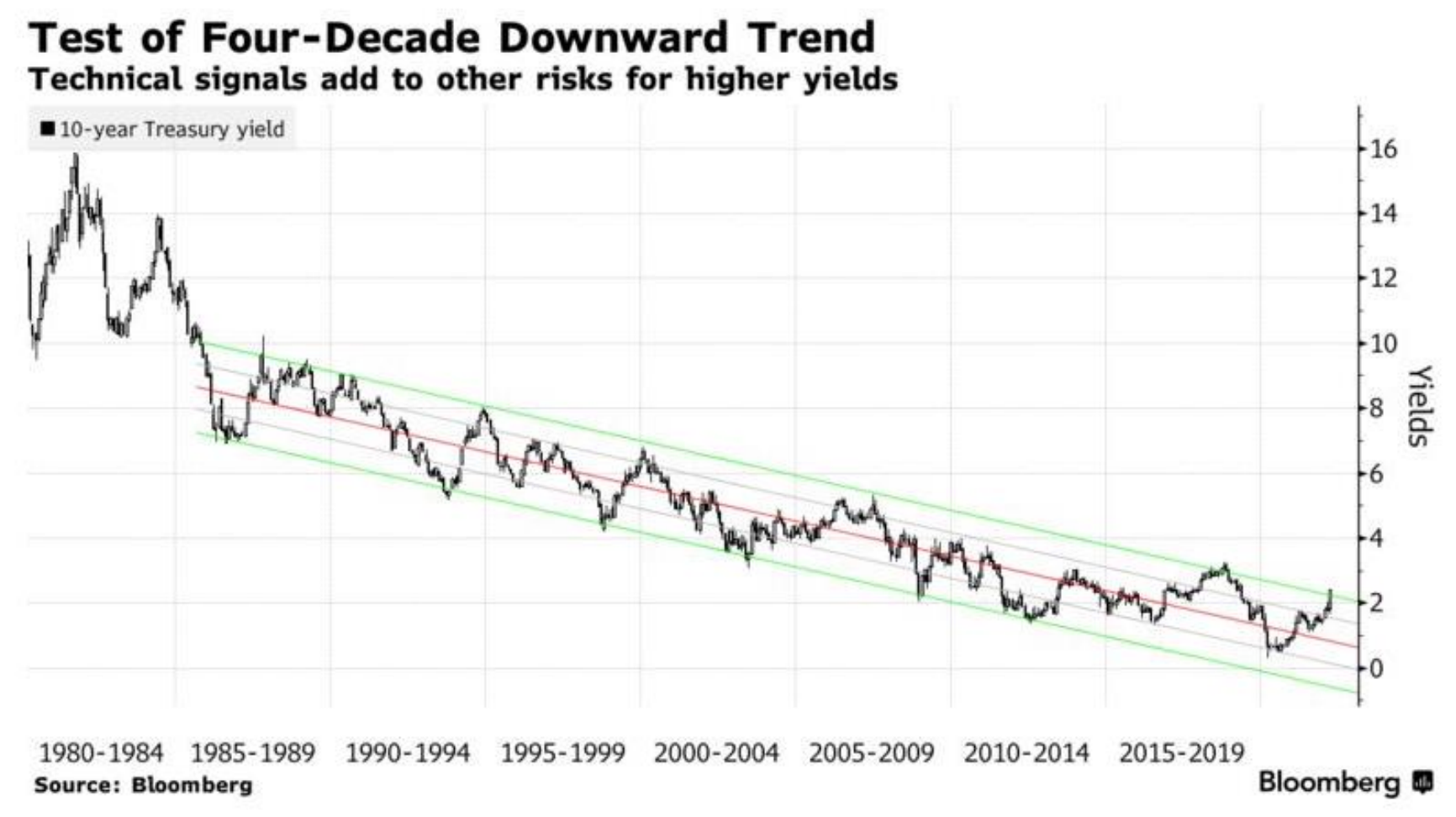
Friends, you will not see many 40-year bull markets in a lifetime so witnessing one ending is a historical investment and economic event. Interest rates have been trending downward for 40 years driving a bond favorable market that ended abruptly during the first quarter of 2022 leaving the aggregate bond indexes down more than the stock market. Most bond investors opened quarterly statements showing losses for the first time in 40 years, including Muni-bonds experiencing worst quarter since 1980. We have the lowest inflation adjusted (real) yields in 60 years.
Oh, to live on sugar mountain
With the barkers and the colored balloons
You cannot be twenty on sugar mountain
Though you are thinking that you are leaving there too soon
You're leaving there too soon
Sugar Mountain by Neil Young
First, the basics. These projected returns make it even more paramount to dollar cost average and get aggressive buying on corrections. Second, it will be prudent to do your due diligence on asset classes that are not expensively based on fundamentals. It will also be important to not let recency bias dominate your investment thought process, i.e., growth stocks will continue to dominate like the last 10 years.
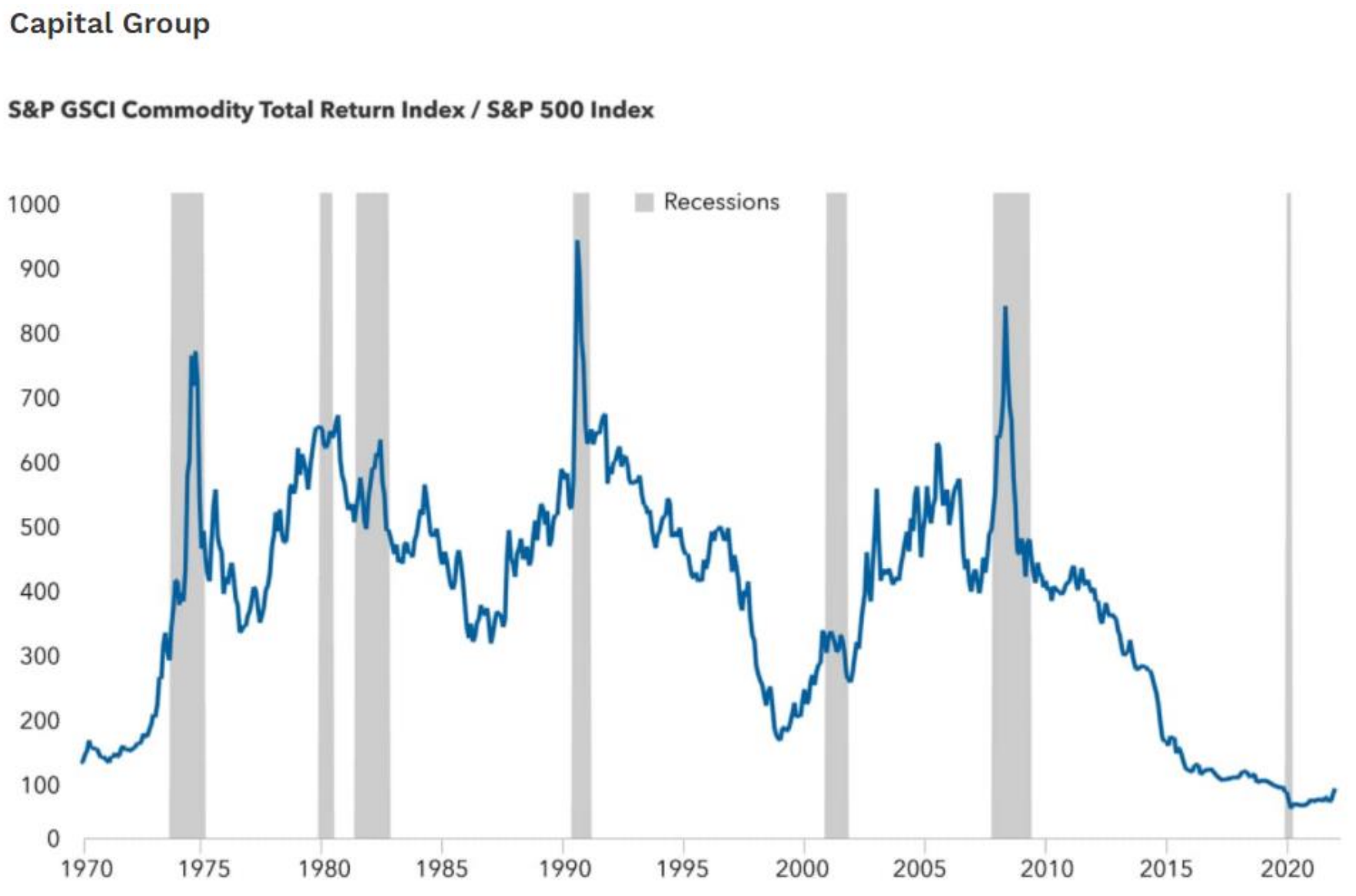
When interest rates go up and inflation goes up, price to earnings multiples come down. There are asset classes that are worth your time to research. Commodities had their best quarter in 32 years, but they are not yet expensive versus history. The following chart from the Capital Group (American Funds) tells us that commodities are still quite cheap versus the S&P 500. For this chart, high means expensive commodities vs. low means cheap commodities. Warning: please discuss any investing in commodities with a professional as this is a trading play, not a long-term buy and hold asset. It is a highly volatile asset class.
Commodities Historical vs. S&P
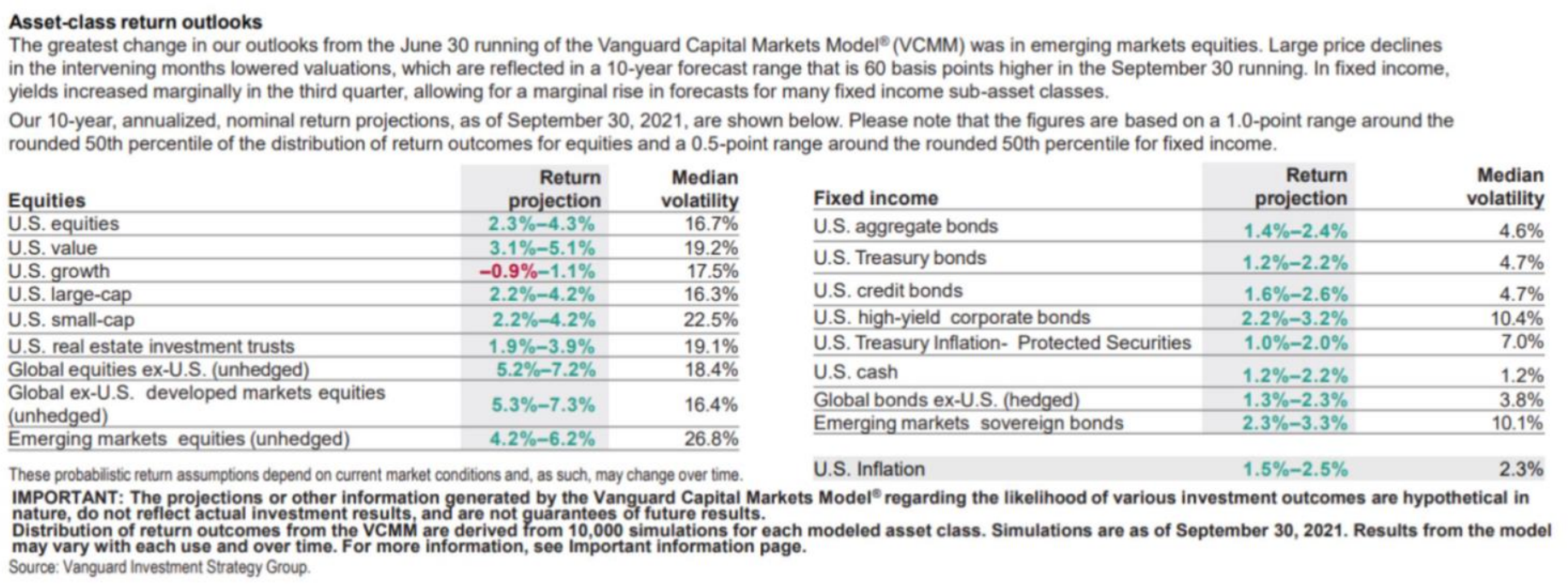
These probabilistic return assumptions depend on current market conditions and, as such, may change over time.
IMPORTANT: The projections and other information generated by the Vanguard Capital Markets Model regarding the likelihood of various investment outcomes are hypothetical in nature, do not reflect actual investment results, and are not guarantees of future results. Distribution of return outcomes from the VCMM are derived from 10,000 simulations for each modeled asset class. Simulations are as of March 31, 2019. Results from the model may vary with each use and over time.
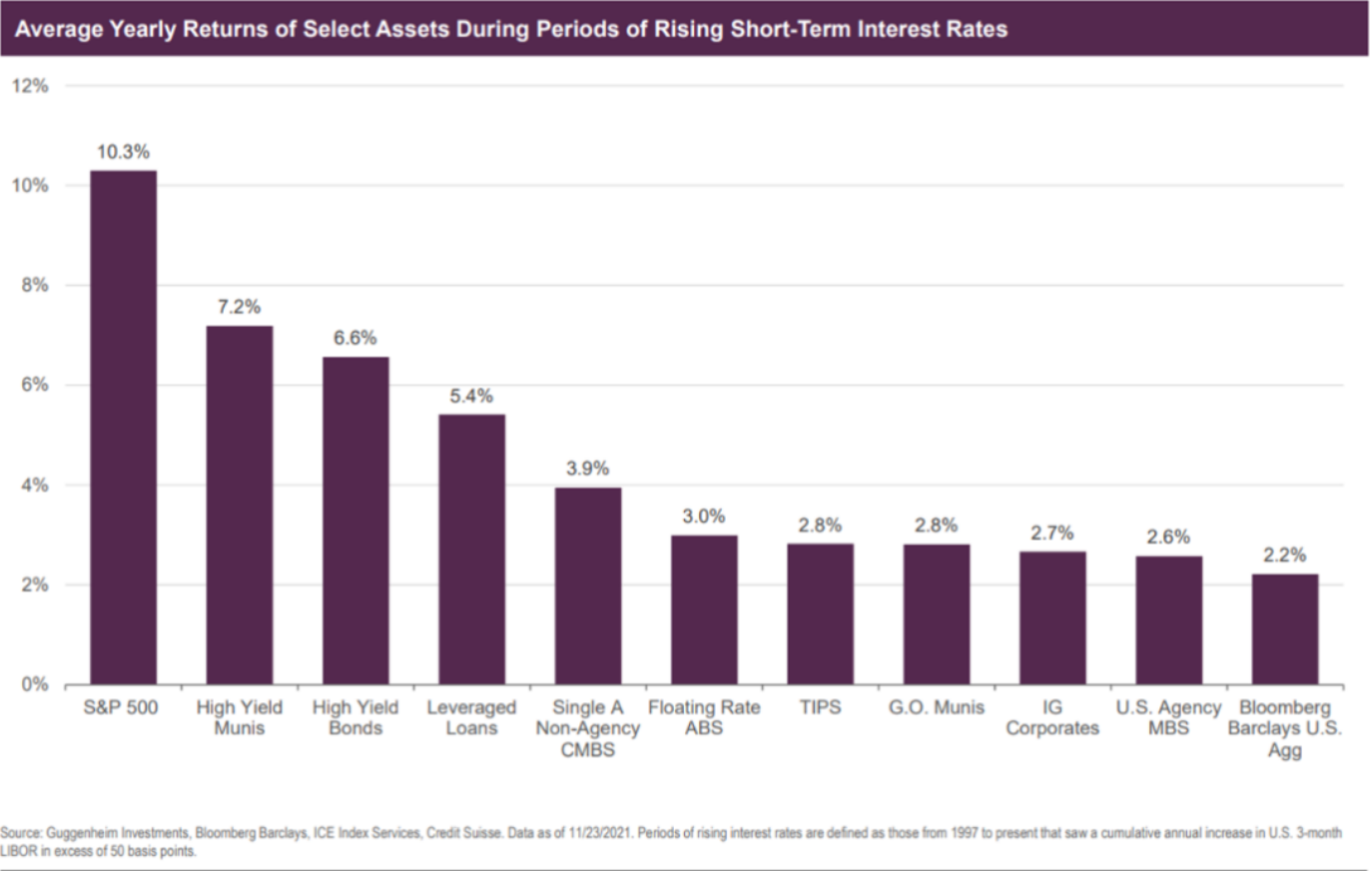
Also, during periods of rising short-term interest rates, stocks have the best history of returns versus
bonds. I would expect the market to be volatile straight through the Summer as inflation, geopolitical
events, and still high valuations converge to leave investors short-term emotional. But, rising interest
rates are not a historical death sentence for stocks.
On December 7th, 1999, Barron’s published the infamous “What’s Wrong,Warren” cover eerily before the Nasdaq crashed 50% and Berkshire recovered years’ worth of underperformance.
The below graph plots the time period 6/30/98 through 2/29/00 for the Nasdaq where many dot-com and technology stocks traded, and the price of Berkshire Hathaway, Warren Buffett’s holding company, which consisted of value stocks:
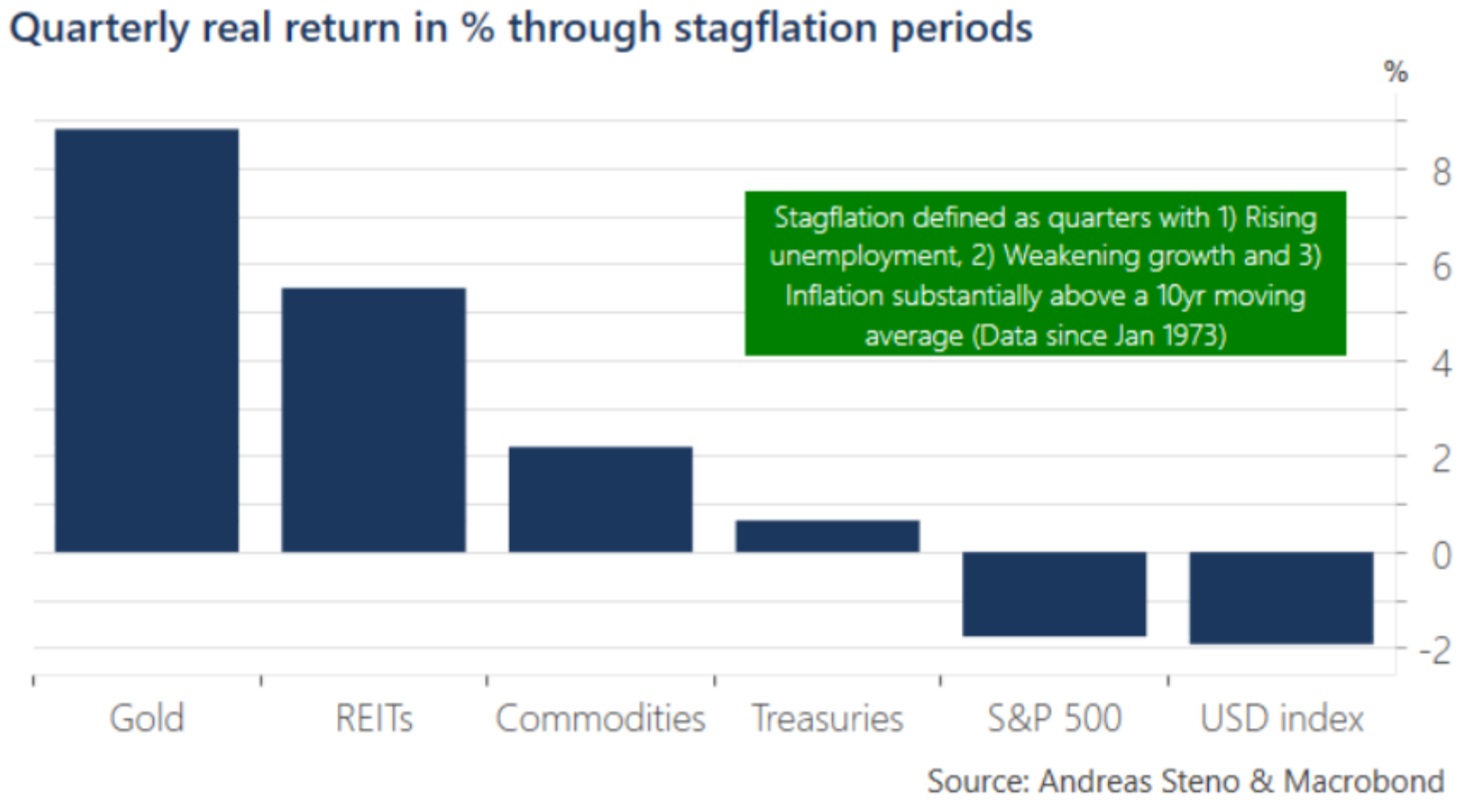
I am not a believer that 1970’s style stagflation is imminent, but commodities and real estate have a positive historical history if stagflation occurs
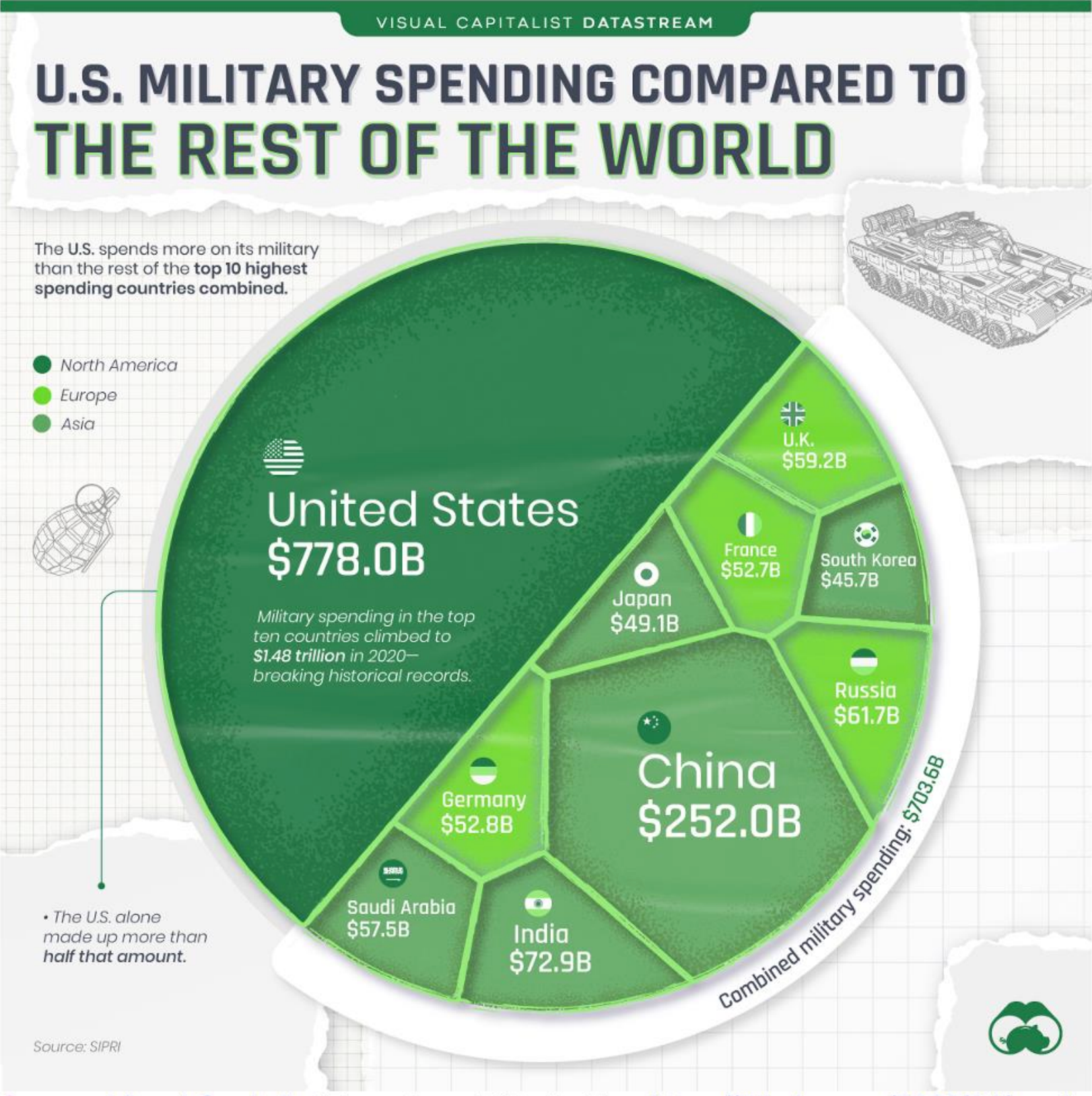
The invasion of Ukraine will change the geopolitical landscape for a generation. A new world order is forming that will set the international stage for decades to come, but the markets have no soul. The stock market is higher since the day of invasion and the U.S. dollar has gone straight up. Since the day I entered finance over 25 years ago, endless amounts of market predictors have warned on the end of the U.S. dollar as the world currency. This time its Bitcoin’s turn but color me skeptical again. Where do you want to park your liquidity - China, Russia, Latin America, Europe? I thought so. The strongest currency is held by the most powerful military and the deepest most liquid markets.
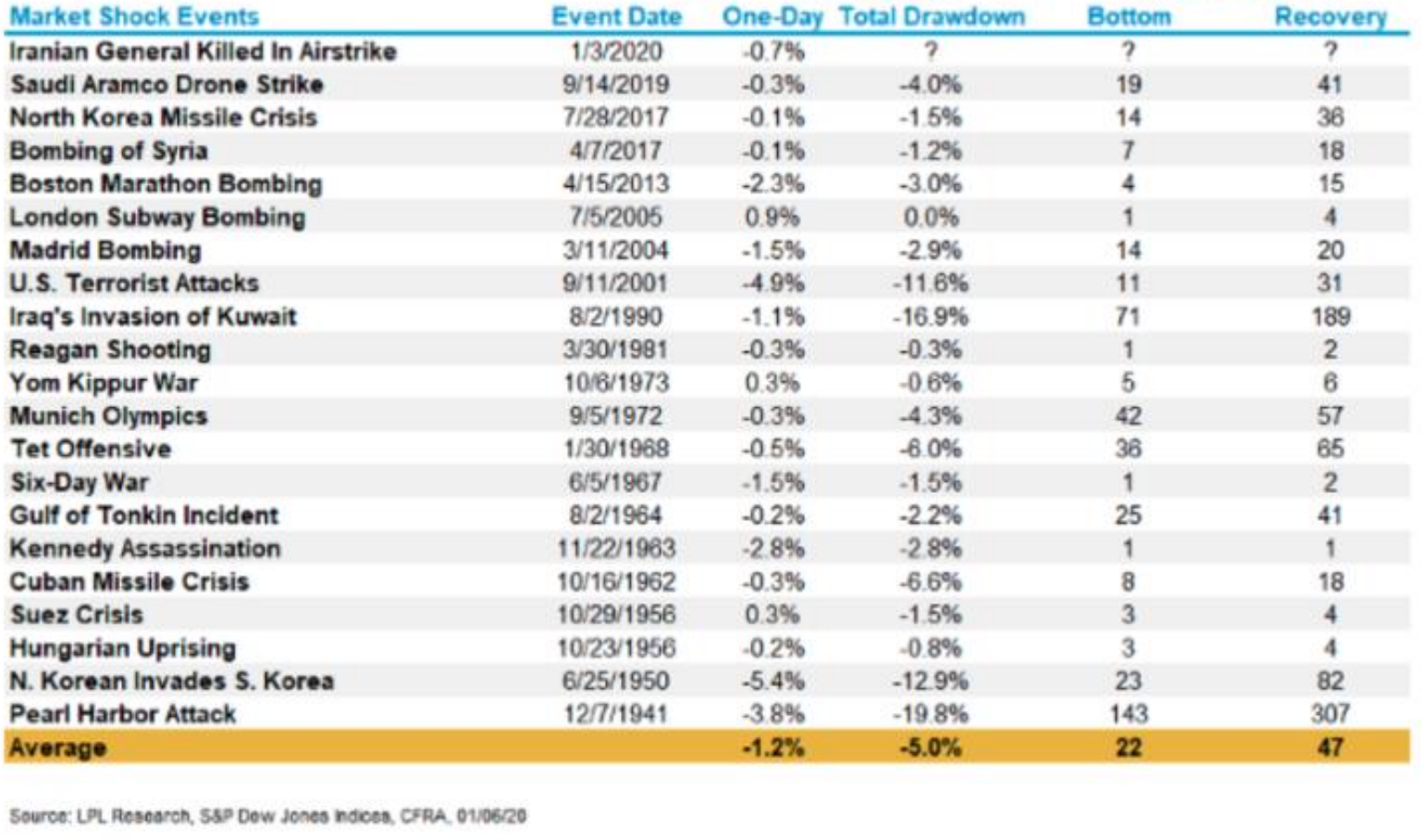
The markets have no soul – remember we recovered to new highs withing days of 9/11
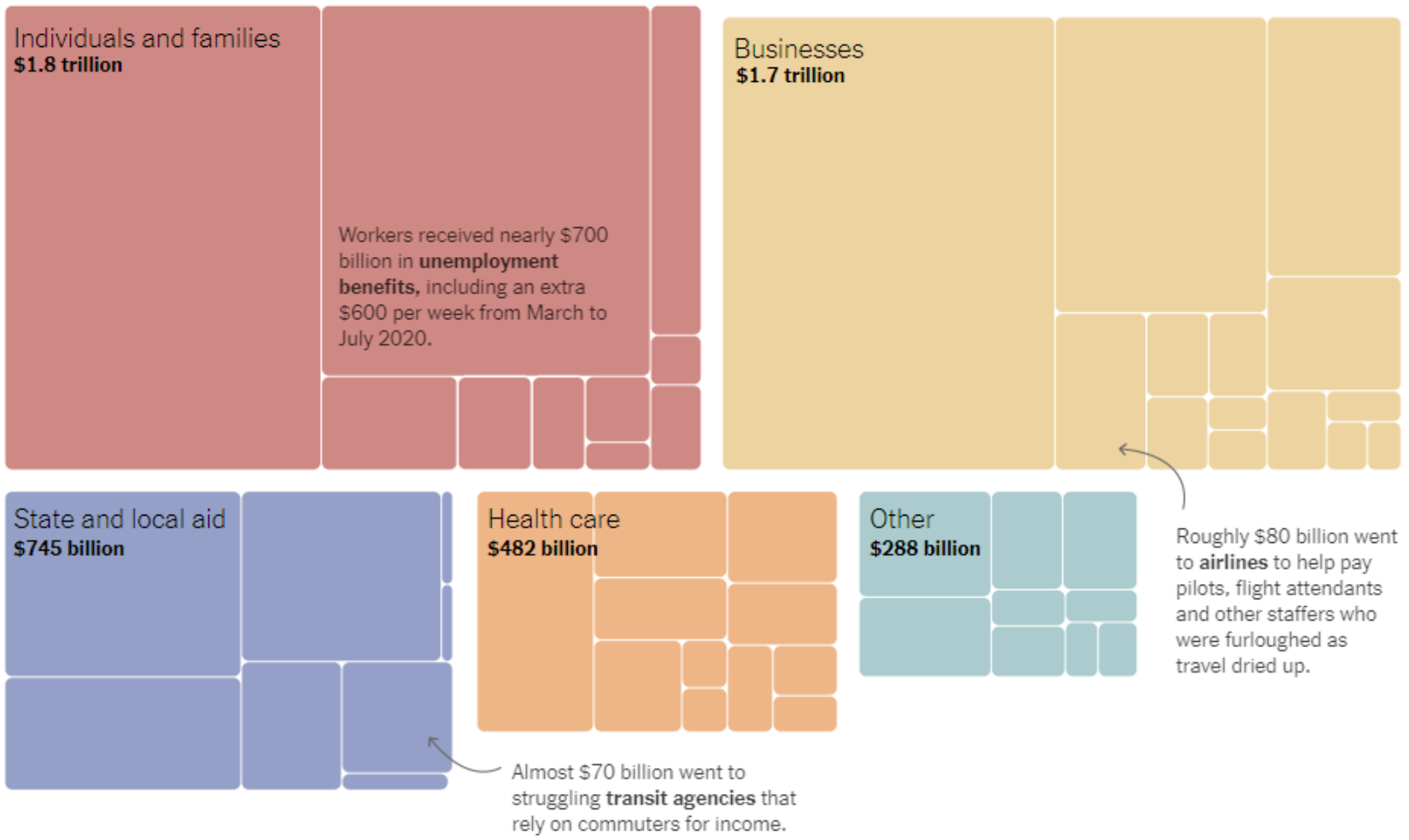
The 10-year treasury rate hit .56 basis points during Covid plus the government provided six times the stimulus as 2008 housing crisis. Here is the simple equation we are left to ponder…. $5 trillion in stimulus + Zero interest rates=Financial Sugar Mountain i.e., inflation. The FED faces unraveling a 40-year sugar mountain and now we added in a war, supply chain issues and sanctions.
It is fair to say that 2008 bail out went to Wall Street versus Covid rescue going to Main Street. Families and small businesses got the majority of pandemic stimulus, but this enhanced our current climb to 40 years high in inflation.
https://www.nytimes.com/interactive/2022/03/11/us/how-covid-stimulus-money-was-spent.html
Part I - Where do we stand?
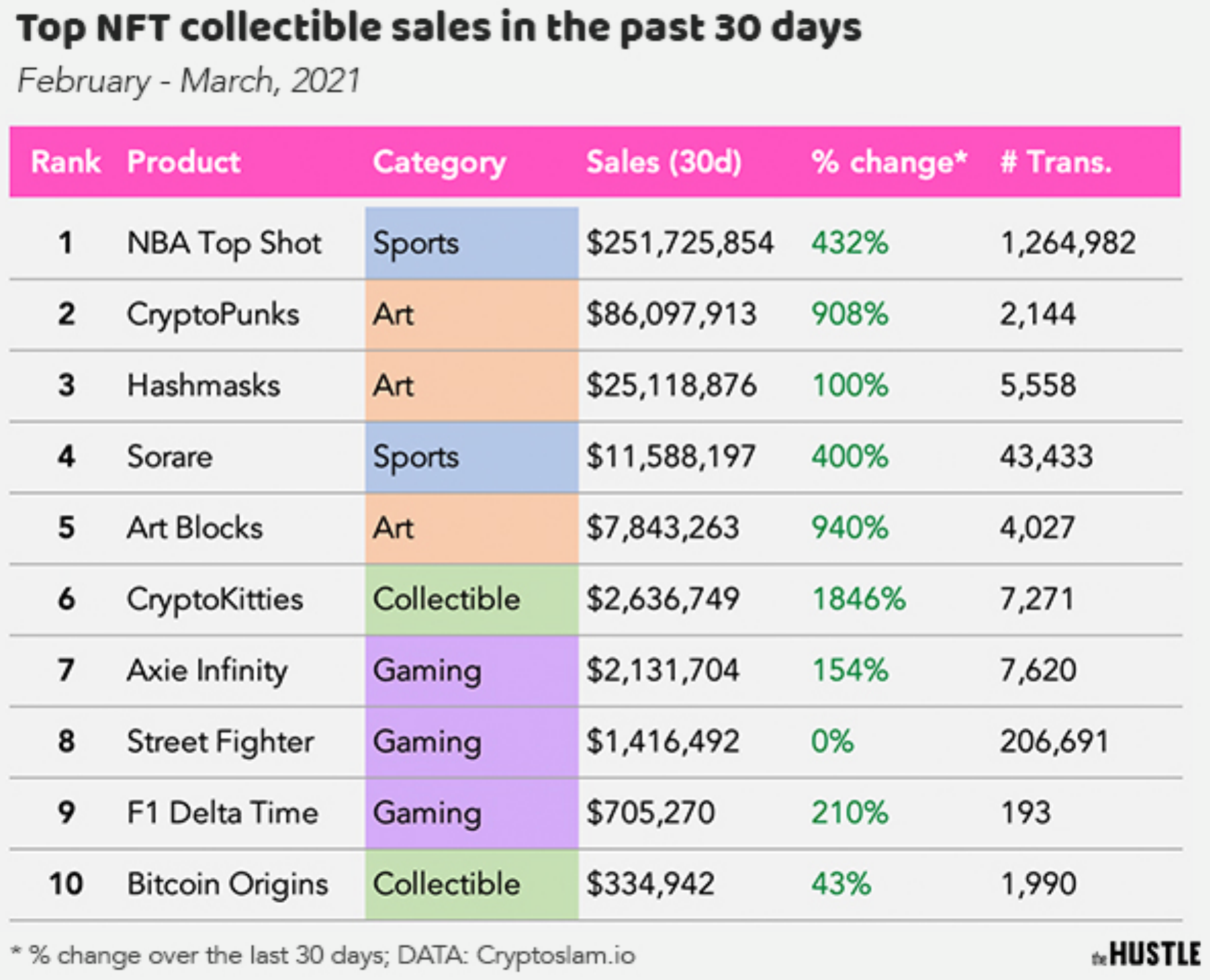
In my last letter, I discussed the top in excess speculation with Ben Affleck and Matt Damon leading the charge by advertising for gambling and crypto investing. The Nasdaq promptly corrected -22% and the S&P -15% but more speculative parts of market such as IPOs, Disruptor Stocks (Cathie Wood ARKK), SPACs, ect. got walloped for -40-70%. More importantly we are witnessing a huge rotation of sector leadership away from technology and toward inflation friendly sectors. At the same time, an asset class rotation into commodity stocks and value stocks in underway.
I want to be clear on the difference between a stock market correction and an economic recession. Ten to fifteen percent stock corrections are commonplace and, in most cases, they are buying opportunities, while recessions are -35% corrections that last 18-24 months with multiple head fakes that suck in investors before the market makes new lows. At the end of a recession, investors become exhausted and mass selling happens on the bottom.
2010-2020 was the first decade without a recession since 1850. The Covid crisis was a 30-day bear market so a true American recession in on the horizon but like always in markets, the timing is complicated.
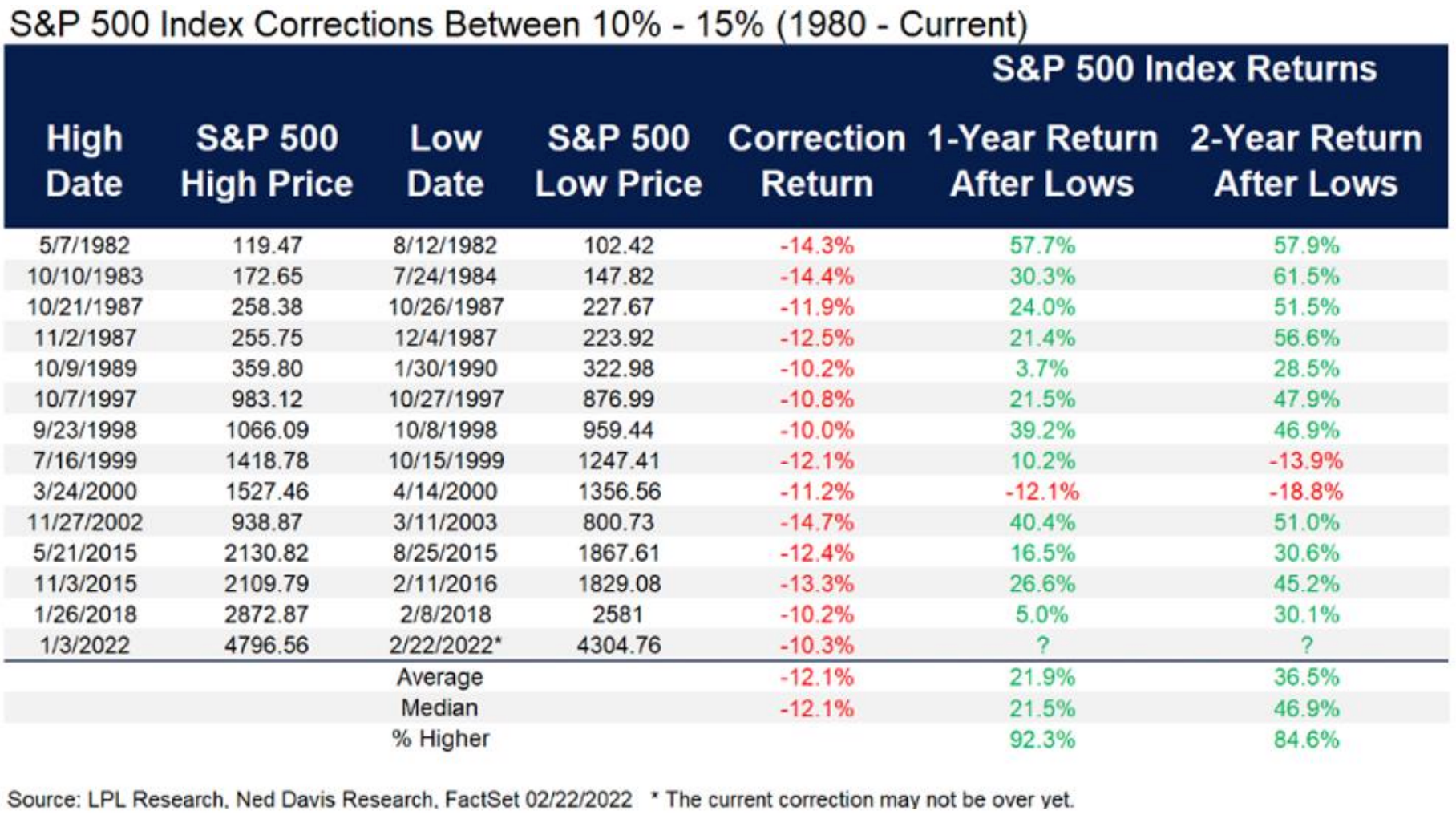
At this moment, the U.S. is not facing an imminent recession but more on that in part II of today’s letter. See below history of 10-15% corrections from LPL research. Outside of the 2000 internet bubble, they all posted positive returns one-year later.
Ben Carlson-Even if the yield curve does predict a recession yet again you cannot predict:
- When the recession will happen.
- If/when the stock market will begin to fall.
- The magnitude of the recession and stock market correction.
- What the Fed will do in the meantime.
Full read at A Wealth of Common Sense
Part IV - Where does this data leave investor?
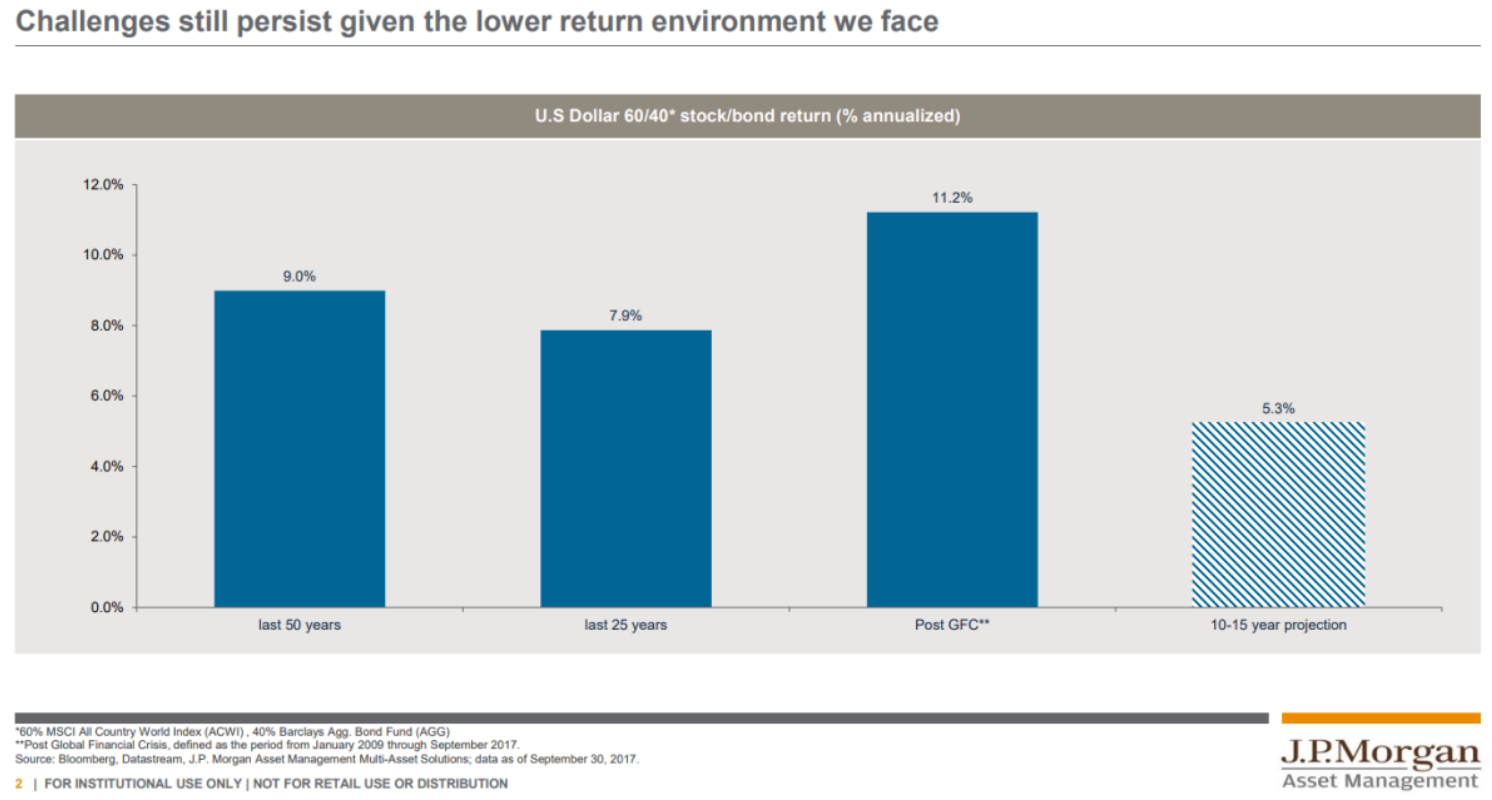
As mentioned in my 2021 year-end letter, there is no need to panic but it is going to be harder to make money in the stock market going forward. I showed Vanguard’s projected 10 year returns in my last few quarterly notes that project bonds losing money after inflation and stocks returning reasonable but much lower returns than the last 10 years.
Below chart from JP Morgan shows expected returns based on math for a 60/40 portfolio versus the last 10, 20, and 30 years. Will it be exact? Of course not, but it could also be worse.
Leveraged loans are up 50 percent since 2015
Leveraged loans, which are issued by overleveraged companies with insufficient cash flows, are part of what Wolf Richter recently called the “gigantic pile of risky corporate debt that is now being brutally repriced as concerns over credit risk (the risk of default) are finally bubbling to the surface.” According to Richter, the S&P/LSTA US Leveraged Loan 100 Index, which tracks the prices of the largest leveraged loans, has plunged by 20 percent since February 22nd.
According to Richter, leveraged loans “are traded in slices like securities or are packaged into highly rated Collateralized Loan Obligations (CLOs). But for years, investors had the hots for them, driven by their relentless chase for yield, in a world of interest rate repression.”
These companies, noted Richter, were often acquired by private equity firms through leveraged buyouts, which means they loaded up those companies with lots of debt. In addition, “PE firms extracted special dividends from their companies,” which were funded by leveraged loans. That’s a form of asset stripping and it leaves the company “more leveraged, more precarious and more likely to topple. But who cares? Those were the good times and the chase for yield was on,” lamented Richter.
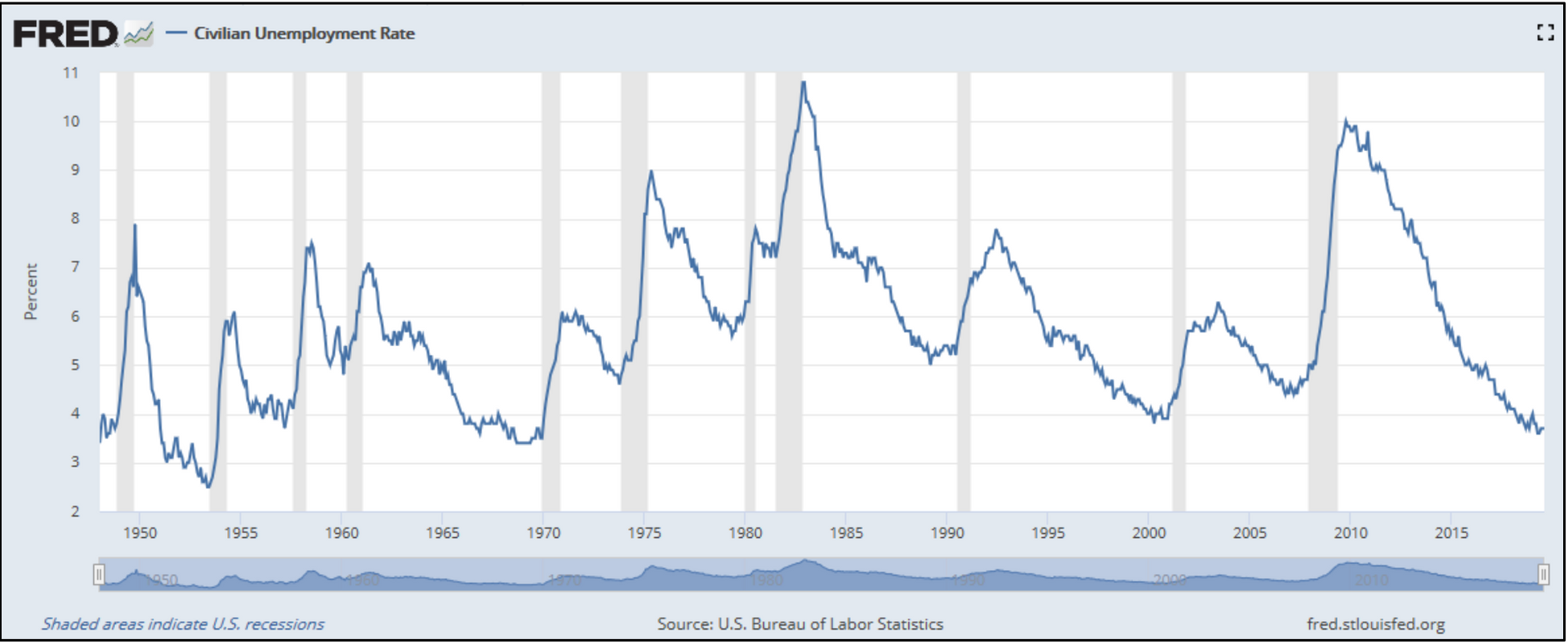
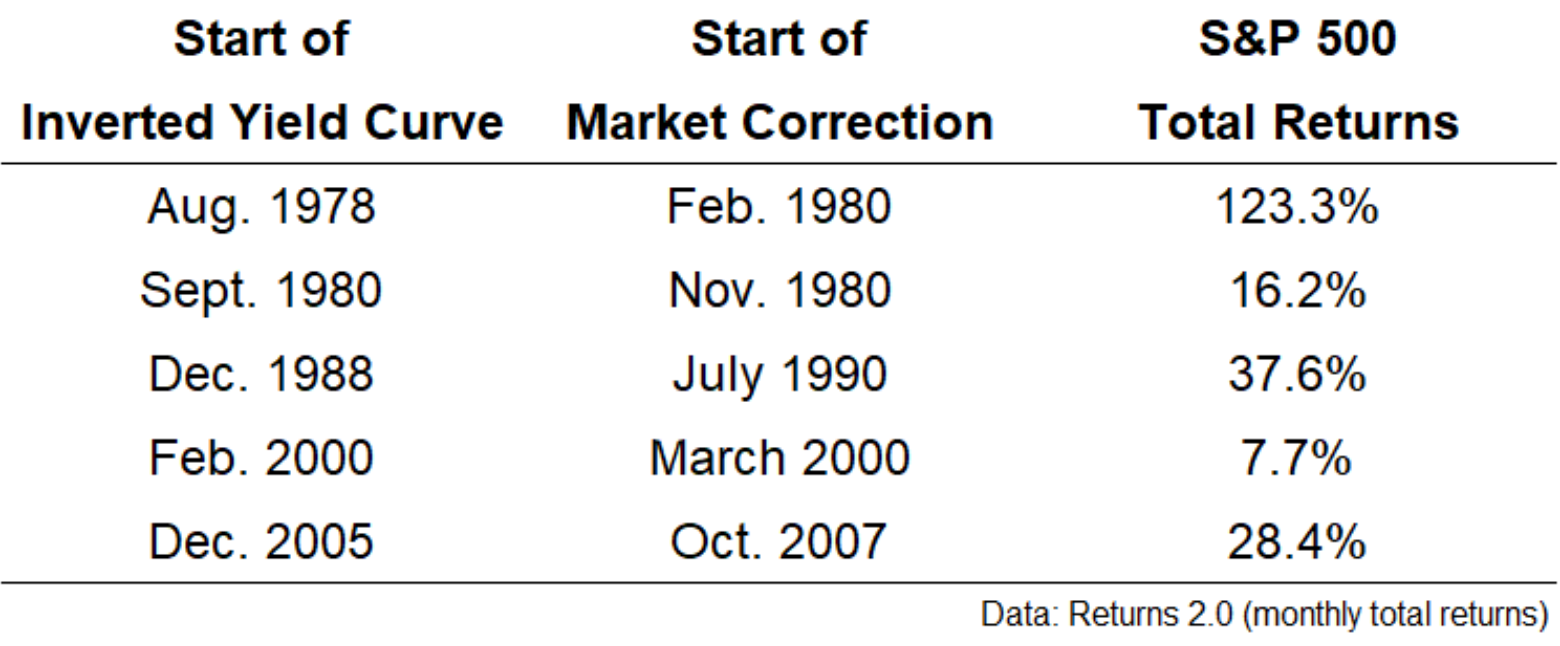
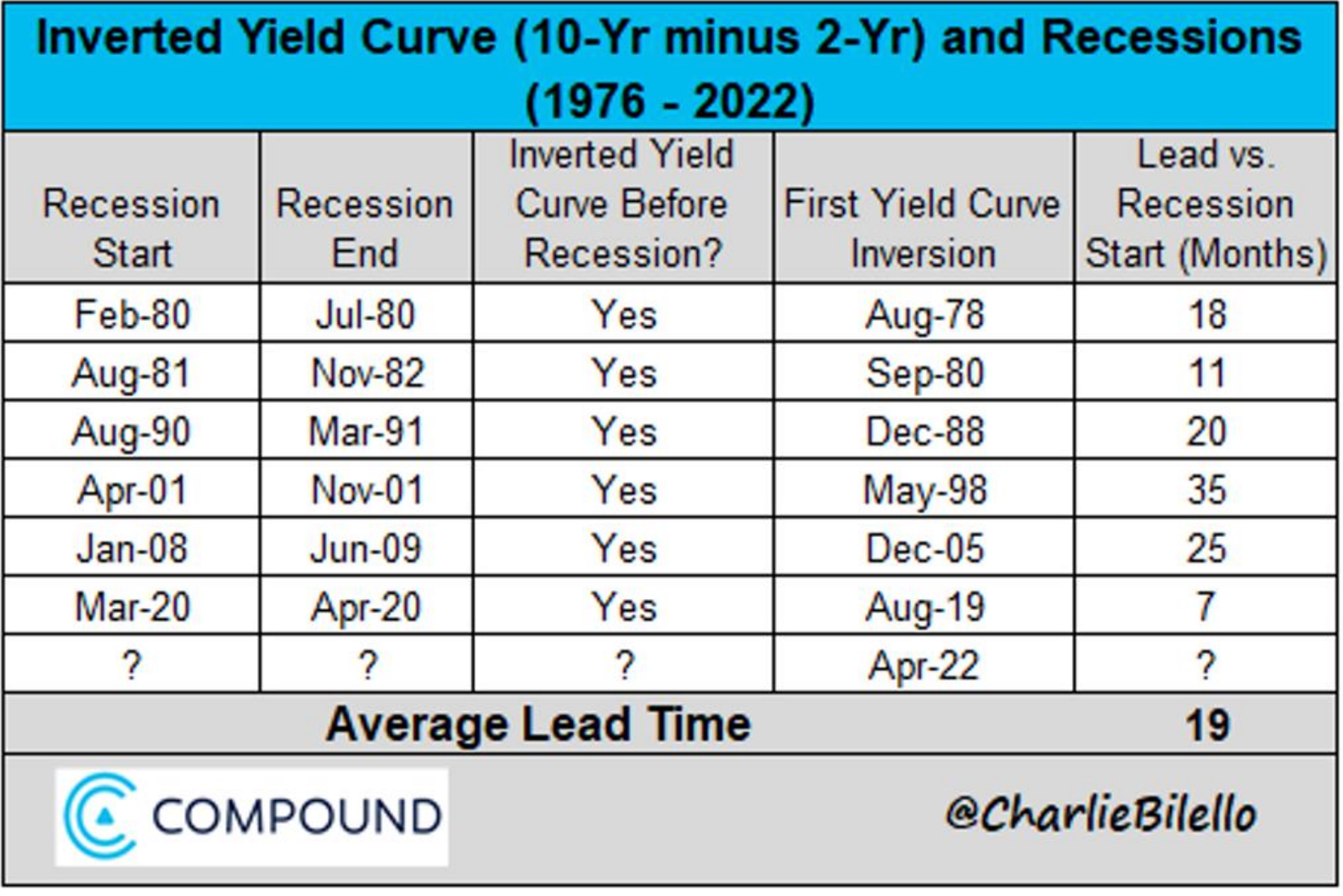
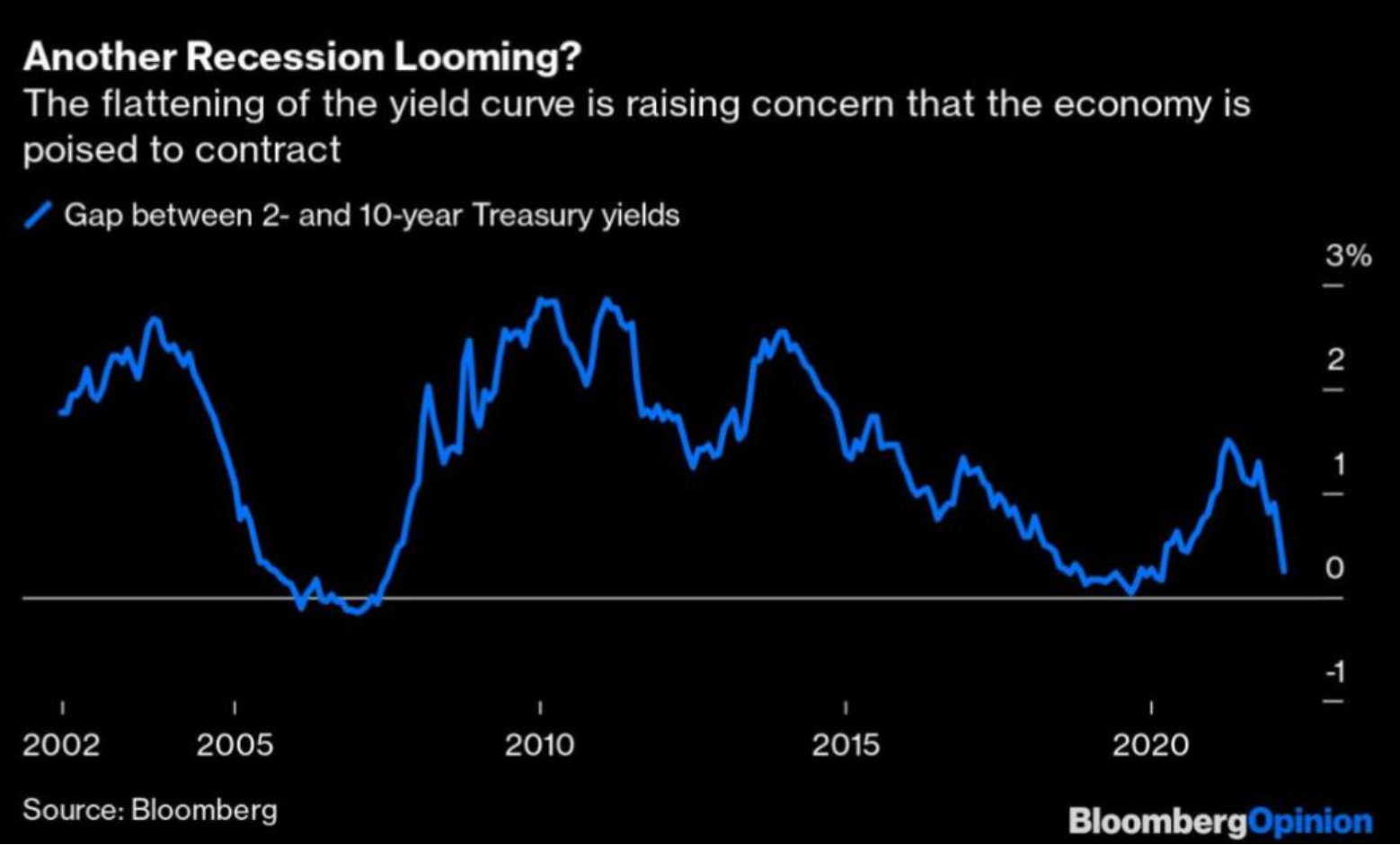
Yes, the yield curve is an excellent indicator of a recession but like most fundamental market indicators, it is not a timing mechanism. Since 1980 the average lead time between inversion and a recession is 18 months and the stock market on average posts positive returns in the run up to a recession.
https://compoundadvisors.com/about
As mentioned in my last quarterly letter, Ben Carlson explains topics much better than me. He says it makes sense to look at the returns between the yield curve inversion and the start of these stock downturns:
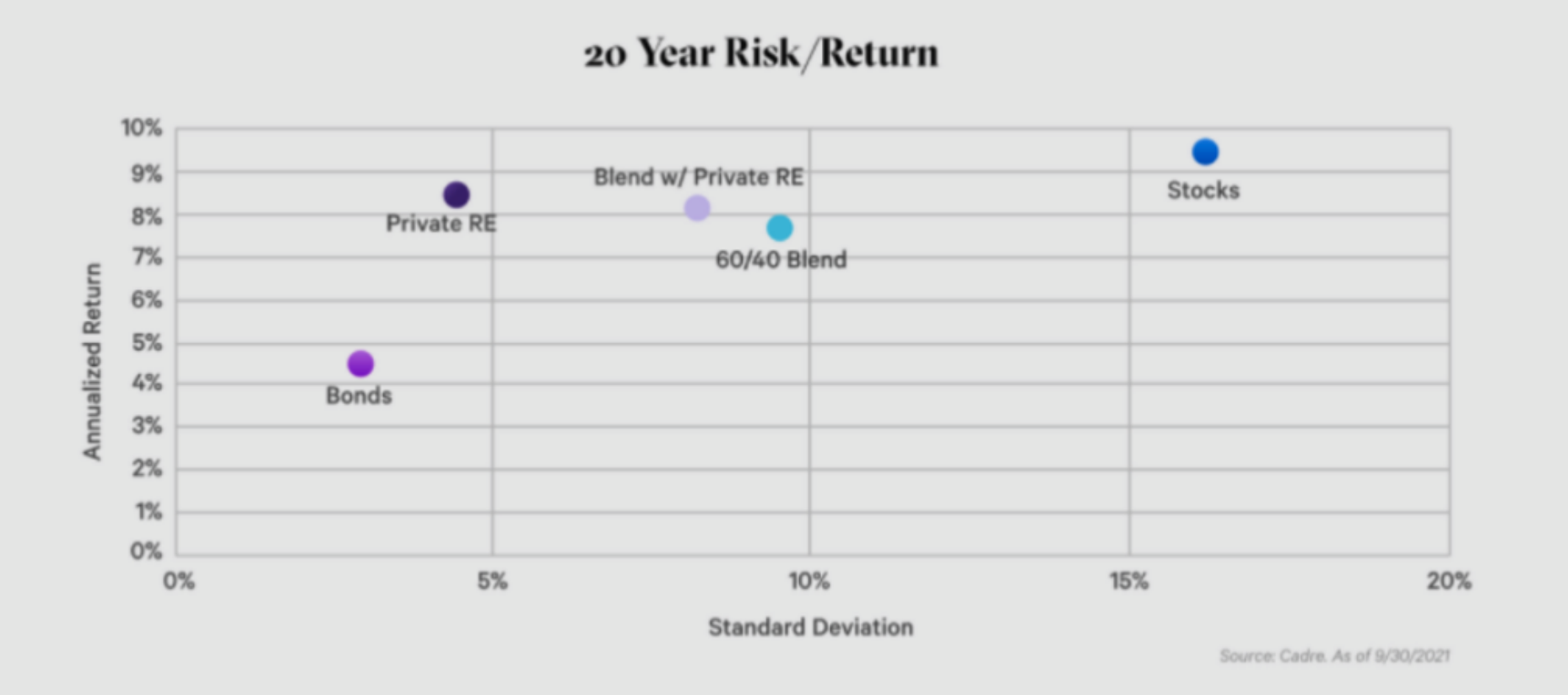
Keeping with the theme of inflation hedges and bond replacements, private real estate is another interesting space to spend research time. Yes, returns have been outstanding for the last 10 years in commercial real estate and it is true that the space is not cheap, but real estate is an excellent inflation hedge. Also, for those who can afford to have a portion of their portfolio illiquid, it is an attractive space versus bonds.
The key for private real estate is choosing the right manager because alpha is generated in this space over the long-term from a disciplined and experienced team. As you can see on the risk/reward chart below, private real estate offers attractive annualized returns with reasonable risk.
Risk – Reward of Private Real Estate
Disclosures
Lansing Street Advisors, LLC is a registered investment advisor with the State of Pennsylvania. You can read more about the Lansing team at www.lansingadv.com .
To the extent that content includes references to securities, those references do not constitute an offer or solicitation to buy, sell or hold such security as information is provided for educational purposes only. Articles should not be considered investment advice and the information contained within should not be relied upon in assessing whether to invest in any securities or asset classes mentioned. Articles have been prepared without regard to the individual financial circumstances and objectives of persons who receive it. Securities discussed may not be suitable for all investors. Please keep in mind that a company’s past financial performance, including the performance of its share price, does not guarantee future results.
Material compiled by Lansing is based on publicly available data at the time of compilation. Lansing makes no warranties or representations of any kind relating to the accuracy, completeness or timeliness of the data and shall not have liability for any damages of any kind relating to the use of such data.
Material for market review represents an assessment of the market environment at a specific point in time and is not intended to be forecast of future events or guarantee of future results.
Indices that may be included herein are unmanaged indices and one cannot directly invest in an index. Index returns do not reflect the impact of any management fees, transaction costs or expenses. The index information included herein is for illustrative purposes only.
The trademarks and service marks contained herein are the property of their respective owners.
Lansing Street Advisors is a registered investment adviser. Information presented is for educational purposes only and does not intend to make an offer or solicitation for the sale or purchase of any specific securities, investments, or investment strategies. Investments involve risk and, unless otherwise stated, are not guaranteed. Be sure to first consult with a qualified financial adviser and/or tax professional before implementing any strategy discussed herein. Past performance is not indicative of future performance.
Lansing Street Advisors may discuss and display, charts, graphs, formulas which are not intended to be used by themselves to determine which securities to buy or sell, or when to buy or sell them. Such charts and graphs offer limited information and should not be used on their own to make investment decisions.
Now you say you're leavin' home
'Cause you want to be alone.
Ain't it funny how you feel
When you're findin' out it's real?
Oh, to live on Sugar Mountain
With the barkers and the colored balloons,
You can't be twenty on Sugar Mountain
Though you're thinking that
you're leaving there too soon,
You're leaving there too soon.
Sugar Mountain by Neil Young
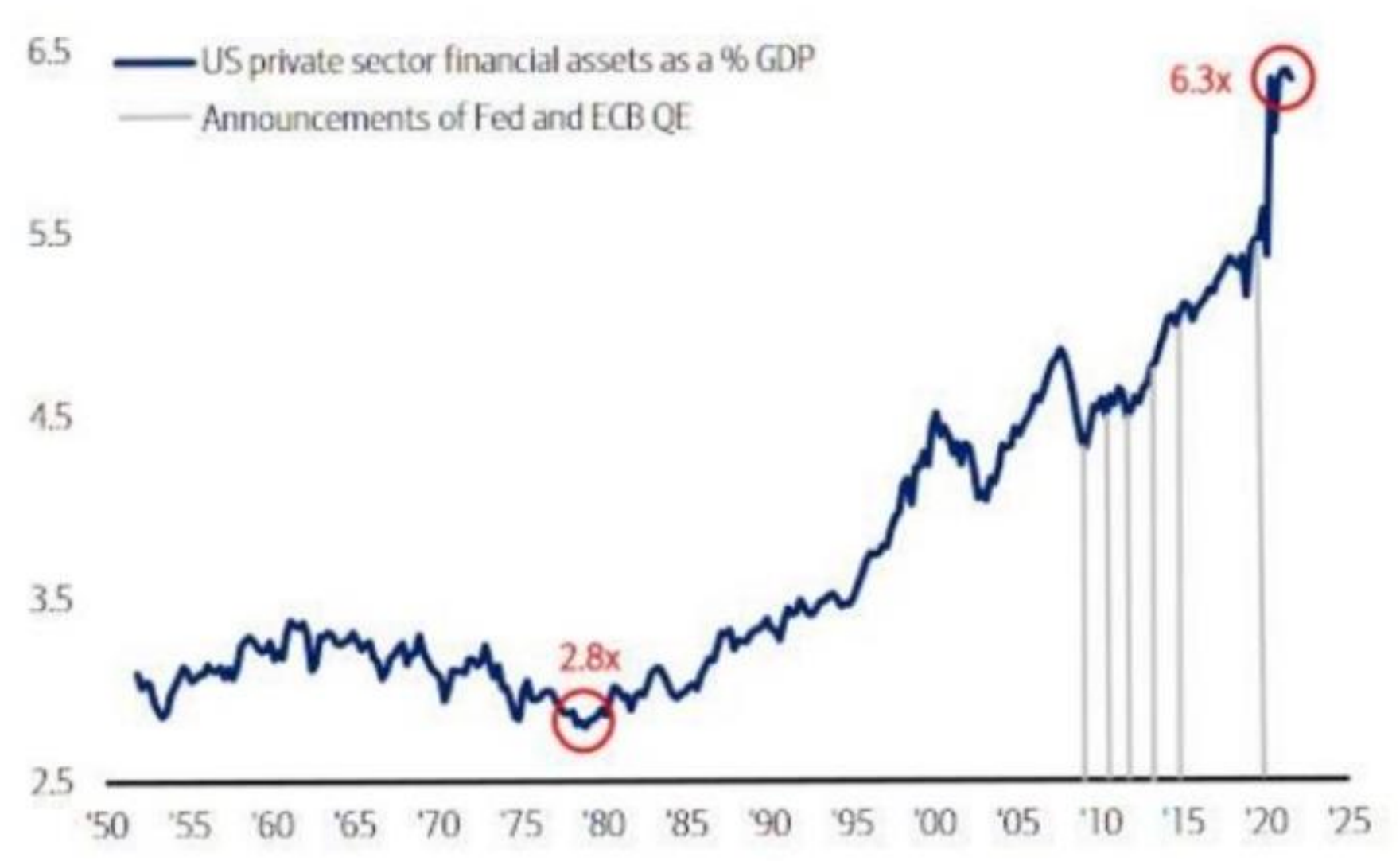
Higher interest rates will not only effect bond returns going forward but every investing class available. The below chart illustrates a vivid picture on the financial sugar mountain.
U.S. Private Sector Financial Assets as a Percentage of GDP During Bond Bull Market
What are US financial assets? Cash, stocks, bonds, mutual funds, and bank deposits are all examples of financial assets. Unlike land, property, commodities, or other tangible physical assets, financial assets do not necessarily have inherent physical worth or even a physical form.
Part III - The Yield Curve is Inverting so the Market will Crash? Not Exactly.
Here is every pundit’s recent favorite chart and this is not without reason because the yield curve has preceded most U.S. recessions. However, like everything else related to investing, its complicated or no one would need to work. For example, the yield curve inverted in 2019 and the S&P is up 63% since the event.
Stock Market History Post 10-15% Correction
Visual Capitalist From Barry Ritholtz Blog https://ritholtz.com/2022/04/weekend-reads-510/
Part II - Interest Rates are Rising so the Market will Crash? Not Exactly.
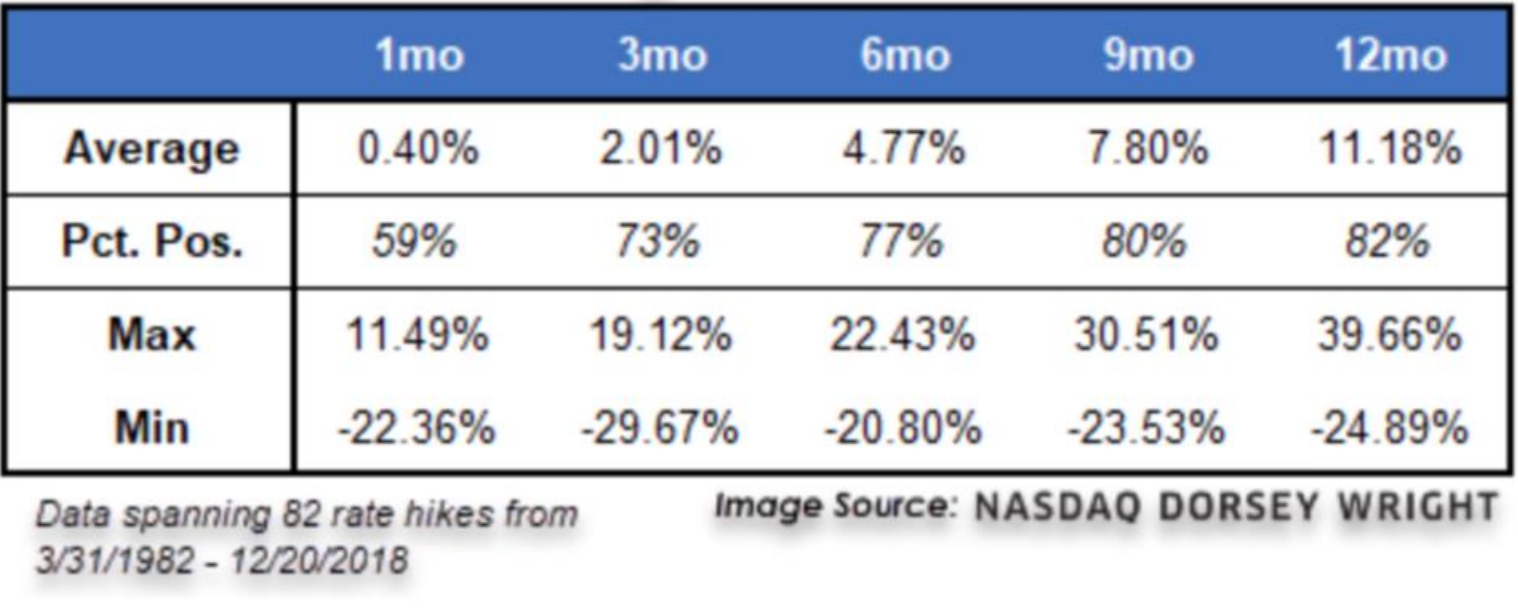
Rising interest rates mean the economy is doing well and considering we have 5m more jobs than people willing to fill them, it is safe to say business in America is healthy. Contrary to media commentary, rising interest rates do not mean an immediate end to a favorable market. The below grid tells us that probabilities are in favor of equities following Fed rate hikes.
Forward S&P 500 Index Returns Following Fed Rate Hikes
Full Disclosure-Lansing Street Advisors offers investing in private real estate, if you are a qualified investor, please contact us for information.
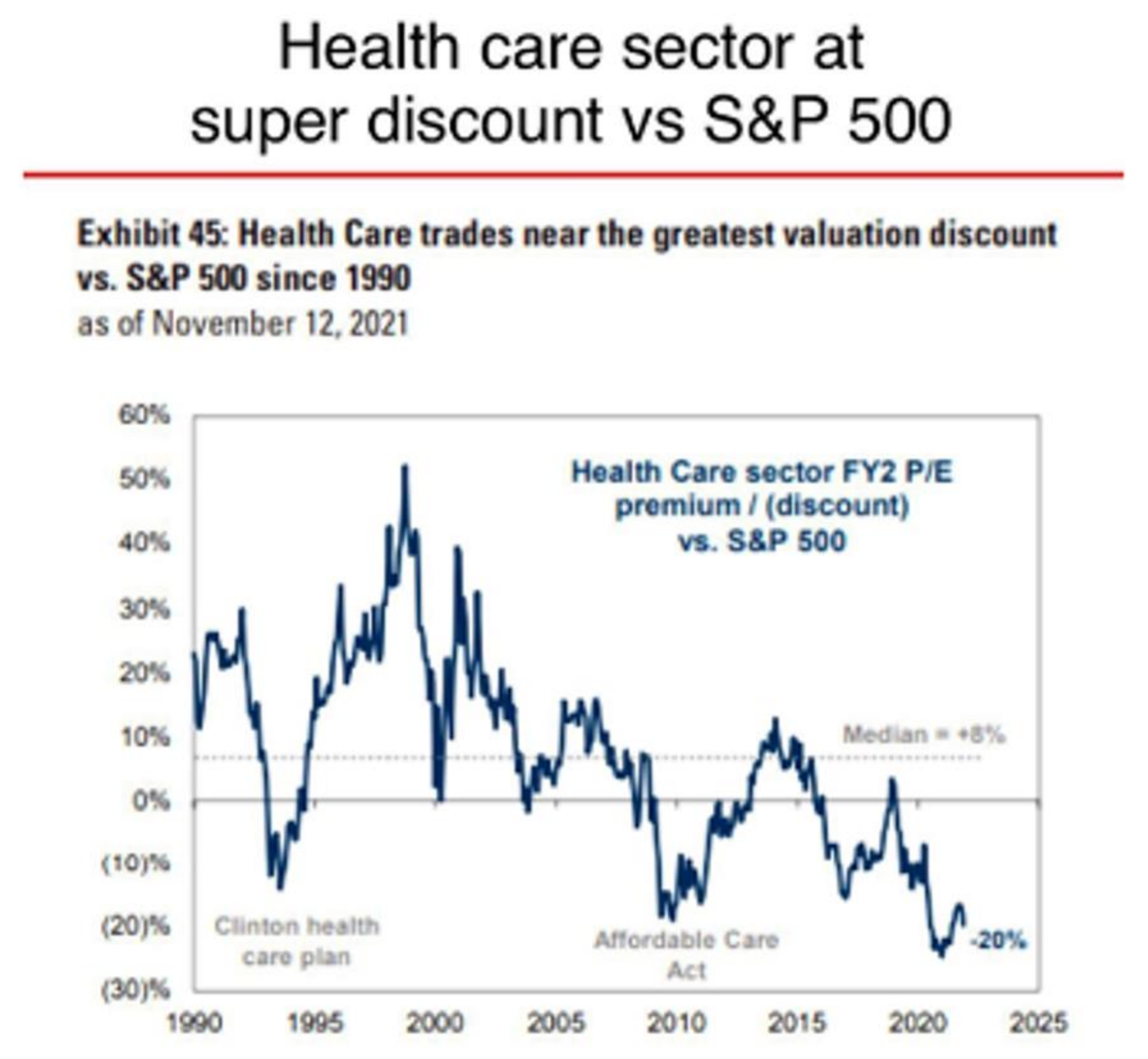
Another option is sectors trading at reasonable valuations and paying healthy dividends. One example is the healthcare sector that trades at a discount valuation, has inflation proof margins, and has a history of performing well in bear markets.
Conclusion
Jerome Powell as Neil Young sings “Ain’t it funny how you feel when you’re findin out it’s real” in this case inflation is what is real. Inflation is a monetary, fiscal, political, and social hot potato that no one wants to own so look for the Fed to aggressively act to the point of accepting a mild recession. The era of record cheap loans is ending as inflation has ripped the printing press out of the Fed’s hand. Input costs, wages and rents are rising. This adds up to pressure on current record high margins for the S&P.
Investment returns in the stock market will revert to the mean instead of high double digits during the past decade. The era of low inflation driven by technology and relocation of workers to low wage countries looks to be ending. There is still opportunity for investments focusing on safety of principal and reasonable rates of return.
The ultimate black swan event was Covid. Since the chances of a Black Swan are 3.6%, our probabilities are low that an out of the box incident will imminently crash the market. The stock and bond markets already experienced a traditional non-recessionary correction in the first quarter 2022 so where does that leave investors?
The next negative event will be a recession but predicting the timing is not easy. Right now, a promising idea is to diversify beyond the traditional 60/40 portfolio, dollar cost average aggressively due to increased volatility, hedge for inflation, and put any cash to work in equities during downturns.
The Fed has an incredible task, but we have been through these situations in history and the U.S. always comes out on top. The best investing days are always ahead.

U.S. Military Spending vs Other Top Countries=Strong Currency
Geopolitical Events and Stock Market Reactions.
Especially important, none of the above are a recommendations for you to buy or sell any security. This is for information purposes only. Please talk with your advisor regarding any advice around the subject matter and your goals.