
Introduction
This letter has already gone through a few iterations. Version one was scrapped when the facts changed. Version two met the same fate halfway through. I finally completed version three—only for the market to rally 10% the same day. At this point, I surrender. So here we go—It’s not perfect, but it’s real—and reflective of just how fast this environment is shifting.
I ended my Q4 2024 letter with the words, “2025 will undoubtedly be an interesting year.” Well, we’re only three months in—and as the saying goes: *May you live in interesting times.*
Consider just a few headlines from Q1:
1. Global leaders are now dabbling in crypto pump-and-dumps.
2. Zero regulation of crypto—could that be its downfall? North Korea has reportedly stolen $6B in crypto, now their largest revenue source. Overregulation and zero regulation are two very different risks.
3. We may be entering a tariff war bigger than Smoot-Hawley.
4. China is diving deep into AI.
5. The QQQ entered bear market territory.
6. $100 million was spent on a single state supreme court election—in Wisconsin.
7. Over 800 NCAA basketball players hit the transfer portal, yet TV ratings somehow improved. Kaitlin Clark graduated, and the women’s tournament lost 10 million viewers.
8. The law of unintended consequences for young men: 24/7 access to weed, gambling, crypto, and porn. It all seemed like a good idea at the time. (More on that later in my section on threats to American exceptionalism.)
9. The Philadelphia 76ers are beginning to resemble the New York Jets of the NBA.
10. Just kidding—tariff escalation was placed on a 90-day pause.
And through it all, the GOAT does it again. Warren Buffett was cashed up at just the right moment—without using a Bloomberg terminal, Excel spreadsheets, quant models, or AI. Sometimes, old-school fundamentals still win.

Carry On My Wayward Son
Song by Kansas
Carry on my wayward son
For there'll be peace when you are done
Lay your weary head to rest
Don't you cry no more
Masquerading as a man with a reason
My charade is the event of the season
And if I claim to be a wise man, it surely means that I don't know
On a stormy sea of moving emotion
Tossed about I'm like a ship on the ocean
I set a course for winds of fortune, but I hear the voices say
These probabilistic return assumptions depend on current market conditions and, as such, may change over time.
IMPORTANT: The projections and other information generated by the Vanguard Capital Markets Model regarding the likelihood of various investment outcomes are hypothetical in nature, do not reflect actual investment results, and are not guarantees of future results. Distribution of return outcomes from the VCMM are derived from 10,000 simulations for each modeled asset class. Simulations are as of March 31, 2019. Results from the model may vary with each use and over time.
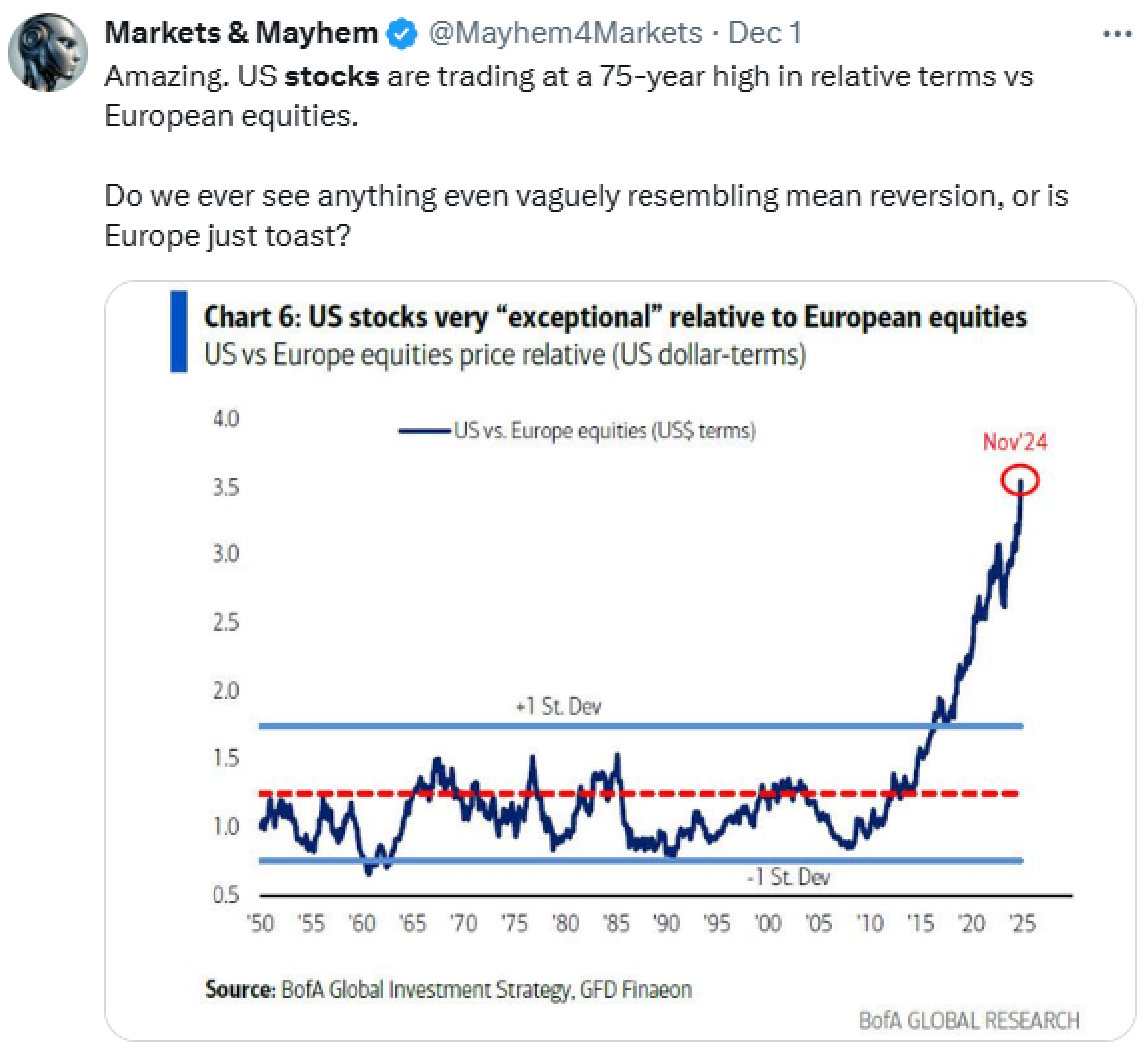
Source @Mayhem4Markets
So far in 2025, a broad range of asset classes have outperformed the S&P 500—including international stocks, bonds, U.S. value stocks, private equity, private lending, and commodities. Most importantly, bonds did what they’re supposed to do: they went up when stocks went down.
That may seem like a basic function—but it’s worth emphasizing. During the last major correction in 2022, both stocks and bonds declined by double digits in the same year—only the second time that’s happened in over a century. In contrast, 2025 has offered a much-needed return to normal market behavior for diversified portfolios.
Part IV. What are the Threats to American Exceptionalism?
Let me be clear—I remain bullish on American exceptionalism. I don’t believe the last 60 days have erased our economic leadership or national resilience. But that doesn’t mean there aren’t real, structural threats worth watching.
While most people immediately point to tariffs, Trump, debt, or China, these aren’t my top concerns. The following three issues, in my view, are far more serious.
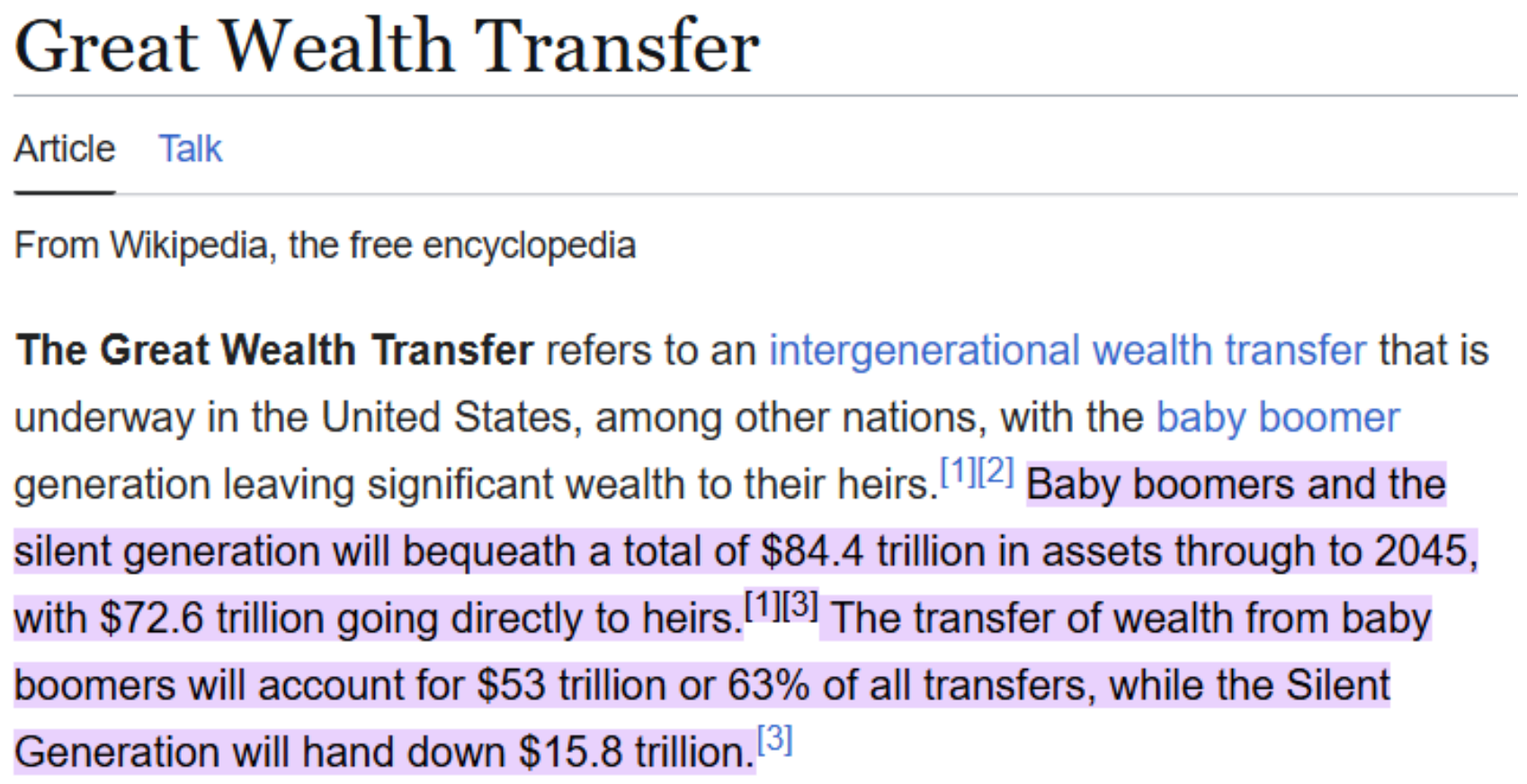
1. The Great American Wealth Transfer
We are on the cusp of an unprecedented $85 trillion intergenerational wealth transfer—something we've never seen in 250 years as a country. While this will certainly support future consumption, it raises two serious concerns:
• Widening wealth inequality, which is already at historical extremes and Trump is claiming he wants to rebuild the American working class through renewed industrialization and America first.
• Risk of political and economic instability, particularly if the benefits of this transfer are unevenly distributed.
There's also the risk of cultural and motivational decay. Will this massive inheritance fuel a generation less driven by work ethic and more prone to intellectual complacency? China’s “lying flat” movement offers a cautionary tale.
On December 7th, 1999, Barron’s published the infamous “What’s Wrong,Warren” cover eerily before the Nasdaq crashed 50% and Berkshire recovered years’ worth of underperformance.
The below graph plots the time period 6/30/98 through 2/29/00 for the Nasdaq where many dot-com and technology stocks traded, and the price of Berkshire Hathaway, Warren Buffett’s holding company, which consisted of value stocks:
https://kailashconcepts.com/ Kailash Concepts
Was the Nasdaq 100 20% rally in the first quarter a repeat of the above or a new bull market in tech? A big portion of the answer will come from the direction of interest rates. The Fed came in like a hurricane upending markets across the world, but we have not begun to feel the effects of higher interest rates working their way across the system. As rates settle into a new range, it will have a profound effect on new business initiatives going forward and be exacerbated by the recent regional bank speed bump that will reduce lending to small business owners. Below are Vanguard’s projected 10-year returns that I include at the end of every letter. The interesting data point is treasuries and high-quality corporate bonds have higher projected returns than growth stocks at one-quarter of the volatility.
Like Neil Young says “I want to love you but I’m getting blown away.”
Part II. Valuations
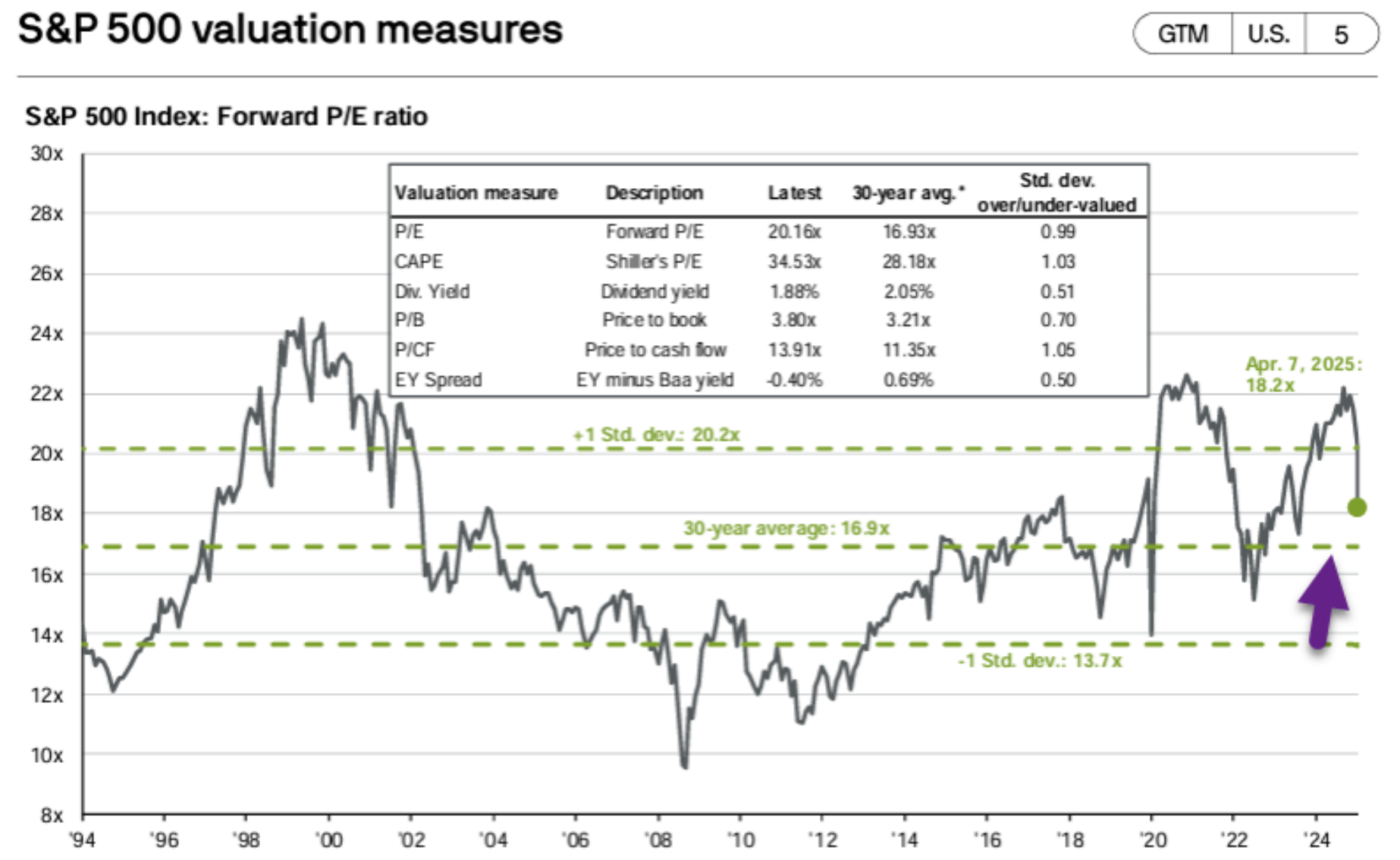
Could we see a recession? Absolutely. But in the meantime, valuations are becoming more attractive by the day.
As the JP Morgan chart below illustrates, we’re approaching 30-year median valuation levels for the S&P 500. And if you strip out the so-called “Magnificent Seven,” the broader market would already be trading below the long-term average.
In this chart, high equals expensive and low equals cheap. After an extended period at the high end of the valuation spectrum, we're now drifting back toward the historical average—offering a potentially more favorable entry point for long-term investors.
Outside Parliament in central London. Benjamin Cremel/Agence France-Presse — Getty Images
Macron faces similar headwinds in France. Voters say they support a stronger military but don’t want to pay for it by increasing taxes, decreasing social spending or raising the retirement age. Macron has already promised not to raise taxes, so some cuts to social spending seem likely. Now parties on the far right and the far left smell blood: Macron is using the Ukraine war to ‘justify the destruction of the welfare state,’ wrote one right-wing lawmaker on X. Cutting back the social services in favor of defense is ‘psychosis,’ said the leader of one of France’s most powerful unions.”
— *New York Times*, “Welfare vs. Warfare”
This is not a landscape poised for seamless leadership succession. The math is difficult, the politics are messy, and the idea of a clean handoff away from U.S. economic dominance is far more complicated than headlines suggest.
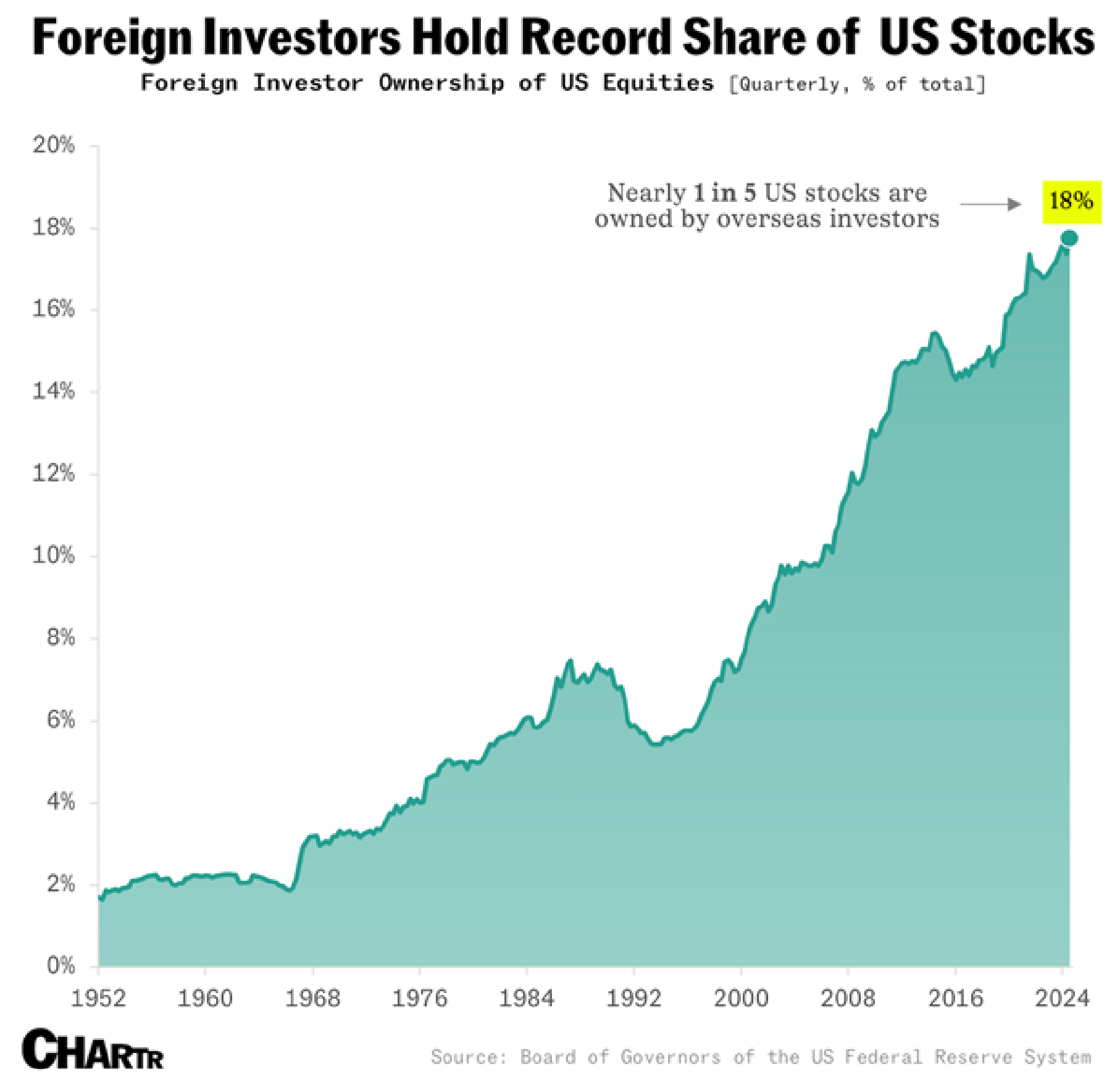
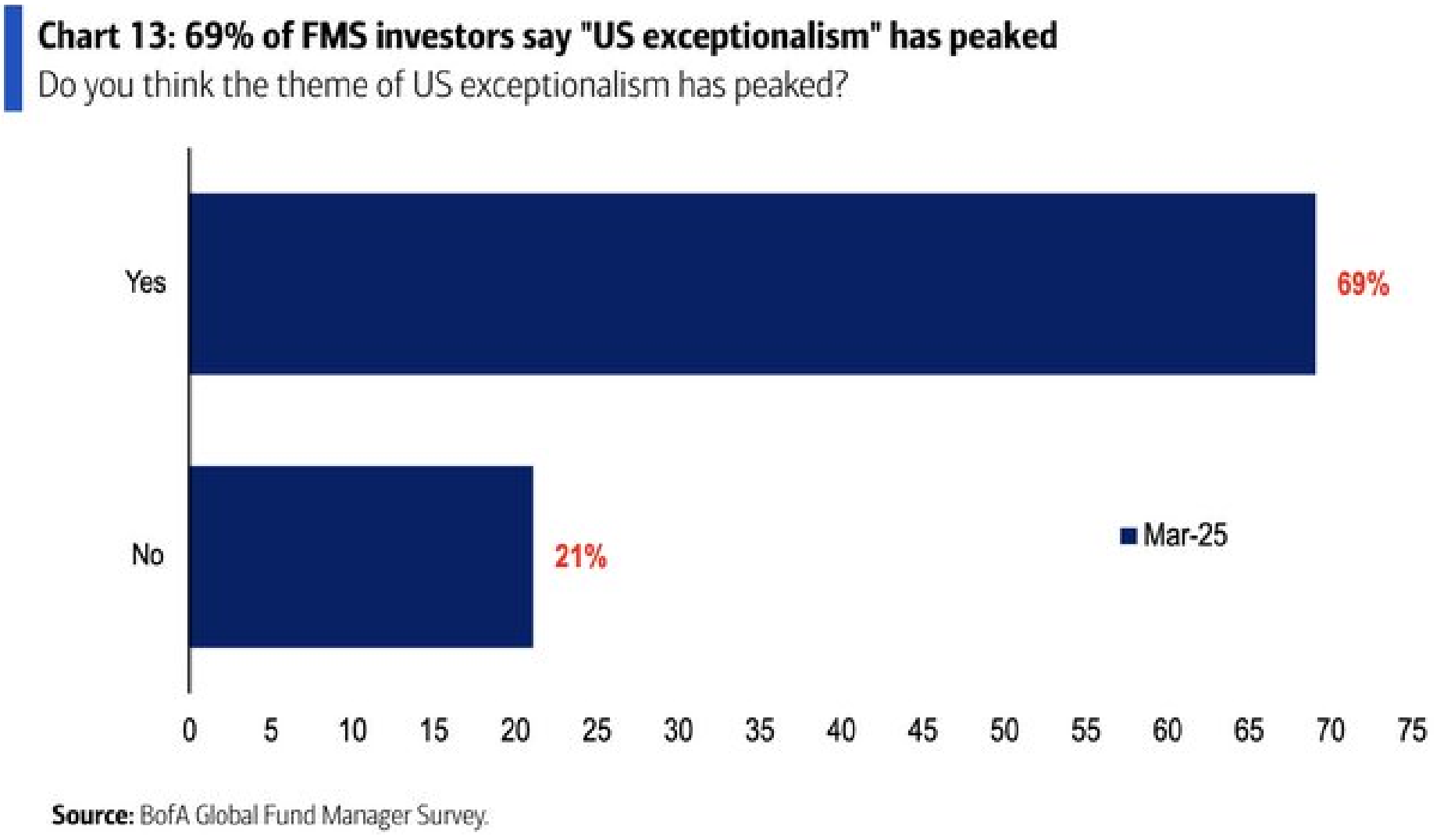
As global fund managers declare the end of American exceptionalism, citizens outside the U.S. are pouring record amounts of money into U.S. equities. An interesting contrast.
The people who actually live and work in these countries appear to be voting—with their pocketbooks and their paychecks—for continued confidence in the American economy.
To be fair, this chart has flashed a potential top for U.S. stock outperformance in prior cycles. So yes, a rotation to international equities may be due. But let’s keep perspective: shifting toward cheaper global assets is very different from declaring the end of American exceptionalism.
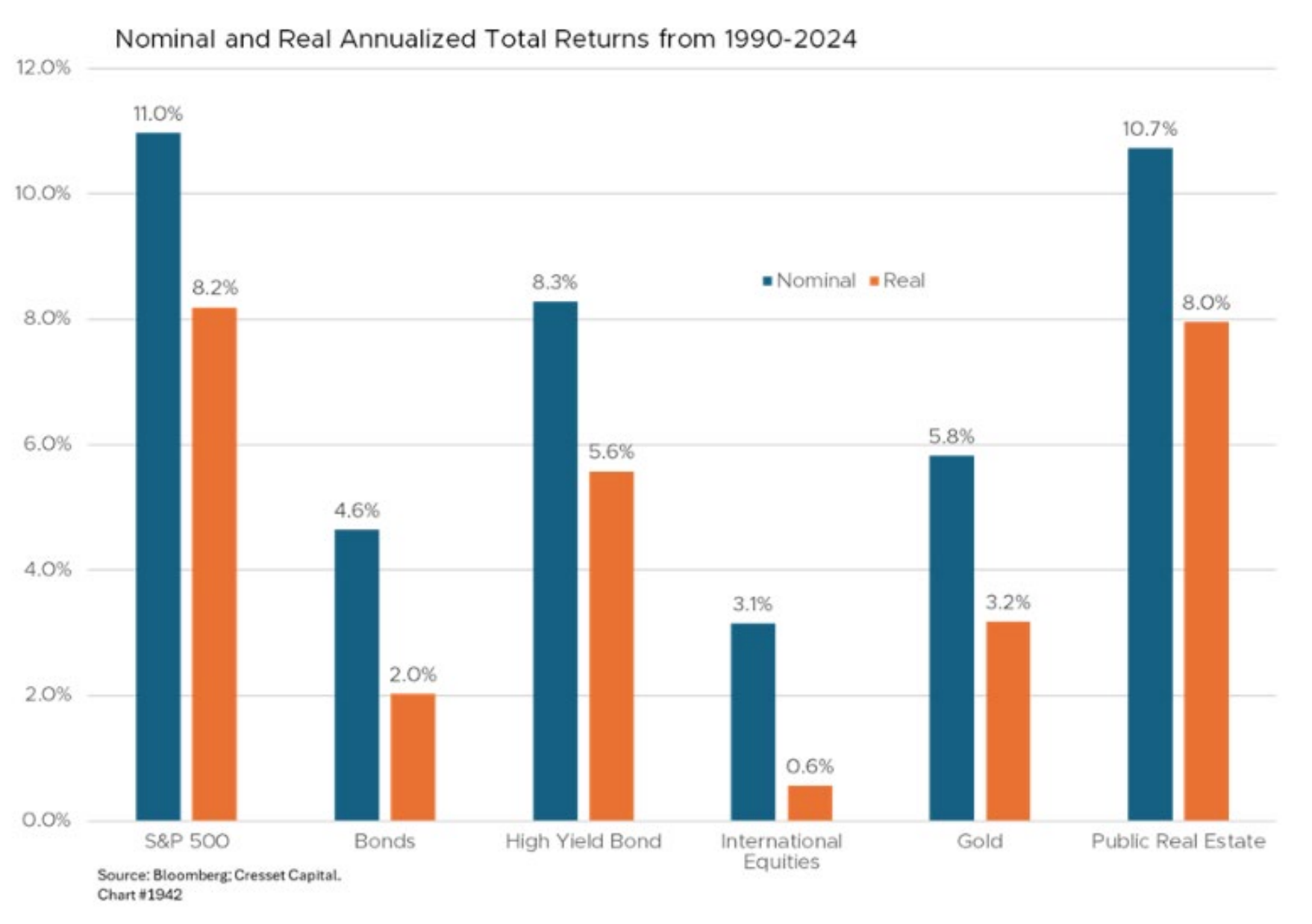
At its core, investing is about simple math: how much did your portfolio return after inflation? As shown in the chart below, over the past 35 years, U.S. equities have not only outpaced inflation—they’ve trounced international stocks. Real returns tell the story. While international equities barely kept up with inflation, U.S. stocks delivered +8.2% annualized above the inflation benchmark.
This is a societal and economic time bomb.
As mentioned in the introduction, the nonstop availability of trading apps, online gambling, crypto speculation, and explicit content has created a toxic environment for many young American men. Traditional forms of learning—books, newspapers, thoughtful debate—have been replaced by algorithm-driven social media feeds that either reinforce existing beliefs or amplify feelings of inadequacy. It’s a deeply troubling dynamic, and frankly, a cultural mess.
From WSJ Joseph Bottum:
“College students can’t read. Not a whole book, not with attention all the way through. Or so we’ve been told repeatedly over the past year. Articles in the *Atlantic*, the *Chronicle of Higher Education* and *Psychology Today* have reported the end of book-reading on campus—and so the end of what college was once imagined to provide: the art, history and philosophy that give the mind the mental furniture it will need in adulthood. ‘Most of our students are functionally illiterate,’ one widely noticed professor put it, ‘unable to read and comprehend adult novels.’”
Scott Galloway is one of the few public intellectuals willing to talk openly about it.
— Explore more: Prof G Media
Leveraged loans are up 50 percent since 2015
Leveraged loans, which are issued by overleveraged companies with insufficient cash flows, are part of what Wolf Richter recently called the “gigantic pile of risky corporate debt that is now being brutally repriced as concerns over credit risk (the risk of default) are finally bubbling to the surface.” According to Richter, the S&P/LSTA US Leveraged Loan 100 Index, which tracks the prices of the largest leveraged loans, has plunged by 20 percent since February 22nd.
According to Richter, leveraged loans “are traded in slices like securities or are packaged into highly rated Collateralized Loan Obligations (CLOs). But for years, investors had the hots for them, driven by their relentless chase for yield, in a world of interest rate repression.”
These companies, noted Richter, were often acquired by private equity firms through leveraged buyouts, which means they loaded up those companies with lots of debt. In addition, “PE firms extracted special dividends from their companies,” which were funded by leveraged loans. That’s a form of asset stripping and it leaves the company “more leveraged, more precarious and more likely to topple. But who cares? Those were the good times and the chase for yield was on,” lamented Richter.
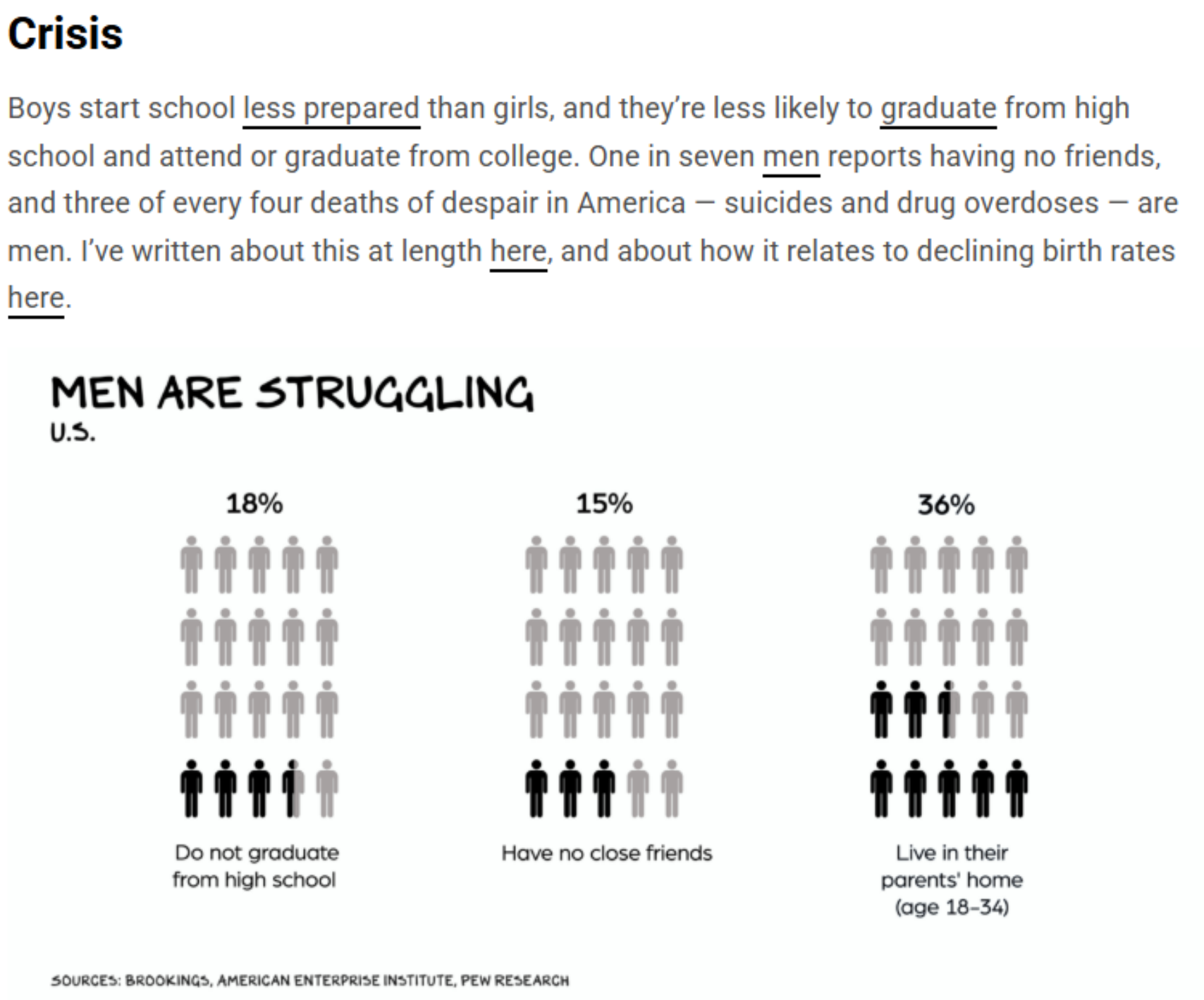
2. The Crisis Among Young American Males
Scott Galloway (Prof G) has covered this topic extensively, and after consuming all his podcasts and reading multiple books on the topic, it will leave you depressed, but I’d rank it among the top three threats to American exceptionalism.
His research is both eye-opening and alarming.
• In five years, we’ll have two women in college for every one man
• There are already 1 million more women than men in graduate programs
• Only 23% of young males are eligible for military service without a waiver, even less show a propensity to enlist: Military Readiness Data – U.S. Department of Defense
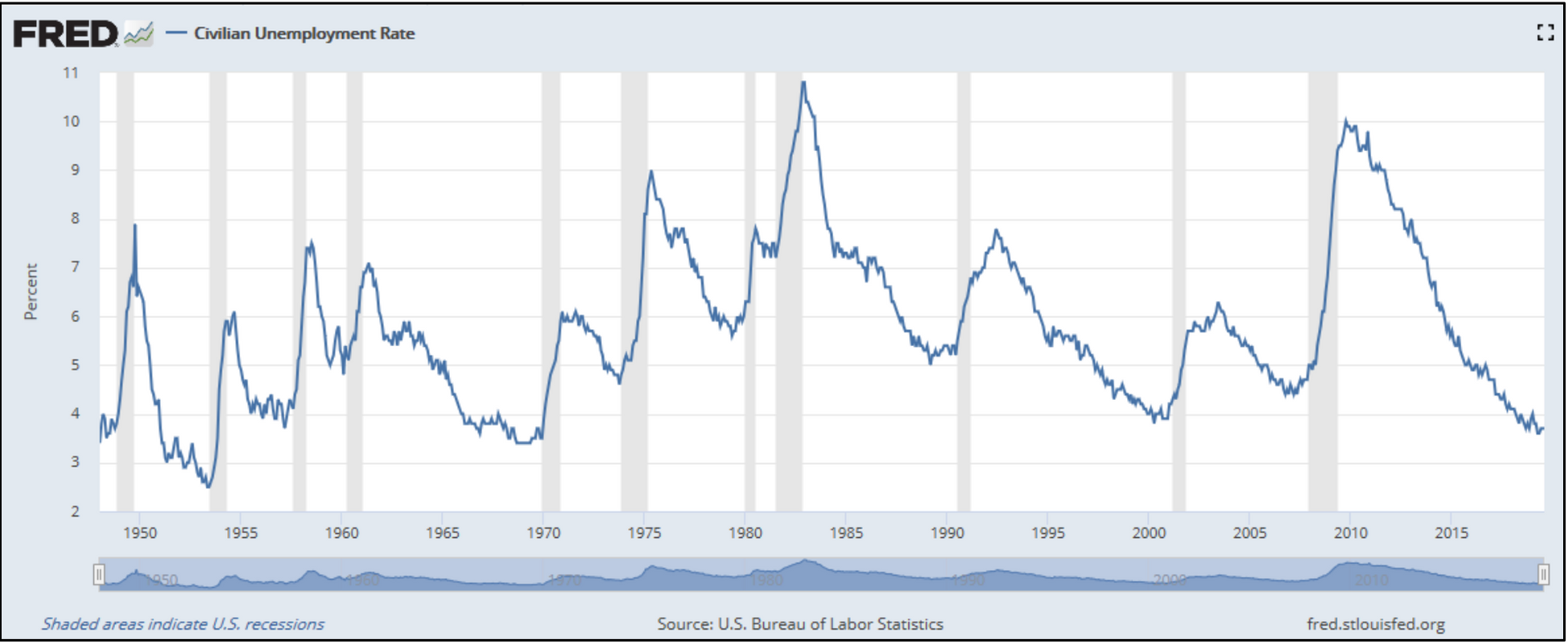
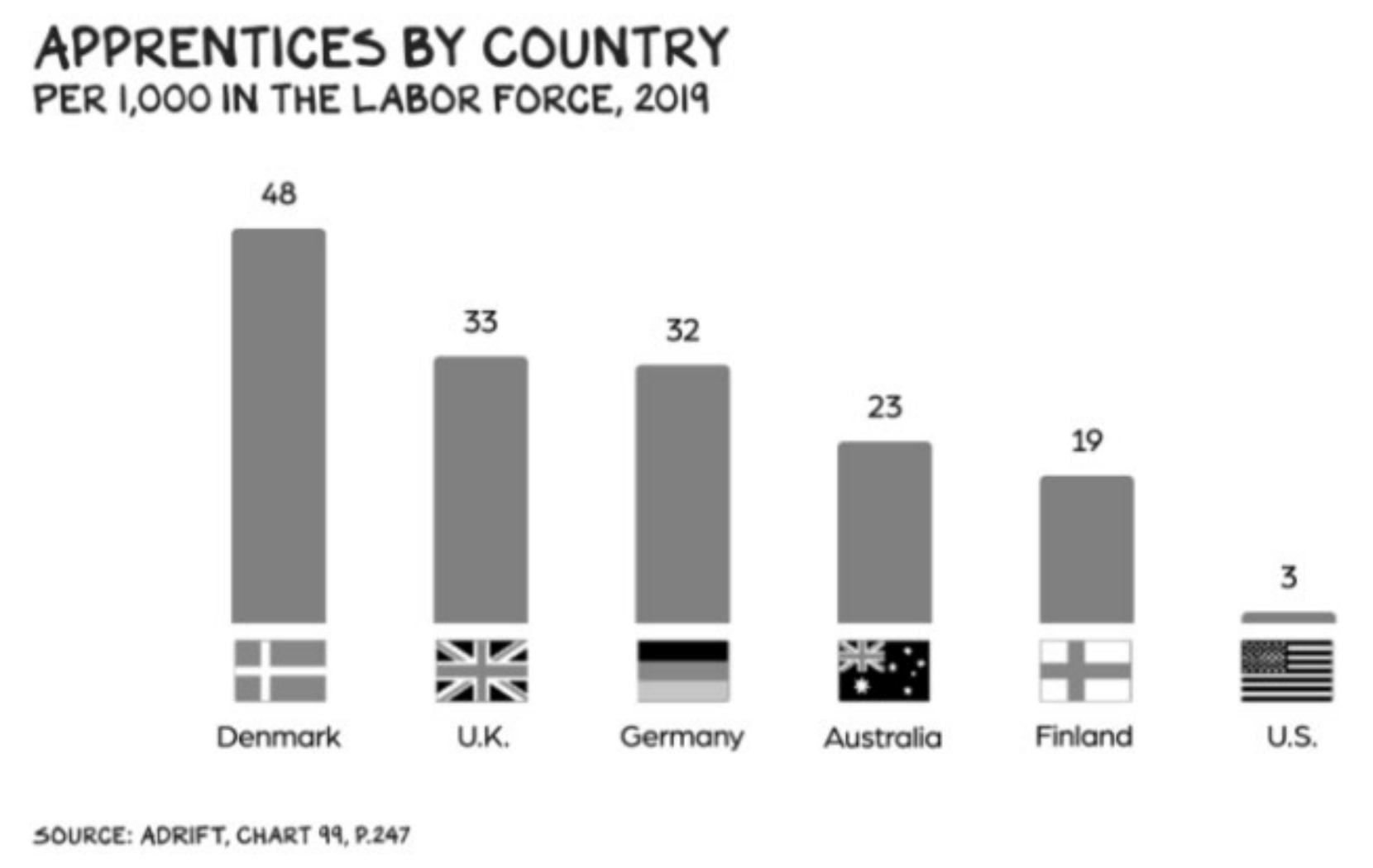
• We're facing widespread labor shortages in police, fire, construction, and skilled trades
Disclosures
Lansing Street Advisors, LLC is a registered investment advisor with the State of Pennsylvania. You can read more about the Lansing team at http://www.lansingadv.com/
To the extent that content includes references to securities, those references do not constitute an offer or solicitation to buy, sell or hold such security as information is provided for educational purposes only. Articles should not be considered investment advice and the information contained within should not be relied upon in assessing whether to invest in any securities or asset classes mentioned. Articles have been prepared without regard to the individual financial circumstances and objectives of persons who receive it. Securities discussed may not be suitable for all investors. Please keep in mind that a company’s past financial performance, including the performance of its share price, does not guarantee future results.
Material compiled by Lansing is based on publicly available data at the time of compilation. Lansing makes no warranties or representations of any kind relating to the accuracy, completeness or timeliness of the data and shall not have liability for any damages of any kind relating to the use of such data.
Material for market review represents an assessment of the market environment at a specific point in time and is not intended to be forecast of future events or guarantee of future results.
Indices that may be included herein are unmanaged indices and one cannot directly invest in an index. Index returns do not reflect the impact of any management fees, transaction costs or expenses. The index information included herein is for illustrative purposes only.
The trademarks and service marks contained herein are the property of their respective owners.
Lansing Street Advisors is a registered investment adviser. Information presented is for educational purposes only and does not intend to make an offer or solicitation for the sale or purchase of any specific securities, investments, or investment strategies. Investments involve risk and, unless otherwise stated, are not guaranteed. Be sure to first consult with a qualified financial adviser and/or tax professional before implementing any strategy discussed herein. Past performance is not indicative of future performance.
Lansing Street Advisors may discuss and display, charts, graphs, formulas which are not intended to be used by themselves to determine which securities to buy or sell, or when to buy or sell them. Such charts and graphs offer limited information and should not be used on their own to make investment decisions.
The core of the “end of American exceptionalism” thesis centers on President Trump’s geopolitical agenda. At Lansing Street Advisors, we make every effort to steer clear of political commentary—and as stated in past letters, we firmly believe politics should not drive portfolio decisions.
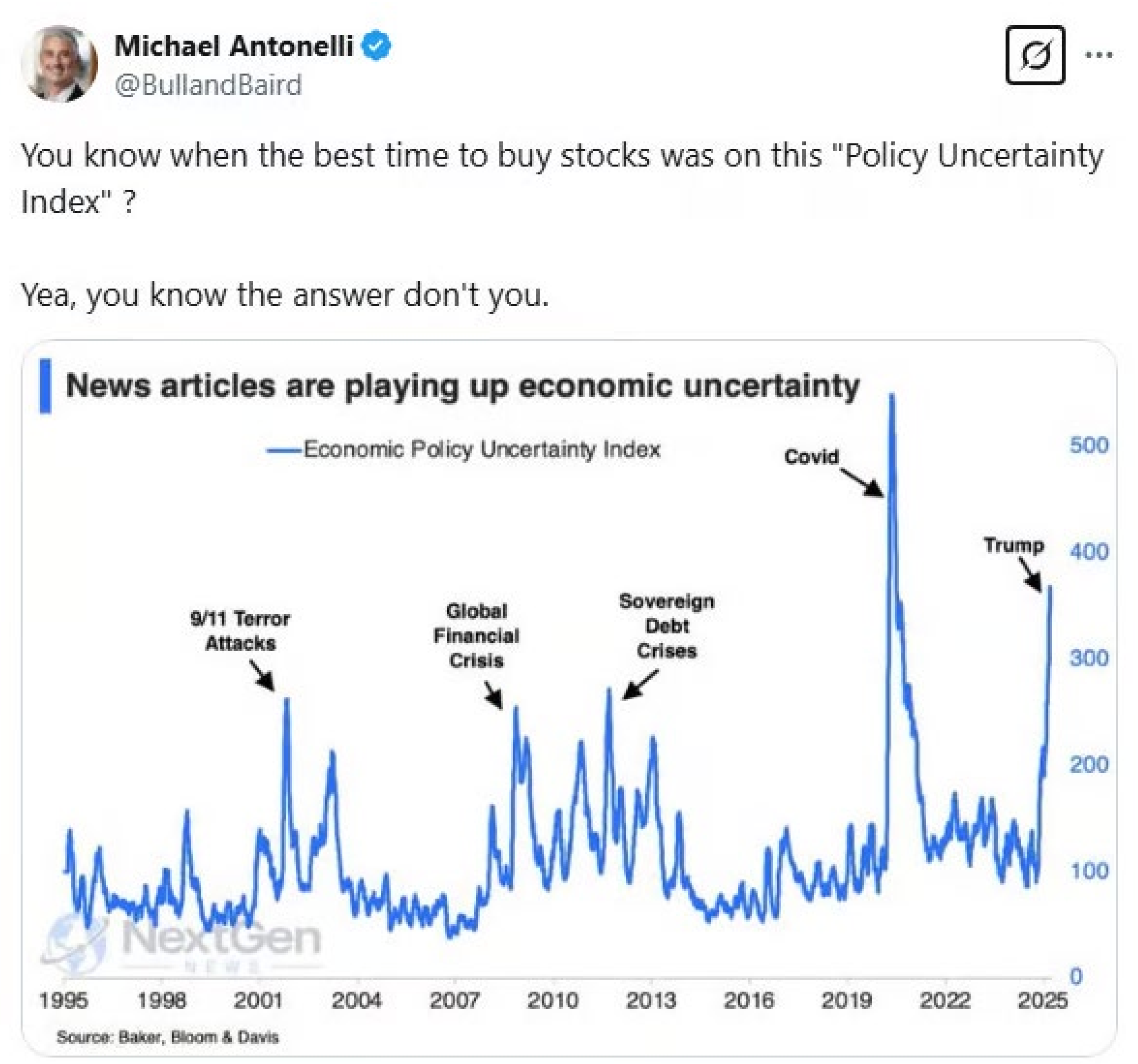
That said, Q1 2025 delivered a spike in policy uncertainty that nearly rivaled COVID-era levels. The chart below shows a key takeaway: historically, days of political turmoil have often turned out to be strong buying opportunities.
Policy uncertainty is currently higher than it was after 9/11 and during the 2008 financial crisis. That may seem excessive—but as always, perception often depends on political affiliation. What’s more extreme, in our view, is the idea that this moment marks the end of American exceptionalism.
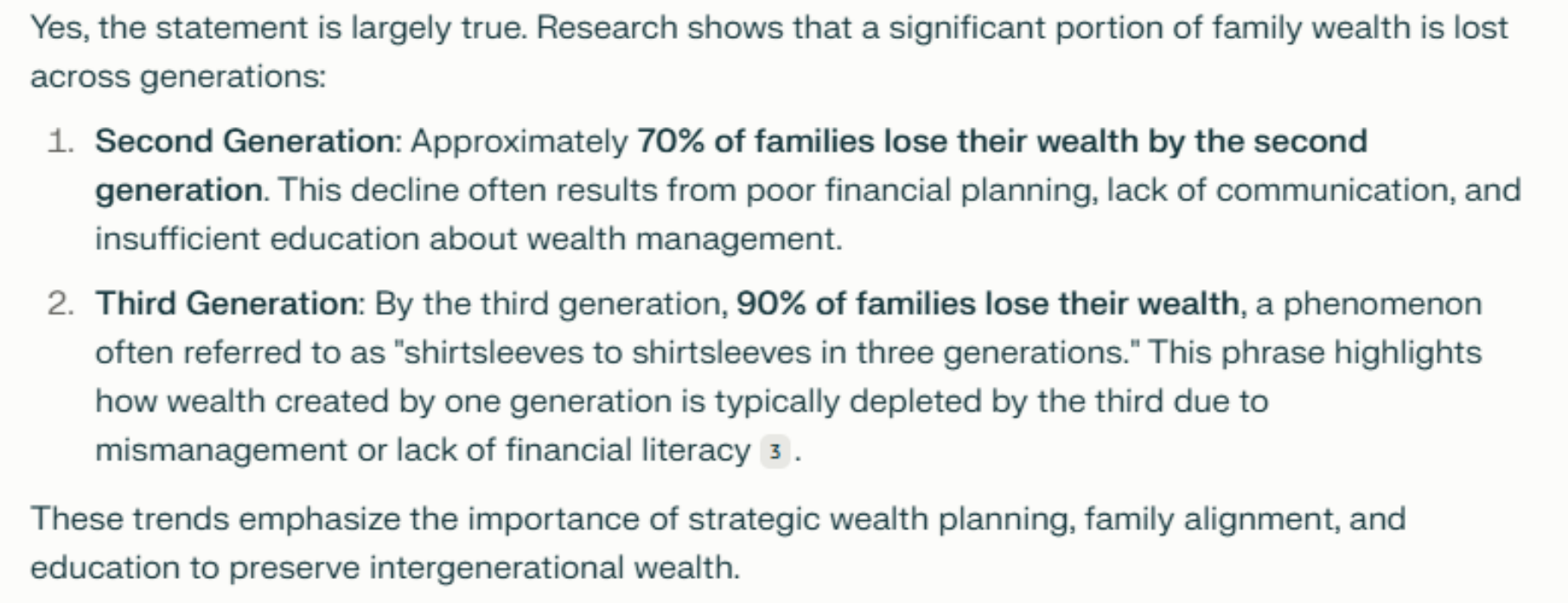
70% of families lose their wealth by the second generation. 90% by the third.
Source: @CharlieBilello
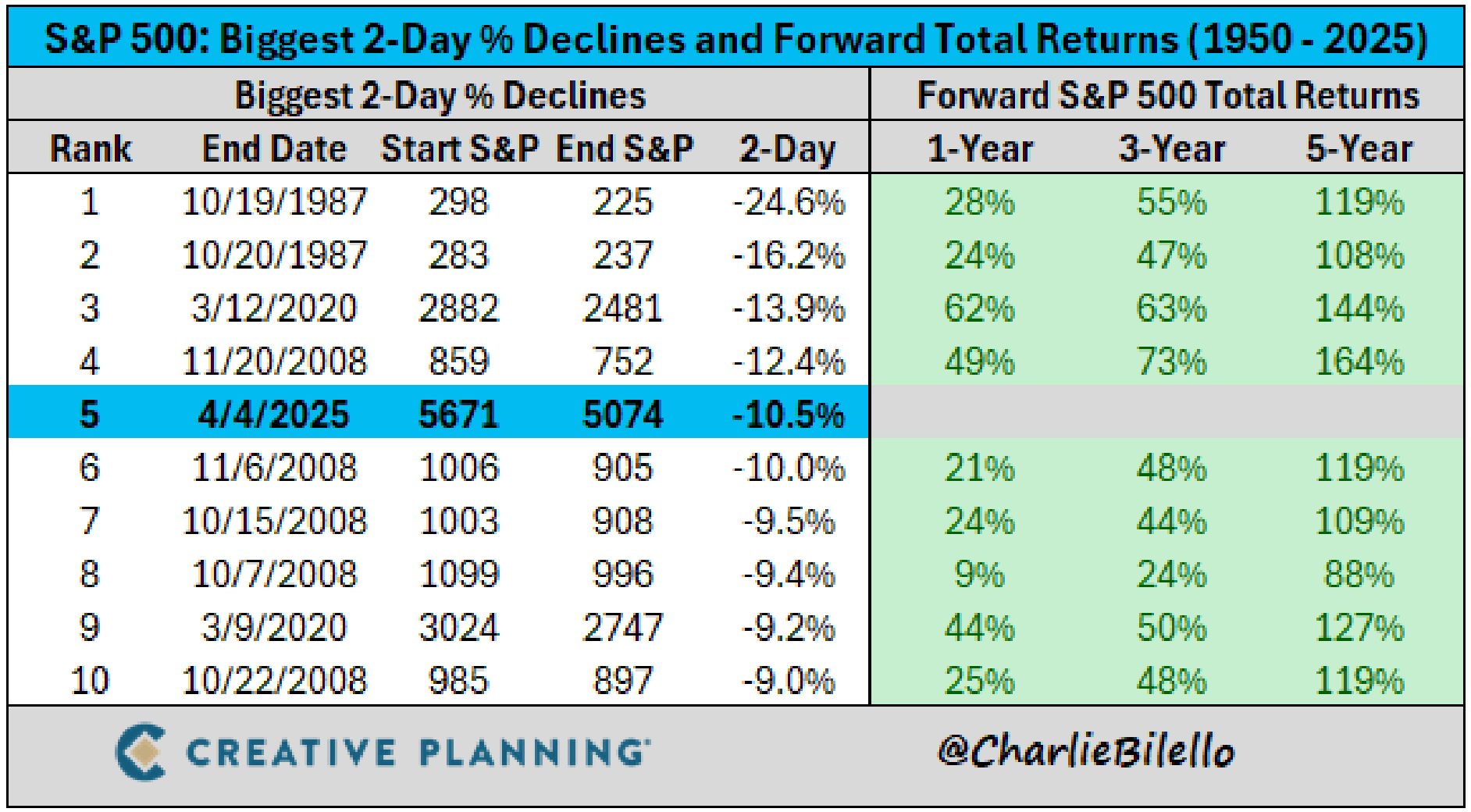
Case in point: the S&P 500 dropped 10.5% over a two-day stretch (Thursday–Friday), marking the fifth-largest two-day decline since 1950. What’s happened after similar selloffs? Every time, stocks were meaningfully higher 1, 3, and 5 years later.
Part III. Diversification
At Lansing Street Advisors, we remain firm believers in diversification—no matter how painful that conviction was during the Mag 7 rally. No one knows exactly how this chaos will unfold. The economy can’t be forecasted or timed with precision. If anything, that truth has only become more obvious in recent months.
So, what do we know?
1. Diversified portfolios win over the long term.
2. U.S. equities consistently outperform inflation. The best companies adapt and thrive—even when we don’t know exactly how they’ll do it.
3. The market corrects by 10–15% nearly every year.
4. Recessions are typically short, while bull markets are long.
5. Dollar-cost averaging and buying during panic periods have historically added excess returns.
Diversified portfolios finally showed their strength in Q1 2025, after being left in the dust from 2022–2024 by the Mag 7. As I noted in last quarter’s letter (and yes, a rare repeat appearance of a chart in these pages), international equity valuations are still at historic lows.
Yes, international stocks are outperforming in 2025—but let’s not overstate it. Many are now back in the red for the year. And as a reminder from my last letter: the state of Mississippi has a higher GDP per capita than France, the UK, Italy, and Japan. Does that sound like the end of American exceptionalism?
If international equities are going to sustain a rally, it will likely hinge on the U.S. dollar continuing to weaken. That’s a real possibility, especially given Trump’s stated preference for a weaker dollar. But make no mistake—the bull case for international stocks is about currency trends, not the decline of America.
Valuations have become more reasonable—thanks in large part to the sharp market selloff following Trump’s surprise tariff announcement. As seen in the chart below, periods of panic selling in U.S. equities have historically been followed by strong forward returns.
Especially important, none of the above are a recommendations for you to buy or sell any security. This is for information purposes only. Please talk with your advisor regarding any advice around the subject matter and your goals.
Is Europe going to dismantle its welfare state overnight and become a fast-growth, entrepreneurial juggernaut within a year? Will European couples suddenly start having five or six children and erase decades of demographic decline?
Unlikely.
Wasn’t China supposedly reverting to full Communism just a short time ago? Now, it’s already in recession. Youth unemployment is over 20%, and the country remains deeply dependent on exports—exports that are increasingly vulnerable to the latest tariff shock. Some analysts believe that sustained pressure could tip key parts of China’s economy into crisis.
And what about the rest of Asia? China, South Korea, and Japan are all facing steep declines in working-age populations within the next two generations. There is no easy “growth switch” for these economies to flip.
Even the New York Times highlights the tough choices ahead in Europe, where economic stagnation and political instability make rapid transformation difficult. As the article puts it:
“Economies are stagnating, governments are unpopular and efforts to keep the far right out of coalition governments are barely holding. Now, as critics see it, leaders want to spend money containing Russia instead of helping their citizens.
In Britain, Starmer plans to increase military spending from 2.3 percent of the economy today to 3 percent early in the next decade. At the same time, he plans to cut Britain’s annual welfare bill by some five billion pounds (about 6.5 billion dollars) a year. It’s a risky proposition after the economy shrank in January and at a time when the hard-right Reform U.K. party is snapping at Labour’s heels in some working-class regions. British voters say welfare spending is more important than military spending.
‘Welfare Not Warfare,’ read a banner at protests last week.
“I could end the deficit in five minutes. You just pass a law that says that anytime there is a deficit of more than 3% of GDP all sitting members of congress are ineligible for reelection.”
– Warren Buffett
After 16 years of S&P-led global stock market domination, U.S. exceptionalism just hit a wall—in a matter of 30 days. That was fast. Two and a half centuries of leadership now seem to be in question. Has America really become the global Wayward Son overnight?
Donald Trump hit the red button—his aggressive tariff policy surprised even his strongest critics. Then he hit the yellow button. For those who believe no one can predict markets, this year is testing that theory to the extreme.
The complex and opaque math behind these “Liberation Day” tariffs has only added to market volatility. The reciprocal calculus is unclear to almost everyone. The U.S. exports services and imports goods—no one truly knows how this wave of tariffs will ripple through that imbalance.
Part I. Is American Exceptionalism Over?
“We always live in an uncertain world. What is certain is that the United States will go forward over time.”
— Warren Buffett
According to the latest Global Fund Manager Survey (FMS), institutional investors believe the era of American exceptionalism is ending—after 16 years of U.S. equity outperformance over international markets. We'd argue it's more like 250 years of exceptionalism, with extra credit for the post-WWII era.
That said, let’s remember who’s voting here: the same fund managers who projected double-digit gains for the S&P in 2022 (it fell 19%) and predicted a decline in 2023 (it gained 24%). These are also the same voices that once championed Trump-era tax cuts and deregulation—now declaring the U.S. a Wayward Son.
Yes, this moment feels different. Trump is unlike anything we've seen in our lifetimes, but so was everything below:
1. 9/11 – Markets closed for a week, then reopened down 15%.
2. 2008 – We were 24 hours from widespread bank failures.
3. Covid – The entire world locked down.
And if we’re going back further: World Wars I and II, the Great Depression, the Cold War, and the fall of communism—all periods of extreme uncertainty and yet, each time, the U.S. moved forward.

Conclusion
It’s long overdue for asset classes outside of large-cap U.S. growth stocks to have their moment. International equities, for example, are trading at a significant discount relative to their U.S. counterparts.
That said, continued outperformance in non-U.S. assets depends heavily on two factors: a weaker U.S. dollar and the American economy avoiding recession. Tariffs or no tariffs, the global economy can’t decouple from the U.S. overnight.
So let’s pump the brakes on the “end of American exceptionalism” narrative. It may make for an engaging academic debate, but in the real world, betting against the U.S. economy has been a losing proposition. Can we have a recession? Of course. But it’s worth noting that we haven’t experienced a “traditional” recession in over 30 years—just major shocks like the internet bubble, 9/11, the global financial crisis, and Covid.
And each time, American companies adjusted. How? I have no idea—but they always do. The downturns are getting shorter. The bull markets are lasting longer. Resilience, reinvention, and resourcefulness continue to define the American economy.
As I wrote at the start of the year, 2025 promised to be “one hell of an interesting year.” We’re only three months in, and so far, it’s delivered. I woke up this morning to an executive order aimed at “making American showers great again”—a literal effort to stop “wimpy showers.”
In the end, the real threats to American exceptionalism aren’t what you see on your news feed—they’re structural:
• Managing the largest wealth transfer in our nation’s history.
• Addressing the growing crisis among young American men.
• And maintaining our competitive edge through legal immigration.
Yes, America may be playing the *Wayward Son* role at the moment. But as for the end of American exceptionalism? I’d say: “Don’t you cry no more.”
Carry on My Wayward Son
Song by Kansas
Carry on my wayward son
For there'll be peace when you are done
Lay your weary head to rest
Don't you cry no more

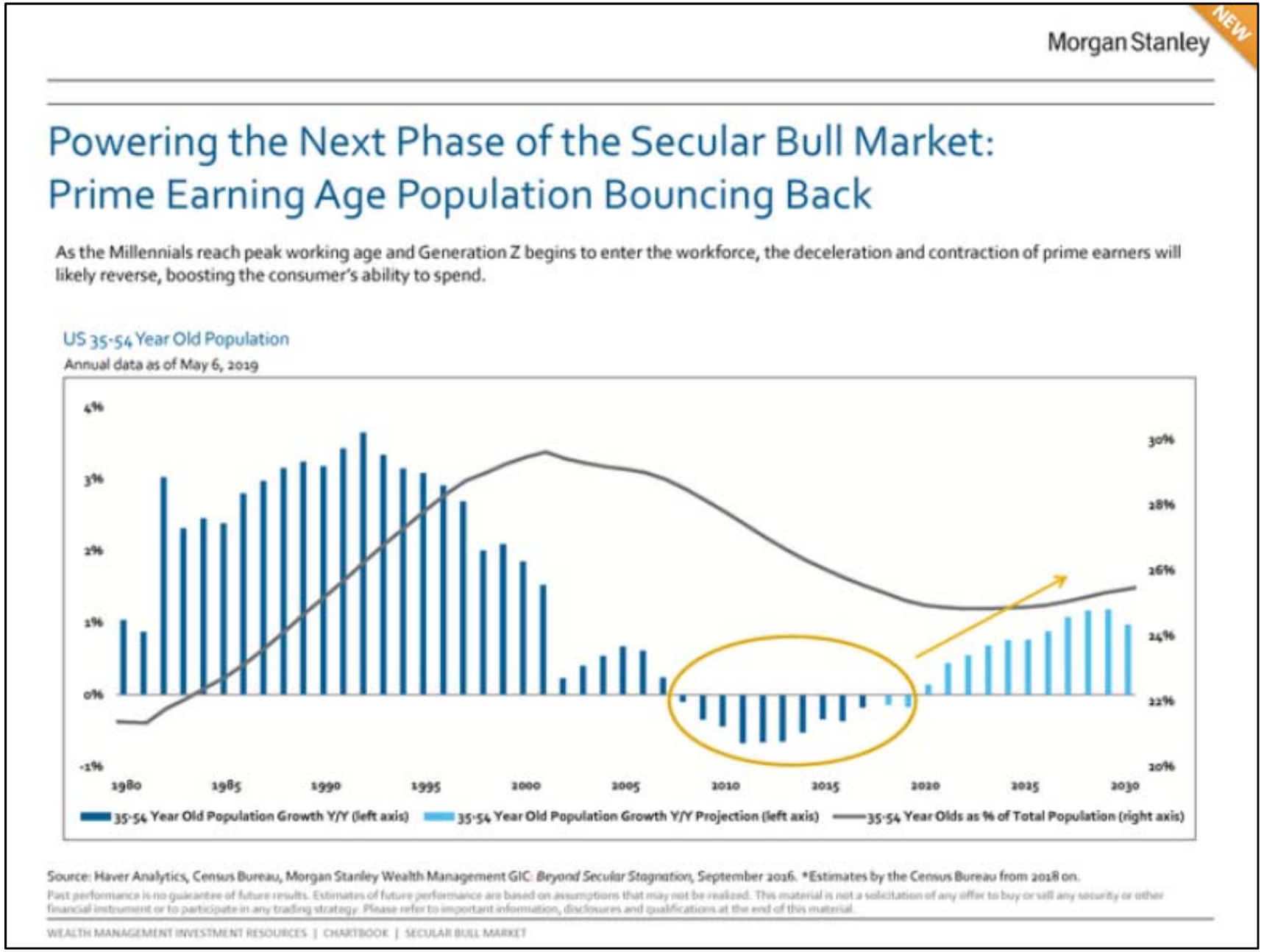
3. Demographics
If you want to understand a country’s long-term growth trajectory, look at its population trends. Demographics have immense predictive power. Without population growth, sustained economic growth becomes incredibly difficult.
In my Q3 2024 letter, I covered the demographic collapse of China and Russia. Japan, South Korea, and much of Europe are in similar decline.
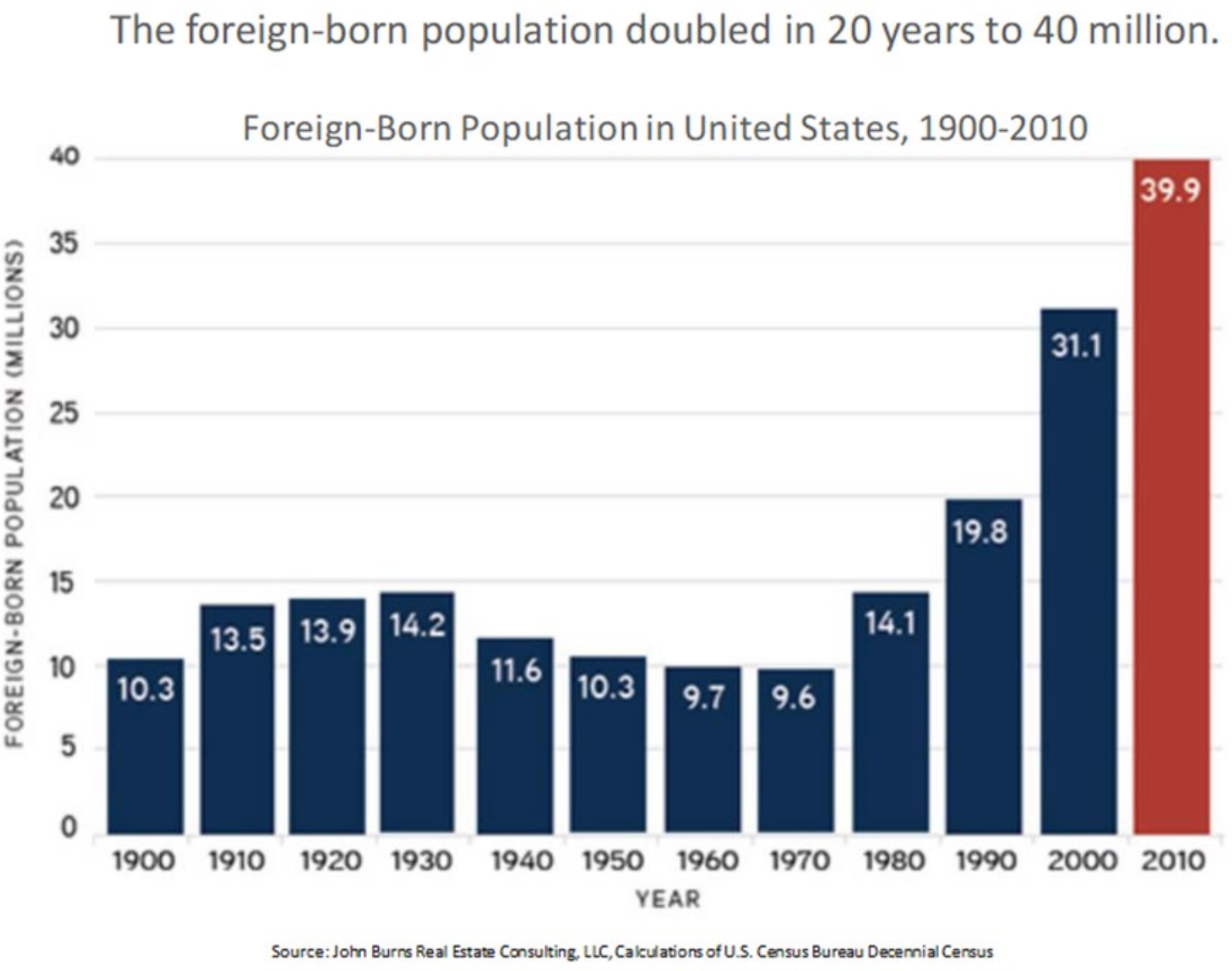
The U.S. has one key advantage: legal immigration—but only if it’s managed well.
Legal Immigration Stats:
• 25% of U.S. doctors are immigrants.
• 25–30% of construction workers are immigrants.
• 25% of entrepreneurs are immigrants.
• Incarceration rate of legal immigrants is 74% lower than native-born Americans.
Source: Perplexity AI
America’s economic edge is rooted in its identity as a nation of immigrants. We boomed post-2008 alongside population growth fueled by immigration. If we mismanage this advantage, we risk joining the rest of the world in demographic decline—and that would pose a far greater challenge to American exceptionalism than any headline about tariffs or TikTok.