Introduction
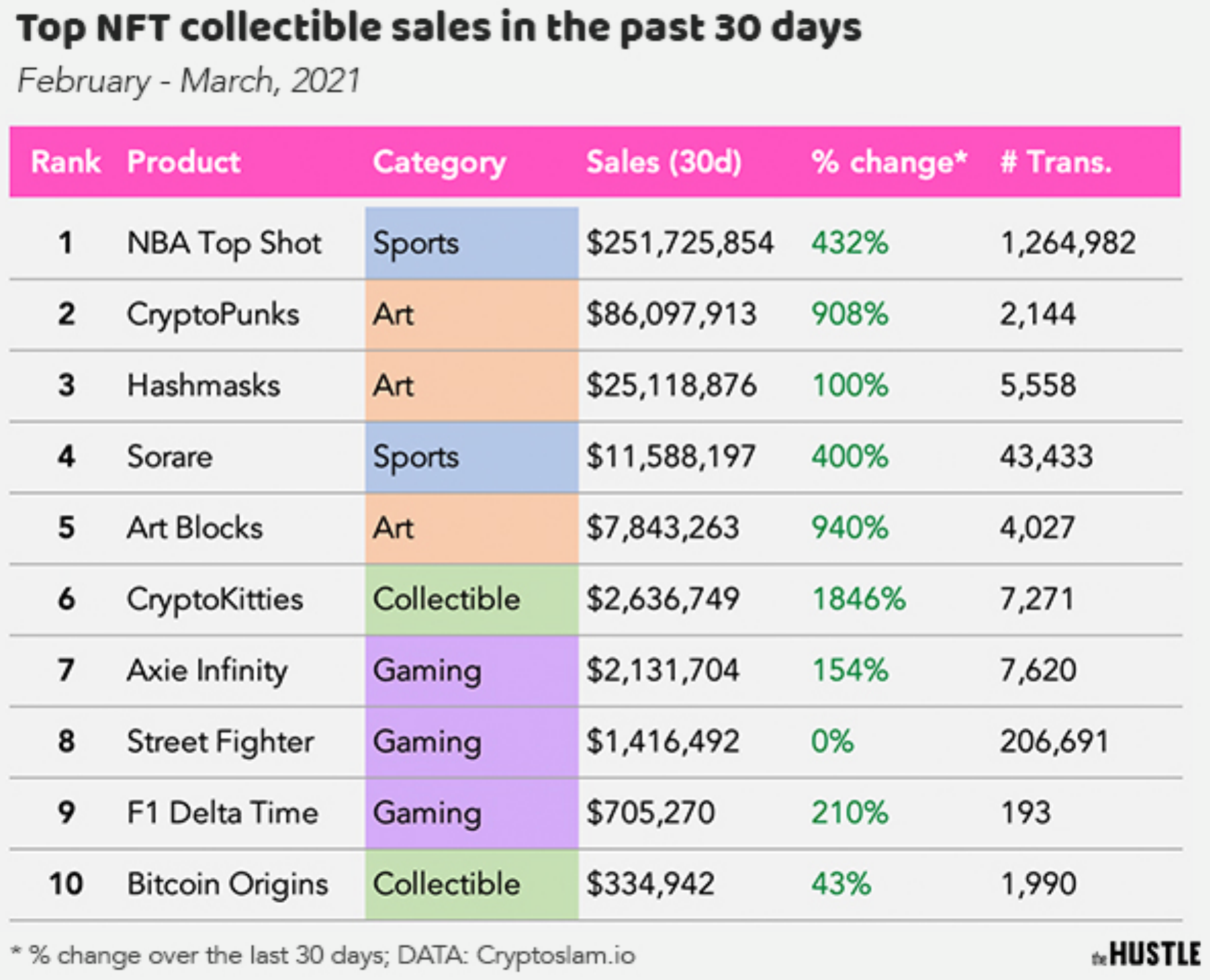
They Did It…Affleck and Damon Win…Historical Market Top Tick. Matt and Ben may wish they were fisherman after the first half market returns following their Super Bowl ads encouraging the world to embrace speculative assets. Dicey assets like crypto, meme stocks, disruptor stocks, and options trading were wiped out shortly after these two Hollywood philanthropists got paid hard cash for their Super Bowl commercials.
What are Matt Damon and Ben Affleck even doing in commercials? Stick to movies about Boston and the world is much better off. Please no more Middle Ages movies either, “The Last Duel” was awful.
In the classic Good Will Hunting Harvard bar scene, the song playing in the background is Fisherman Blues. Right now, Matt and Ben should go on a long fishing trip, write a movie based in Boston and give up cheesy commercials on a permanent basis.
I am Shipping up to Boston - Dropkick Murphy’s
I am shipping up to Boston whoa
I am shipping up to Boston whoa
I'm shipping up to Boston whoa
I'm shipping off...to find my wooden leg
https://www.slideshare.net/EthosEvents/dr-vi-sharon-ocin22
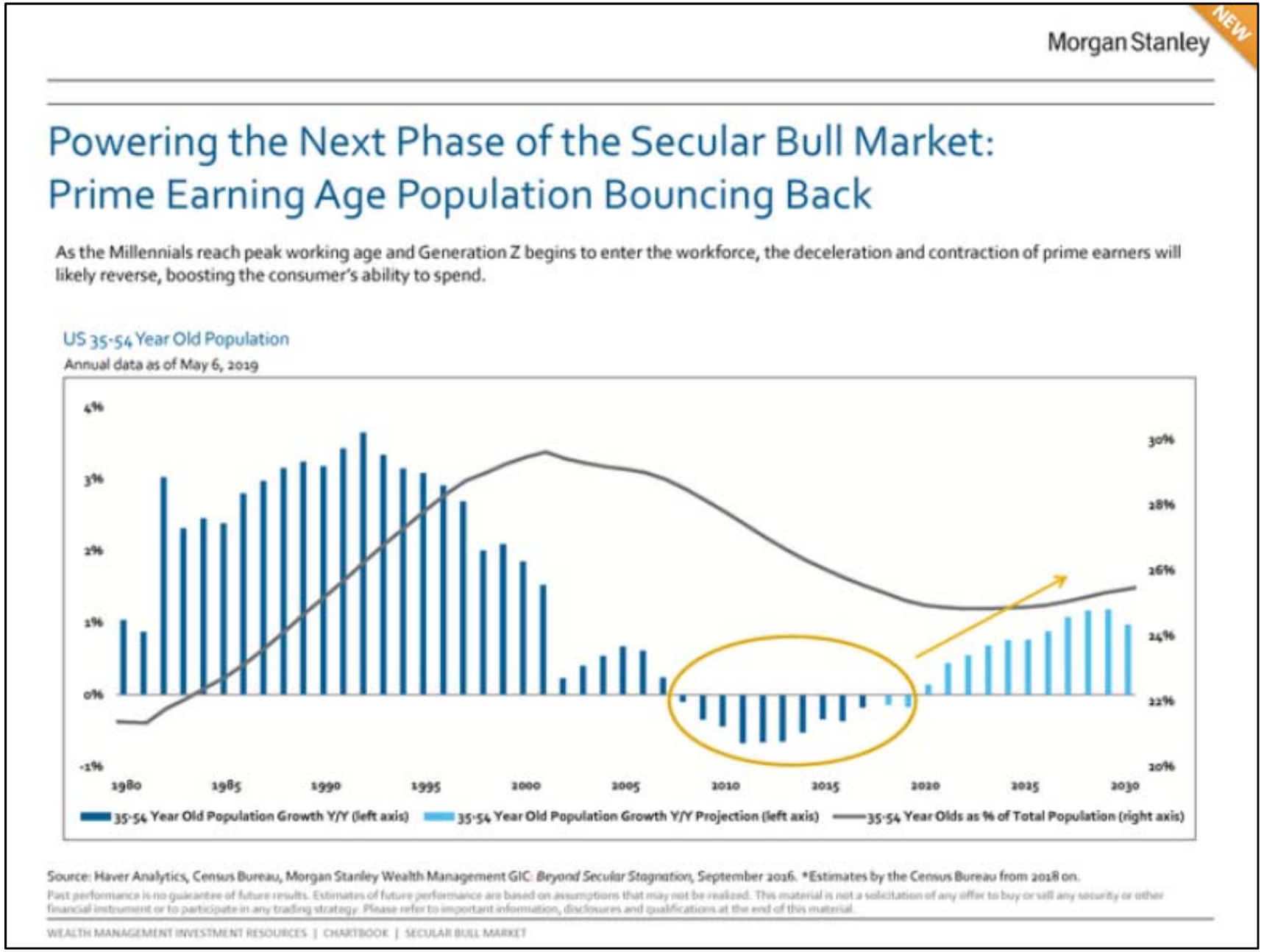
Part III - Good News for Millennials and Boomers
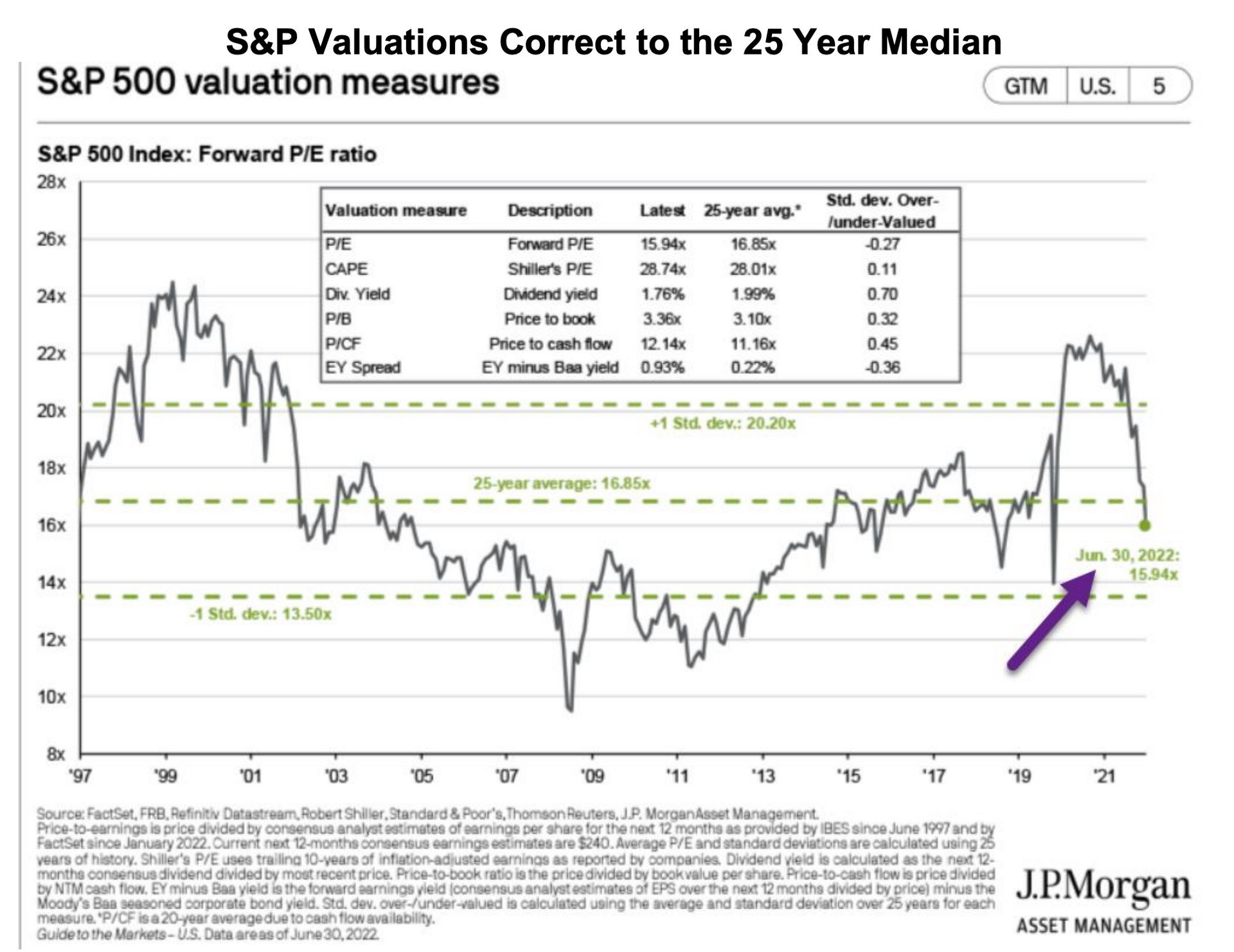
There is good news for the two largest demographic groups in America. For Millennials, stocks may not be cheap, but equities are much less expensive leaving young people in position to be aggressive in your dollar cost averaging. Forward P/E ratios have corrected back below the 25-year median and if you remove the technology sector, the S&P would be close to one standard deviation below median. Again, investing is a psychology game not an IQ game, Millennials should be investing for the next cycle.
STOCKS
-In chart below, the Americans who invested with discipline 2010-2015 experienced huge windfalls of growth by the end of the decade.
S&P Valuations Correct to the 25 Year Median
These probabilistic return assumptions depend on current market conditions and, as such, may change over time.
IMPORTANT: The projections and other information generated by the Vanguard Capital Markets Model regarding the likelihood of various investment outcomes are hypothetical in nature, do not reflect actual investment results, and are not guarantees of future results. Distribution of return outcomes from the VCMM are derived from 10,000 simulations for each modeled asset class. Simulations are as of March 31, 2019. Results from the model may vary with each use and over time.
https://www.freep.com/story/news/local/michigan/2022/06/10/inflation-food-prices/7579055001/
Americans are dazed, weak and unsteady from first inflation bout in 30 years.
On December 7th, 1999, Barron’s published the infamous “What’s Wrong,Warren” cover eerily before the Nasdaq crashed 50% and Berkshire recovered years’ worth of underperformance.
The below graph plots the time period 6/30/98 through 2/29/00 for the Nasdaq where many dot-com and technology stocks traded, and the price of Berkshire Hathaway, Warren Buffett’s holding company, which consisted of value stocks:
https://awealthofcommonsense.com/2022/06/how-long-does-it-take-for-stocks-to-bottom-in-a-bearmarket/
The next chart shows in vivid fashion the advantages of long-term holders aggressively investing during a downturn.
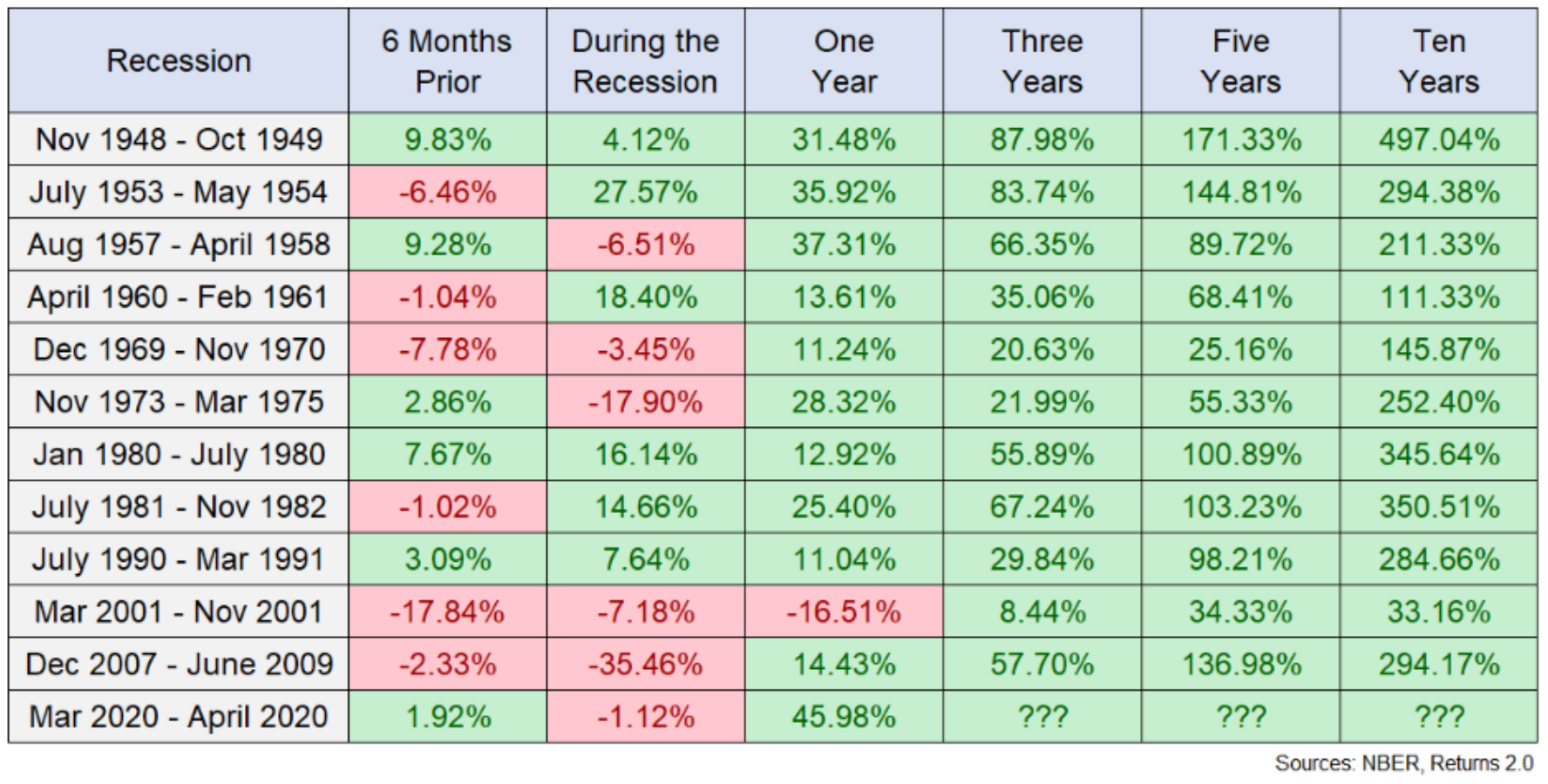
Ben Carlson – Here is a look at every recession since WWII along with S&P 500 returns in the 6 months leading up to the recession, during the actual recession itself and then one, three, five years and ten years from the end of the recession:
https://www.zerohedge.com/economics/gas-prices-squeezing-americans-more-rate-bidens-economy-poor
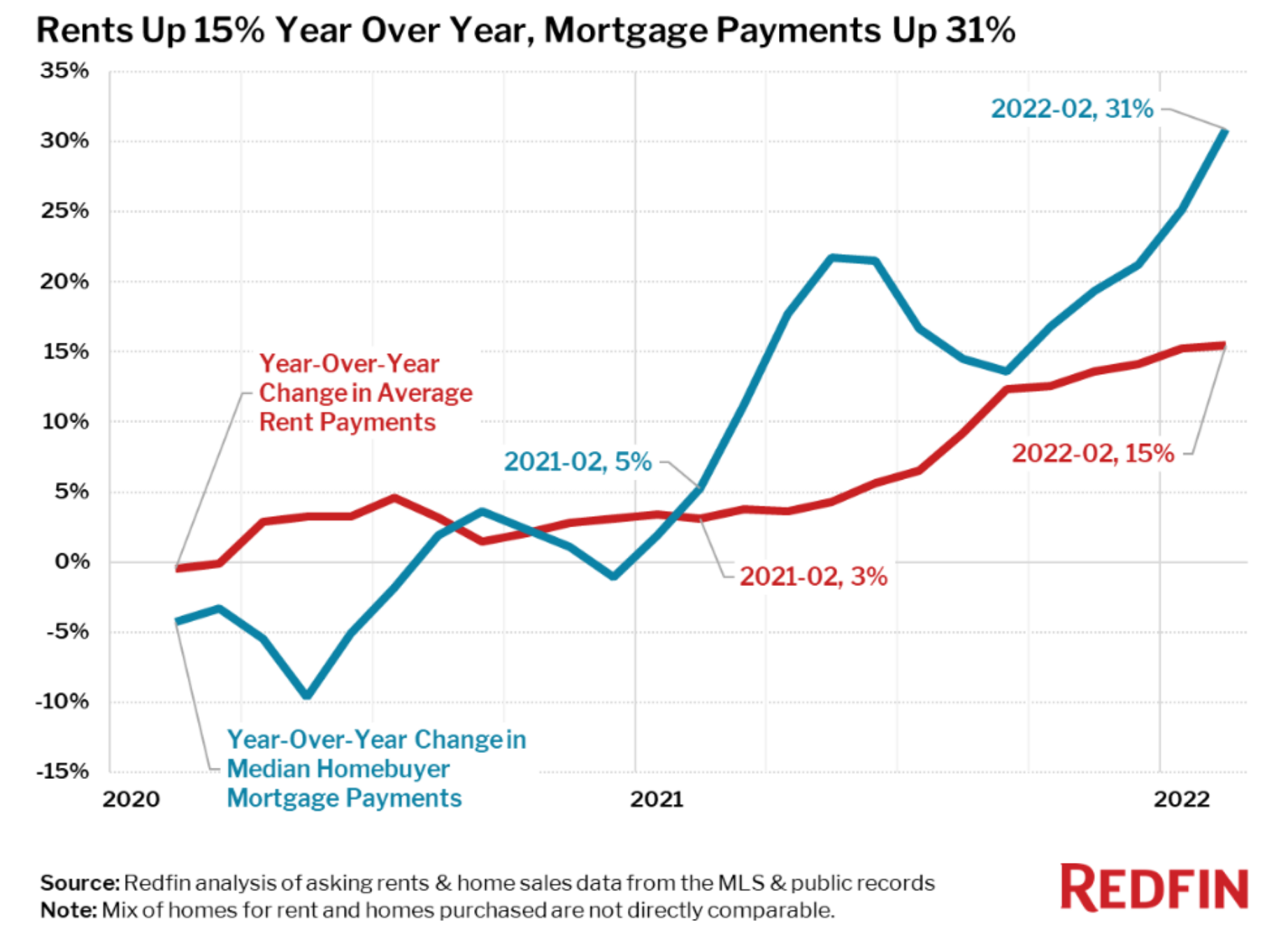
R - Rent and mortgage costs
skyrocketed higher in 2022 with bidding wars happening at mid-level homes and apartments. Rents up 15% and mortgage payments up 31%.
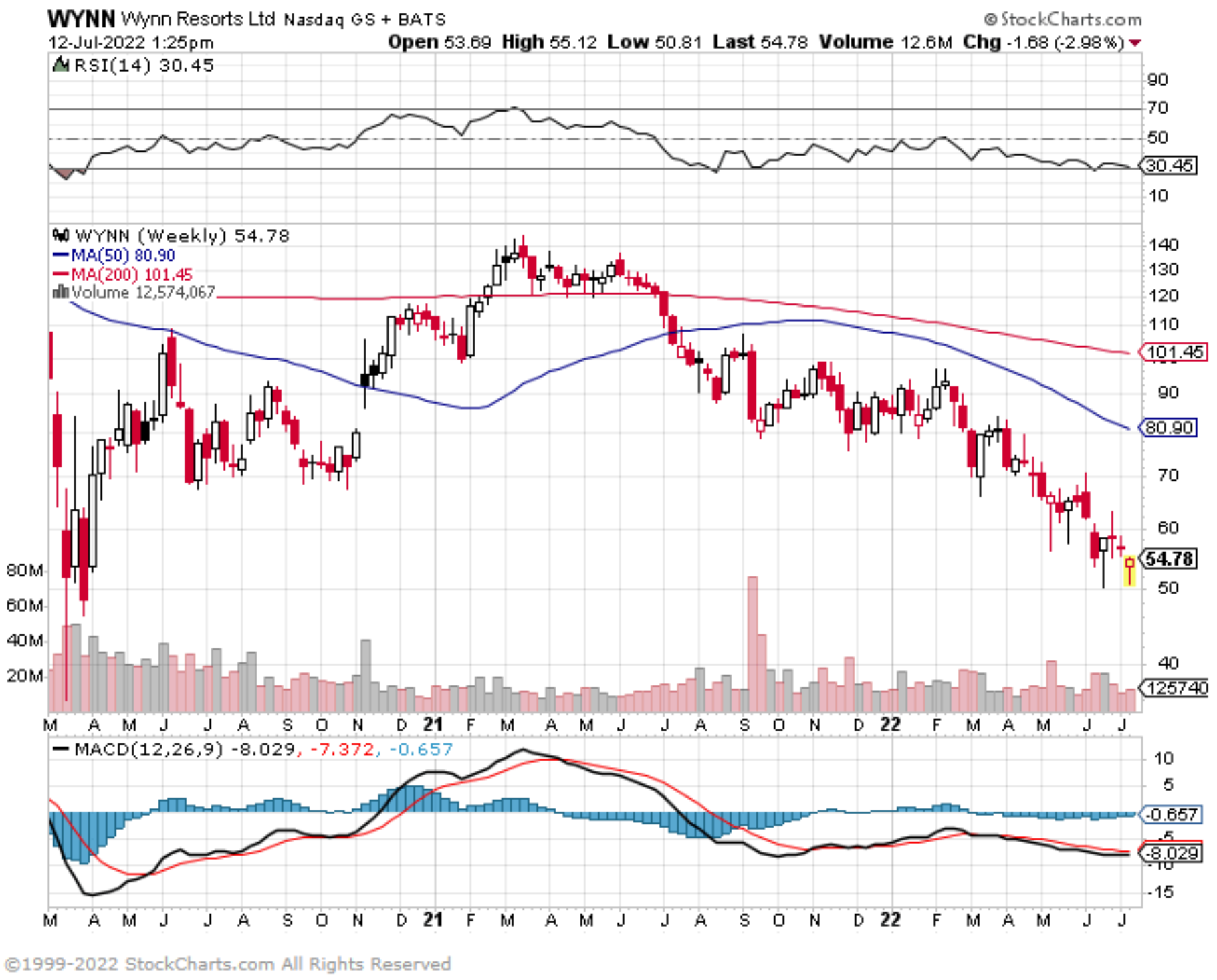
Affleck’s WYNN had -63% Correction from 2021 Highs but more important is 24/7 access to gambling is a loser’s game for everyone involved except the house.
Part I – The American Grog Problem
G-Gas prices hit $5 a gallon up over 50% in one year leaving citizens hundreds of dollars poorer per month.
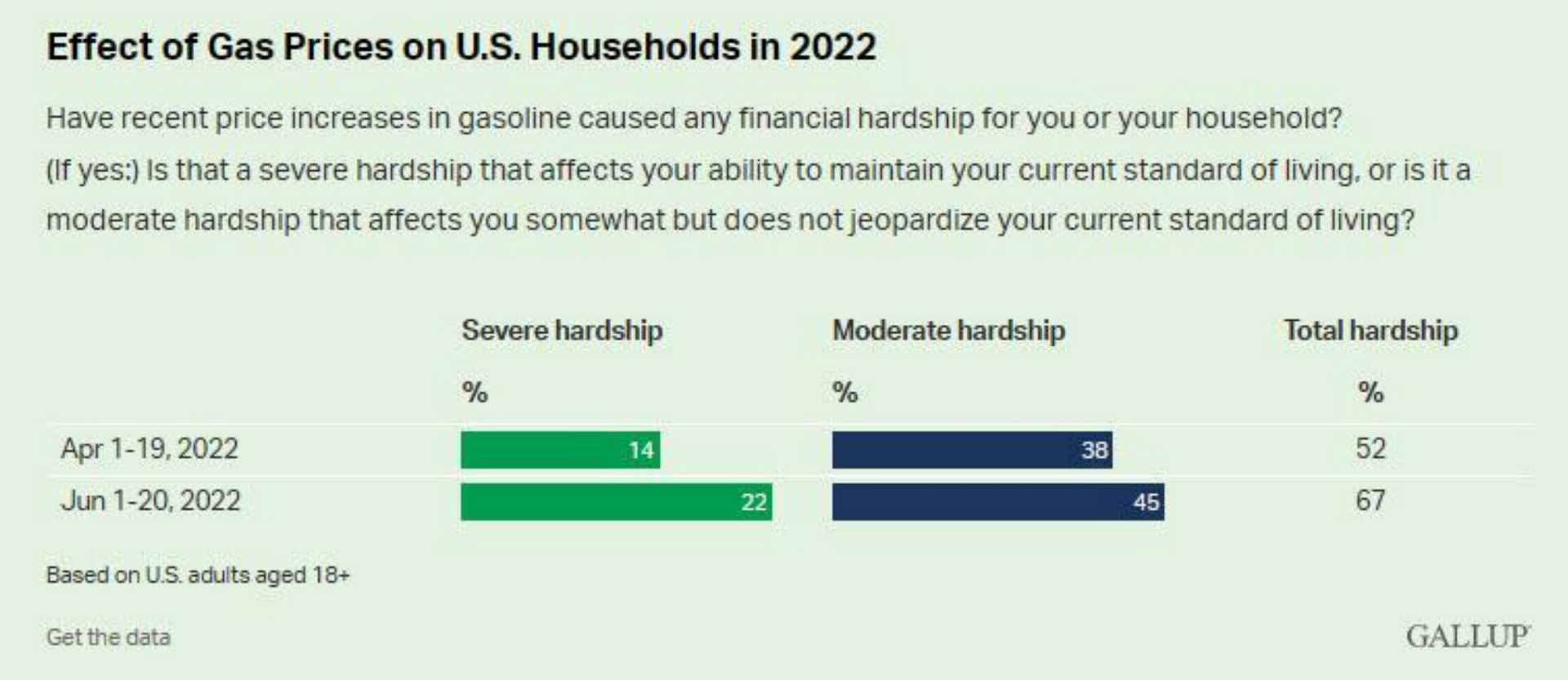
Two-thirds of Americans say recent increases in the price of gas are causing them hardship, which is up from 52% feeling this financial pinch in April. Although more Americans say they are experiencing “moderate” rather than “severe” hardship, the percentage describing the hardship as severe has risen from 14% to 22%. See next page for chart.
Part III - What is Already Priced In?
The good news is the stock market prices in the future now. One of the core beliefs of Lansing Street Advisors revolves around investing as a psychology game not an IQ game. With markets especially in the 24-hour news cycle, we think of the immediate price action. This is a cognitive error as we should be thinking where the market will be in 18 months.
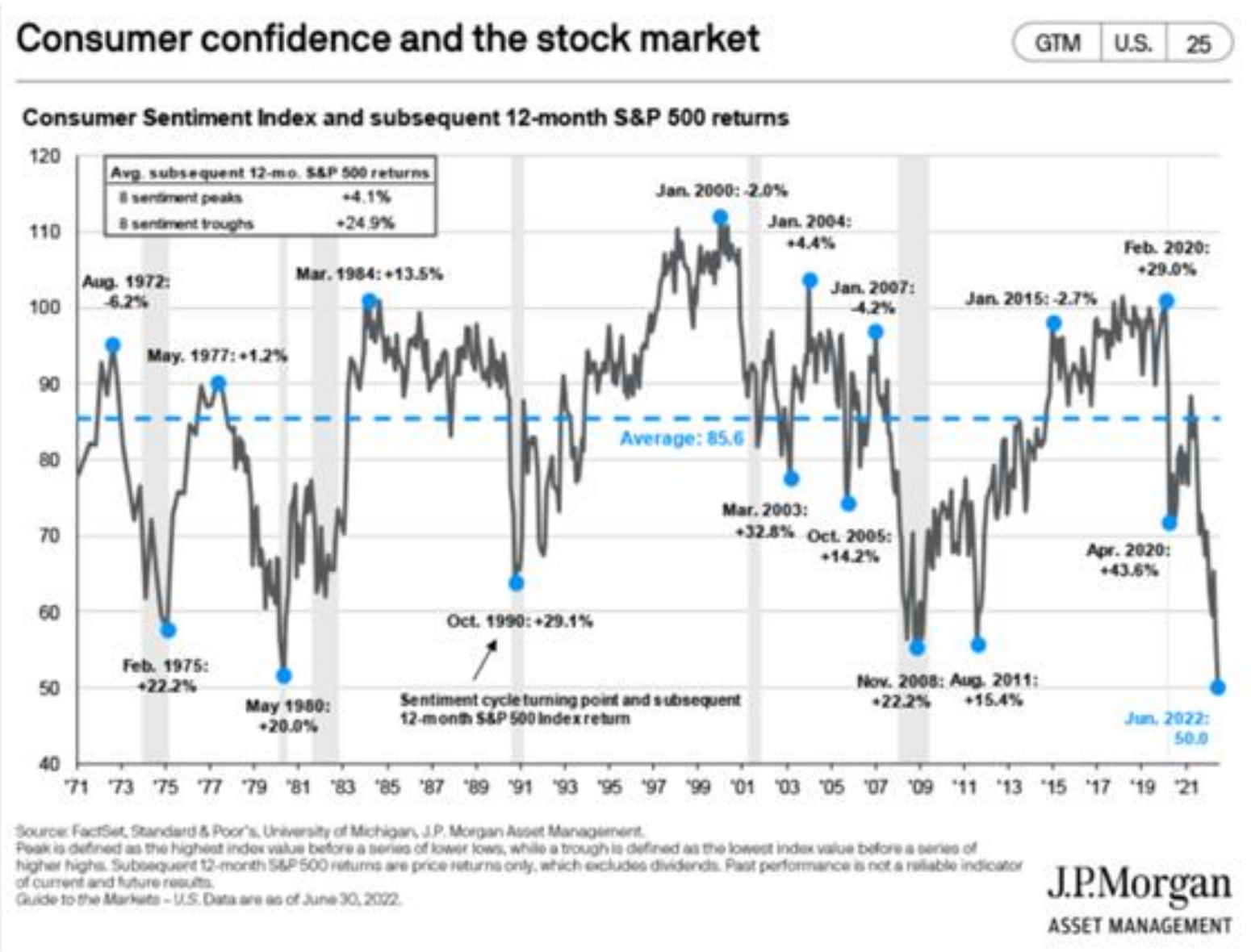
Consumer confidence is below the 2008 Great Financial Crisis due to increasing gas, rent and groceries (GROG). There is good news behind these bad feelings, see JP Morgan chart below as consumer confidence bottoming is a buy signal for the S&P 500. American citizens confidence in the first half of this year hit record modern day low even slicing thru the levels of internet bubble and great fiscal crisis. This is happening during a 3.5% unemployment rate. See next page for chart.
We Already Experienced $6 Trillion Decline Equal to Internet Bubble - Joseph Carson, a former chief economist at AllianceBernstein, estimates that households may have lost more in equities and crypto than the $6 trillion total decline in equity wealth from the bursting of the dot-com bubble at the beginning of the century, he writes in an email. Randall W. Forsyth
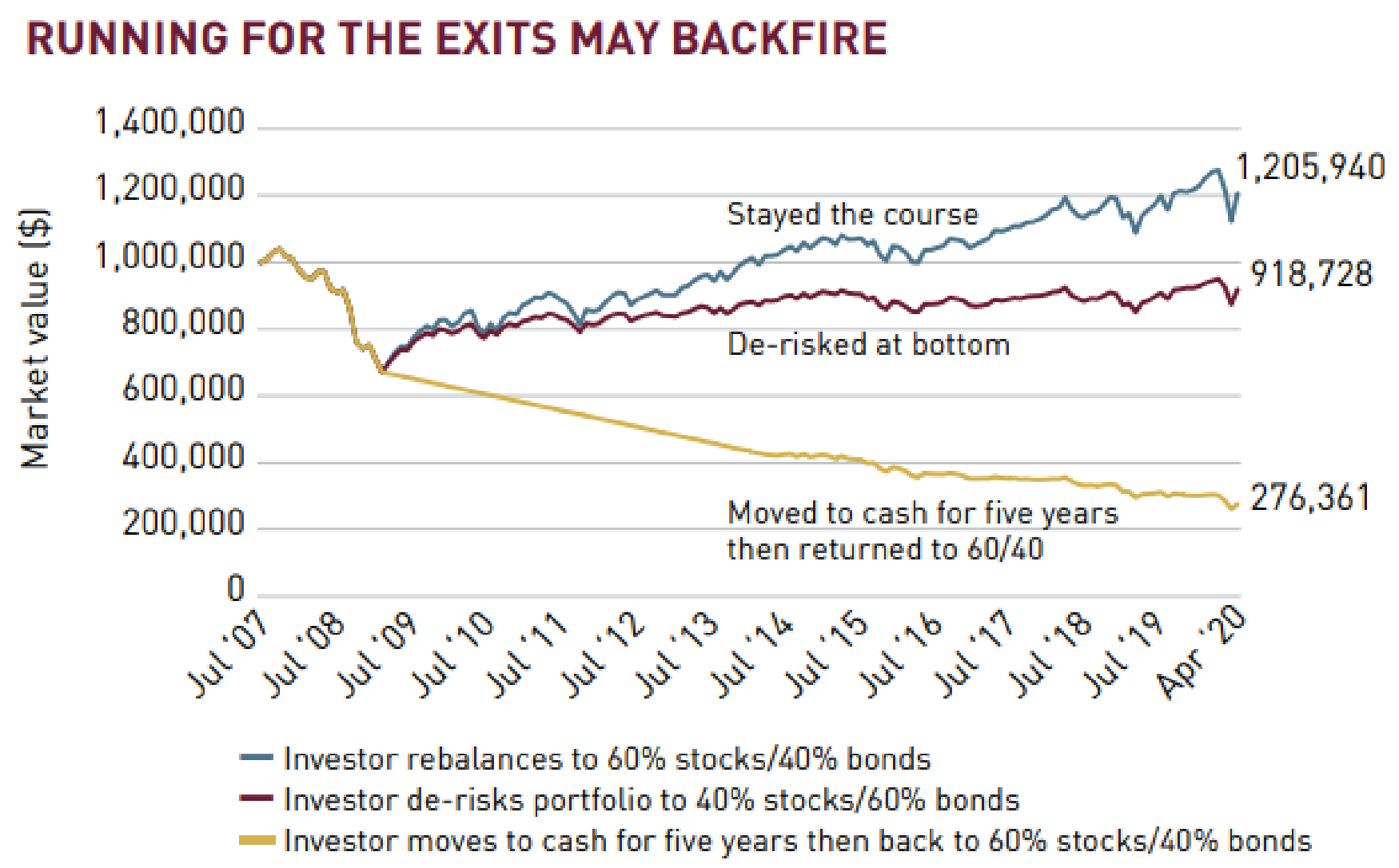
Market downturns are temporary but emotional decisions can lead to permanent wealth damage. We may not have witnessed the bottom but de-risking near lows can do permanent damage to wealth.
Leveraged loans are up 50 percent since 2015
Leveraged loans, which are issued by overleveraged companies with insufficient cash flows, are part of what Wolf Richter recently called the “gigantic pile of risky corporate debt that is now being brutally repriced as concerns over credit risk (the risk of default) are finally bubbling to the surface.” According to Richter, the S&P/LSTA US Leveraged Loan 100 Index, which tracks the prices of the largest leveraged loans, has plunged by 20 percent since February 22nd.
According to Richter, leveraged loans “are traded in slices like securities or are packaged into highly rated Collateralized Loan Obligations (CLOs). But for years, investors had the hots for them, driven by their relentless chase for yield, in a world of interest rate repression.”
These companies, noted Richter, were often acquired by private equity firms through leveraged buyouts, which means they loaded up those companies with lots of debt. In addition, “PE firms extracted special dividends from their companies,” which were funded by leveraged loans. That’s a form of asset stripping and it leaves the company “more leveraged, more precarious and more likely to topple. But who cares? Those were the good times and the chase for yield was on,” lamented Richter.
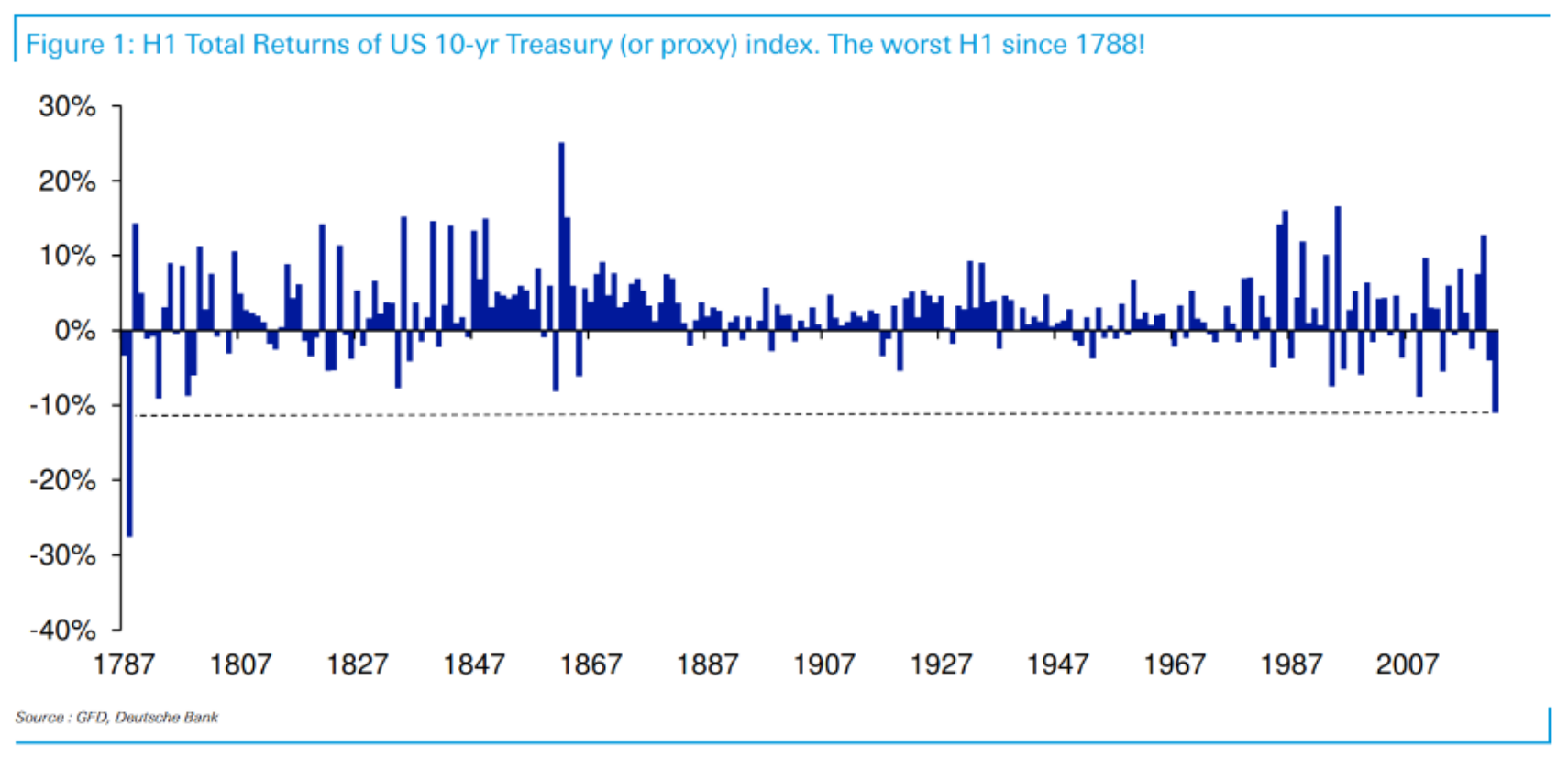
Total Returns 10 Year Treasury the Worst Since 1788
Jim Reid-Deutsche Bank
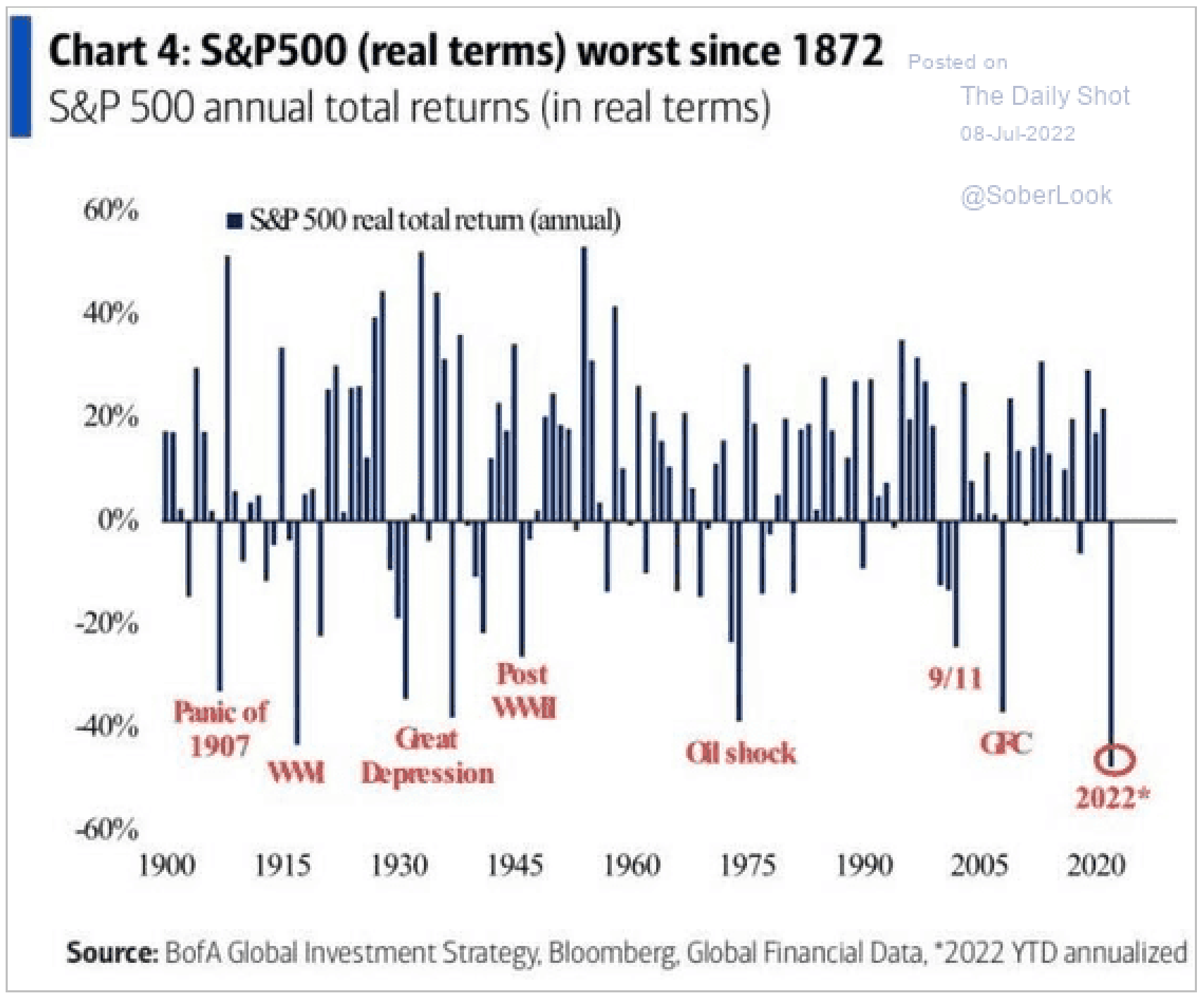
With GROG prices hitting 30-year highs, the inflation adjusted S&P returns were the worst since 1872.
Will the recession be mild or severe? The last 11 American recessions average a -26% in S&P that leaves a moderate downturn 70-80% priced into the public markets. America is at 3.5% unemployment rate with record cash sitting in checking accounts. Let us again turn to Ben Carlson for historical data around our dilemma.
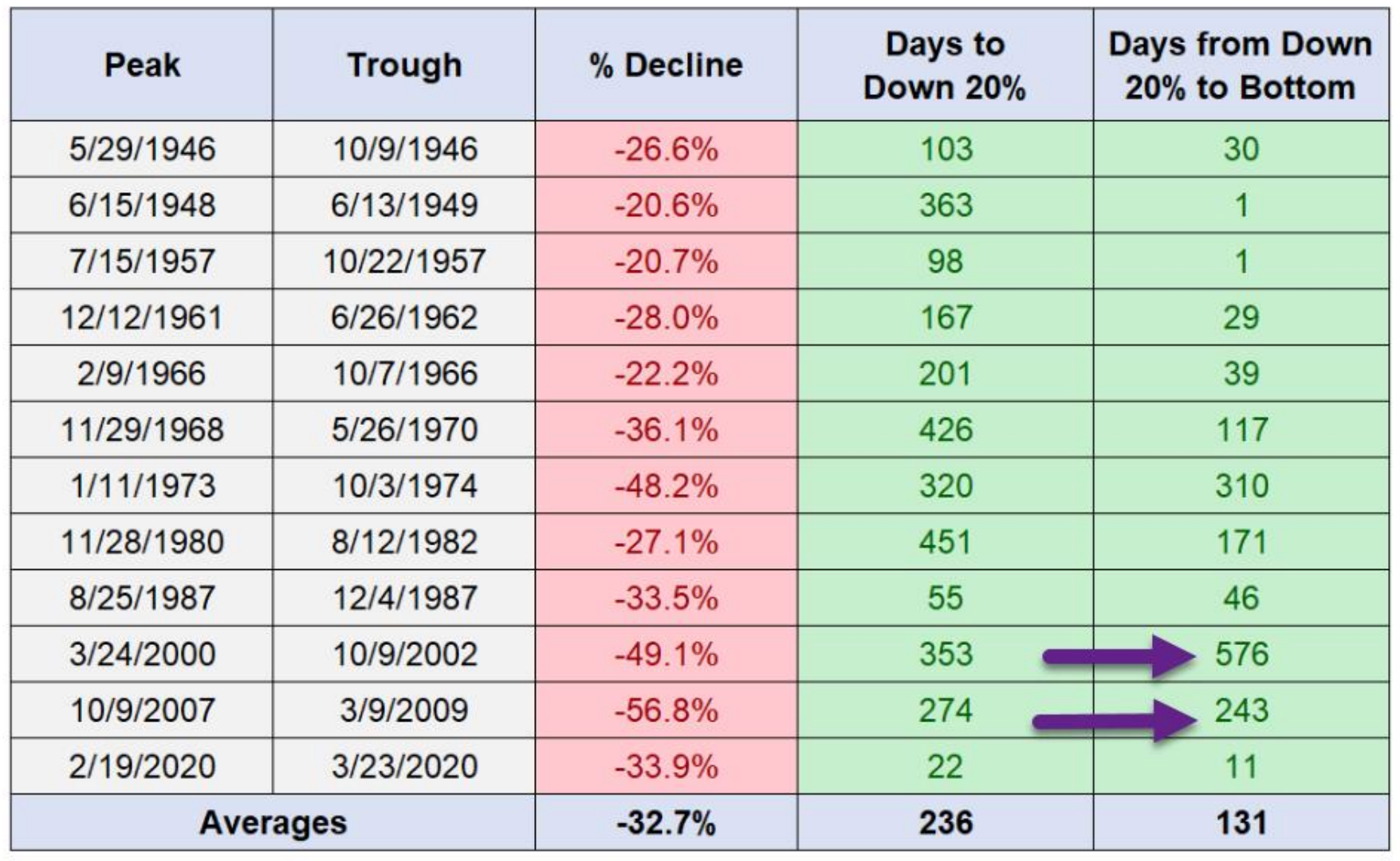
Is today going to duplicate the 2000 or 2008 bubbles? I added two purple arrows to Ben’s chart below showing the pain of finding a bottom after first -20% downturns in those bubbles. The Nasdaq P/E ratio at the top in this bull market in 2022 hit 32x, it is hard for people to conceptualize this but the internet bubble Nasdaq P/E high was 200x.
As you can see from the JP Morgan chart, at the time of the great financial crisis stocks were not expensive, this was a credit crisis based off the American home market not a stock market valuation bubble. Now we face an unraveling of at different sort altogether. This is the unwinding of a 40-year bond bull market topped off by the Covid stimulus of eight times the 2008 crisis.
Disclosures
Lansing Street Advisors, LLC is a registered investment advisor with the State of Pennsylvania. You can read more about the Lansing team at www.lansingadv.com .
To the extent that content includes references to securities, those references do not constitute an offer or solicitation to buy, sell or hold such security as information is provided for educational purposes only. Articles should not be considered investment advice and the information contained within should not be relied upon in assessing whether to invest in any securities or asset classes mentioned. Articles have been prepared without regard to the individual financial circumstances and objectives of persons who receive it. Securities discussed may not be suitable for all investors. Please keep in mind that a company’s past financial performance, including the performance of its share price, does not guarantee future results.
Material compiled by Lansing is based on publicly available data at the time of compilation. Lansing makes no warranties or representations of any kind relating to the accuracy, completeness or timeliness of the data and shall not have liability for any damages of any kind relating to the use of such data.
Material for market review represents an assessment of the market environment at a specific point in time and is not intended to be forecast of future events or guarantee of future results.
Indices that may be included herein are unmanaged indices and one cannot directly invest in an index. Index returns do not reflect the impact of any management fees, transaction costs or expenses. The index information included herein is for illustrative purposes only.
The trademarks and service marks contained herein are the property of their respective owners.
Lansing Street Advisors is a registered investment adviser. Information presented is for educational purposes only and does not intend to make an offer or solicitation for the sale or purchase of any specific securities, investments, or investment strategies. Investments involve risk and, unless otherwise stated, are not guaranteed. Be sure to first consult with a qualified financial adviser and/or tax professional before implementing any strategy discussed herein. Past performance is not indicative of future performance.
Lansing Street Advisors may discuss and display, charts, graphs, formulas which are not intended to be used by themselves to determine which securities to buy or sell, or when to buy or sell them. Such charts and graphs offer limited information and should not be used on their own to make investment decisions.
https://www.youtube.com/watch?v=hIdsjNGCGz4
From my January 2022 Letter “Affleck is encouraging consumers who don’t understand basic math to access 24/7 gambling websites to bet away the rent and grocery money under the premise of “bet any game any time.” Damon is one upping him with “embrace the moment and commit” to “peer over the edge” and go long crypto.”
Read “Q4 2021 Letter – Whole Lot of Money” Here
Since the famous Super Bowl top tick ads, Damon’s crypto market has lost two-thirds of its value and Affleck’s WYNN stock is down -63%. Millennials were wiped out financially by their iPhone that gave them 24-hour access during the Covid lockdown to dangerous speculative asset classes. The U.S. dollar had one of its strongest rallies ever leaving it up +12% in 2022 while Bitcoin lost -58% leaving little doubt what the world wants to hold in times of crisis.
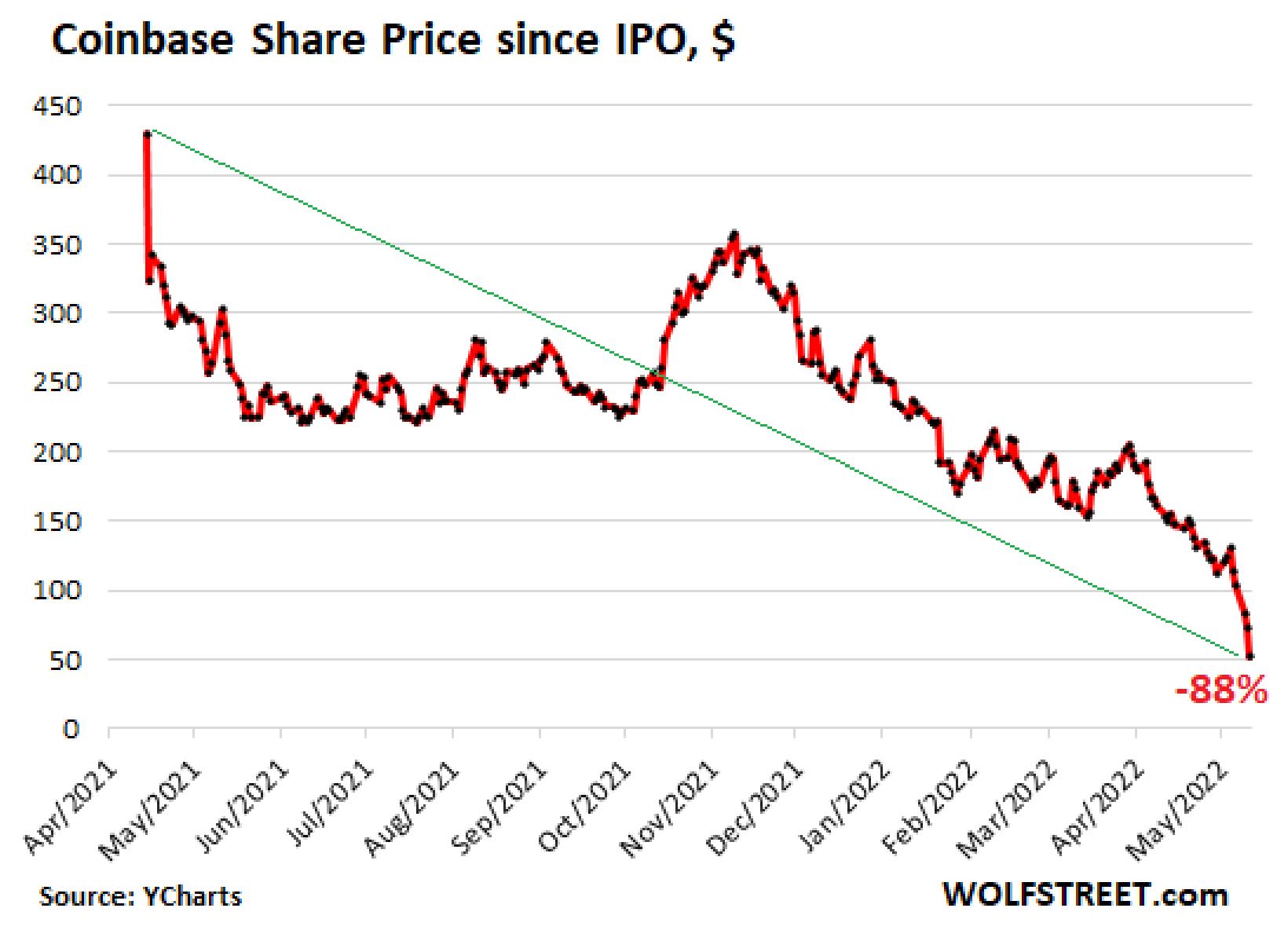
The public market equivalent to Matt Damon’s crypto.com is Coinbase -88% from IPO day.
Part II - First Half Left Nowhere to Hide in Public Markets.
In the last week, the yield curve inverted telling us that the best-known signal for a recession is confirmed. According to CNBC, 58% of Americans live paycheck to paycheck so GROG setting in on consumer spending. The next question is how severe of recession will we experience, there may be more downside, but the markets have priced in a lot of pain.
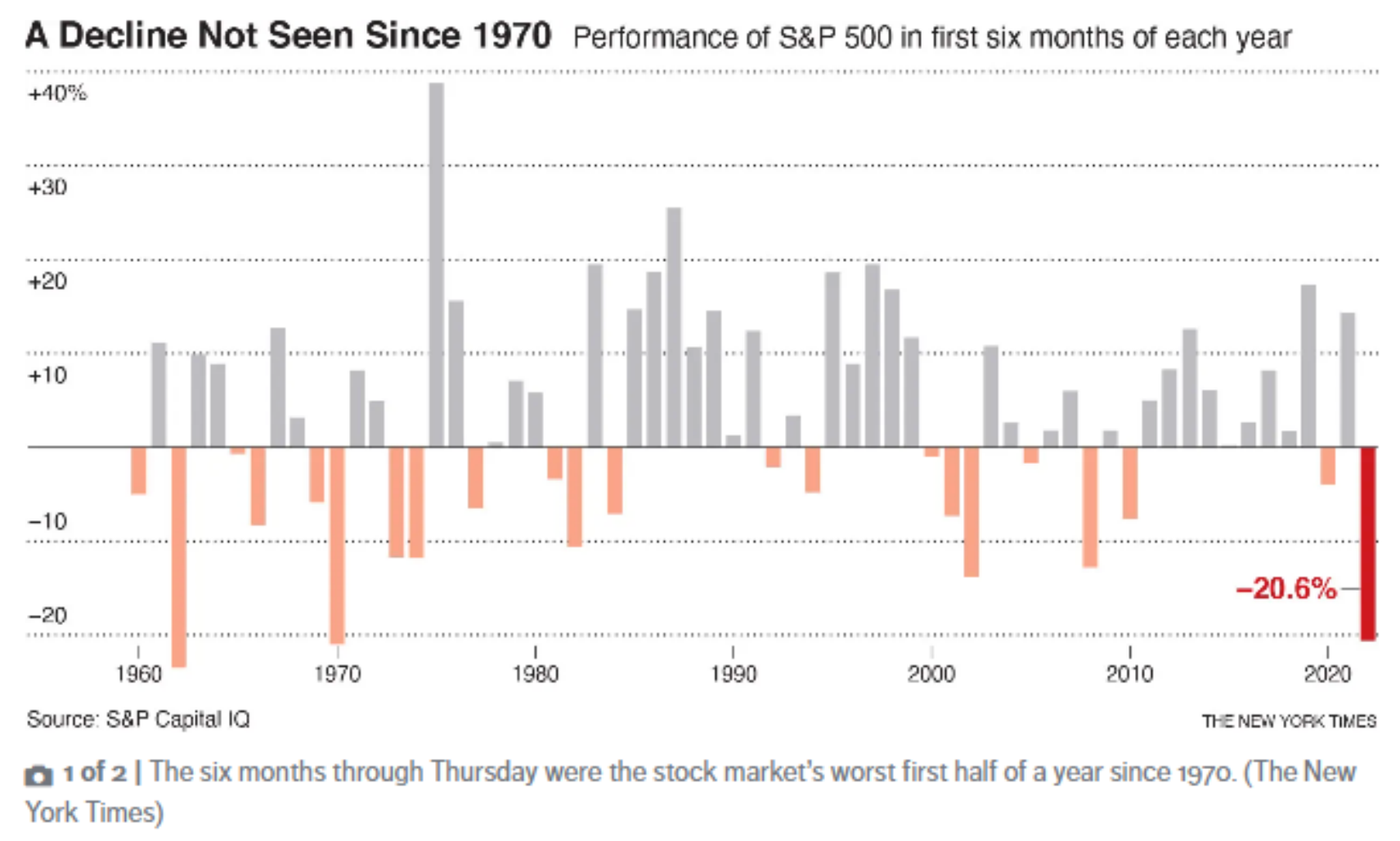
The S&P 500 had worst start since 1970 and treasury bonds the historical protection against a bear market in stocks had their worst six months since 1788. See next page for chart.
Stock Market History Post 10-15% Correction
https://finance.yahoo.com/news/consumer-price-index-much-more-134827013.html
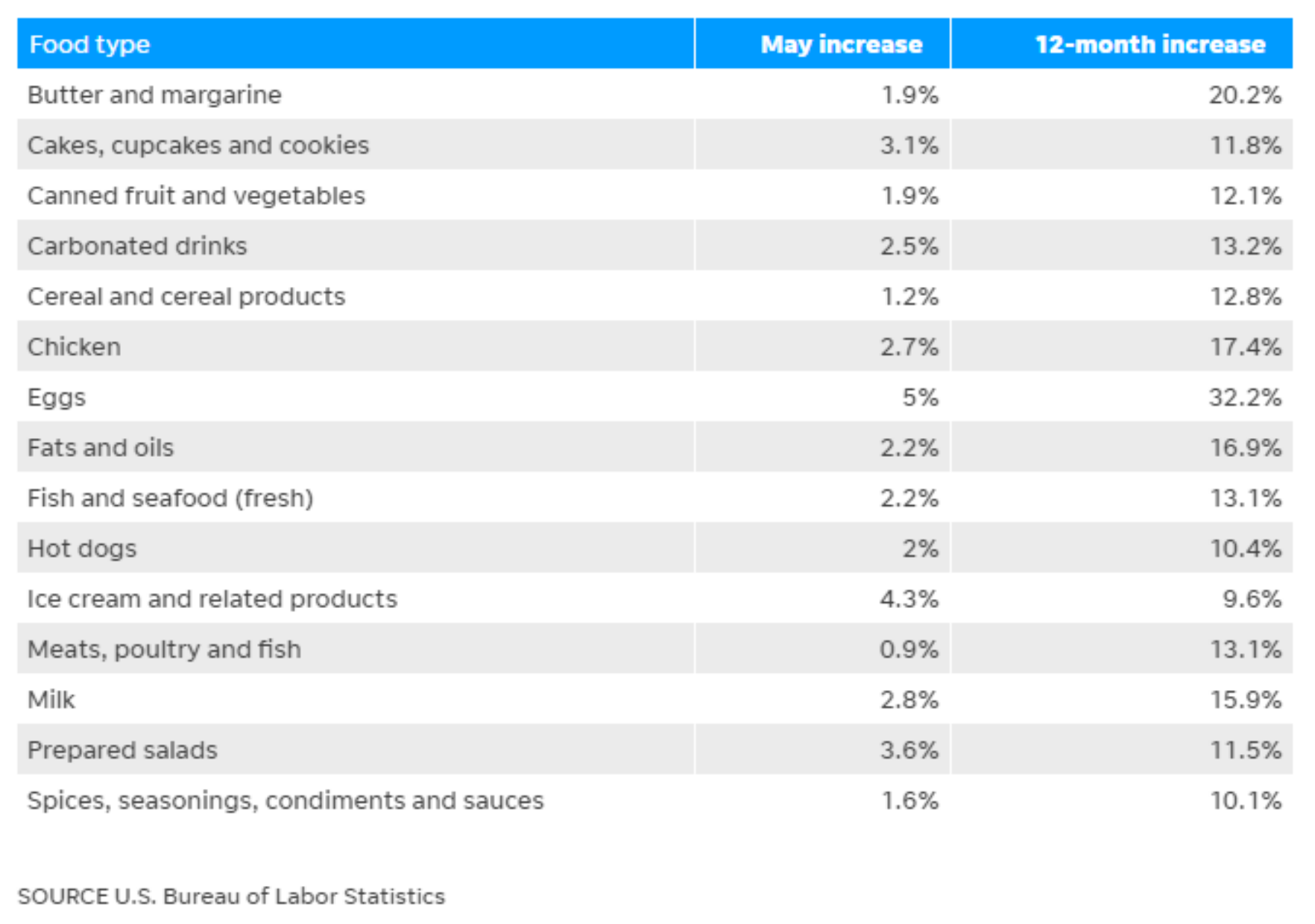
G-Groceries
increased in mid-teens year over year. See grid below showing double digit growth of
the average American’s food bill.
https://awealthofcommonsense.com/2022/06/how-long-does-it-take-for-stocks-to-bottom-in-a-bearmarket/
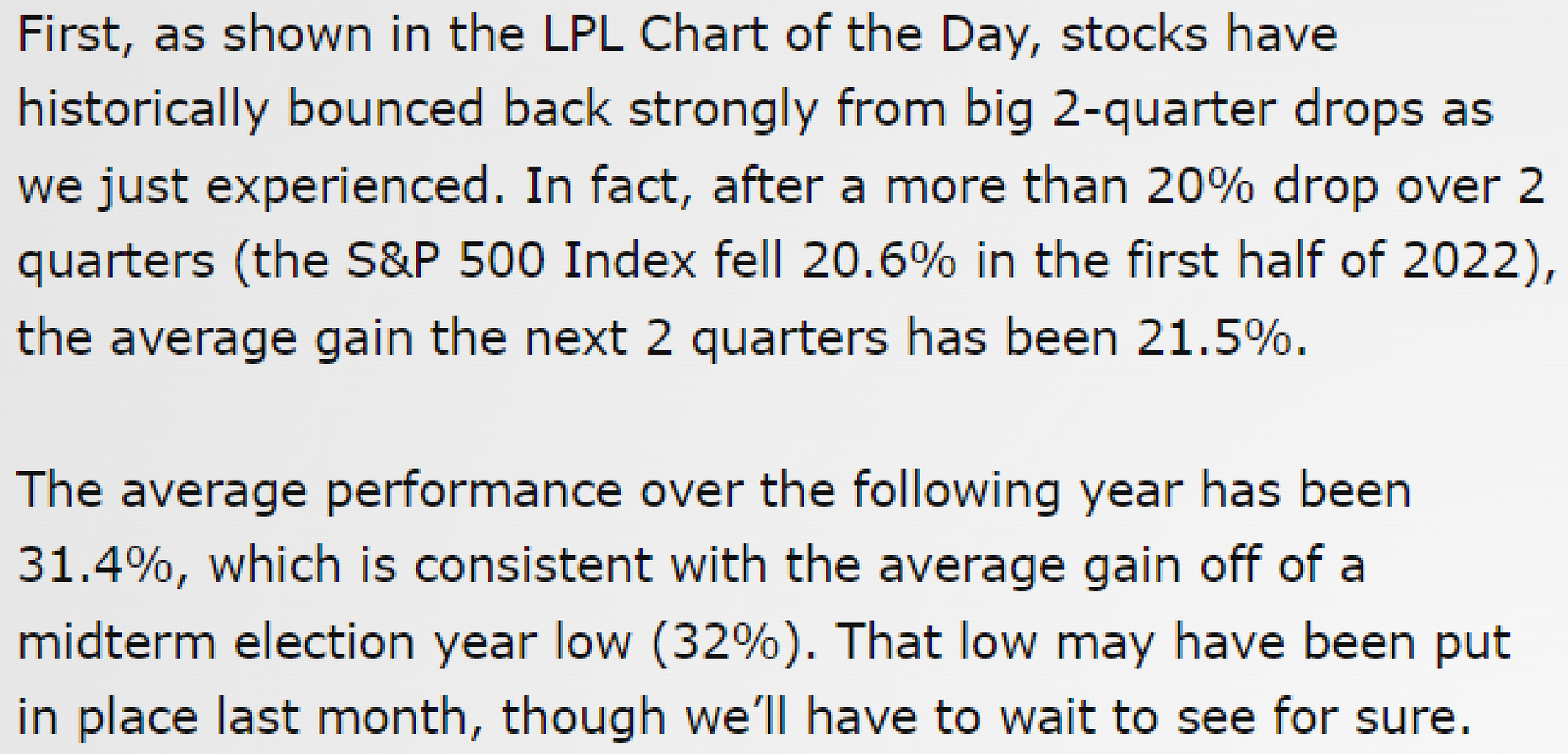
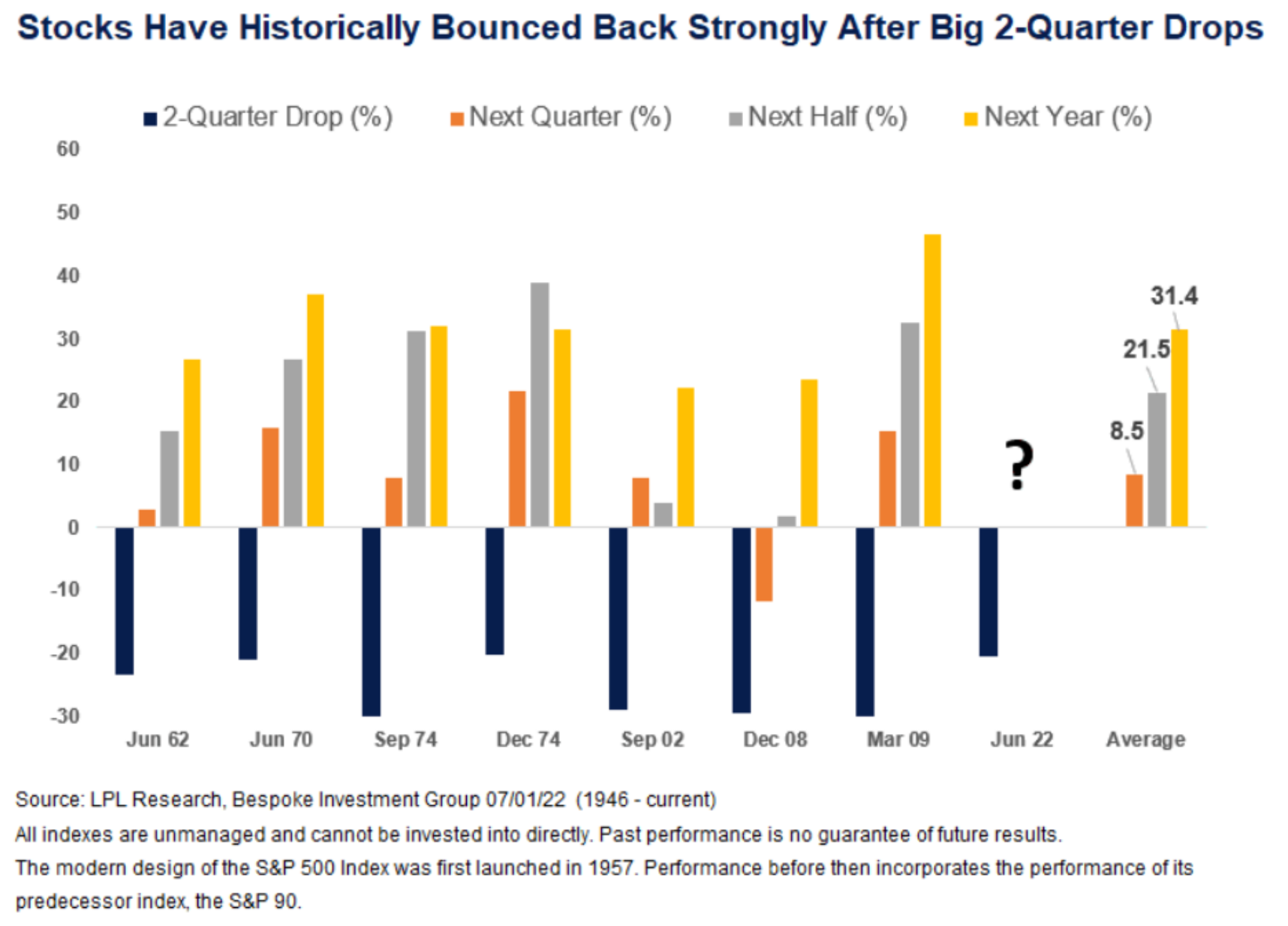
As mentioned earlier in this letter, we experienced a historical 6 month drop in equities. Here is the history of previous two quarter drops.
Historical Market Performance After Big Two Quarter Drops - LPL Research
Conclusion
Speculation in markets was decimated in first half. Although sexy stories dominate headlines, the more important bubble break was bonds. “Safe money” saw double digit negative returns, throwing diversified portfolios into a tailspin. Keep in mind we are coming off a 12-year run of record stock/bond returns, so a resetting of valuations was inevitable.
Re-setting valuations in bubble sections of the economy is different than 2008 credit crisis or 2000 internet bubble of 200x P/E ratios. In 2008, we were concerned about banks closing their doors, plus Americans faced massive layoffs, home foreclosures, and business bankruptcies. Today bank and household balance sheets are much less levered.
We may be facing more volatility and downside this Summer but valuations across asset classes have re-set to more acceptable levels. As mentioned in all my previous Lansing Street quarterly letters, the next decade’s returns will not match the past 10 years as we revert to single digit returns.
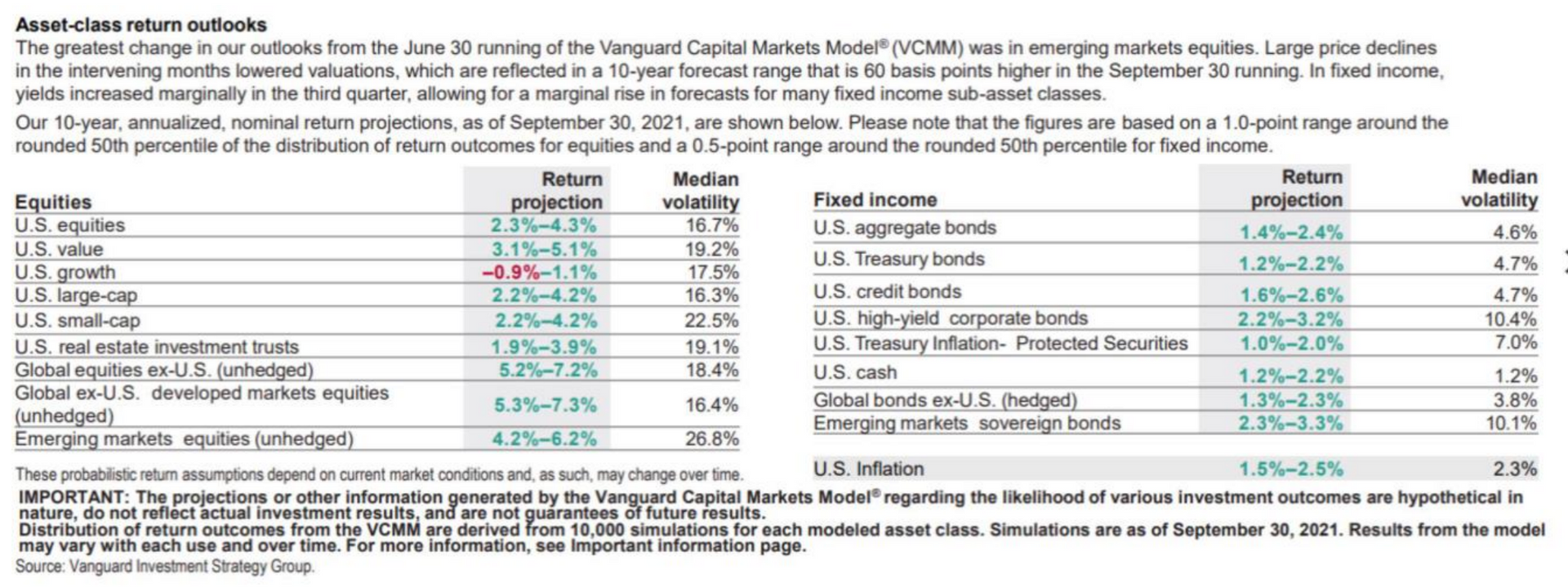
Vanguard’s projected 10-year returns grid will be reset by end of Summer. Below is the pre-bear market grid. These numbers will shift upward from new lower valuations.
Vanguard Projected Returns (before 2022 bear market)

https://iplresearch.com/2022/07/07/reasons-for-optimism-as-second-half-gets-underway/
BONDS -With 10,000 Baby Boomers hitting sixty-five every day, an investment class important to their future is also getting cheaper. As retirees are looking for fewer volatile portfolios with a steady income, bonds have been more volatile than stocks in 2022. However, this short-term uncertainty is creating more reasonable fundamental valuations.
As mentioned in my previous letter, bonds were the real bubble, but the FED has reshuffled the decks. Bonds are not cheap, but they are much more attractive than 12 months ago.
Here is the sharp change in yields this year.
- Investment grade corporate moved from 2.5% to 5.5%
- Preferred from 3.5% to 7%
- High Yields from 3.75% to 8.5%
- 2-3-year Investment Grade Corporate 4.5% to 5%
Where the $5 Trillion in Stimulus Went-NYT
Average Americans suffering from a new financial disease called GROG while Matt and Ben hock
speculation. We are officially shipping them up to Boston back to making movies and away from
encouraging Americans to gamble away their savings.
Fisherman Blues-The Water Boys
Lyrics
I wish I were a fisherman
Tumblin' on the seas
Far away from dry land
And its bitter memories
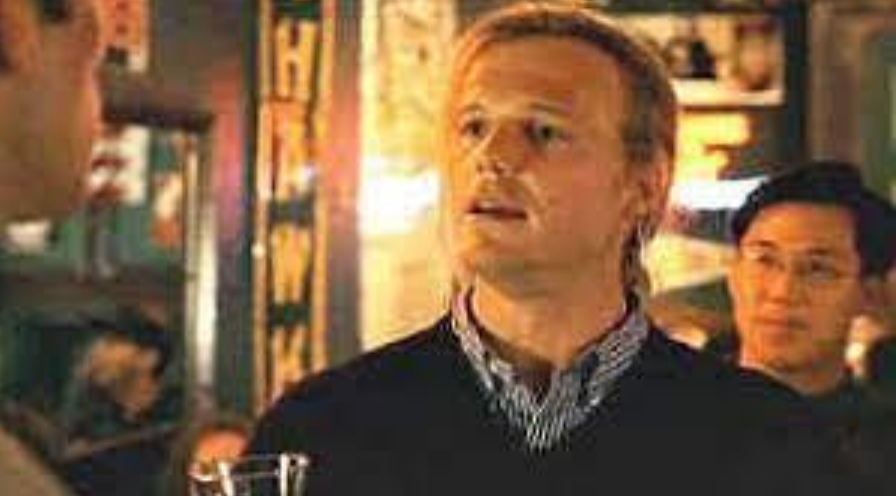
Classic Good Will Hunting Bar Scene -The Harvard history major coincidentally looks like a modernday crypto leader.
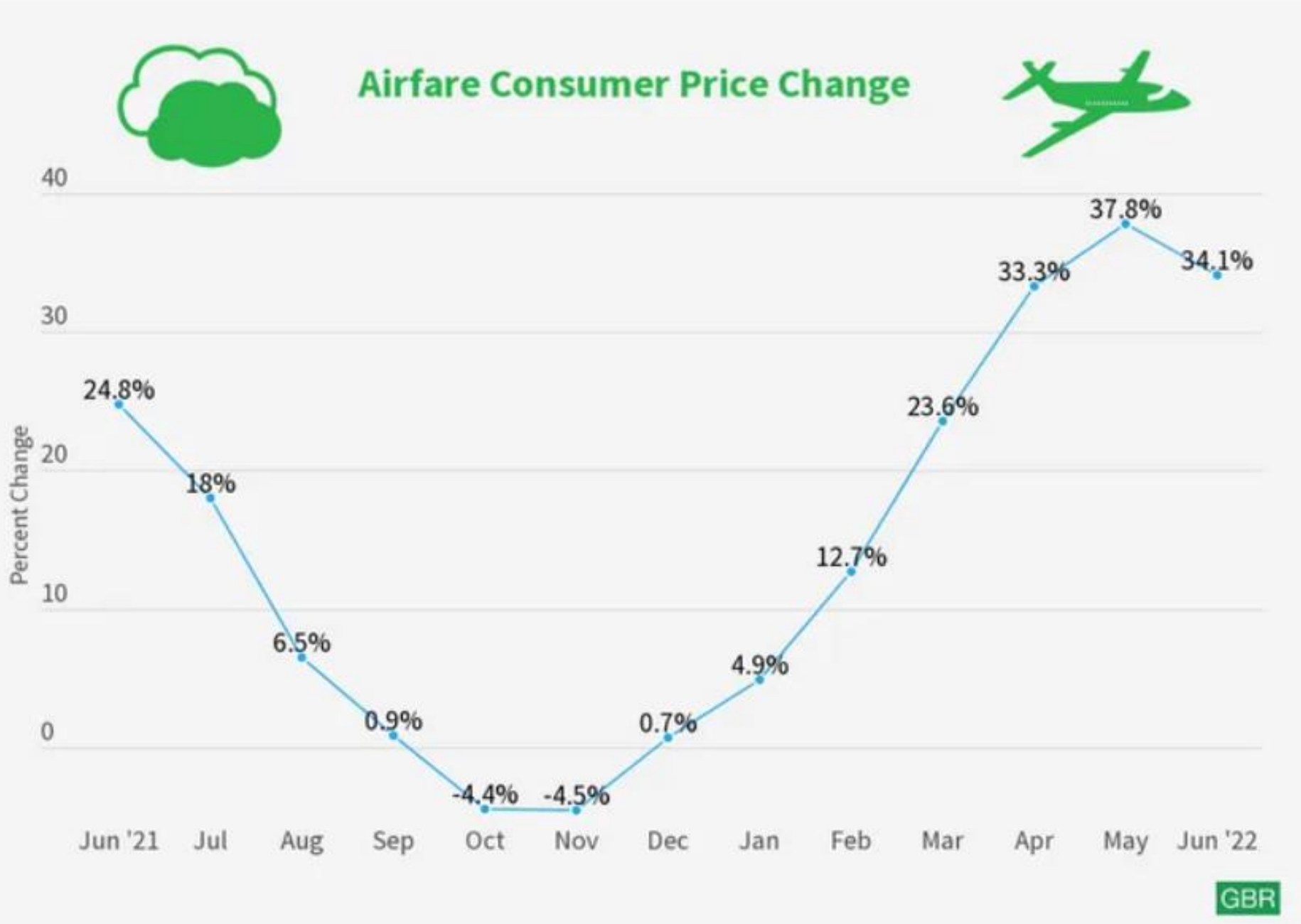
O - Off-time is more expensive than ever in 2022. Full-service menu prices increased a record 8.7% year over year in April according to Fed data. The cost of domestic airfare has increased "significantly" over the course of 2022, rising 47% since January, according to recent Adobe Analytics data. Just as Americans want to break-out in post Covid party prices for travel, restaurants, and entertainment skyrocket.
How Long Does It Take for Stocks to Bottom in a Bear Market?
Ben Carlson looked at the historical records and found some interesting results. Some bear markets were over as soon as they began, like 1948 and 1957. Others took a while, like ‘73-‘74 and the dotcom bust. The past is not much help with figuring out the future, but I did find this data point to be interesting: Seven out of the last twelve bear markets have bottomed in 46 days or less once the -20% level was breached.
Capital Group summarizes average 5 year returns from current bond coupon levels.
Higher yields have boosted total returns
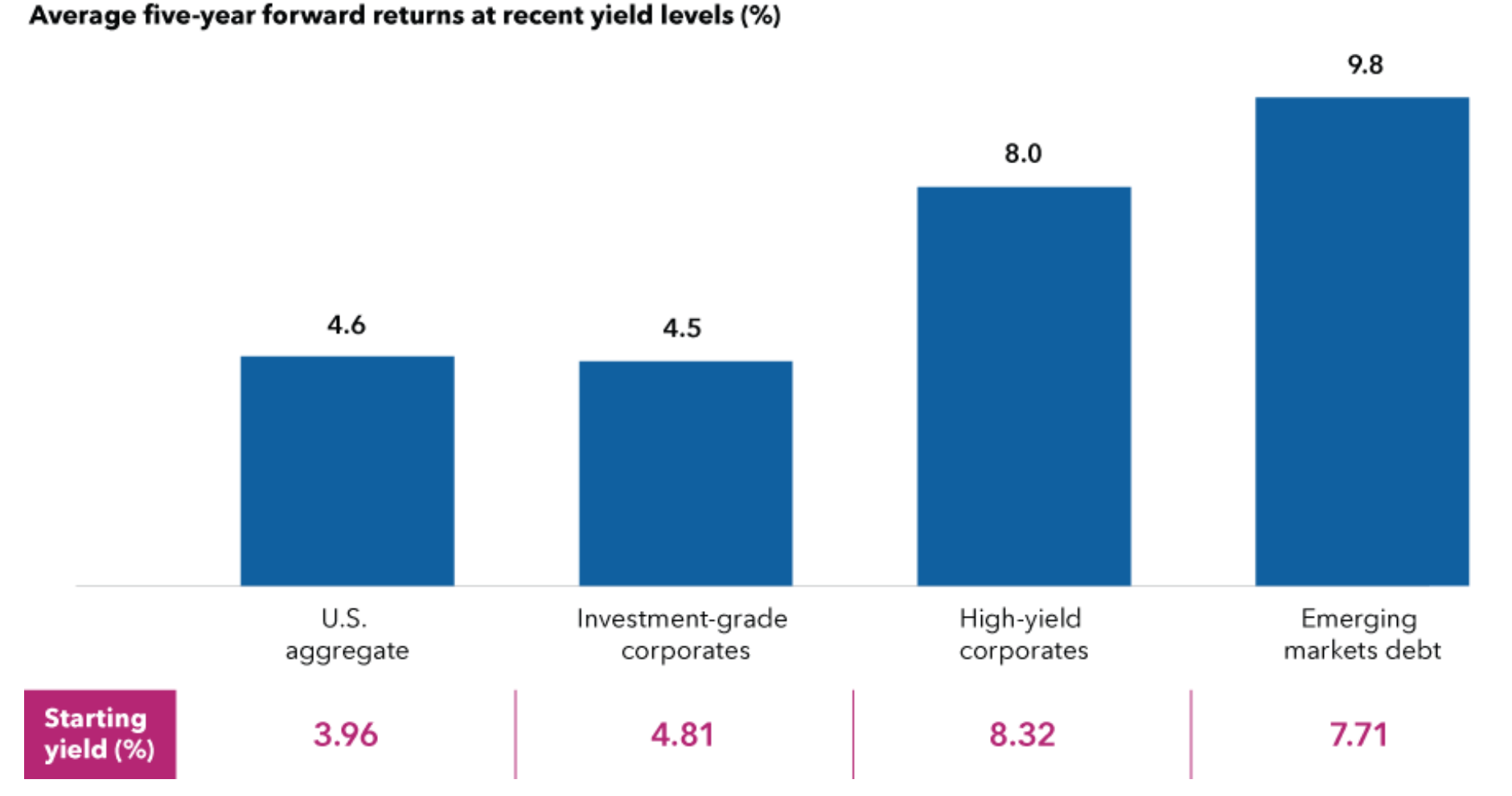
Sources: Capital Group, Bloomberg, J.P. Morgan. Yields as of June 15, 2022. Monthly return data as of May 31, 2022, going back to January 2000, for all sectors except for emerging markets debt, which goes back to January 2003. Based on average monthly returns for each sector when in a +/–0.30% range of yield-to-worst shown. Sector yields above include Bloomberg U.S. Aggregate Index, Bloomberg U.S. Investment Grade Corporate Index, Bloomberg U.S. Corporate High Yield Index, 50% J.P. Morgan EMBI Global Diversified Index/50% J.P. Morgan GBI-EM Global Diversified Index blend. Past results are not predictive of results in future periods.
Retiring boomers will lean on municipal bonds for income in retirement. In years when Munis were down, they averaged a loss of about 4.4%. However, in the five-year period that followed, the sector saw an average annualized return of 9.3%. See next page for chart.
History suggests higher Muni returns ahead
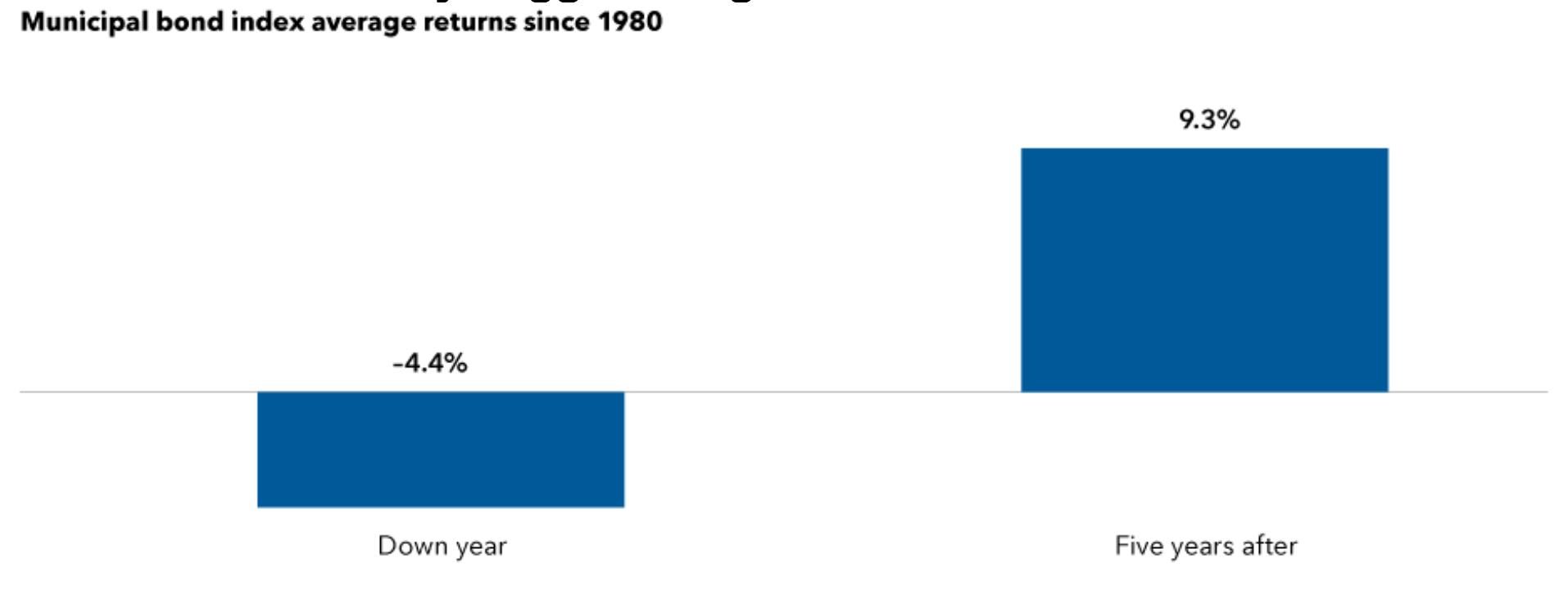
Sources: Capital Group, Bloomberg. Returns as of June 15, 2022. Past results are not predictive of results in future periods -
According to Barron’s, when junk bonds yield 8-9% like today, average returns over the next 12 months are 13%.
Barron’s - The selloff in speculative-grade bonds this year has produced a doubling in yields, to 8.4%, writes Rachna Ramachandran, a researcher in structured products and high-yield strategies at GMO. In the past 30 years, only during the 2008-09 financial crisis and the March 2020 Covid-19 market maelstrom have high-yield bonds produced a doubling in yields so quickly, she notes.
When speculative-grade bonds start with yields between 8% and 9%, total returns in the next 12 months historically have been strong; 13% is the most frequent outcome over the past three decades, with returns ranging most often between 7% and 17%, according to Ramachandran’s research note.
Moreover, a higher starting yield can absorb a lot of bad developments. She calculates an 8.4% yield can offset a 12% default rate (with a 30% recovery rate on defaults), which would be a vastly worse outcome than the 1% actual default rate in the past year. Beyond defaults, the market would have to sell off further, raising yields by another 1.95 percentage points, before an investor would be underwater, she adds.
By Barron’s
Randall W. Forsyth
https://www.barrons.com/articles/high-yield-bonds-bargains51656024312?mod=past_editions
As you can see from Vanguard chart below, stocks and bonds both experiencing negative returns is a rare event, only happening 3.6% of the time. Stocks and bonds negative for a one-year period happens 0.4% of the time. See next page for chart.
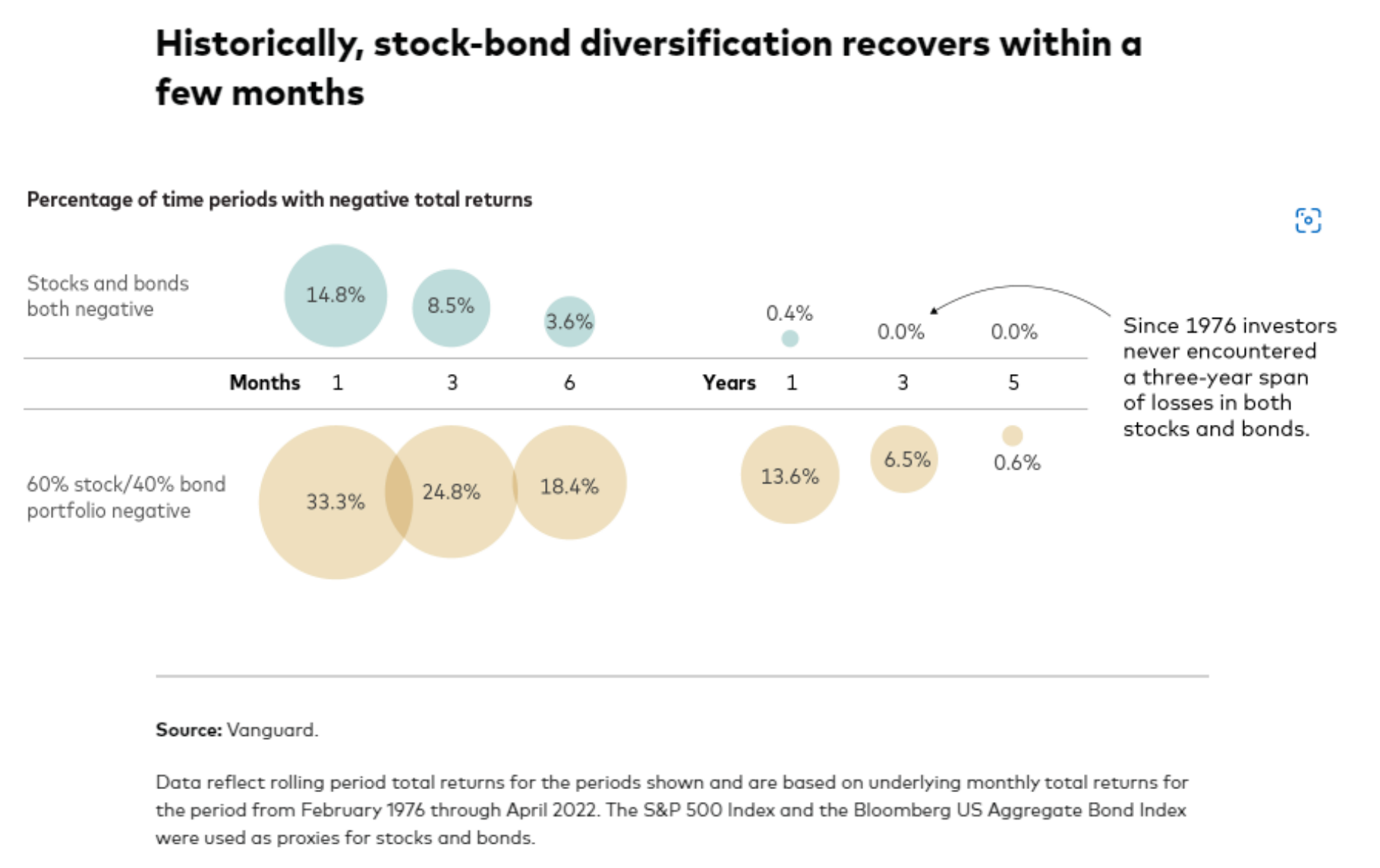
The 60/40 portfolio will rise again (vanguard.com)
Part III - Some Cushion for Recession - Cash, Employment and State Budget Surpluses.
In all my past letters, we discussed lower return expectations going forward. During the 2010–2022, U.S. stock and bond markets experienced returns double historical averages. This leaves us facing lower but acceptable returns going forward. New stock market sectors will lead as capital becomes more expensive.
From Kailash Research-See the outsized returns from 2009-2021 but especially 2017-2021. These returns were driven by growth stocks so reversion to historical mean returns is expected.
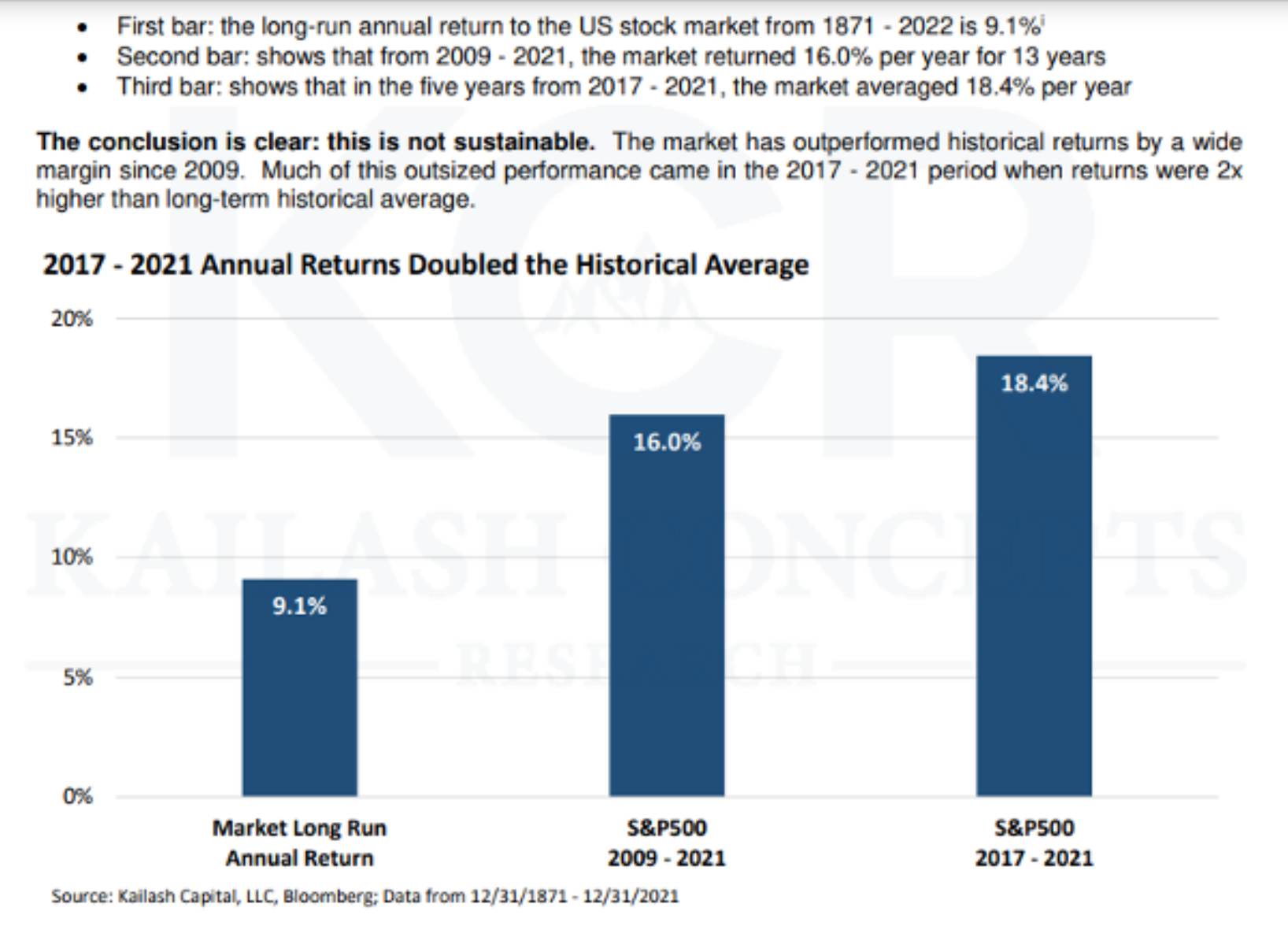
https://kailashconcepts.com/
However, if we are facing recession, it will be one of the strangest downturns in history. Many pundits are calling for another 2008 or worse but Americans are sitting on record cash, record home equity, a historical low unemployment rate and flush state budgets.
Irrelevant Investor Blog
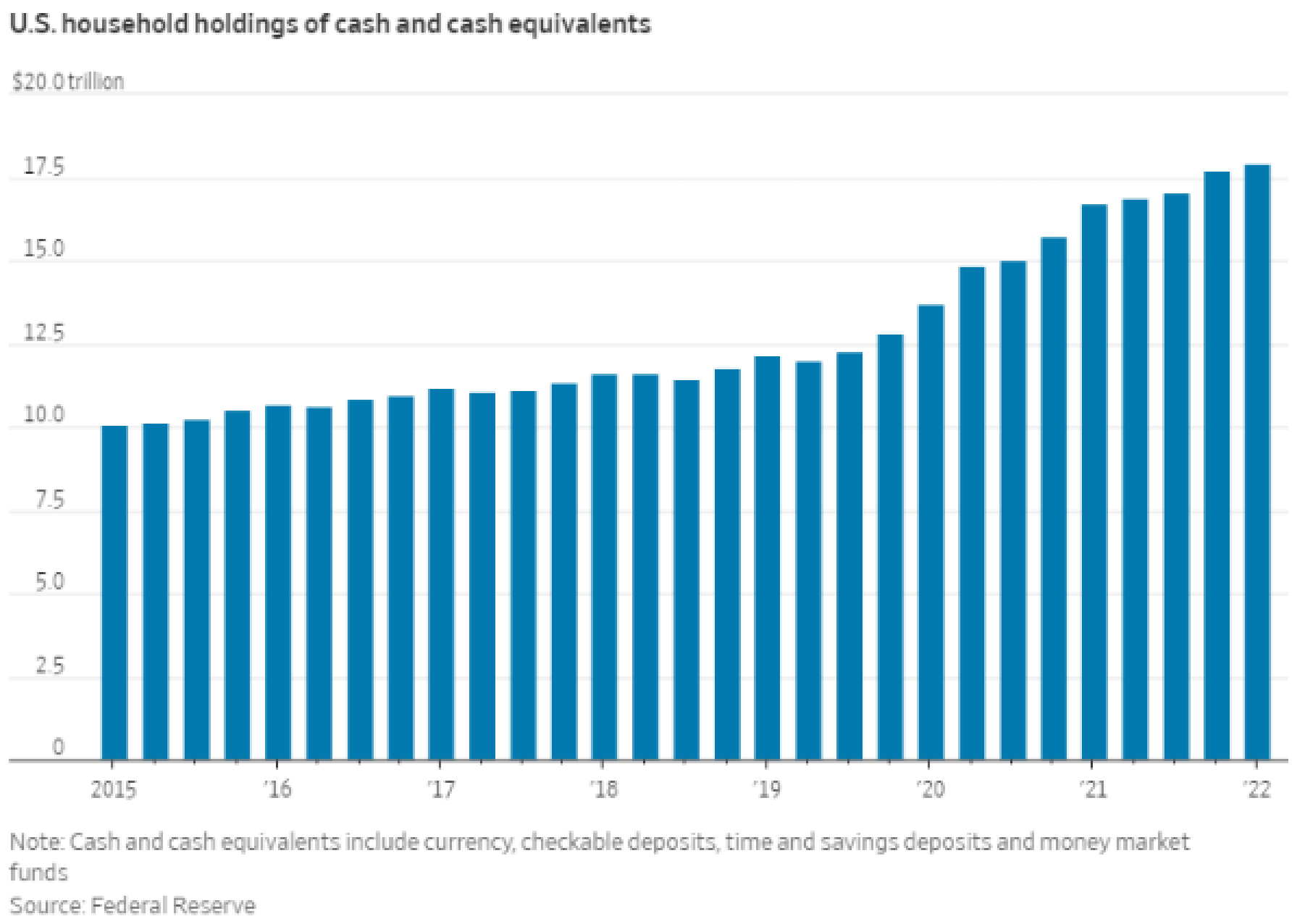
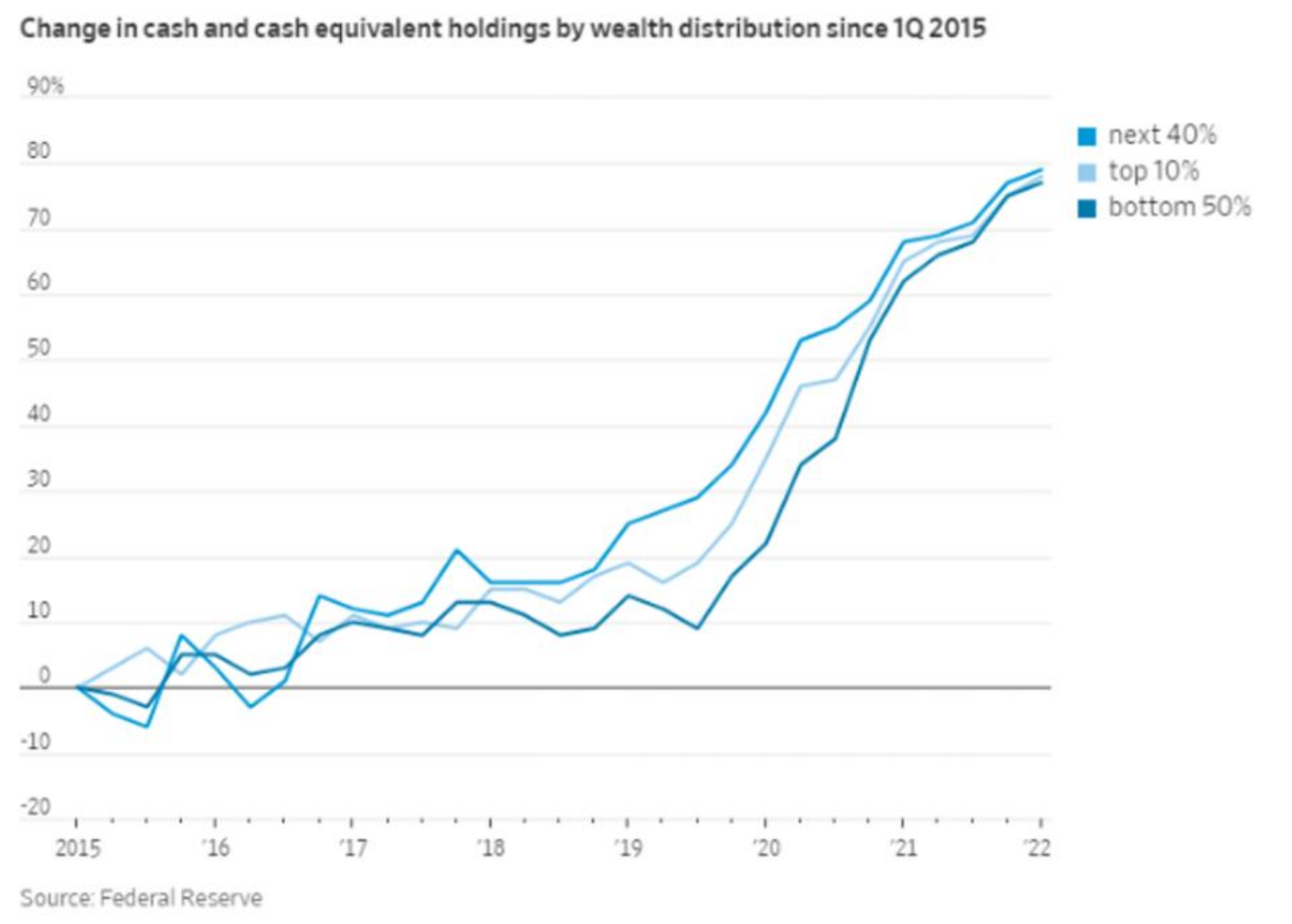
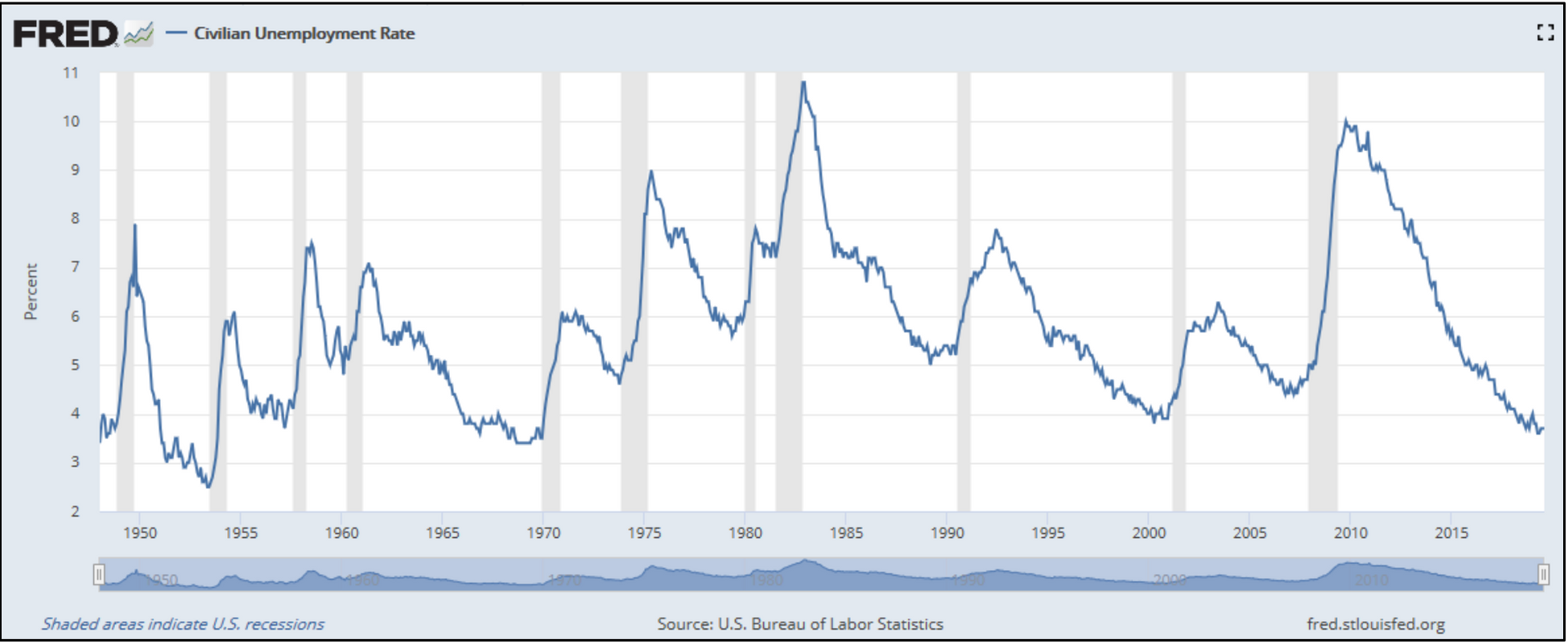
Low Unemployment
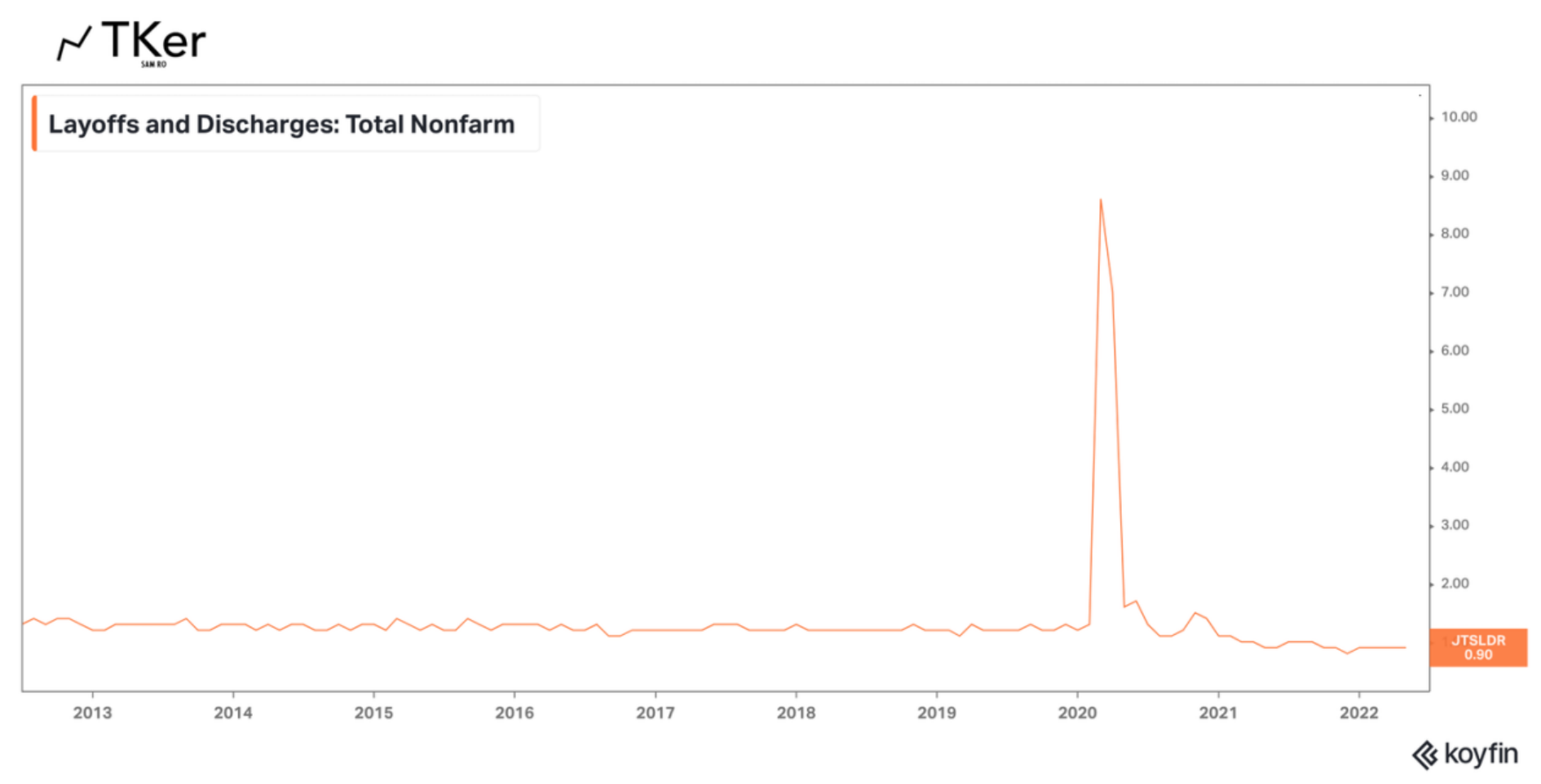
The U.S. is short five million workers right now so early layoffs like Tesla employees are being hired right away. We have negative population growth and retiring baby boomer demographic leaving worker shortages across a list of industries.
From Sam Ro @samro This is in line with BLS data released on Wednesday that showed the layoff rate remained near a record low of 0.9% in May.
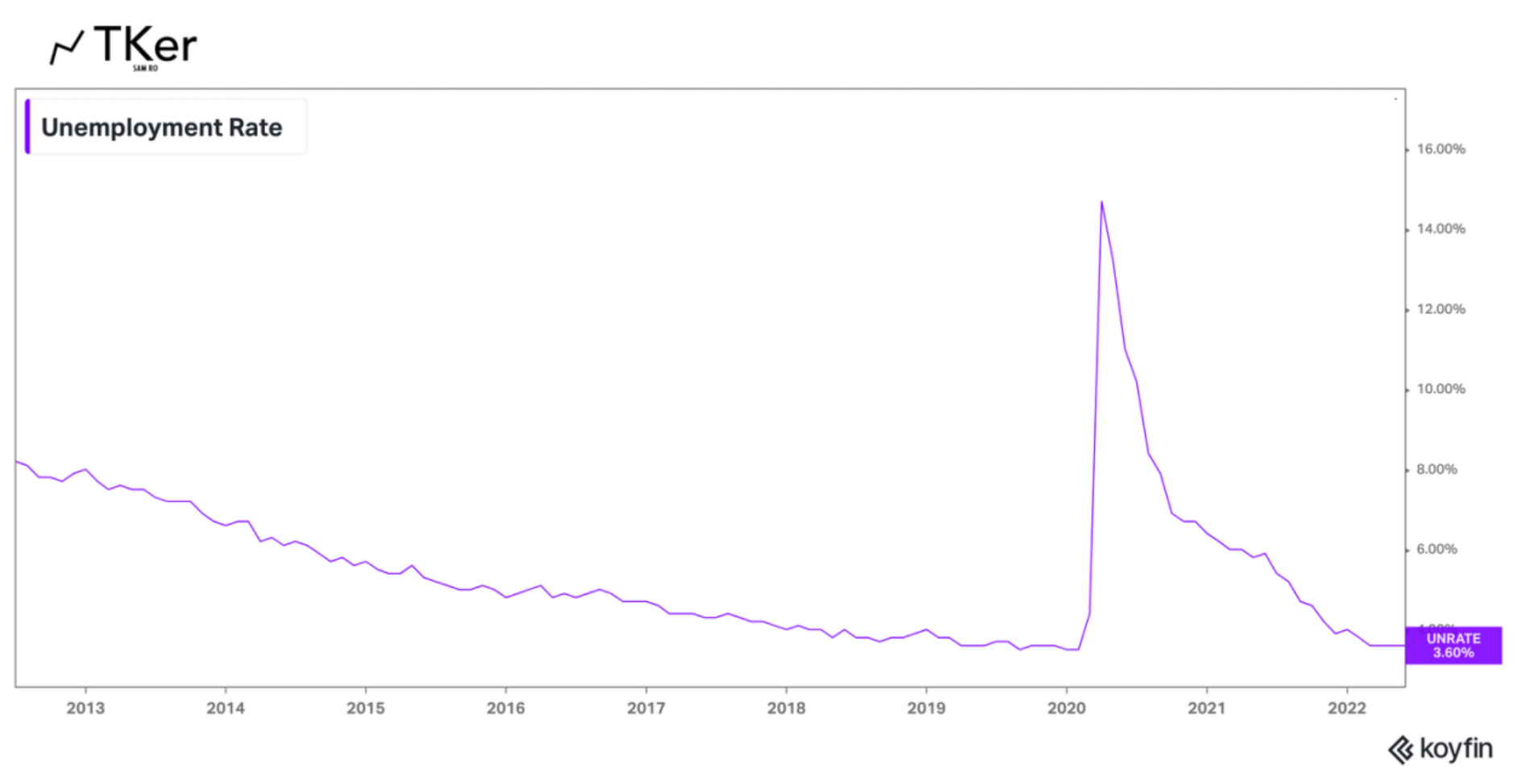
Also, the unemployment rate remains exceptionally low at 3.6%
https://www.tker.co/p/june-jobs-payrolls-not-recession
State Government Surpluses
State and local government spending is 17% of GDP. Today state governments have massive government surpluses versus 2008 shortfalls.
2008- 41 states were facing budget shortfalls.
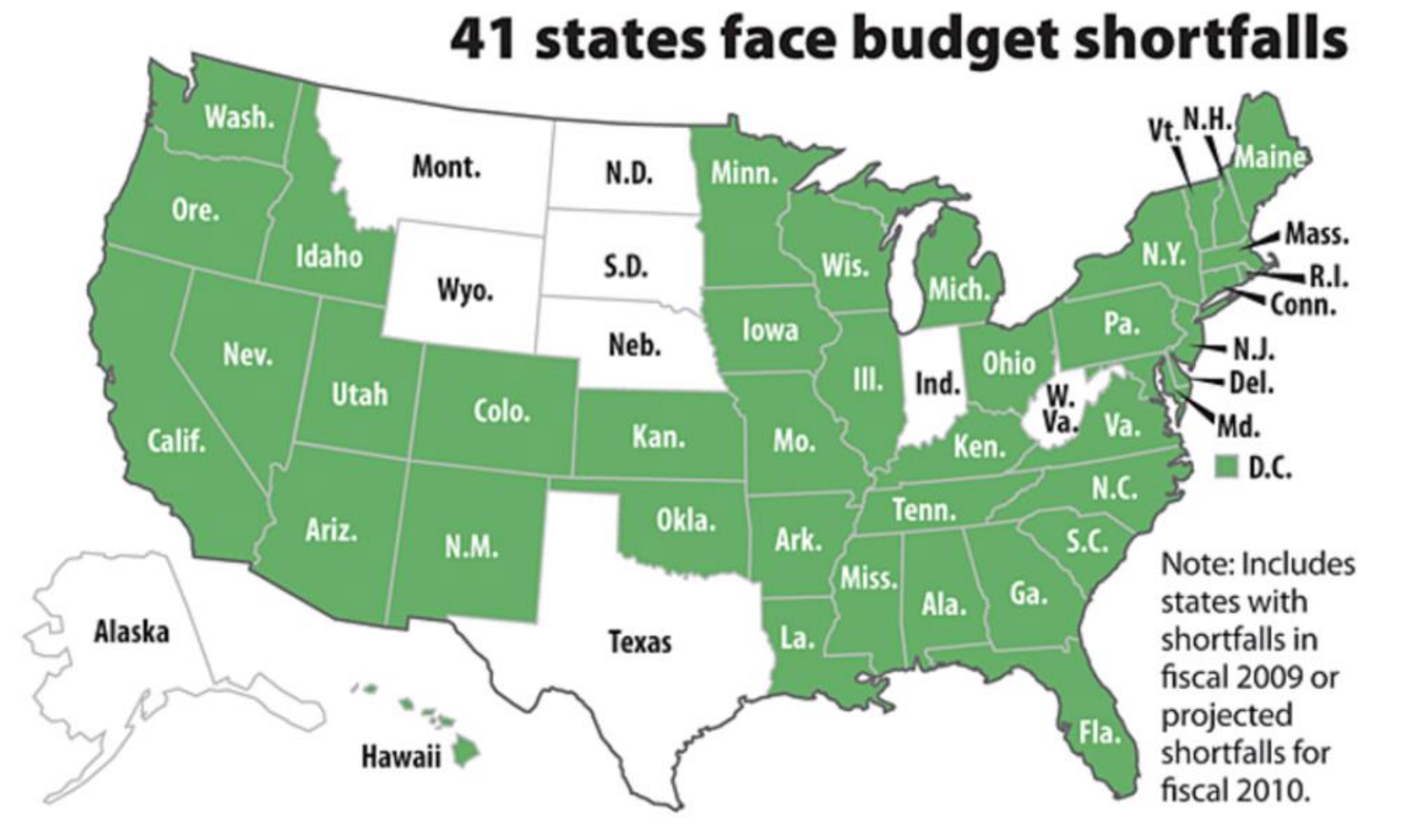
2022 Pew Research
After an early pandemic decline, states had collectively amassed their largest fiscal cushion on record by the start of the current budget year. Higher-than-expected tax revenue—among other temporary factors—drove the total held in savings and leftover budget dollars to new highs. As states approach the close of fiscal year 2022, most expect to spend down at least a portion of their surplus funds.
Despite fallout from the coronavirus and a two-month recession, the 50-state total of rainy day funds dipped only temporarily in fiscal year 2020, followed by a historic increase by the end of the first full budget year of the pandemic.
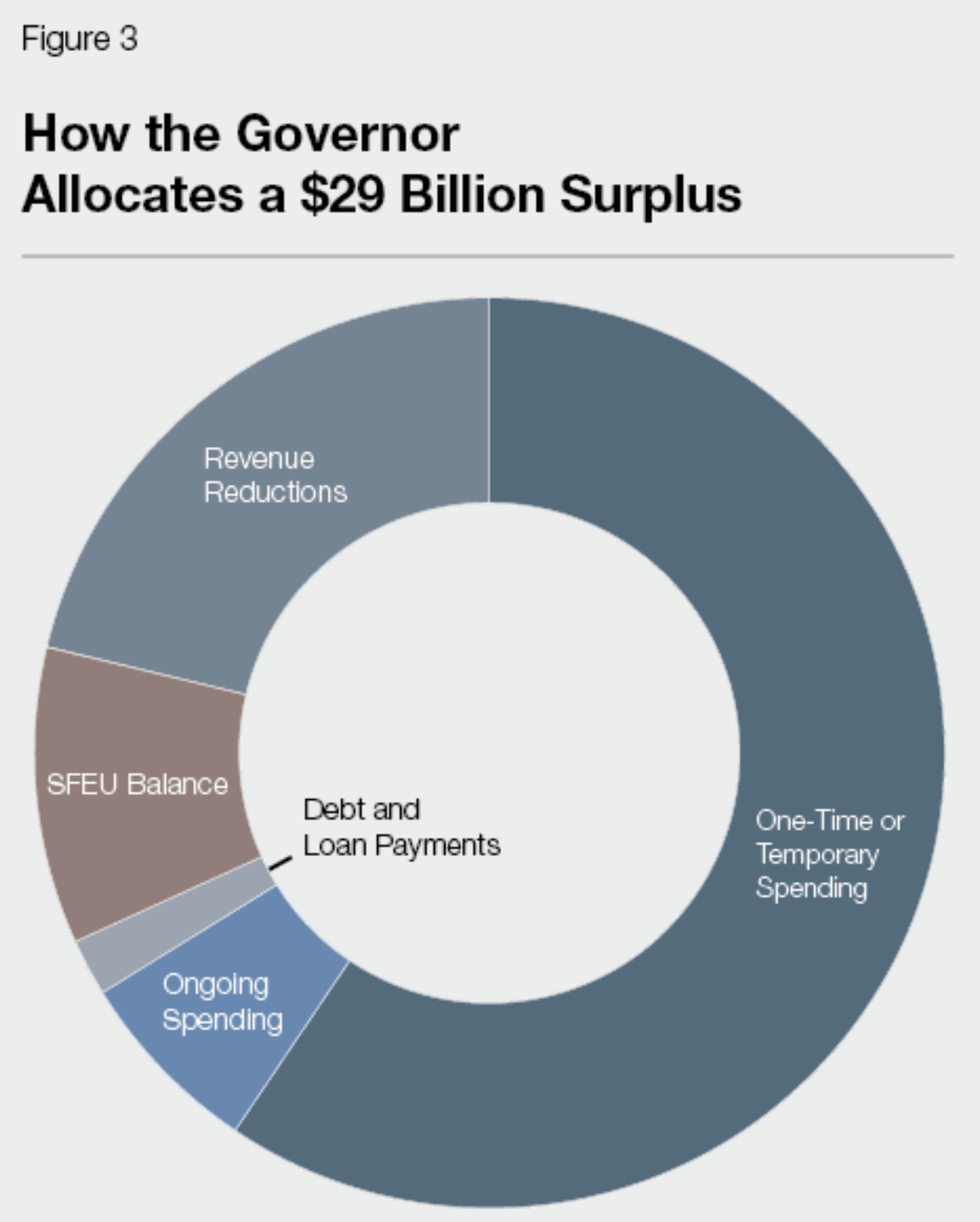
Instead of empty coffers, big states like California face the handling of huge surpluses.