
Introduction
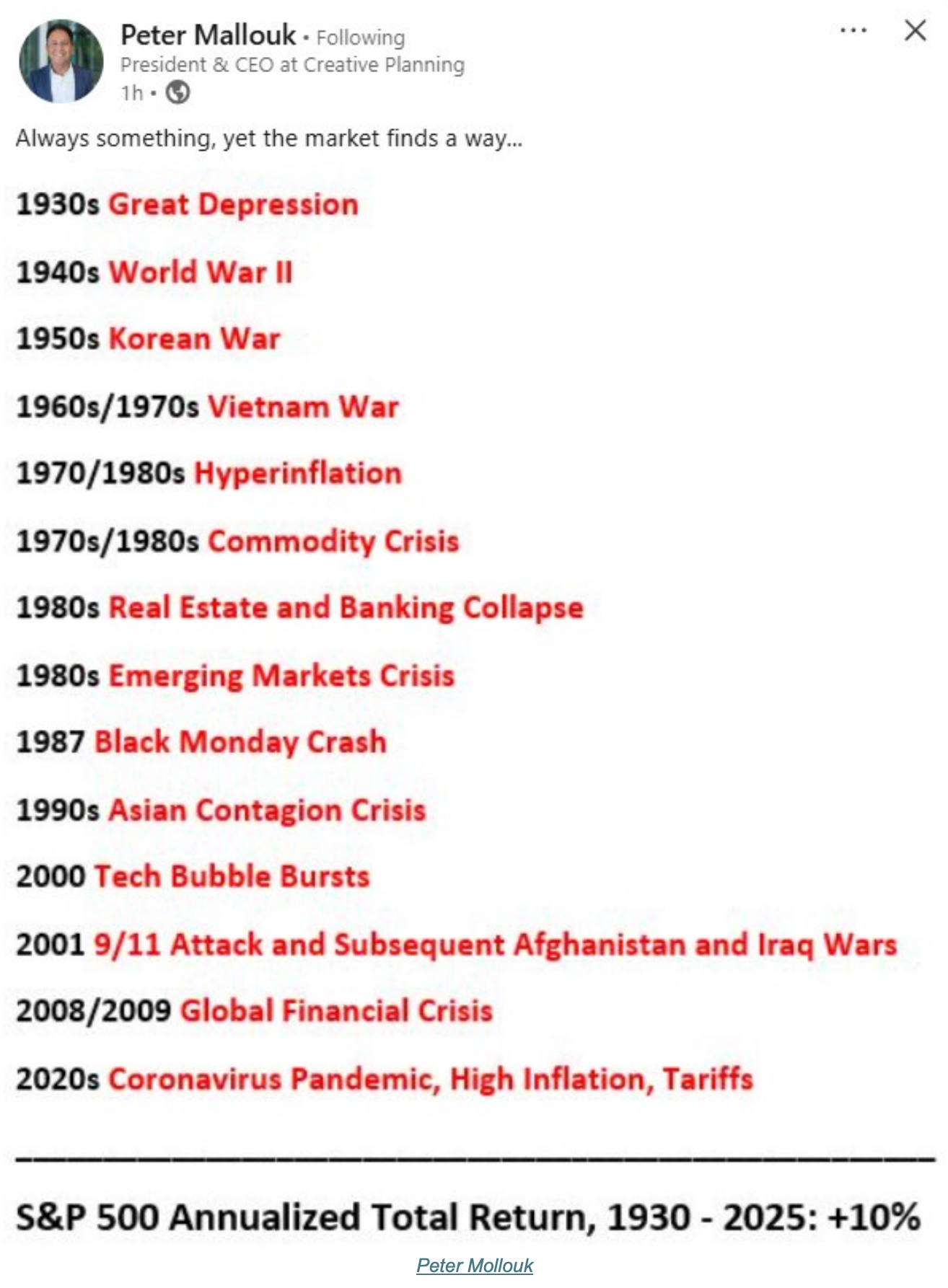
New highs in the stock market are as American as apple pie—greed is good. In the midst of headlines like Liberation Day, California wildfires, DOGE, TACO, “Bomb Iran,” Epstein, $5 trillion added to the deficit, tariff inflation, and more—the outcome remains the same: new market highs. Is this new? Far from it. It's the historical norm. (See chart #3 below from Peter Mallouk at Creative Planning.)
But today’s version of this familiar story has a twist. The senators and congressmen Dylan once sang about are now running personal trading accounts—outperforming most hedge funds in the world.
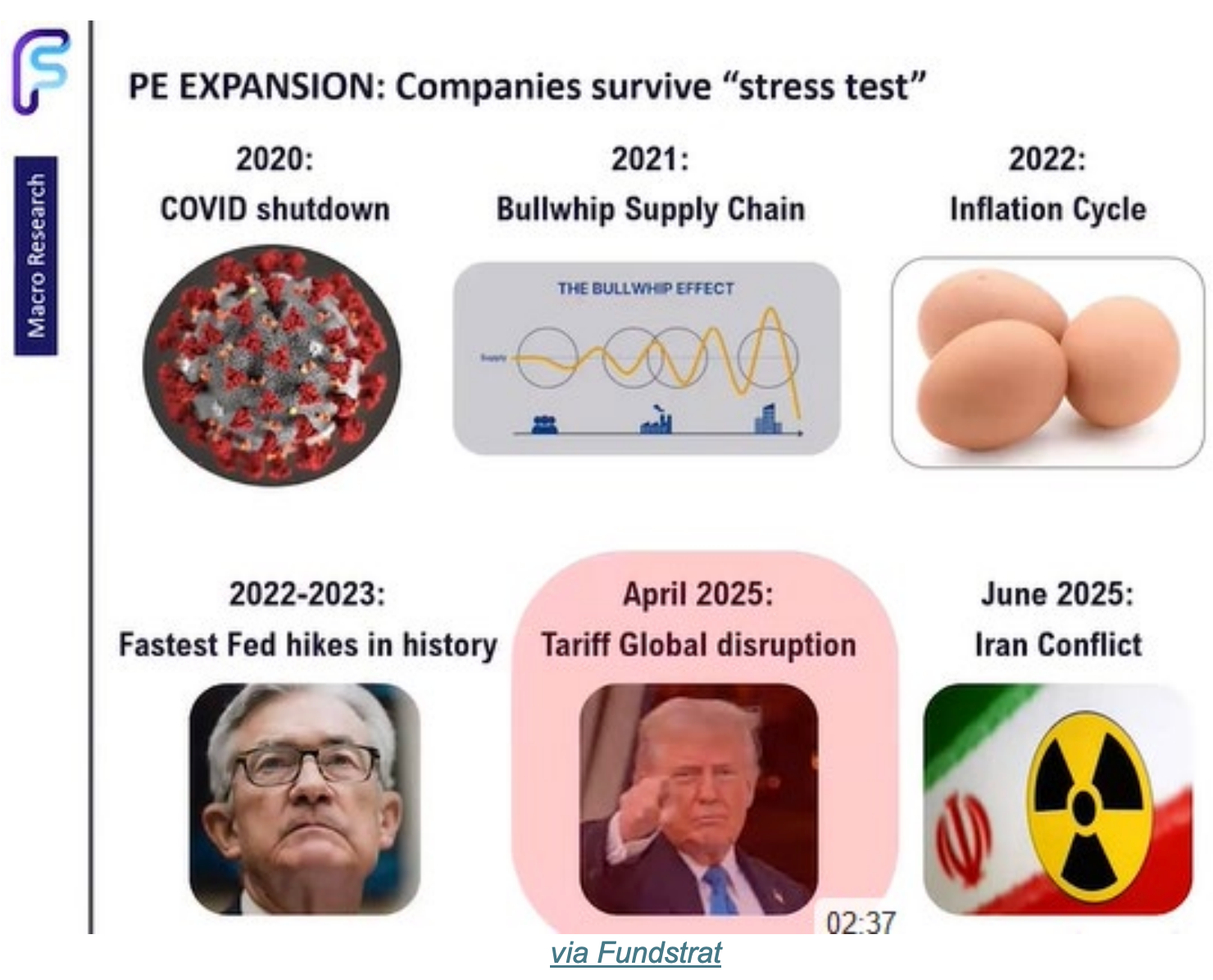
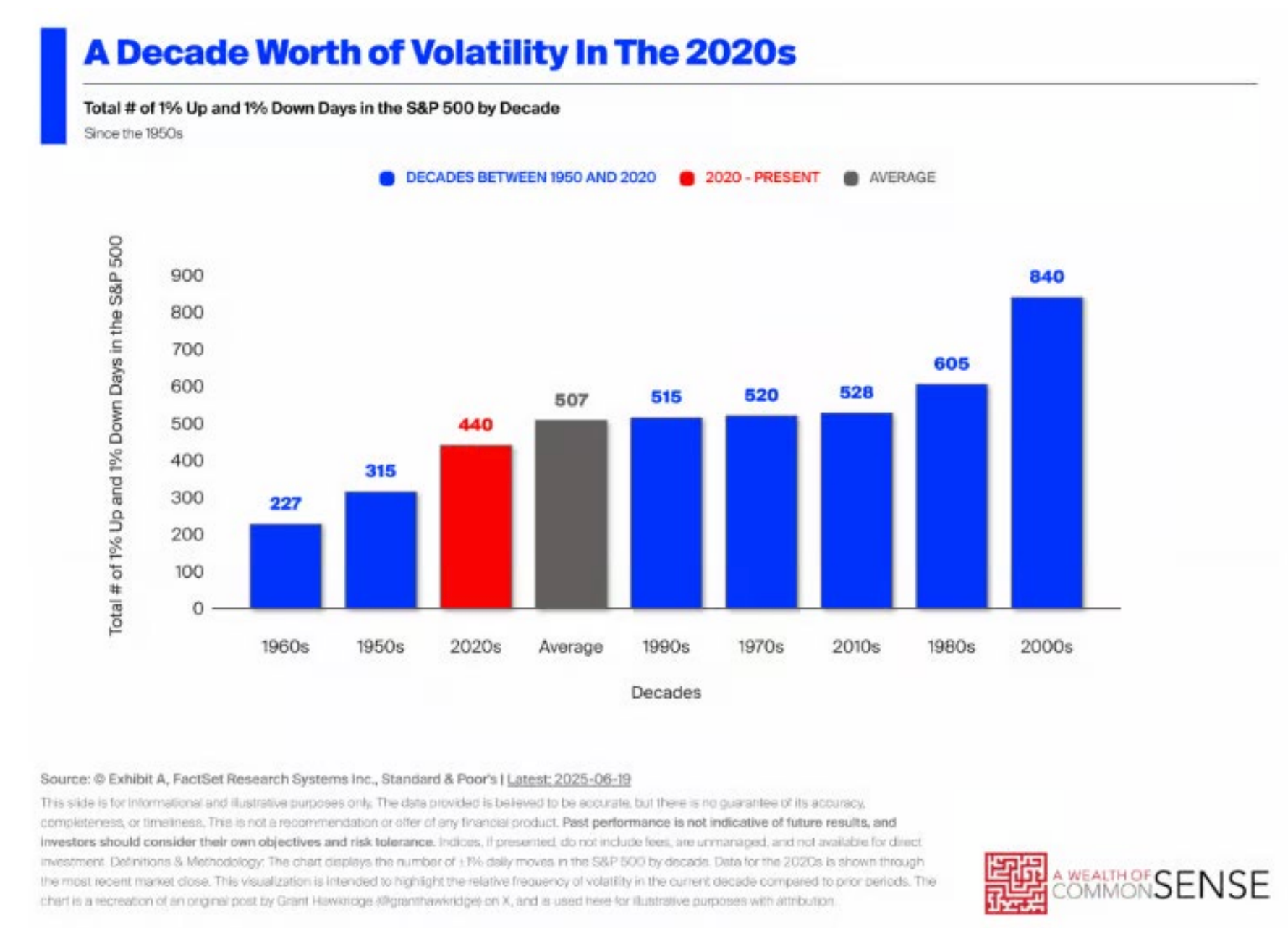
According to Tom Lee at Fundstrat, we’ve endured six “Mini-Black Swans” in just five years—compressing a decade’s worth of volatility into half the time. Yet markets continue their march upward. American investors are seemingly immune to the noise, as 401(k) contributions hit all-time highs and retail stock buying reaches its highest level since 2018.
The second twist? The rise of the speculation economy—an ecosystem of crypto, gambling, prediction markets, and derivatives trading. As Dylan wrote, “Your sons and your daughters are beyond your command.” If you can’t lend a hand, best to step aside. This is nowhere near a top yet.
We’ve said this in past letters, and it bears repeating: it can be argued that we haven’t seen a traditional recession since the 1990s. Instead, we endure speculative frenzies—bubbles in tech, housing, crypto—that periodically burst. In between, the market delivers three 5% corrections a year, one 10–15% correction annually, and a 20–30% drawdown every five years.
6 Mini-Black Swans in 5 Years
The Times They Are A-Changin
Song by Bob Dylan (1964)
“Come senators, congressmen, please heed the call
Don’t stand in the doorway, don’t block up the hall
For he that gets hurt will be he who has stalled
The battle outside ragin’
Will soon shake your windows and rattle your walls
For the times they are a-changin’
“Come mothers and fathers throughout the land
And don’t criticize what you can’t understand
Your sons and your daughters are beyond your command
Your old road is rapidly aging
Please get outta’ the new one if you can’t lend your hand
For the times they are a-changin'”
These probabilistic return assumptions depend on current market conditions and, as such, may change over time.
IMPORTANT: The projections and other information generated by the Vanguard Capital Markets Model regarding the likelihood of various investment outcomes are hypothetical in nature, do not reflect actual investment results, and are not guarantees of future results. Distribution of return outcomes from the VCMM are derived from 10,000 simulations for each modeled asset class. Simulations are as of March 31, 2019. Results from the model may vary with each use and over time.
Part II. Speculation Economy
The rise of crypto, phone-based gambling, prediction markets, and high-speed derivatives trading is fueling a new wave of risk-taking that may ultimately surpass the dot-com bubble in scale. Welcome to the speculation economy.
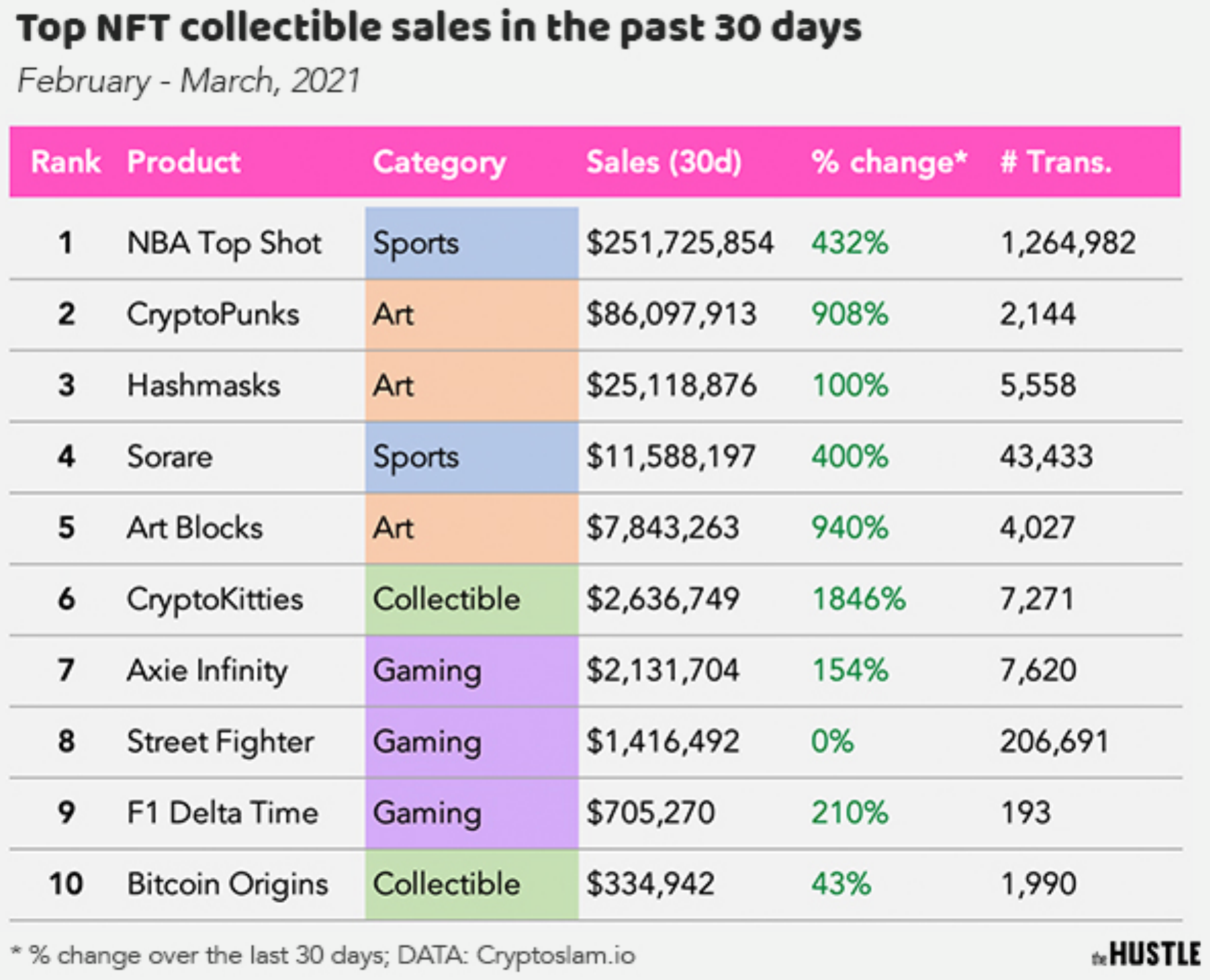
It’s been 25 years since the internet bubble burst. That’s just enough time for a new generation to forget how these things end. Meme stocks and SPAC IPOs are back with a vengeance.
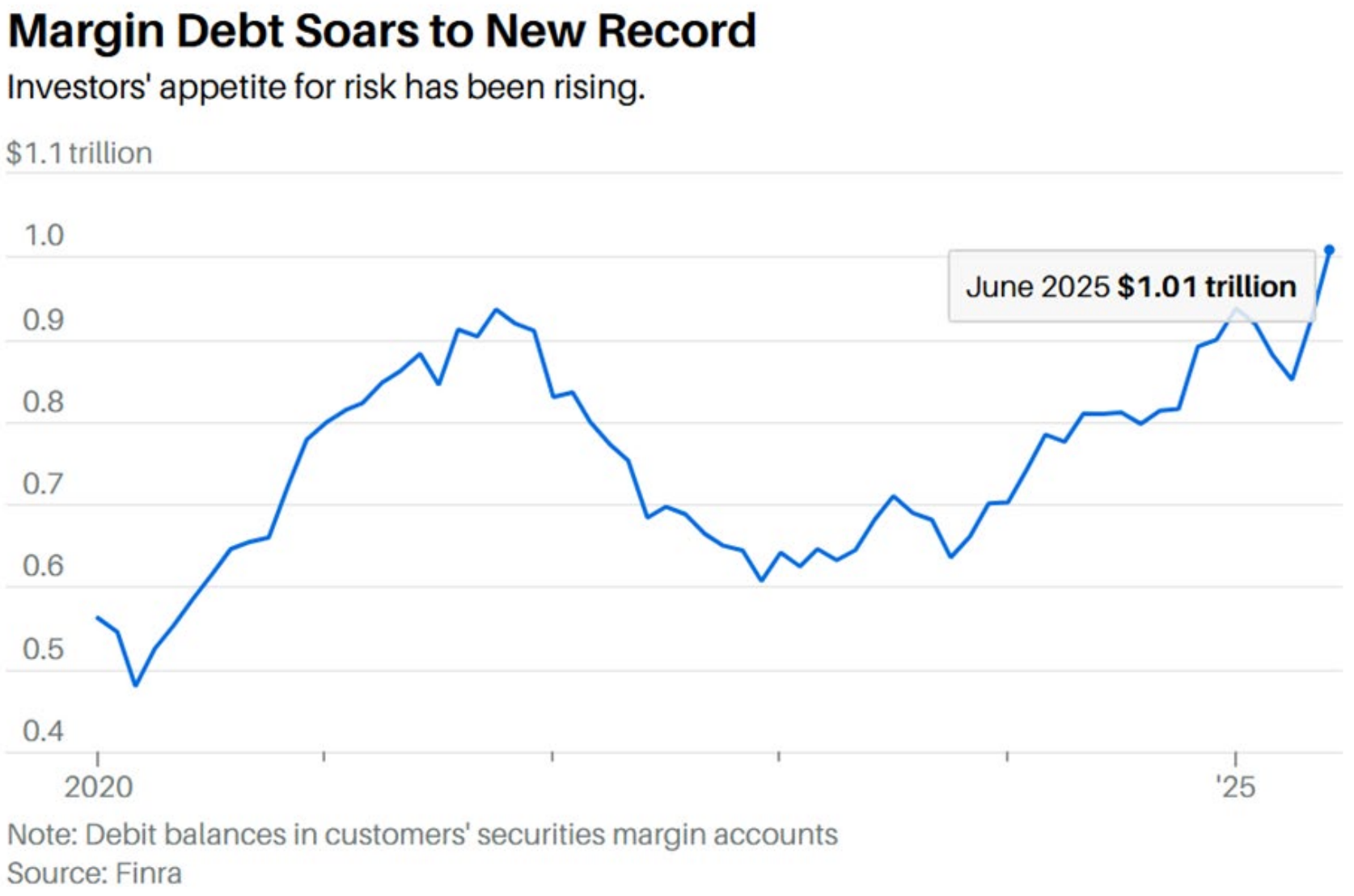
Margin debt just crossed $1 trillion, surpassing the 2021 peak. While debt-to-GDP ratios aren't yet at crisis levels, the cost of borrowing has risen dramatically—margin rates were around 1.5% back then, and today they’re closer to 4.5%.
Strategists at Deutsche Bank are sounding alarms. According to *Barron’s*, the recent 18% surge in margin usage is one of the fastest on record—comparable only to late 1999 and mid-2007. We all know how those ended.
Again, this is not near the end, we could have massive move higher before it gets bubbly.

On December 7th, 1999, Barron’s published the infamous “What’s Wrong,Warren” cover eerily before the Nasdaq crashed 50% and Berkshire recovered years’ worth of underperformance.
The below graph plots the time period 6/30/98 through 2/29/00 for the Nasdaq where many dot-com and technology stocks traded, and the price of Berkshire Hathaway, Warren Buffett’s holding company, which consisted of value stocks:
https://kailashconcepts.com/ Kailash Concepts
Was the Nasdaq 100 20% rally in the first quarter a repeat of the above or a new bull market in tech? A big portion of the answer will come from the direction of interest rates. The Fed came in like a hurricane upending markets across the world, but we have not begun to feel the effects of higher interest rates working their way across the system. As rates settle into a new range, it will have a profound effect on new business initiatives going forward and be exacerbated by the recent regional bank speed bump that will reduce lending to small business owners. Below are Vanguard’s projected 10-year returns that I include at the end of every letter. The interesting data point is treasuries and high-quality corporate bonds have higher projected returns than growth stocks at one-quarter of the volatility.
Like Neil Young says “I want to love you but I’m getting blown away.”
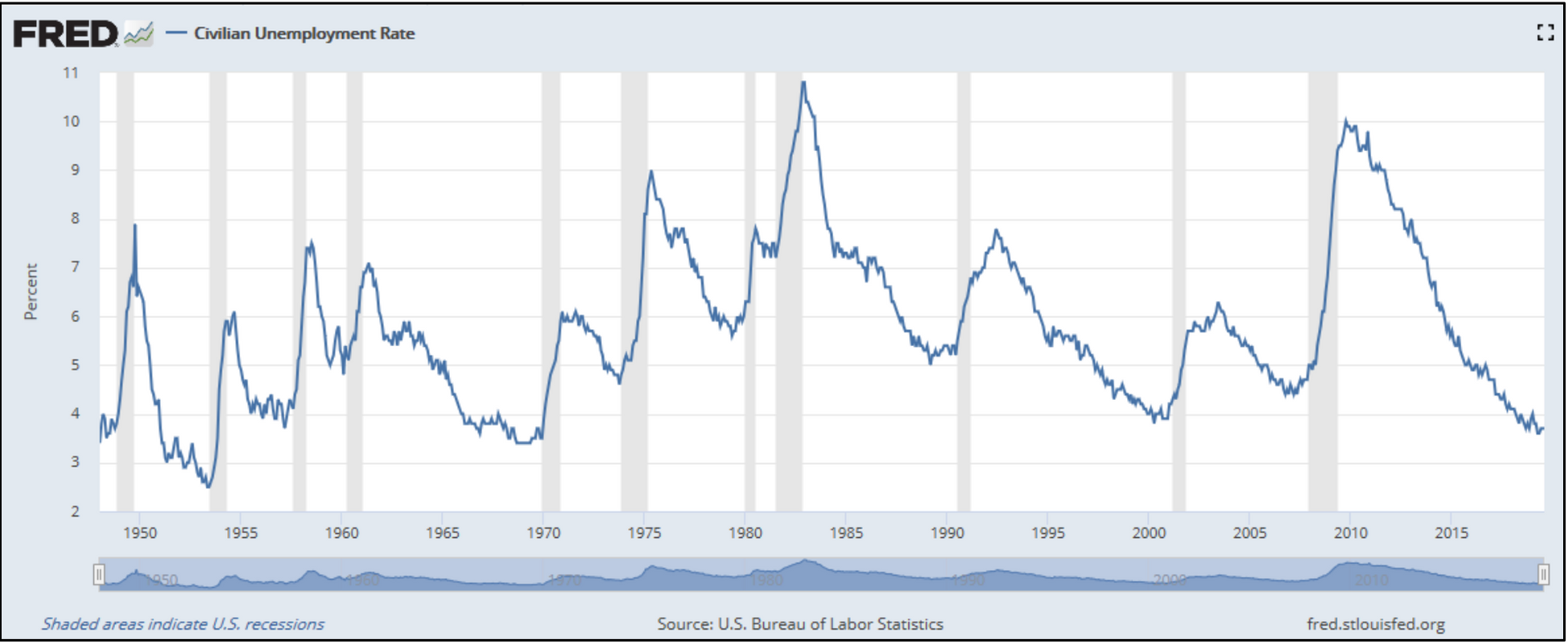
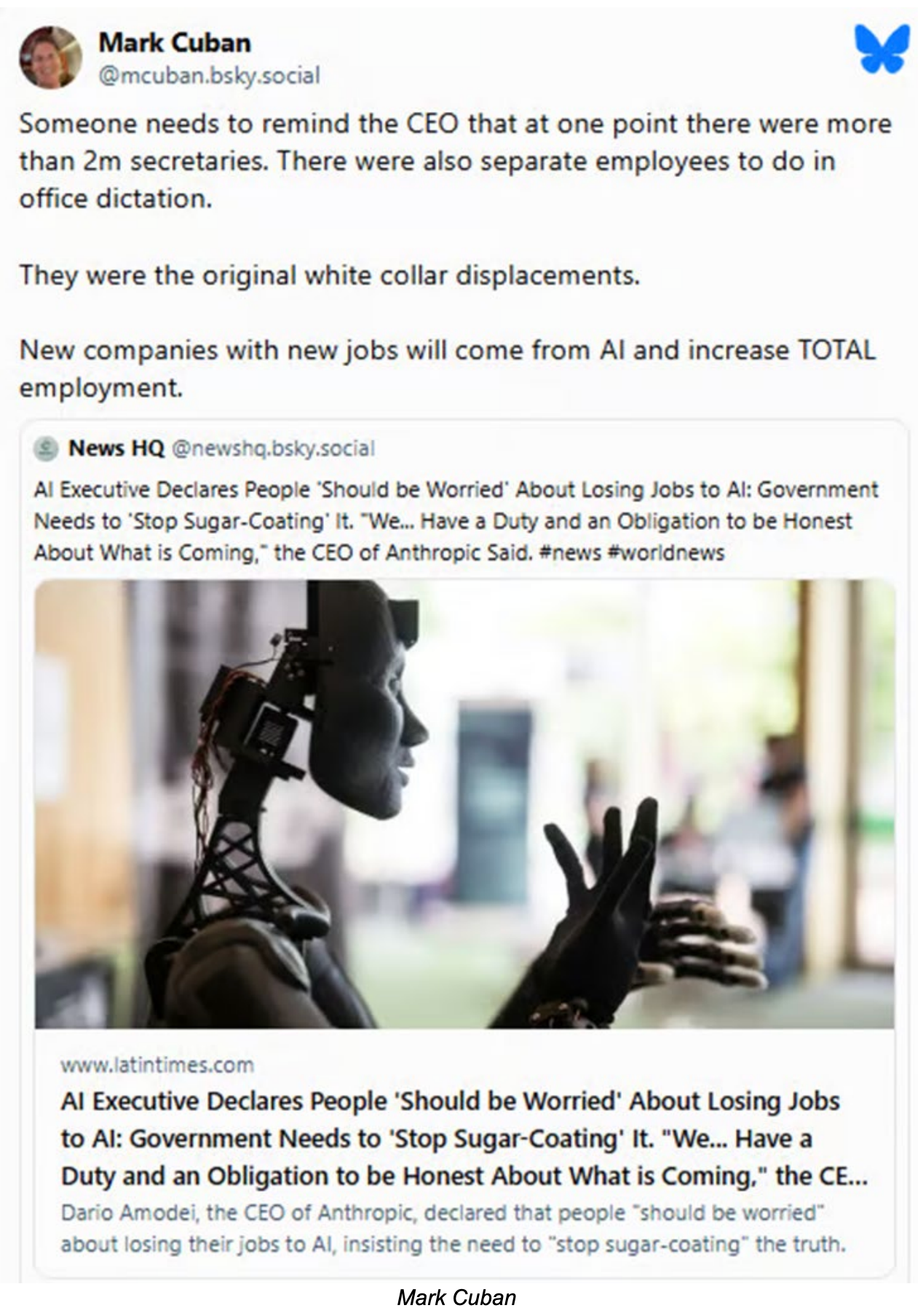
I know what your thinking, automation and less inflation is good, but won’t we lose millions of jobs? It’s a fair concern, but history tells a different story. In Economics in One Lesson, Henry Hazlitt outlines how innovation doesn’t eliminate jobs—it shifts them. Mark Cuban recently addressed this same concern: yes, there will be displacement, but total employment has historically expanded with each wave of innovation.
Just look at the past 25 years of tech advancement—despite rapid automation, we’re sitting at 4.1% unemployment and facing labor shortages across key industries. The jobs always follow the invention.

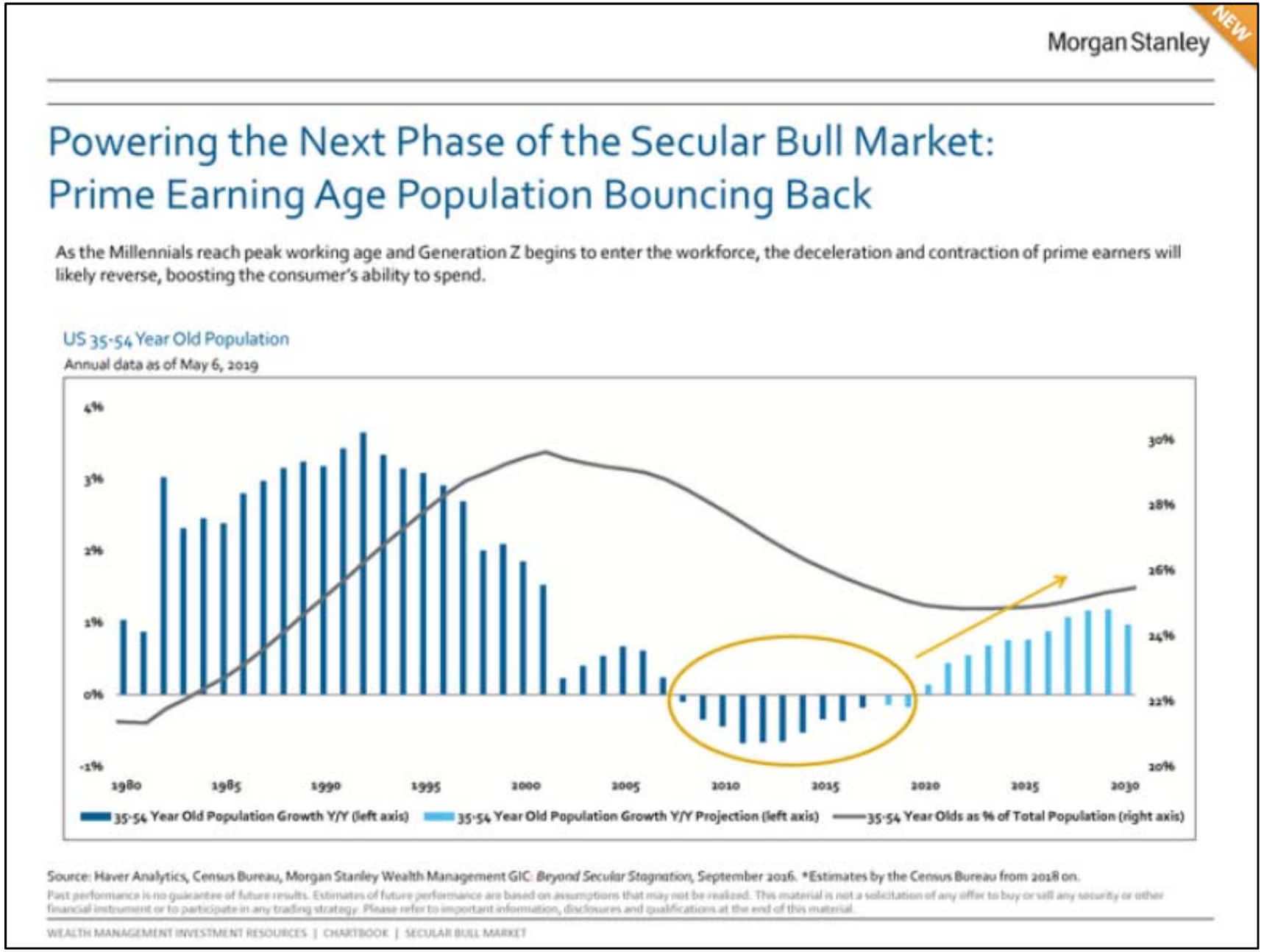
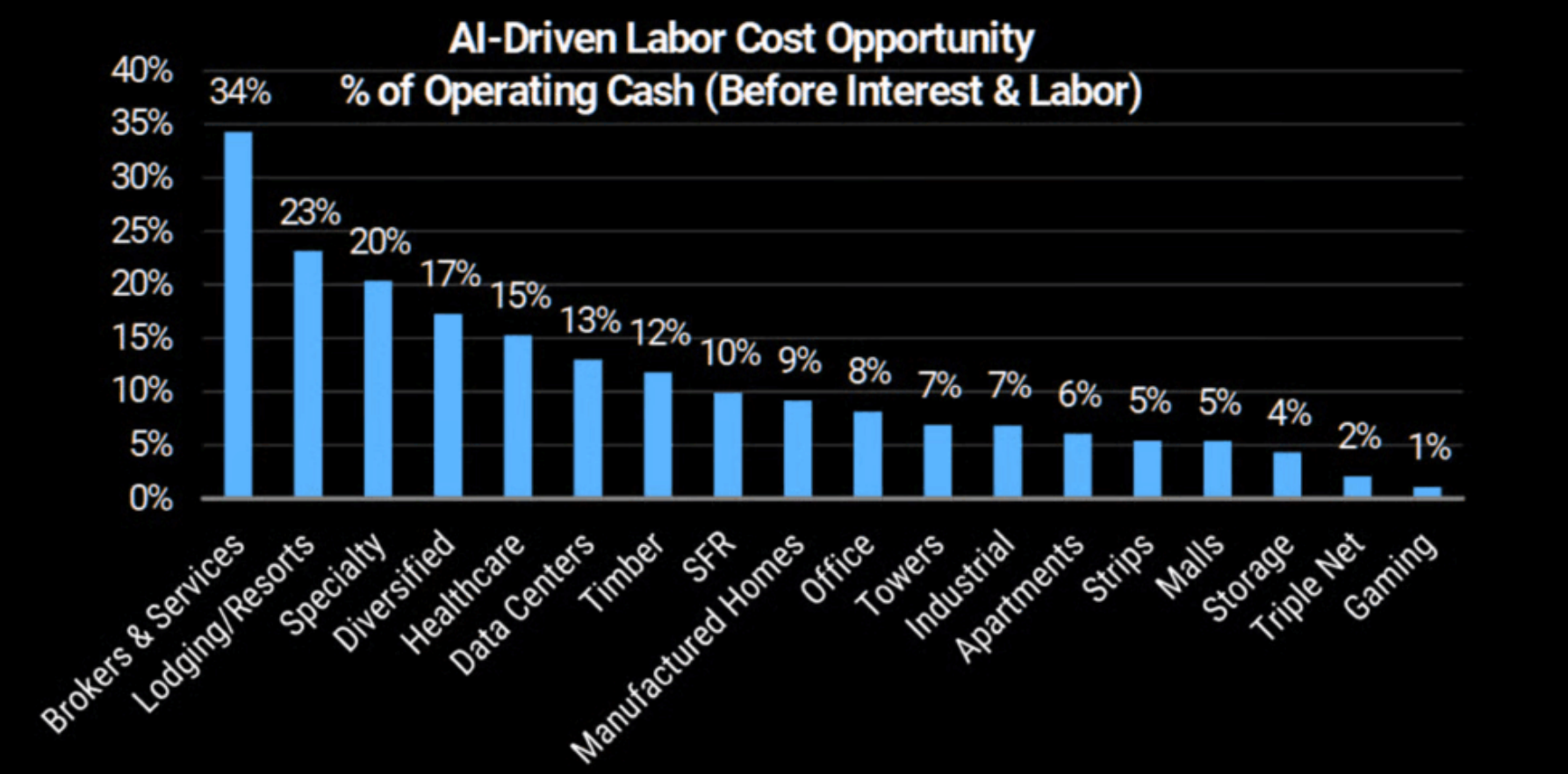
Automation
AI-driven automation is expected to lower costs and increase productivity. The chart below illustrates projected increases in operating cash flow from labor cost savings due to AI adoption.
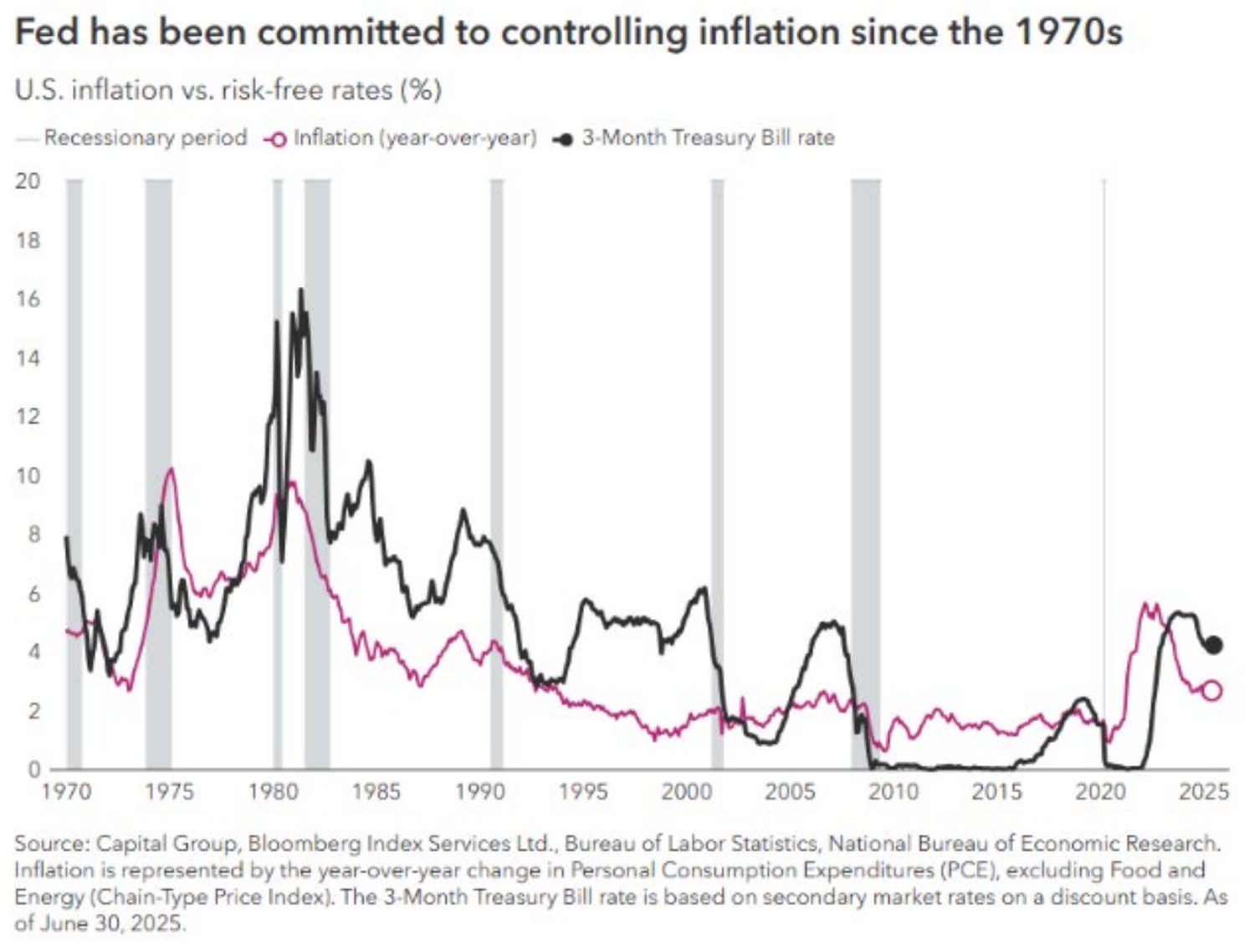
But this isn't just about a single technology—it’s about a long-term deflationary trend. Since the tech boom began in the 1990s, inflation has been on a consistent downward trajectory. While the Fed deserves credit, much of the long-term pressure on inflation has come from innovation itself.
The bull remains intact. Momentum is strong. At Lansing Street, we continue to believe U.S. equities offer the best long-term returns over inflation anywhere in the world. But to earn those returns, you must endure the volatility—and resist the temptation to treat investing like a casino.
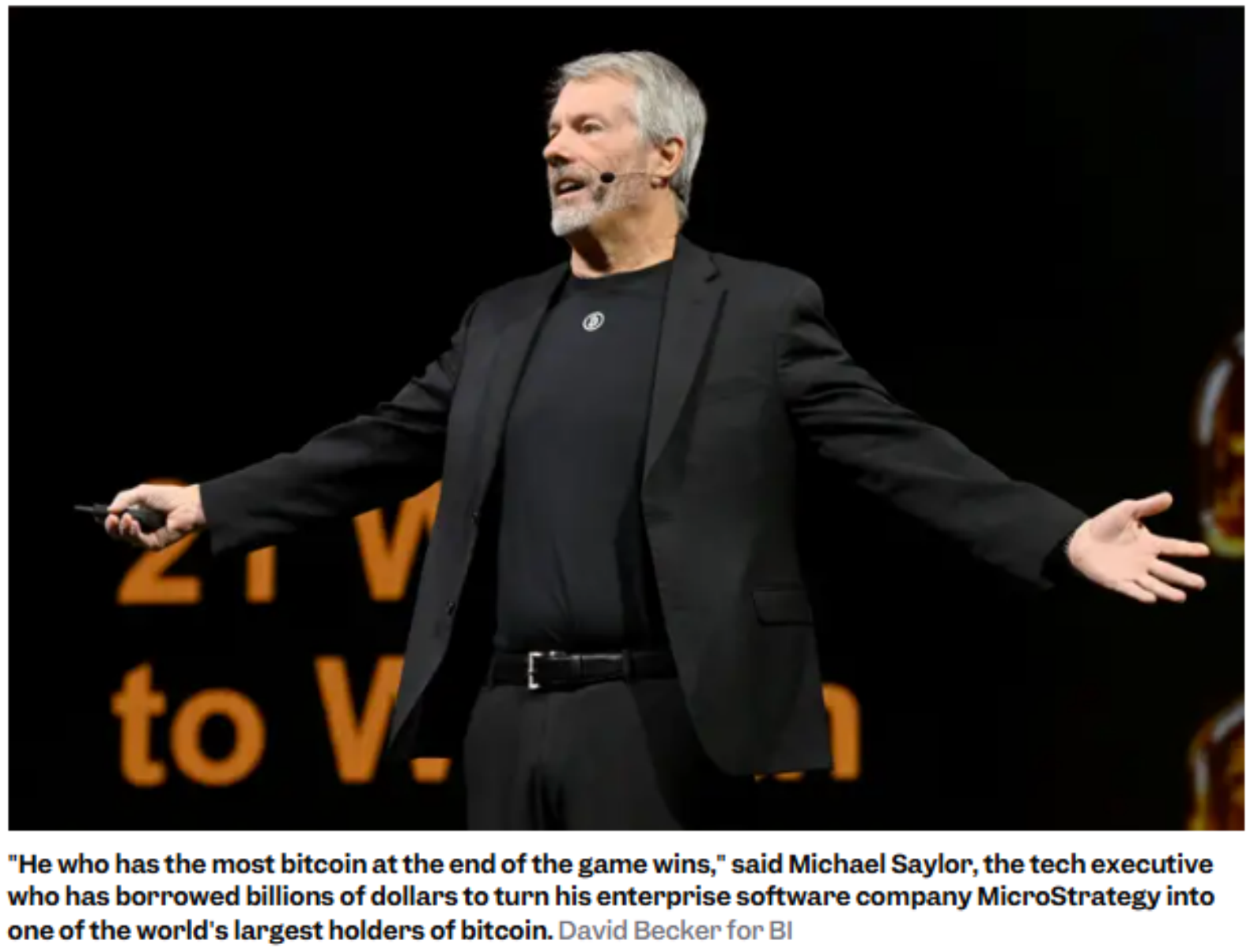
And then there’s Michael Saylor —a figure who makes Gordon Gekko look like a cautious Vanguard investor.
At a recent conference, Saylor took the stage as the Bitcoin zealot, delivering a slideshow of 21 instructive axioms, each paired with AI-generated images. Phrases like “Master artificial intelligence” and “Domicile where sovereignty respects your freedom” flashed on the screen, creating a surreal mashup of libertarian futurism and investment hype. The core message? Forget your own business ideas. “Do not chase your own good ideas,” he told the audience.
There is only one mission: sell or mortgage everything you own, take out loans upon loans, and buy as much Bitcoin as fast as you possibly can. One slide declared:
“Raise and reinvest capital relentlessly — velocity compounds wealth.”
In one particularly jaw-dropping moment, Saylor laid out how a dentist making a few hundred thousand dollars a year could—in theory—become a Bitcoin billionaire through an aggressive sequence of corporate maneuvers, margin loans, share sales, and revolving lines of credit. “Why aspire to be merely rich,” he asked, “when you could be the first billionaire dentist on your block?”
This isn’t investing. It’s something closer to evangelism. “Give me all your money to enter heaven.” The story here is very much to be continued.

Leveraged loans are up 50 percent since 2015
Leveraged loans, which are issued by overleveraged companies with insufficient cash flows, are part of what Wolf Richter recently called the “gigantic pile of risky corporate debt that is now being brutally repriced as concerns over credit risk (the risk of default) are finally bubbling to the surface.” According to Richter, the S&P/LSTA US Leveraged Loan 100 Index, which tracks the prices of the largest leveraged loans, has plunged by 20 percent since February 22nd.
According to Richter, leveraged loans “are traded in slices like securities or are packaged into highly rated Collateralized Loan Obligations (CLOs). But for years, investors had the hots for them, driven by their relentless chase for yield, in a world of interest rate repression.”
These companies, noted Richter, were often acquired by private equity firms through leveraged buyouts, which means they loaded up those companies with lots of debt. In addition, “PE firms extracted special dividends from their companies,” which were funded by leveraged loans. That’s a form of asset stripping and it leaves the company “more leveraged, more precarious and more likely to topple. But who cares? Those were the good times and the chase for yield was on,” lamented Richter.
One area to watch closely: zero-day options. Retail traders are diving into this high-speed, high-risk corner of the market—often with little understanding of the odds. These trades are structured in ways that heavily favor market makers. When even the world’s top hedge funds are banning their own professional traders from using these tools, it should give pause to anyone using a Robinhood app to try their luck.
Goldman Sachs summarizes the speculative surge best. Their latest chart highlights the four riskiest pockets of the market—and all four are now in the top decile of risk. If history rhymes, they’re heading toward 100% before this bull market is over.
Disclosures
Lansing Street Advisors, LLC is a registered investment advisor with the State of Pennsylvania. You can read more about the Lansing team at http://www.lansingadv.com/
To the extent that content includes references to securities, those references do not constitute an offer or solicitation to buy, sell or hold such security as information is provided for educational purposes only. Articles should not be considered investment advice and the information contained within should not be relied upon in assessing whether to invest in any securities or asset classes mentioned. Articles have been prepared without regard to the individual financial circumstances and objectives of persons who receive it. Securities discussed may not be suitable for all investors. Please keep in mind that a company’s past financial performance, including the performance of its share price, does not guarantee future results.
Material compiled by Lansing is based on publicly available data at the time of compilation. Lansing makes no warranties or representations of any kind relating to the accuracy, completeness or timeliness of the data and shall not have liability for any damages of any kind relating to the use of such data.
Material for market review represents an assessment of the market environment at a specific point in time and is not intended to be forecast of future events or guarantee of future results.
Indices that may be included herein are unmanaged indices and one cannot directly invest in an index. Index returns do not reflect the impact of any management fees, transaction costs or expenses. The index information included herein is for illustrative purposes only.
The trademarks and service marks contained herein are the property of their respective owners.
Lansing Street Advisors is a registered investment adviser. Information presented is for educational purposes only and does not intend to make an offer or solicitation for the sale or purchase of any specific securities, investments, or investment strategies. Investments involve risk and, unless otherwise stated, are not guaranteed. Be sure to first consult with a qualified financial adviser and/or tax professional before implementing any strategy discussed herein. Past performance is not indicative of future performance.
Lansing Street Advisors may discuss and display, charts, graphs, formulas which are not intended to be used by themselves to determine which securities to buy or sell, or when to buy or sell them. Such charts and graphs offer limited information and should not be used on their own to make investment decisions.
Not only are new stock market highs as American as apple pie, but volatility is the patriotic soul of the U.S. market. As Peter Mallouk illustrates in the chart below, seemingly world-ending events occur multiple times each decade—yet the S&P 500 continues to push higher.
Investors have fully embraced the “buy the dip” mentality in the 2020s. Until we experience a true second-leg selloff—like in 1999 or 2008 that breaks prior lows—the inflows keep coming.
For perspective: between 70 to 85 million people died in World War II, including more than 50 million civilians. Markets recovered and marched forward. Volatility isn’t new—it’s the price of admission for long-term gains.
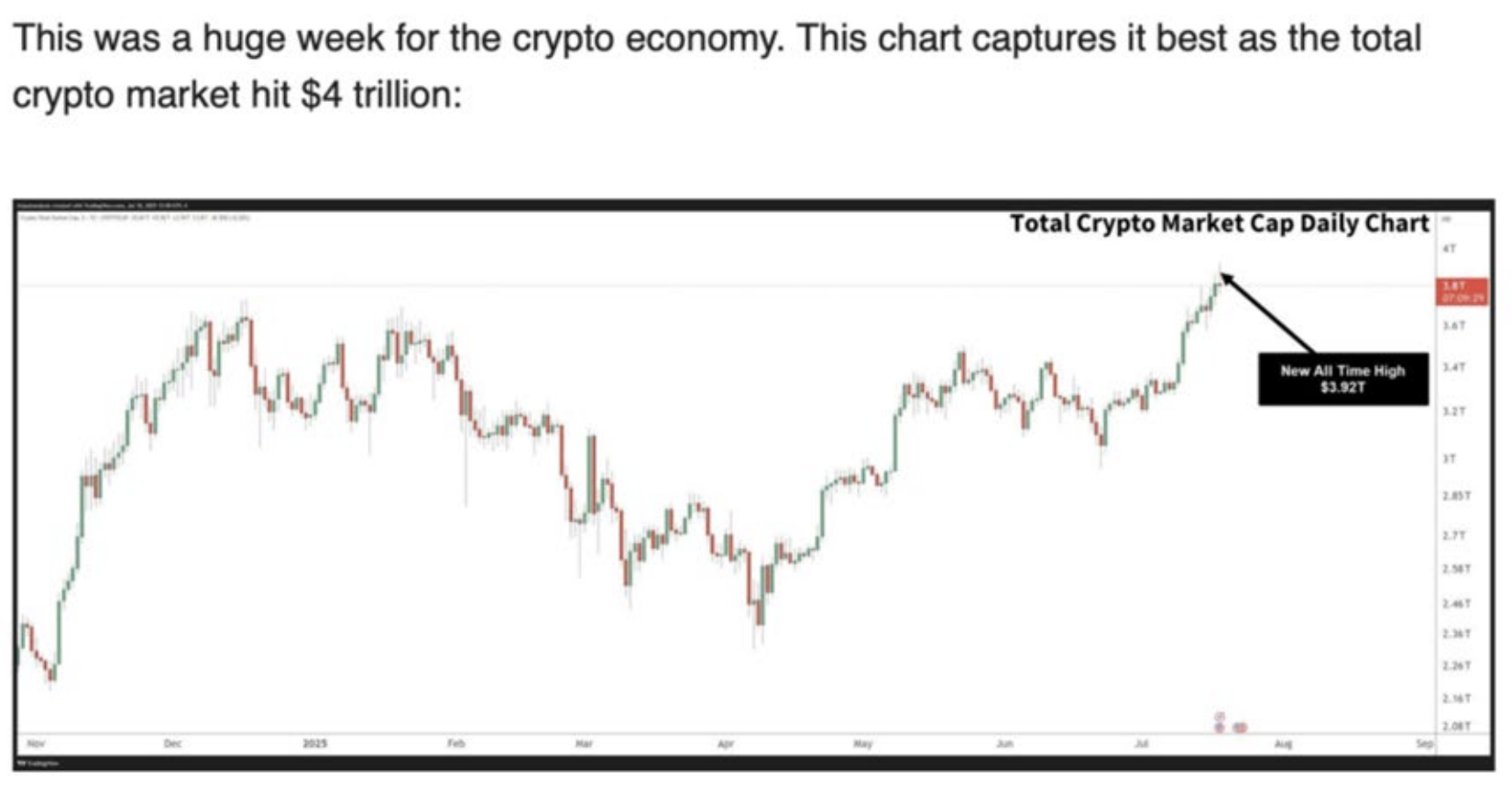
Meanwhile, the crypto ecosystem hit $4 trillion this year. The bulls were right: crypto is becoming institutionalized. There are now 28 crypto-related ETFs, 12 crypto companies scheduled to IPO in 2025, and institutional buyers—from pensions to endowments—are quietly building positions.
Crypto as an asset class is here to stay, but a significant percent of their ecosystem is still corrupt and extremely speculative. But like the early internet era, many crypto players will go to zero before we reach the promised land.
As I’ve argued in previous letters, the idea that U.S. economic leadership is fading is overblown. After predictions of capital fleeing the U.S. in response to Trump’s economic agenda, we’re now seeing the opposite: net foreign purchases of U.S. securities hit a record in May 2025.


The Weak Dollar
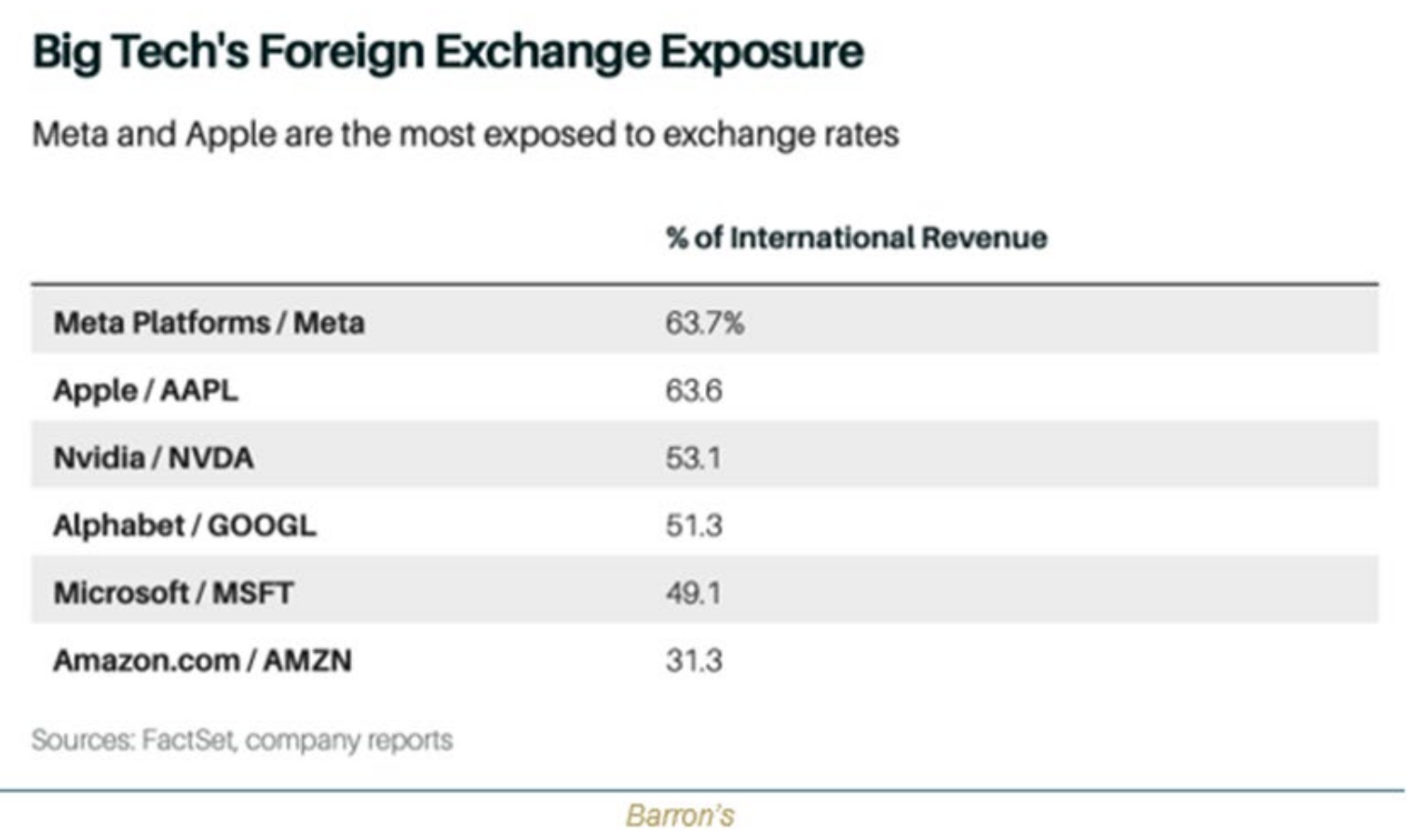
The U.S. dollar posted its worst first half of the year since 1973. Whether that’s good or bad depends on sector, market cap, and global exposure. For large-cap global companies—especially the Mag 7— a weaker dollar is a tailwind.
Especially important, none of the above are a recommendations for you to buy or sell any security. This is for information purposes only. Please talk with your advisor regarding any advice around the subject matter and your goals.
Part I. Valuations, Automation, and a Weak U.S. Dollar
Valuations
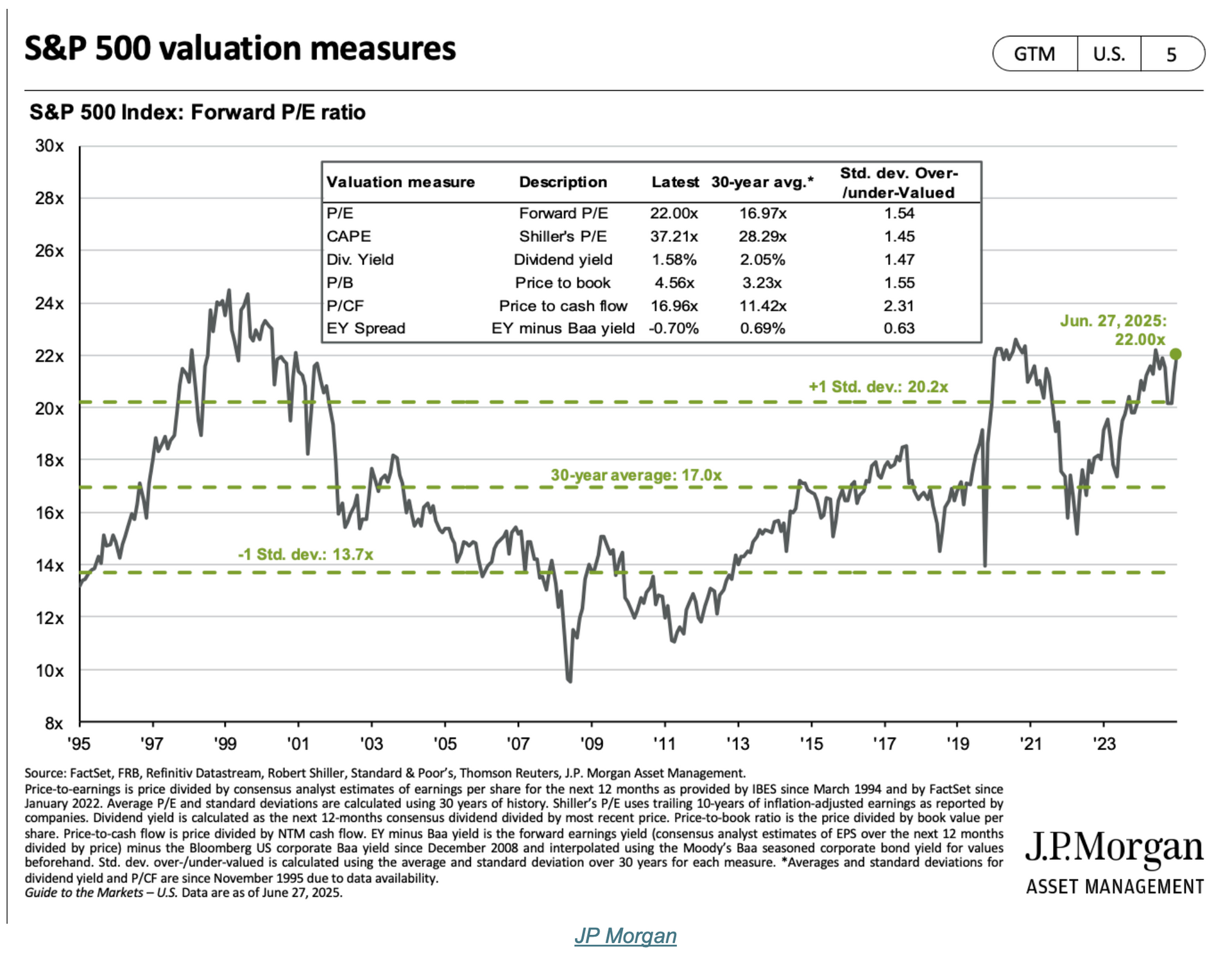
Let’s start with my favorite JP Morgan chart on market valuations: high equals expensive, low equals cheap.
We’re back to a forward P/E of 22x—right where we were in 2021. But there’s a key difference: in 2021, the 10-year Treasury yield was 1.5%. Today, it’s 4.4%. That means valuations are just as stretched, but now they're sitting atop much higher interest rates.
Does that mean markets are due to crash? Not necessarily. With potential deregulation, lower rates, and productivity gains from AI, we may even surpass the internet bubble highs. After all, it’s been nearly a generation since the last true market bubble in 1999–2000. New highs are not bearish for the market.
The S&P 500 witnessed a decade worth of volatility in 5 years
Conclusion
This quarter’s letter is far from bearish—it’s uniquely American. No other country in the world swings this big. Our entrepreneurs risk everything to chase their dreams, and that’s exactly why global capital continues to pour into both our public and private markets. The byproduct of this ambition? Volatility.
But volatility equals opportunity.
The democratization of information has brought investment tools to the fingertips of every American with a smartphone. And now, with AI, that access is accelerating. But here’s the reality: even with 100 years of data, elite educations, and institutional resources, professional investors still haven’t consistently beaten the index.
So what’s the likely outcome for retail traders trying to time bubbles? The same as always—pain.
History doesn’t repeat, but it often rhymes. Every cycle feels different, but the endgame tends to look the same: grave financial wounds for individual investors who believed it was different this time.
We’re not at the top yet—but mark it down, this story is far from over. Expect a wild IPO market before this bull is over, as venture and private equity unleash all the Unicorns ($1B private companies) to the public markets.
Michael Saylor isn’t new. In fact, he’s as American as apple pie. And as Dylan reminds us:
“Don’t criticize what you can’t understand.”
Right now, your kids may be the ones who “get it.” Most investors over 50—myself included—can’t clearly explain crypto. Institutional allocators still call it “speculative,” and 99% of the finance community can’t articulate the value prop beyond “you just have to be there.”
That’s why this crypto-AI-market cycle could dwarf the internet bubble. Senators and Congresspeople are following Dylan’s call to “not block the doorway.” We are heading into what may be the least regulated market run-up since before the SEC was created in 1929.
How many Gen Z or Millennial investors have studied the history of financial bubbles? Maybe 1%. So if you’re over 50, prepare to be called “stupid” for a little while longer—because we’re not in the ninth inning yet. Again with limited regulation and massive liquidity, we are not near bubble territory.
There’s a reason we just packed a decade’s worth of volatility into five years. This is likely the new normal. And it’s not over until the “buy the dip” strategy gets crushed.
Legendary investor Howard Marks put it best:
“You never get a bubble until the public, the brokerage community, the financial institutions, the pension funds, and even the universities are all involved.”
The Times They Are A-Changin
Song by Bob Dylan (1964)
“Come senators, congressmen, please heed the call
Don’t stand in the doorway, don’t block up the hall
For he that gets hurt will be he who has stalled
The battle outside ragin’
Will soon shake your windows and rattle your walls
For the times they are a-changin’
“Come mothers and fathers throughout the land
And don’t criticize what you can’t understand
Your sons and your daughters are beyond your command
Your old road is rapidly aging
Please get outta’ the new one if you can’t lend your hand
For the times they are a-changin'”

Meanwhile, America is leading in crypto, AI, and setting the stage to dominate quantum computing. That innovation fuels our markets—but also our greed. So let’s remember: don’t bet the entire wad.
All innovation eventually gets expressed through the U.S. stock market. Declines are temporary. Gains are permanent. And as we always say at Lansing Street Advisors: “Investing is a psychology game—not an IQ game.”
Great companies find a way through every crisis. Weren’t tariffs supposed to be the death of U.S. stocks?
Warren Buffett:
“Be fearful when others are greedy, and greedy when others are fearful.”