Introduction
Mick Jagger said:
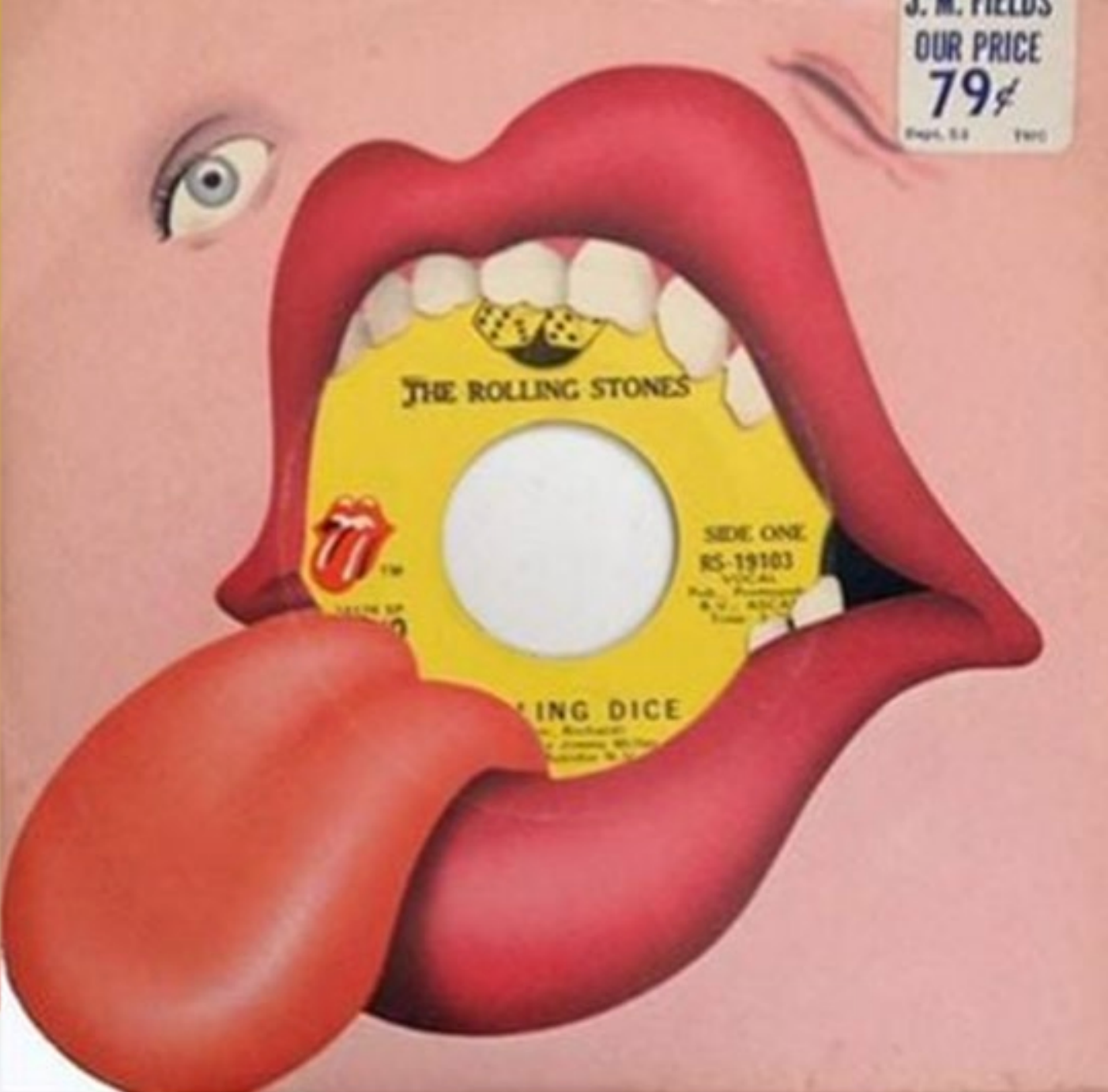
“It’s weird where your lyric things come from. On ‘Tumbling Dice,’ I sat down with the housekeeper and talked to her about gambling. She liked to play dice, and I really didn’t know much about it, but I got it off her and managed to make the song out of that. [It] was written to fit Keith’s riff. It’s about gambling and love—an old blues trick.”
These Rolling Stones’ lyrics channel the spirit of a promiscuous gambler—and it’s hard to find a better metaphor for today’s markets. “It’s about gambling and love,” Jagger said, and that sentiment feels especially relevant in 2025, where speculation and emotional investing are rolling together more than ever. From meme stocks to margin loans, Robinhood traders to crypto cowboys, the modern investing landscape looks a lot like dice—thrown over and over again.
As we discussed in last quarter’s The Times They Are A-Changin’ letter, vast segments of the market now resemble Jagger’s “promiscuous gambler”—where trading, investing, gambling, and entertainment all blur into a 24/7, touchscreen casino.
The Degenerate Economy , a term coined by Stocktwits CEO Howard Lindzon, captures this dynamic perfectly: speculative bets, fueled by easy access, with digital wallets becoming everything from brokerage accounts to betting slips.
"Over the past few years, Stocktwits CEO Howard Lindzon has been exploring what he calls the 'Degenerate Economy'—the next phase of investing where the lines between trading, ownership, and gambling blur, and it all happens in the palm of your hand. In this new economy, people are making high-risk moves and embracing a more speculative approach to finance, where digital wallets on your phone hold everything from investments to assets with just a few taps.”
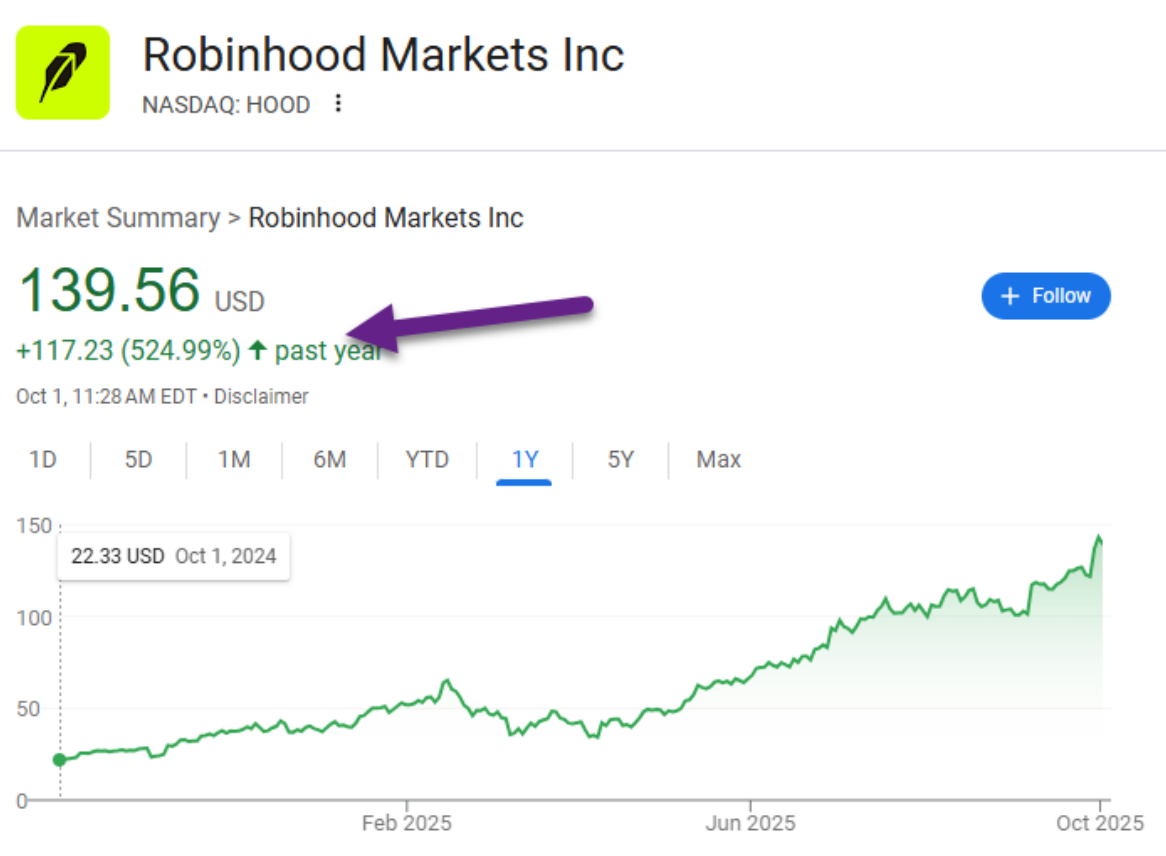
And if you want a poster child for this era, look no further than Robinhood (HOOD)—up +524% year-over-year.
What’s driving that growth?
- Trading fees—mostly from options and crypto.
- Margin lending—borrowed money fueling retail speculation.
- Prediction markets—yes, betting lines for finance, up 100% year over year.
Tumbling Dice
Song by The Rolling Stones (1972)
“Baby, get it straight
You got to roll me and call me the tumbling dice
Got to roll me (Call me the tumbling dice)
Got to roll me
Got to roll me
Got to roll me (Oh, oh yeah)
Got to roll me (Oh, oh)
Got to roll me (Oh yeah)
Got to roll me (Oh, keep on rolling)
Got to roll me (Oh, keep on rolling)
Got to roll me (Oh yeah, keep on rolling)
Got to roll me (Call me the tumbling dice)
Got to roll me (Yeah)
Got to roll me (Roll me, baby)
Got to roll me (Ah yeah)
Got to roll me (Oh my, my, my, my)
Got to roll me
Got to roll me (Keep on tumbling down, baby, oh)”
These probabilistic return assumptions depend on current market conditions and, as such, may change over time.
IMPORTANT: The projections and other information generated by the Vanguard Capital Markets Model regarding the likelihood of various investment outcomes are hypothetical in nature, do not reflect actual investment results, and are not guarantees of future results. Distribution of return outcomes from the VCMM are derived from 10,000 simulations for each modeled asset class. Simulations are as of March 31, 2019. Results from the model may vary with each use and over time.
That said, there is cause for optimism:
- The democratization of information has made learning personal finance easier than ever.
- 401(k) participation is climbing.
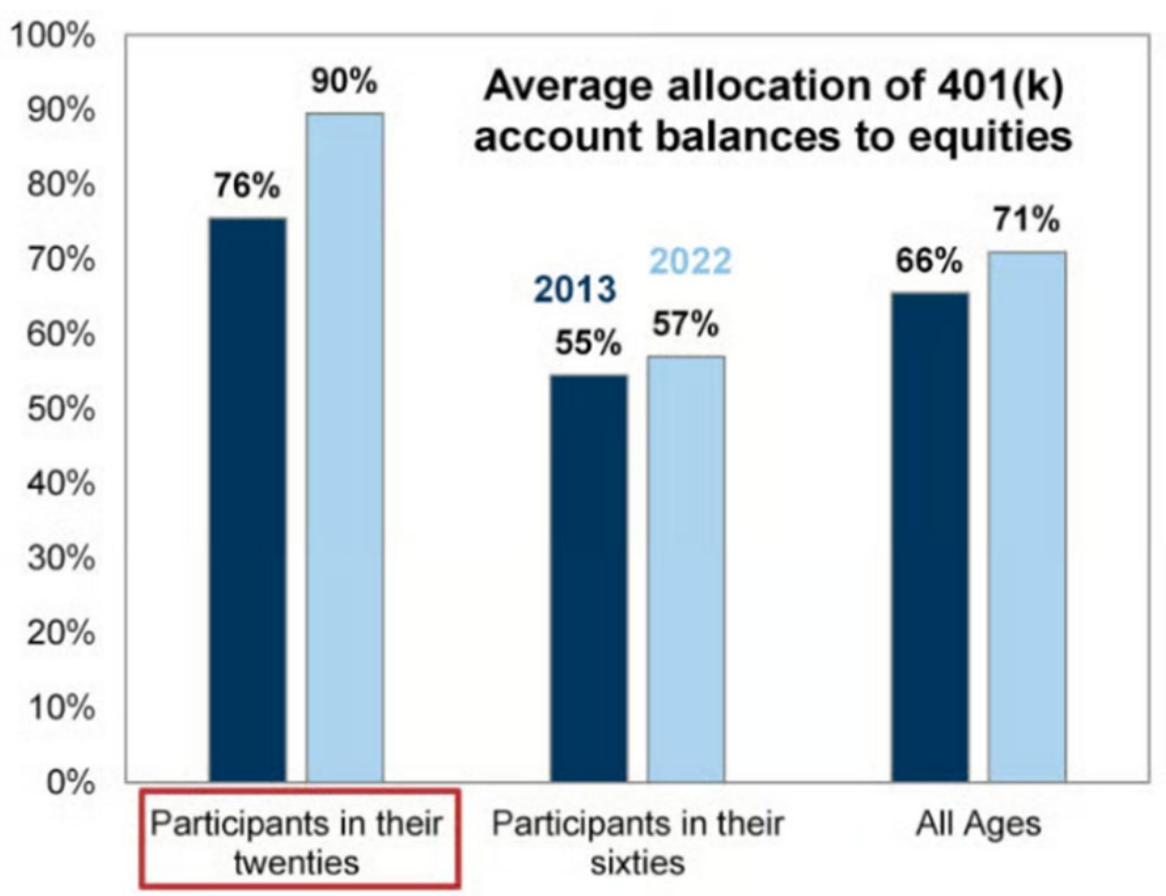
- Young investors in their 20s are holding 90% stock allocations in their portfolios.
- Participation rates are growing—especially relative to our global peers.
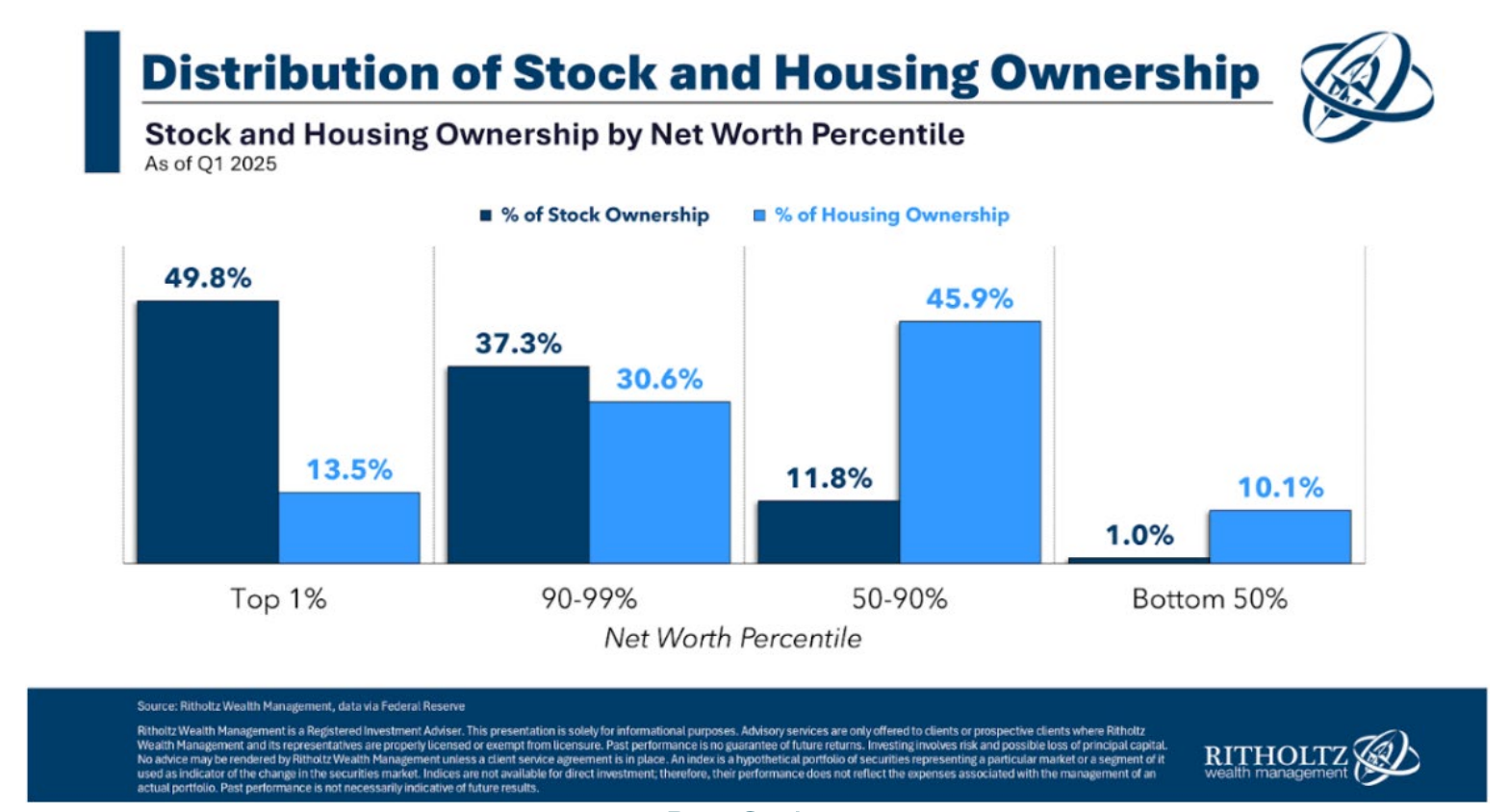
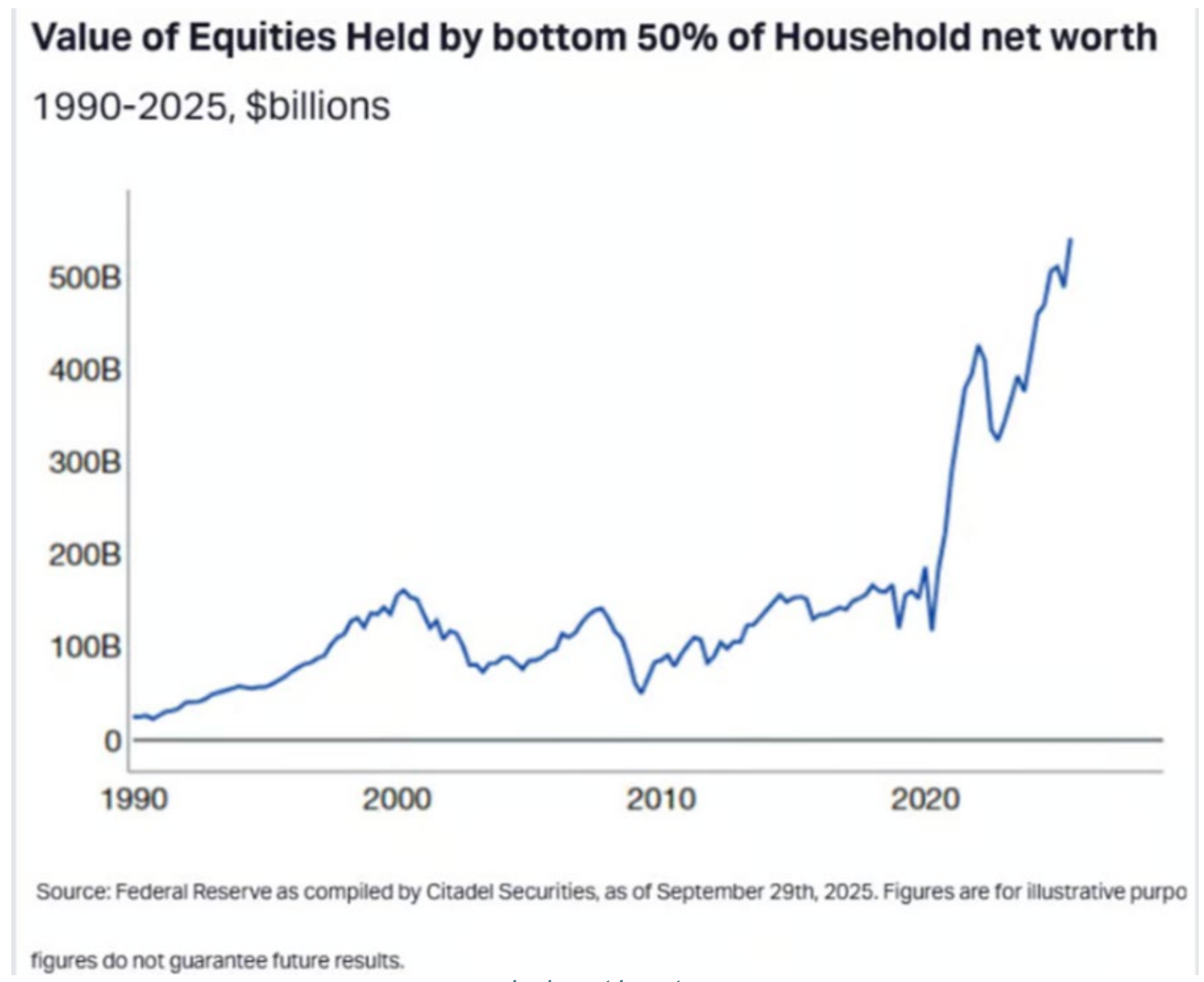
Even more encouraging, the bottom 50% of American households have quadrupled their stock holdings since 2020. Think about that: from virtually zero in 1990 to a meaningful stake today.
Yes, the top 10% still holds the majority of wealth, but the American appetite for shareholder capitalism is spreading—and that’s a positive trend for long-term national prosperity.
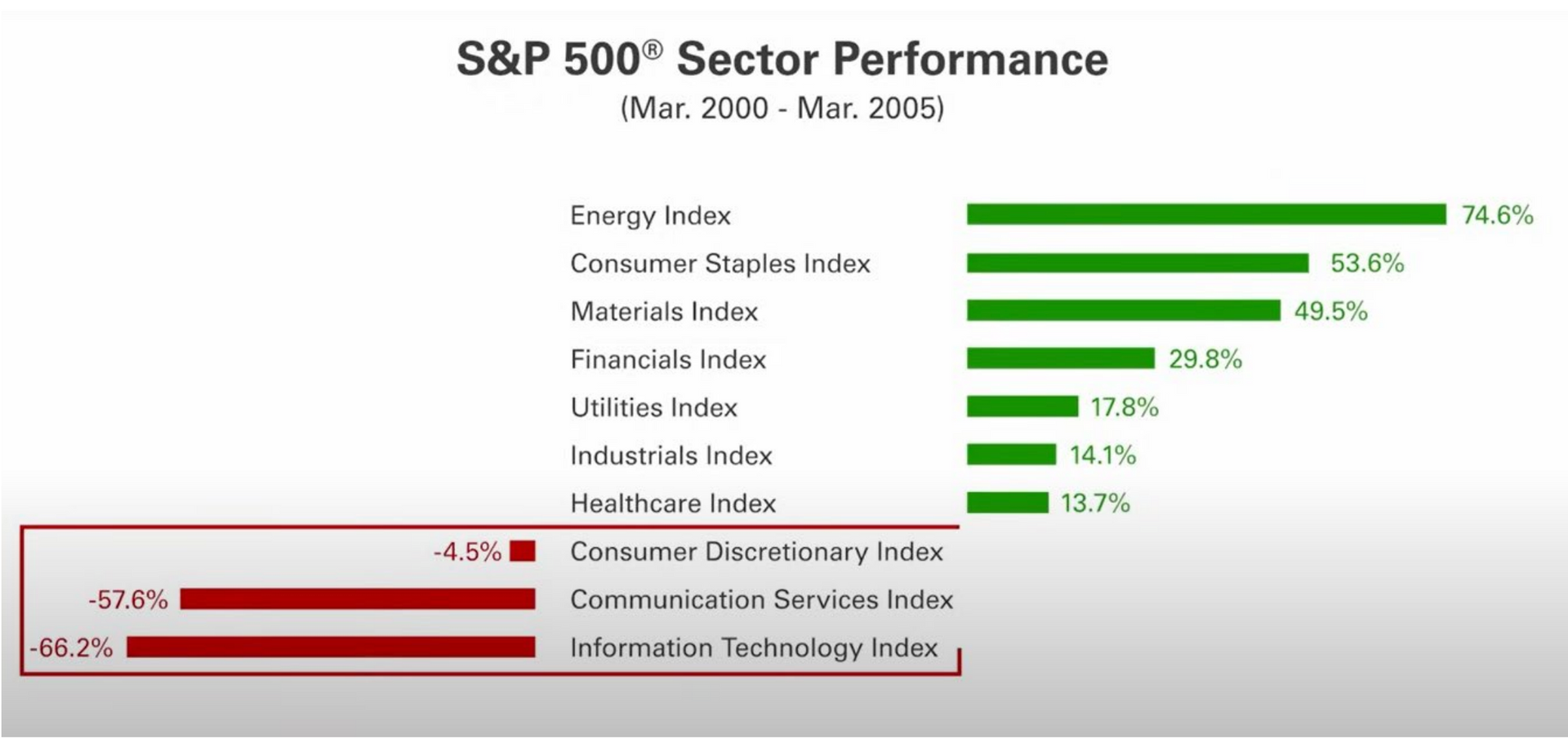
On December 7th, 1999, Barron’s published the infamous “What’s Wrong,Warren” cover eerily before the Nasdaq crashed 50% and Berkshire recovered years’ worth of underperformance.
The below graph plots the time period 6/30/98 through 2/29/00 for the Nasdaq where many dot-com and technology stocks traded, and the price of Berkshire Hathaway, Warren Buffett’s holding company, which consisted of value stocks:
https://kailashconcepts.com/ Kailash Concepts
Was the Nasdaq 100 20% rally in the first quarter a repeat of the above or a new bull market in tech? A big portion of the answer will come from the direction of interest rates. The Fed came in like a hurricane upending markets across the world, but we have not begun to feel the effects of higher interest rates working their way across the system. As rates settle into a new range, it will have a profound effect on new business initiatives going forward and be exacerbated by the recent regional bank speed bump that will reduce lending to small business owners. Below are Vanguard’s projected 10-year returns that I include at the end of every letter. The interesting data point is treasuries and high-quality corporate bonds have higher projected returns than growth stocks at one-quarter of the volatility.
Like Neil Young says “I want to love you but I’m getting blown away.”
Even better news from Vanguard: 92% of their investors did not trade during the Liberation Day sell-off. I'm not sure what those statistics are at Robinhood.
“We were looking at how Vanguard investors traded on those days between the third and ninth of April. The market was plunging, but 92% [of investors] didn’t trade. And even among those who did trade, 77% of them were buying the dip, especially younger people. Those who were sellers tended to be older.
Now, for many people, managing that fear and volatility is stressful. For some of those individuals, [financial] advice could be an important option. We’ve learned that advice not only adds value in terms of the portfolio, but also in terms of taking away stress and not having to worry about one’s financial life.”
— Barron's, Fiona Greig
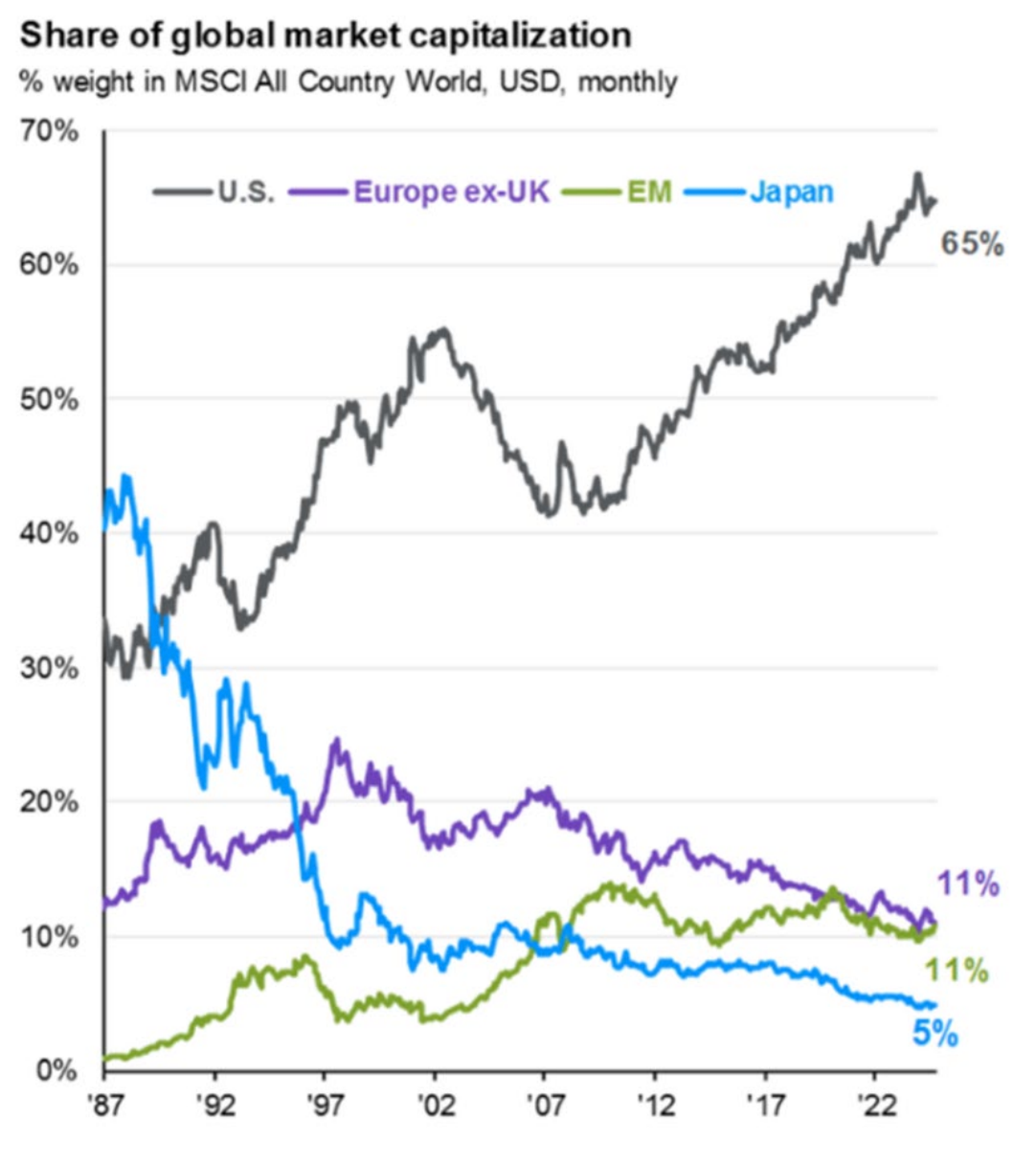
In regard to our global peers, just look at the scoreboard. Since the 2008 financial crisis, U.S. market capitalization has soared, while Europe and Japan have seen a 40-year downtrend in public stock value. Emerging markets have been locked in a two-decade sideways grind. America’s equity culture is the envy of the world, and we need to keep pushing for broader participation.
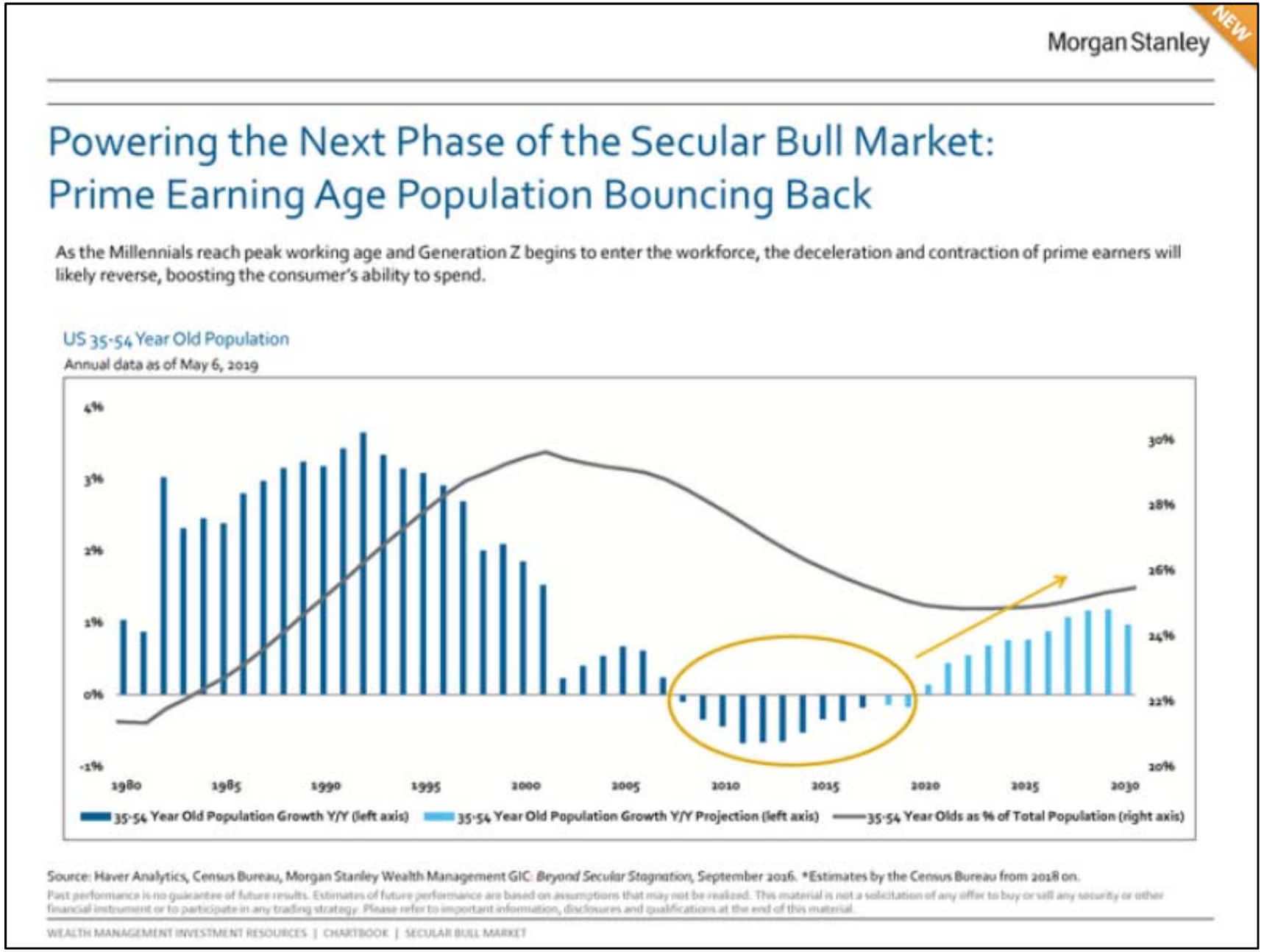
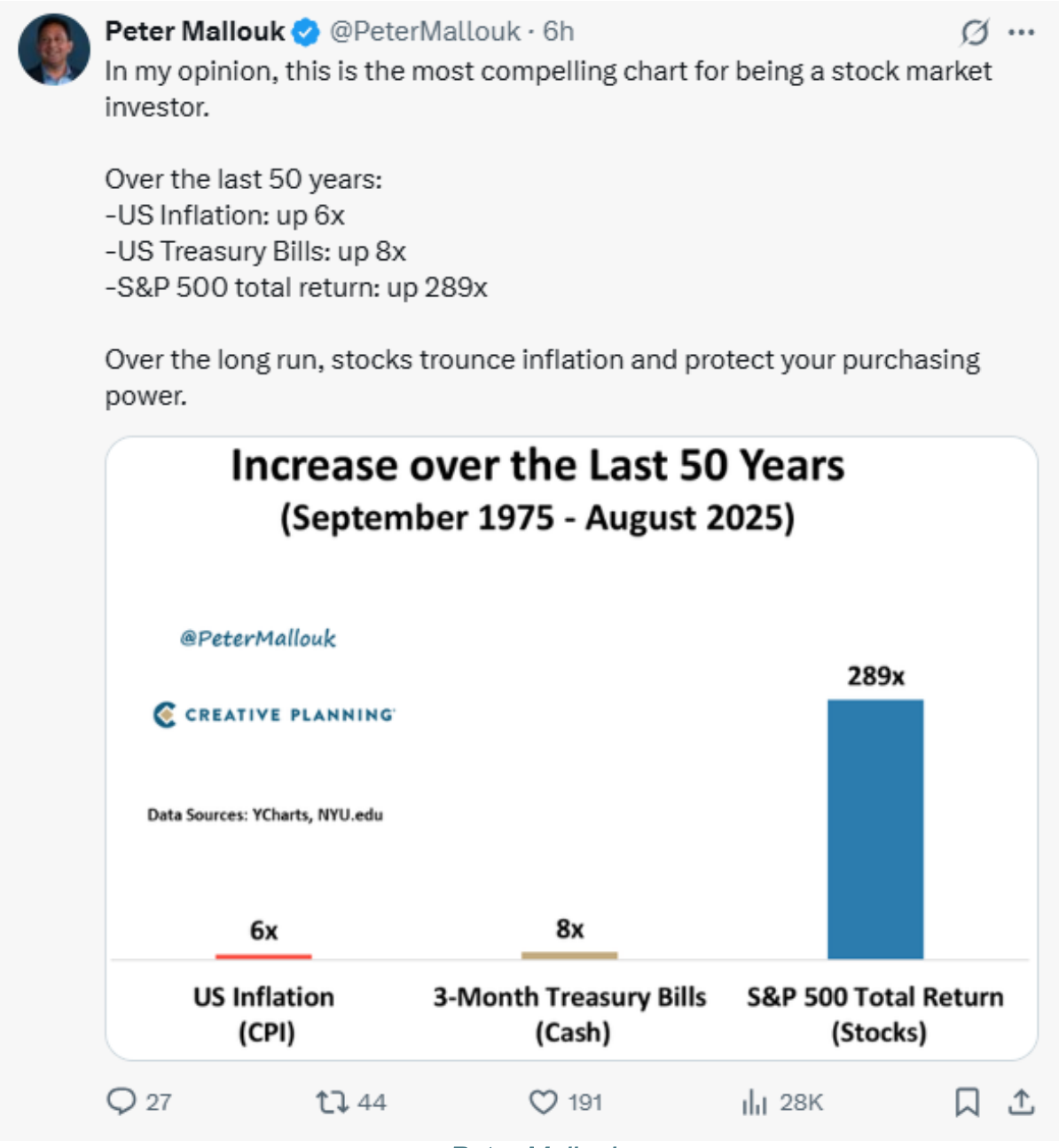
Why is broad stock ownership such a good thing? Because over the past 50 years, the S&P 500 is up 289x— while inflation is up just 6x. Let that sink in. Imagine if 50% of Americans had been invested in the market since the 1970s. The impact on household wealth would’ve been transformational. That’s why we should be teaching investing and financial literacy from first grade through college—twice a day.
Investing is not gambling. When you hold a diversified stock portfolio for the long run, you're engaging in a lowvolatility, high-return strategy. The data is clear.
The good news? Today’s youngest 401(k) participants seem to get it. Those in their 20s have nearly 90% of their portfolios in stocks, which is exactly where they should be. The bad news? Not enough of society is participating. But the trend is improving—especially compared to global peers.
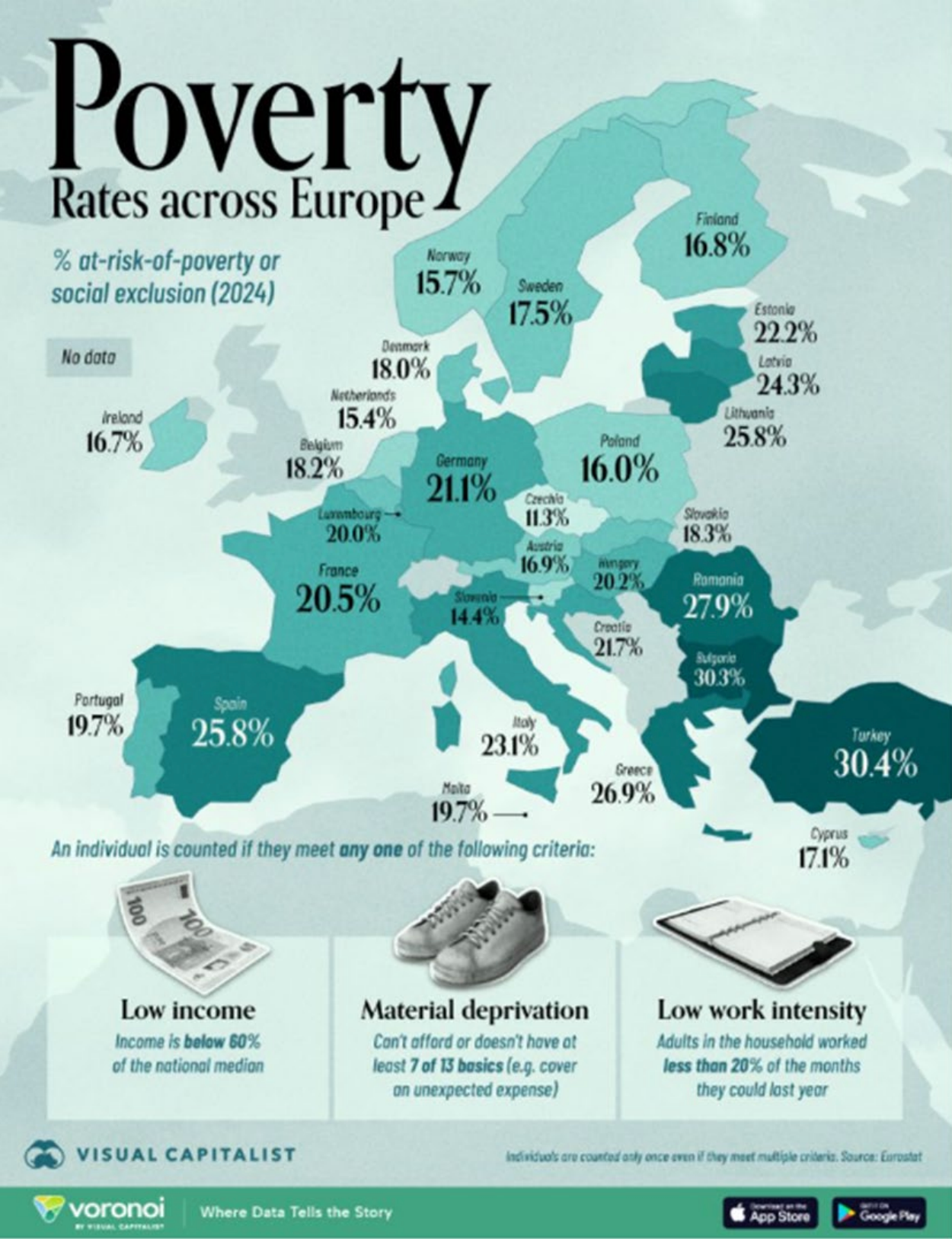
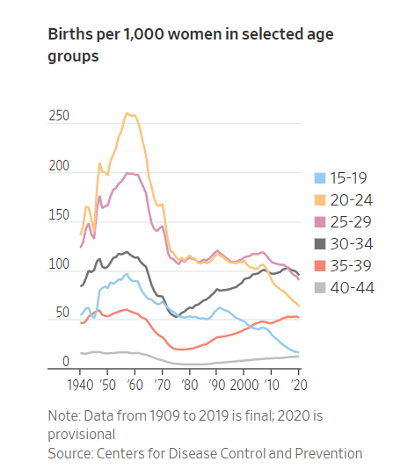
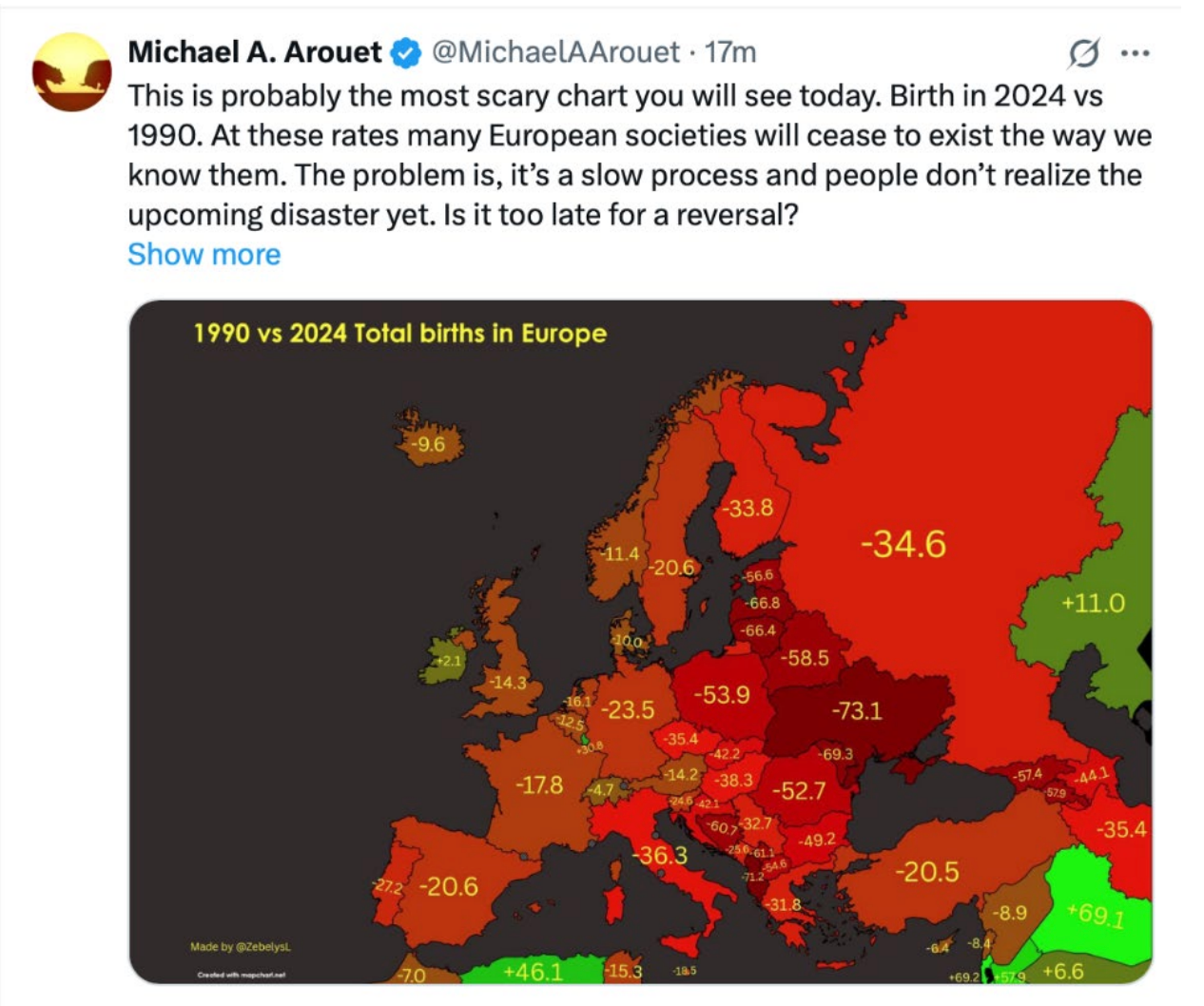
I’ve never understood some American’s obsession with European "greatness"—or their need for validation from countries whose economic systems are, frankly, floundering. Why are we so fixated on what Europeans think of us? (Ukraine conflict aside.) Let’s be honest: I could be strolling through Athens, fully aware that Greece’s birth rate has plummeted by 30% and its poverty rate sits at a staggering 26.9%, and yet I'm expected to feel upset when they criticize the American economy?
The entrepreneurial spirit in the U.S. remains unmatched. Just look at the statistics:
• 5.5 million new business applications in 2023 — one for every 24 households.
• Black-owned employer businesses up 50% since 2017.
• 12,000 Latino-owned businesses in Philadelphia alone, contributing $28 billion to the regional economy.
• Hispanic Americans are the fastest-growing segment of U.S. entrepreneurs.
“The U.S. remains, as Webster observed, centered on the individual. American capitalism is especially pitched toward getting capital to entrepreneurs. Last year, the U.S. registered a record 5.5 million applications for new businesses—one for every 24 households.”
— Roger Lowenstein, WSJ
According to The Philadelphia Inquirer, Jennifer Rodríguez, President and CEO of the Greater Philadelphia Hispanic Chamber of Commerce (GPHCC), estimated in late 2023 and early 2024 that there were approximately 12,000 Latino-owned businesses in Philadelphia alone. These businesses contribute over $28 billion annually to the region’s economy.
As noted in previous letters, Hispanic Americans are now the fastest-growing segment of entrepreneurs in the U.S. — a trend that reflects broader shifts in business formation and economic dynamism across the country.
Why This Matters
1. Trust in Institutions Is Declining—But Small Business Still Stands Tall
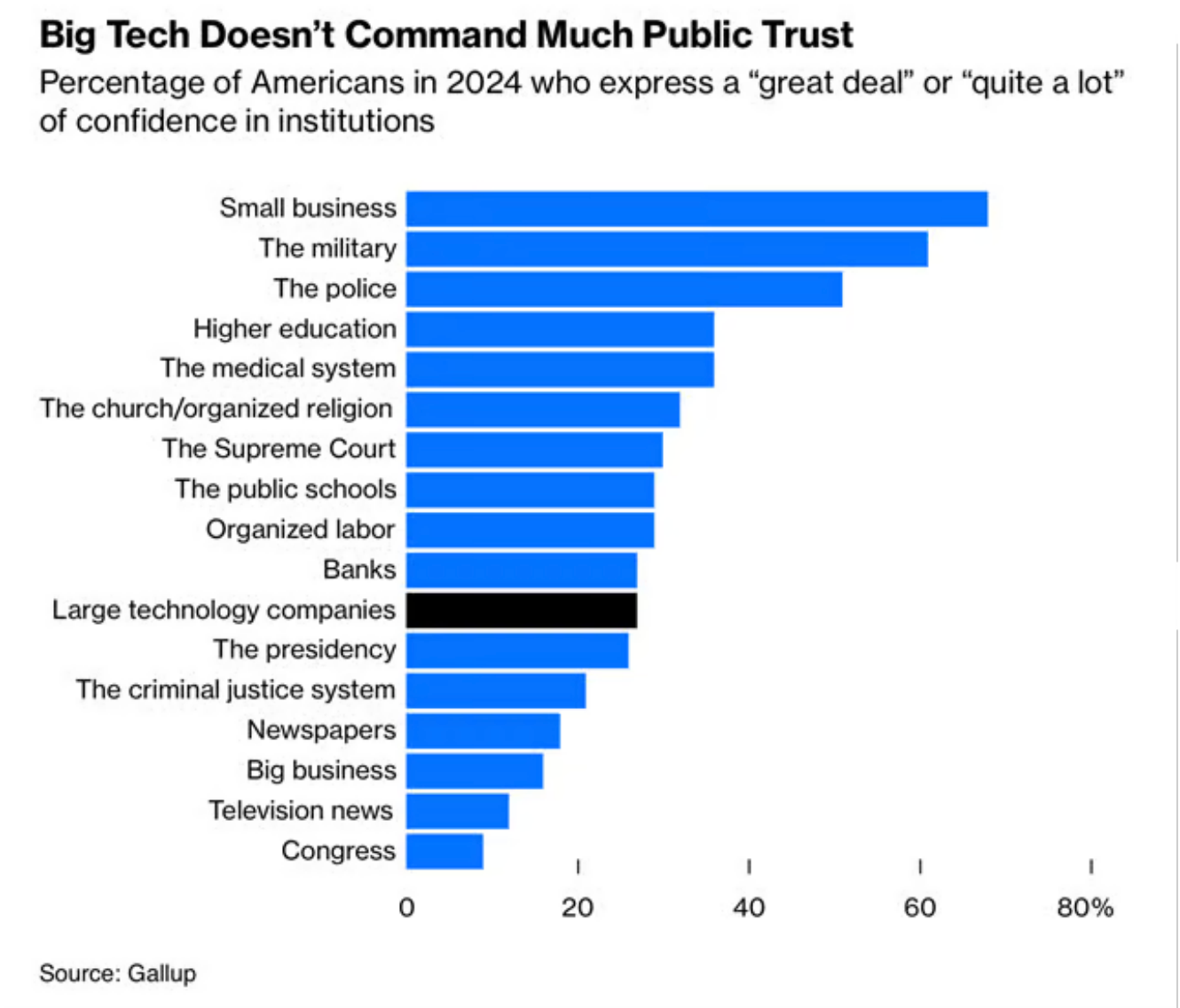
In a country where confidence in major institutions is eroding, the American public still places the highest levels of trust in small business owners and the military. Ironically, many of the same large tech firms driving stock market returns rank low on the public trust scale. The credibility and relatability of small business owners—especially minority- and immigrant-owned firms—remain a cornerstone of civic and economic strength.
2. Small Businesses Drive Employment and Local Economies
Nearly half of all U.S. employees work for small businesses with fewer than 500 workers. These companies aren’t just economic engines—they’re also community anchors. They hire locally, support families, and create the kind of social mobility that can't be replicated through bureaucratic programs or top-down planning.
Leveraged loans are up 50 percent since 2015
Leveraged loans, which are issued by overleveraged companies with insufficient cash flows, are part of what Wolf Richter recently called the “gigantic pile of risky corporate debt that is now being brutally repriced as concerns over credit risk (the risk of default) are finally bubbling to the surface.” According to Richter, the S&P/LSTA US Leveraged Loan 100 Index, which tracks the prices of the largest leveraged loans, has plunged by 20 percent since February 22nd.
According to Richter, leveraged loans “are traded in slices like securities or are packaged into highly rated Collateralized Loan Obligations (CLOs). But for years, investors had the hots for them, driven by their relentless chase for yield, in a world of interest rate repression.”
These companies, noted Richter, were often acquired by private equity firms through leveraged buyouts, which means they loaded up those companies with lots of debt. In addition, “PE firms extracted special dividends from their companies,” which were funded by leveraged loans. That’s a form of asset stripping and it leaves the company “more leveraged, more precarious and more likely to topple. But who cares? Those were the good times and the chase for yield was on,” lamented Richter.
Part III. Is the Rest of the World Investing Better? NO.
Legendary Fidelity investor Peter Lynch recently said on Josh Brown’s podcast:
“America creates, China duplicates, and Europe legislates. We have a great country.”
It’s a succinct truth bomb.
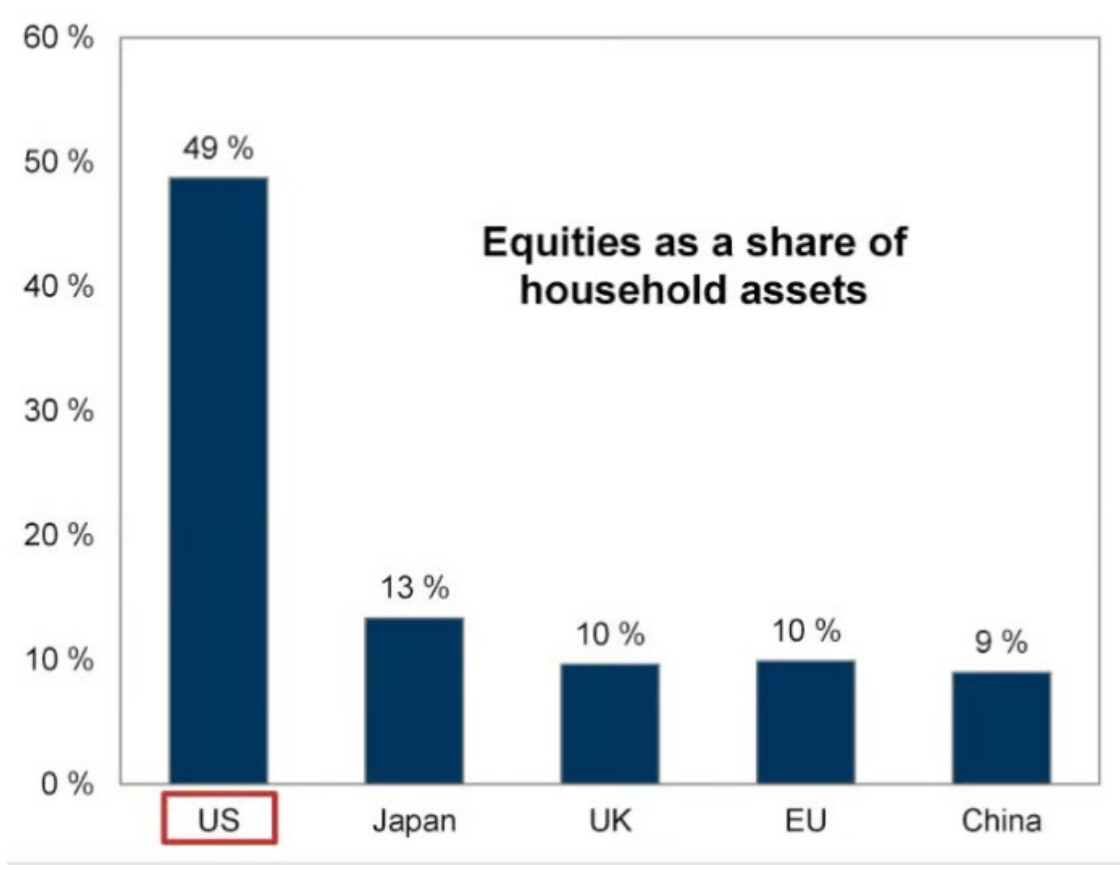
As mentioned earlier, our global competitors (Europe, China, Japan) have less than 15% of household wealth in stocks—a massive disadvantage when it comes to building generational wealth. Stock ownership is the engine of American capitalism, and other developed nations are miles behind.
Furthermore, as discussed in previous letters, Europe is facing a demographic time bomb, with countries experiencing birth rate declines of 30–50%, and poverty rates nearly double those of the U.S. (America at 10.6%).
As Roger Lowenstein noted in The Wall Street Journal :
“Europe is more equal, but it is also poorer. Per capita income in Arkansas, one of America’s poorest states, is higher than in Germany. More Americans are employed, own more appliances, and eat out more. The U.S. outpaces Europe in entrepreneurship, employment, and innovation.”
And let’s also consider what Scott Galloway has said in The Freedom to Fail: America’s Edge Over Europe :
“Over the past two decades, the productivity of U.S. listed tech firms has increased by around 40%, while that of European tech firms has remained stagnant. Today, not a single European company ranks among the global top 25. The U.S. accounts for 20.
A recent article in The Economist attempts to explain why Europe has fallen so far behind, and it has to do with firing people.
The diagnosis: In many European countries, it’s too expensive to let employees go. The cost of firing in America is roughly seven months of that employee’s wages. In Germany and France, the cost is 31 and 38 months of wages, respectively. (That’s over two and a half years.)
This creates a risk-averse culture where companies avoid growth opportunities because they’re hesitant to hire. This makes Europe a particularly difficult place for startups.
Nearly a third of European “unicorns” founded between 2008 and 2021 relocated elsewhere — usually to the U.S.”
Disclosures
Lansing Street Advisors, LLC is a registered investment advisor with the State of Pennsylvania. You can read more about the Lansing team at http://www.lansingadv.com/
To the extent that content includes references to securities, those references do not constitute an offer or solicitation to buy, sell or hold such security as information is provided for educational purposes only. Articles should not be considered investment advice and the information contained within should not be relied upon in assessing whether to invest in any securities or asset classes mentioned. Articles have been prepared without regard to the individual financial circumstances and objectives of persons who receive it. Securities discussed may not be suitable for all investors. Please keep in mind that a company’s past financial performance, including the performance of its share price, does not guarantee future results.
Material compiled by Lansing is based on publicly available data at the time of compilation. Lansing makes no warranties or representations of any kind relating to the accuracy, completeness or timeliness of the data and shall not have liability for any damages of any kind relating to the use of such data.
Material for market review represents an assessment of the market environment at a specific point in time and is not intended to be forecast of future events or guarantee of future results.
Indices that may be included herein are unmanaged indices and one cannot directly invest in an index. Index returns do not reflect the impact of any management fees, transaction costs or expenses. The index information included herein is for illustrative purposes only.
The trademarks and service marks contained herein are the property of their respective owners.
Lansing Street Advisors is a registered investment adviser. Information presented is for educational purposes only and does not intend to make an offer or solicitation for the sale or purchase of any specific securities, investments, or investment strategies. Investments involve risk and, unless otherwise stated, are not guaranteed. Be sure to first consult with a qualified financial adviser and/or tax professional before implementing any strategy discussed herein. Past performance is not indicative of future performance.
Lansing Street Advisors may discuss and display, charts, graphs, formulas which are not intended to be used by themselves to determine which securities to buy or sell, or when to buy or sell them. Such charts and graphs offer limited information and should not be used on their own to make investment decisions.
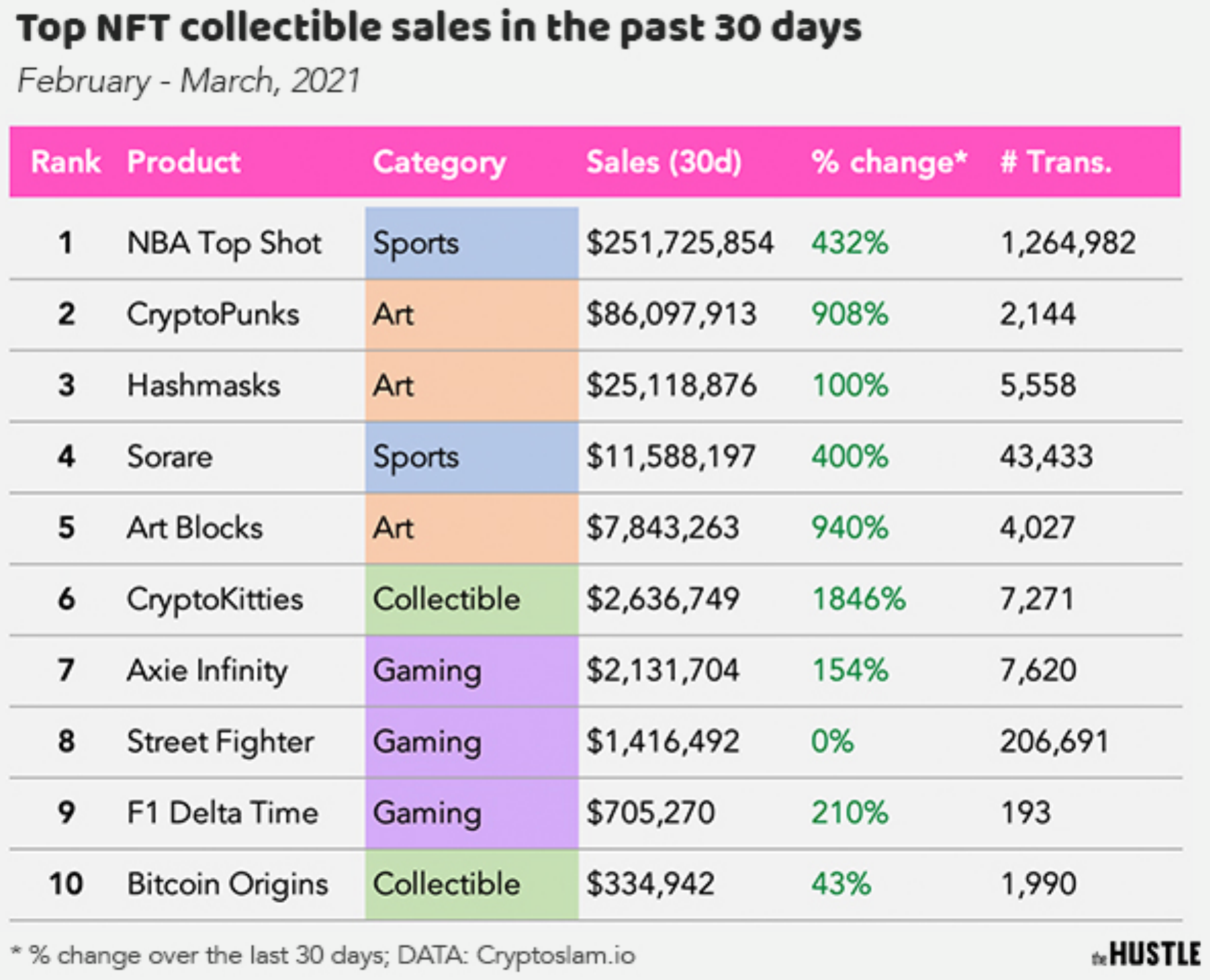
Sub-sectors of the American investment universe are clearly getting bubbly, with speculators leading the surge. But as mentioned in previous letters, we are not near 1999 internet bubble territory. This quarter’s letter focuses on the wealth created in America by embracing shareholder capitalism. Over the long term, stocks deliver exceptional real returns—and importantly, more citizens are participating each year. We need to get everyone into the pool—and the trend is finally moving in that direction.
Part I. America Loves Shareholder Capitalism
The Exile on Main Street album saw the Stones blend blues, country, and gospel into a 1972 fever dream of a record—yet only one of its 18 tracks, Tumbling Dice, made it onto the Billboard charts. It’s strange that songs like Rocks Off, Happy, or All Down the Line didn’t crack the mainstream. But perhaps there’s a simple explanation: everyone was high, and no one owned stocks.
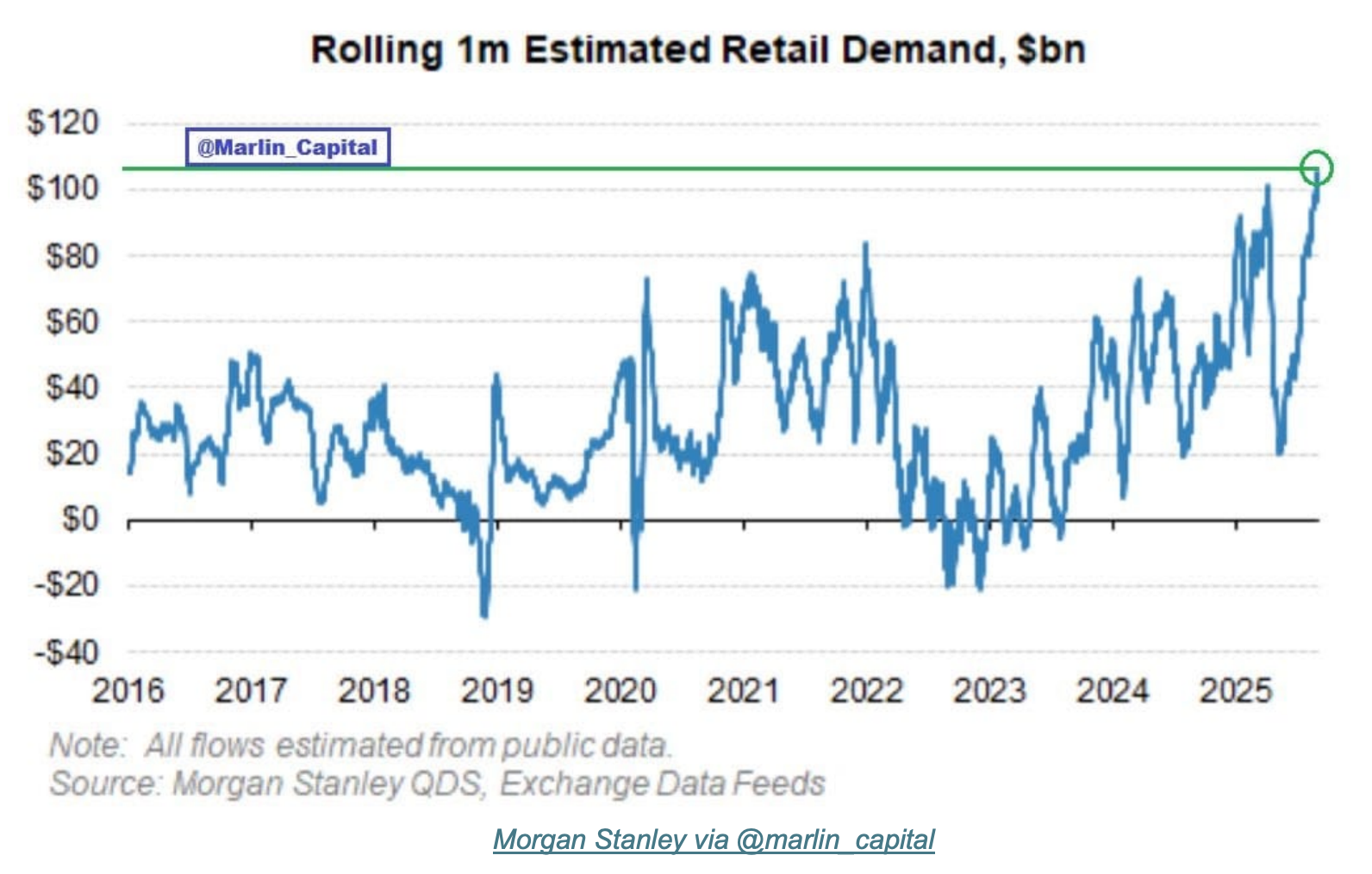
To top it off, retail investors are voting with their dollars in record-breaking fashion:
Retail demand.
"We have just witnessed the largest Retail Investor buying EVER. Retail has bought over +$100B of US stocks in the last month, the largest 1M buying on record."
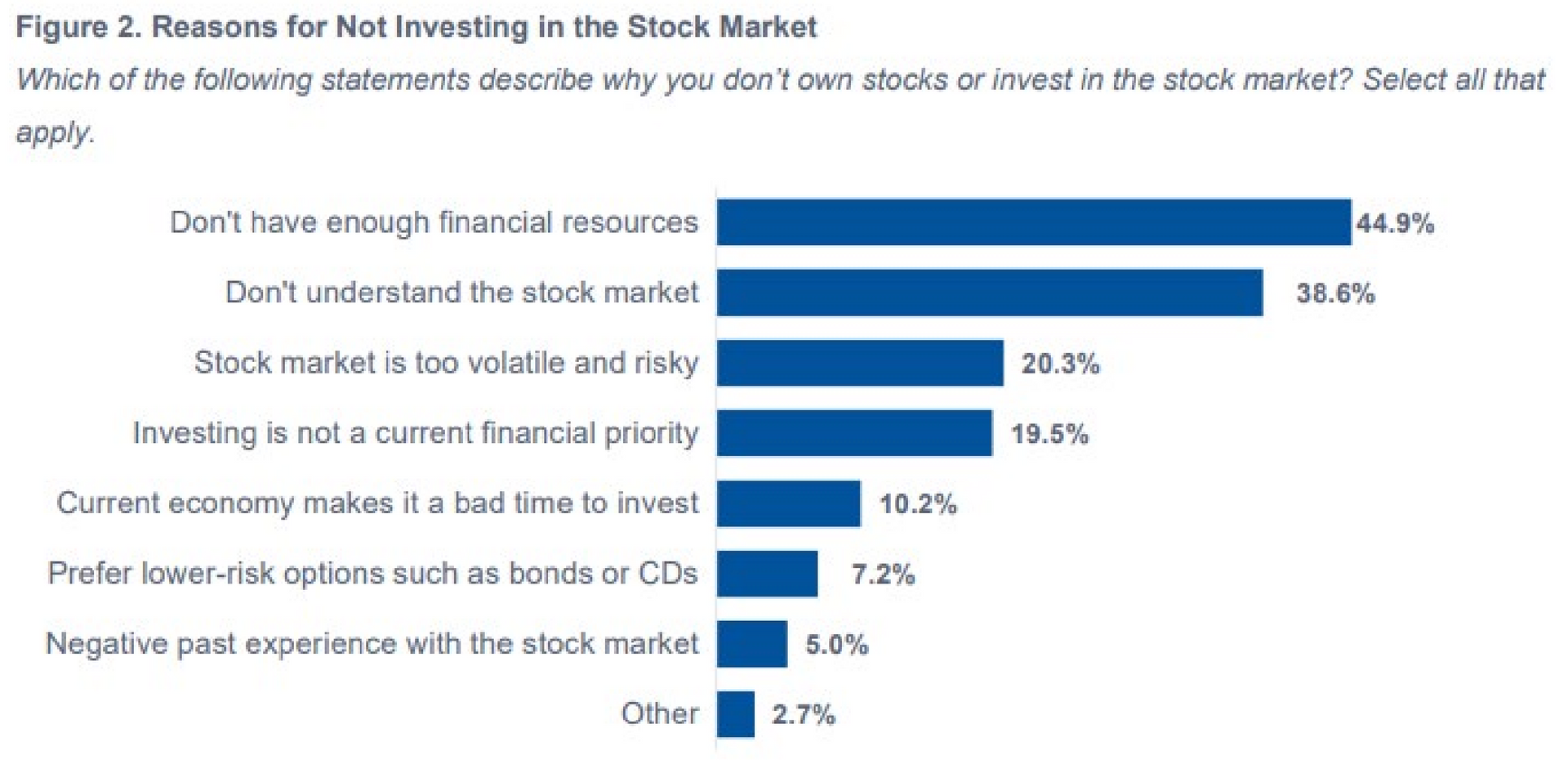
So why don’t more Americans invest in the market? The #1 reason—lack of investable capital—is a systemic issue beyond the scope of my expertise and this letter. But the next six most-cited reasons are, to some extent, solvable through education and access. That’s the good news. The bad news? Our education system isn’t doing nearly enough, and social media fills the vacuum with a firehose of misinformation. Financial education needs to be a core subject, taught from first grade through college, completely separate from traditional math and economics.

Part II. How Do We Get More Americans Onboard?
We’re heading in the right direction: more Americans are investing in stocks each year. But as Ben Carlson highlights, the bottom 50% of the population still owns virtually no stocks and holds few other assets. This is a sobering reality. A state-by-state breakdown might yield some surprising insights, but the national takeaway is clear: increasing asset ownership among the bottom half of the population is not just economically sound—it’s socially responsible. Unfortunately, it is well above my pay grade to answer this social dilemma, but some of the reasons why are solvable—and everything is relative versus the rest of the world.
Especially important, none of the above are a recommendations for you to buy or sell any security. This is for information purposes only. Please talk with your advisor regarding any advice around the subject matter and your goals.
According to the WSJ this week, among Americans with incomes between $30,000 and $80,000, 54% now have taxable investment accounts.
If Mick Jagger sat down with his housekeeper in 2025, he wouldn’t be learning about rolling dice in a back alley—he’d be hearing about Bitcoin, Robinhood, and the Magnificent 7. America has become a stock market nation, where financial headlines are household conversation and investing is deeply ingrained in our culture.
Our national love for shareholder capitalism is stronger than ever—especially compared to the rest of the world.
Yes, we have a historic wealth gap between the top 10% and the rest of the country, as we are all well aware. But the participation trends are moving in the right direction:
• More Americans own stocks than ever before.
• 401(k) contributions are at record highs.
• Retail engagement continues to surge.
Would I prefer we still had widespread pension plans supporting our workforce? Absolutely. But the cards are on the table, and increased stock ownership is a win for American households.
The chart below underscores America’s dominant role as the global beacon of shareholder capitalism. Yes, we experience crashes and corrections—but we also outperform the rest of the world by embracing higher risk and deeper equity ownership.
U.S. households hold 4 to 5 times more equities than our international peers, and that’s a stat worth celebrating. This risk-taking culture, backed by broad participation in public markets, is exactly why American investors—and the American economy—keep leading the way.
These degenerate economy participants are the tumbling dice of the roaring 2020s.
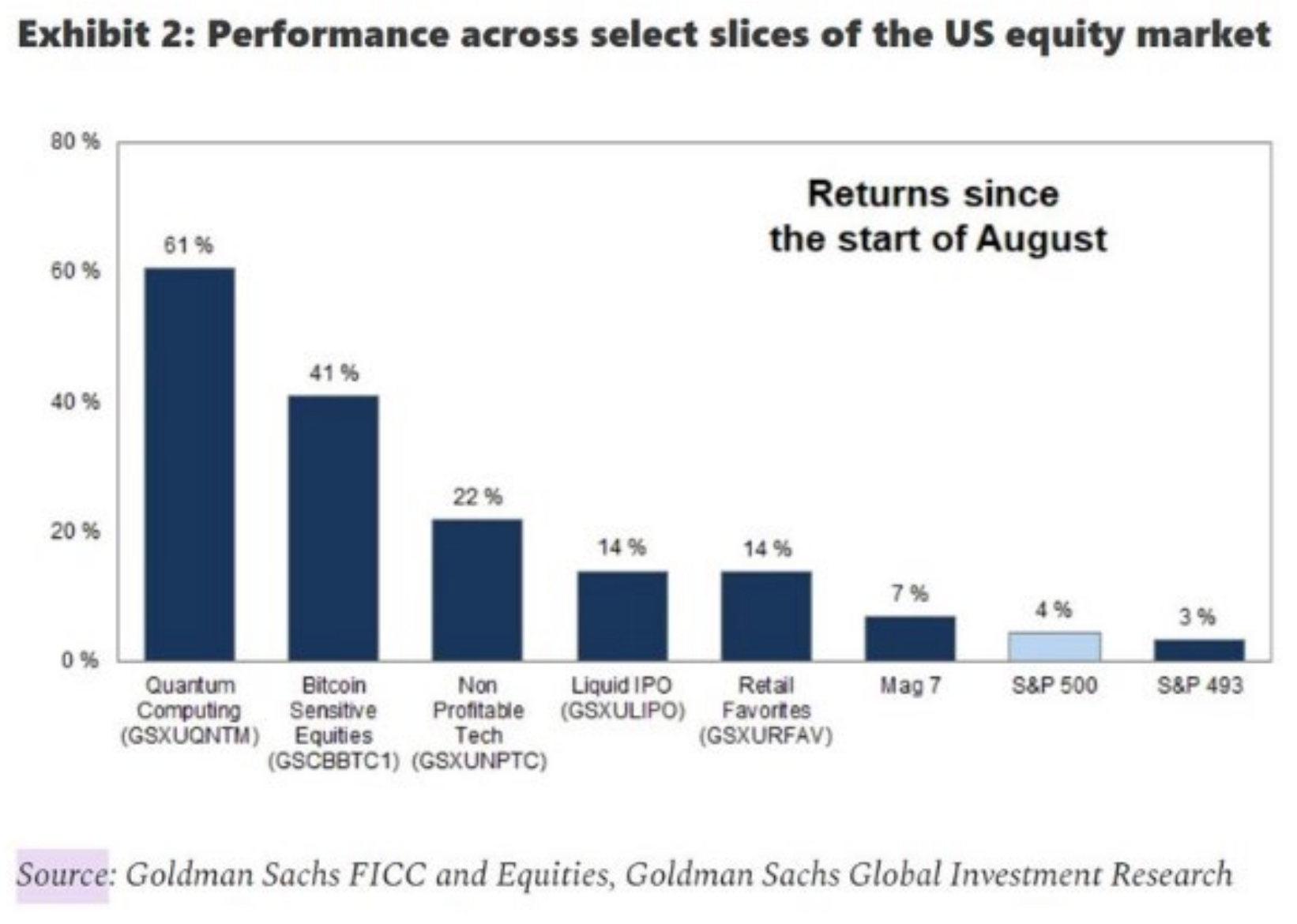
The dice tumbled coming out of the Liberation Day selloff, then hit the crap table wall starting in August— coming up quantum, crypto, and nonprofit technology stocks. These three speculative asset classes crushed both the Mag 7 and the S&P 500. There is an insatiable appetite for risk in America right now, backed by a $7 trillion cash kicker. In the short term, this kind of speculation brings volatility—but over the long term, it reinforces the U.S.’s world economic leadership.
Since August Quantum, Crypto, and Non-Profit Tech Dominate
Conclusion
The spirit of “Tumbling Dice” captures the mood of the modern investor—part gambler, part dreamer, always in motion. Today’s markets echo that same blend of risk and reward, where trading apps bring Wall Street to our pockets and speculation can feel like a national pastime. Investing and emotion roll together in ways Mick Jagger might not have foreseen, but would likely recognize.
Yet beneath the surface-level chaos of meme stocks, margin loans, and the so-called “degenerate economy,” lies something far more enduring: America’s deep-rooted embrace of shareholder capitalism. Stock ownership has grown meaningfully among U.S. households in recent years, particularly among younger investors and those previously left out of the financial system. More people are participating, more retirement plans are equity-heavy, and wealth-building opportunities are increasingly accessible—not perfectly, but measurably better than a decade ago.
In fact, the bottom 50% of U.S. wage earners have directed roughly $400 billion into stocks over the past five years—a powerful trend that suggests long-term engagement is on the rise.
It is not perfect—free markets do not exist without winners and losers—but judging by the comparison charts in today’s letter, our shareholder model offers more opportunity than our global competitors.
The good news is that the trend is rising. More Americans are “getting in the pool,” participating in the upside of risk-taking, even if the entry points are uneven.
The path forward isn’t without bumps. Volatility is a feature, not a bug, of an economy that encourages bold risk-taking. But it’s that same willingness to place bets on innovation, entrepreneurship, and ownership that gives the U.S. its global economic edge. The American model isn’t perfect—but it’s dynamic, resilient, and open to anyone willing to roll the dice.
Tumbling Dice
Song by The Rolling Stones (1972)
Baby, get it straight
You got to roll me and call me the tumbling dice
Got to roll me (Call me the tumbling dice)
Got to roll me
Got to roll me
Got to roll me (Oh, oh yeah)
Got to roll me (Oh, oh)
Got to roll me (Oh yeah)
Got to roll me (Oh, keep on rolling)
Got to roll me (Oh, keep on rolling)
Got to roll me (Oh yeah, keep on rolling)
Got to roll me (Call me the tumbling dice)
Got to roll me (Yeah)
Got to roll me (Roll me, baby)
Got to roll me (Ah yeah)
Got to roll me (Oh my, my, my, my)
Got to roll me
Got to roll me (Keep on tumbling down, baby, oh)