
Is Money Moving Again to More Expensive Markets?
It looks like investors are buying expensive markets and selling cheap markets again. In my August post “Gimme Shelter,” I pointed out that
money was flowing into an expensive fixed income market and out of a reasonably priced equity market. At the time, I observed that recency bias and negativity bias were leading investors to shift money "under the mattress" into traditionally safe bonds or cash. I cited a Wall Street Journal article reporting that investor demand for bond funds relative to stocks was at the highest level on record. According to the article, investors had poured $202 billion into global bond funds and withdrawn $57 billion from stocks. In just the U.S., China and Japan alone, a stunning $55 trillion was sitting idle in bank deposit accounts that were yielding essentially zero interest. “Never before in history have individual investors been so bearish on stocks when the stock market is at a record high,” I wrote.
Today, investors may be over-allocating to the U.S. stock market just when the international markets look attractive. I grew up in a “Buy American” household, so I know the drill. My dad was am Army veteran from the World War II generation and my Mom was a first generation American. Thanks to our President, buying American may be in vogue when it comes to consumer
purchases, but now may not be the ideal time to adopt the “home grown” strategy when it comes to your equity investments.
Populism is the buzzword of the global marketplace of 2016-2017. Populism is all about ordinary people, protecting an alienated part of the population from the elite leadership. The current populism movement is global and it has the potential for hyper-growth thanks to the democratization of information via technology. Large groups of people can now mobilize quickly under a dynamic populist leader who makes a compelling platform of promises.
America, Europe, Canada, Latin America and other countries are facing populist movements that will change the previous globalization thesis. Much of today’s populism worldwide revolves around nationalism. That’s because large parts of the population in those countries have not reaped the benefits of a global economy.
Wouldn’t it be funny if the global economy starts working just as populism takes off? First, let’s start with the classic definition of “funny” by that well known psychotic philosopher, Tommy Devito (Joe Pesci) from the classic mob movie Goodfellas.
Tommy DeVito: “You mean, let me understand this cause, ya know maybe it's me, I'm a little screwed up maybe, but I'm funny how, I mean funny like I'm a clown, I amuse you? I make you laugh, I'm here to amuse you? What do you mean funny, funny how? How am I funny?”
As mentioned in previous notes, we seek to educate clients and followers more than amuse them, but we try not to take ourselves too seriously. Investors tend to have a home-nation bias when choosing their asset allocations. Home bias tends to cause investors to place large portions of their wealth in domestic equities, despite the widely cited benefits of diversifying into foreign equities, including countless research studies providing supporting evidence for that strategy. Home-nation bias can damage portfolios especially during times when valuation spreads widen, as all markets—no matter where they’re located--tend to go through cycles.
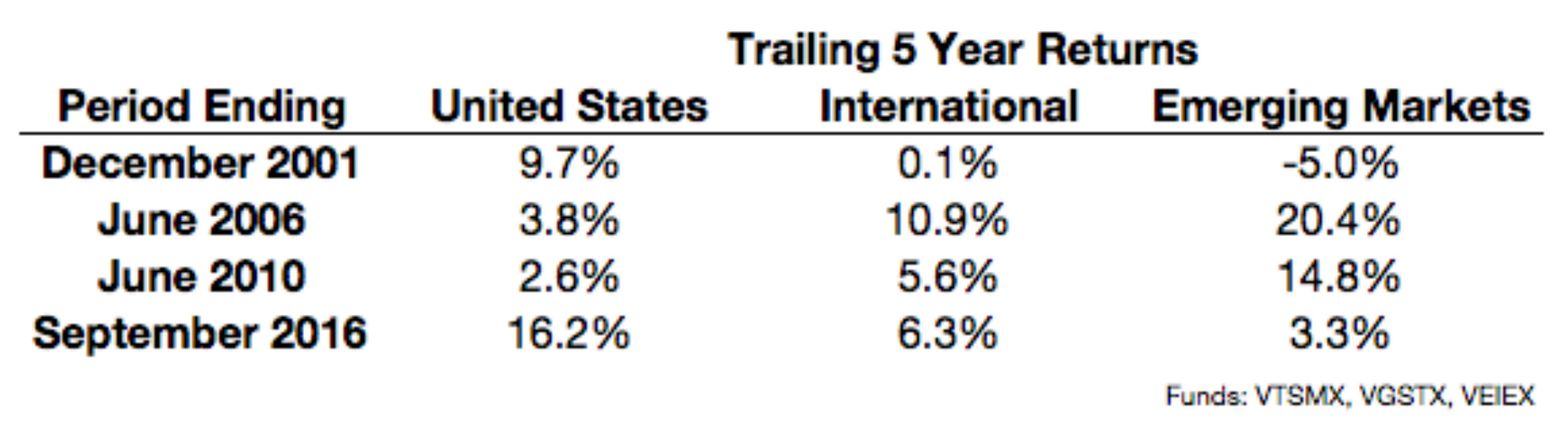
Carlson went on to explain that the performance spreads in December of 2001 were fairly similar to the spreads we see today with the U.S.
comfortably outpacing the rest of the world. Those 2001 numbers had completely reversed by 2006 and they stayed that way through 2010 before “coming full circle today” with U.S. equity returns back in the lead.
Despite these cyclical differences, Carlson said that if” you looked at the 15 year returns of these funds since 2001 (rather than 5 year returns) they weren’t all that different:
- United States +7.8%
- International +6.3%
- Emerging Markets +7.3%
Read Carlson’s work here
http://awealthofcommonsense.com/2016/12/diversification-is-no-fun/
“I want to know healing
An American prayer
I want to know the meaning
Of American prayer
I want to believe in
American prayer
But I can hear children screaming
American prayer”
— U2
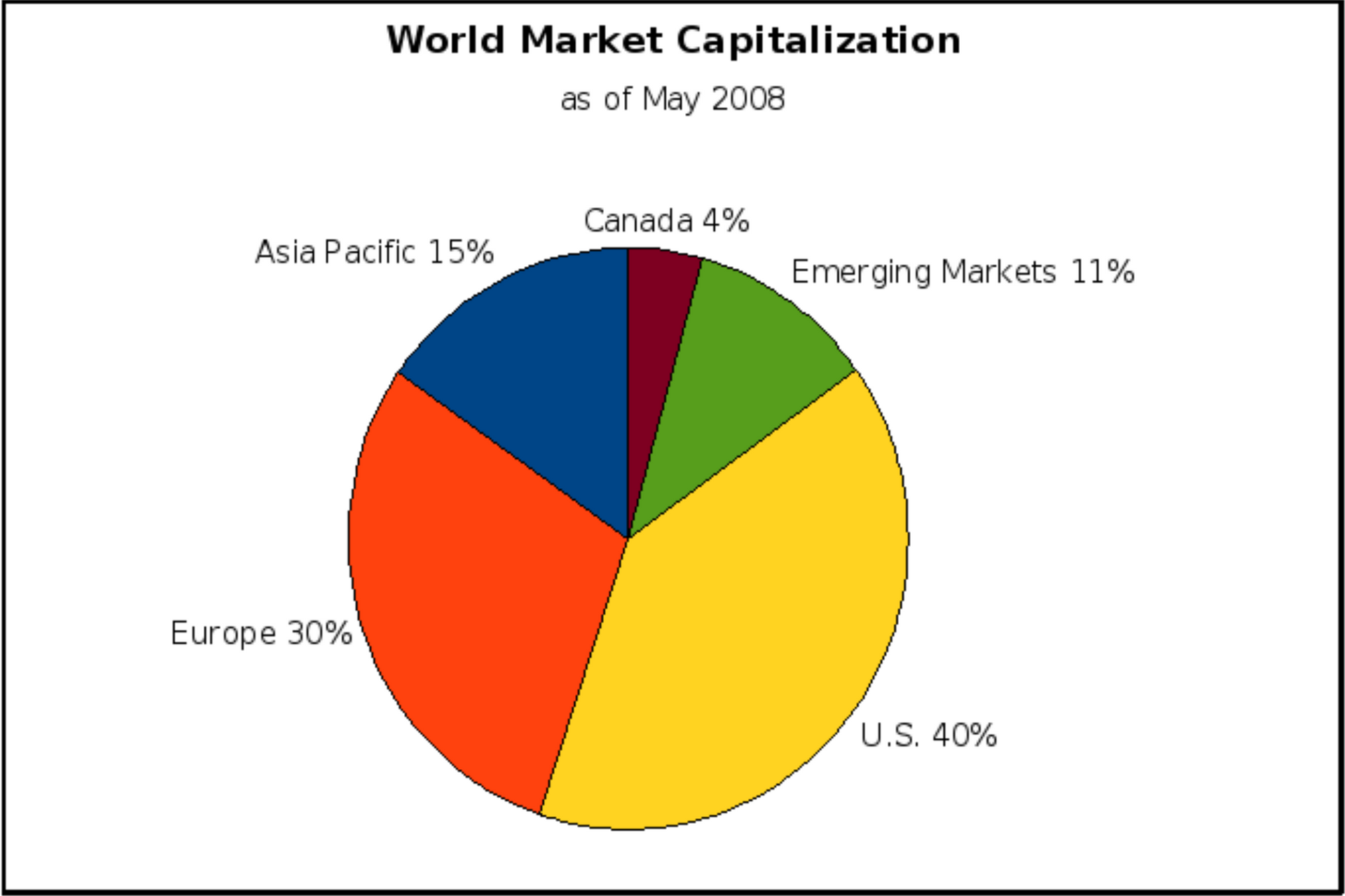
Home Bias in a Big World—The U.S. Accounts for 40 Percent of the Total World Stock
Market.
Sources:
https://www.bogleheads.org/wiki/Domestic/International
http://www.pragcap.com/a-simple-four-fund-global-financial-asset-portfolio/
Conclusion
“It has been said that arguing against globalization is like arguing against the laws of gravity.”
Kofi Annan
Investing is a global pursuit. Populism may be sweeping the world political stage, but public companies are in constant search of new universal customer markets. Revenues need to grow, and the U.S. accounts for only about 4.4 percent of the world population. Not many companies want to leave out the other 95 percent of potential customers. Life is a cycle and so are the markets. Today, stronger global growth, weaker currencies, better earnings growth and cheaper valuations make the international markets tough to rule out.
Life and Markets Go Through Cycles
Looking closer at the current cycle
One of my favorite bloggers, Ben Carlson summarized the recent cycle as follows:
“I took a look back a 5 year trailing returns on three different Vanguard equity index funds — U.S., international and emerging markets — to show this cyclicality in practice:
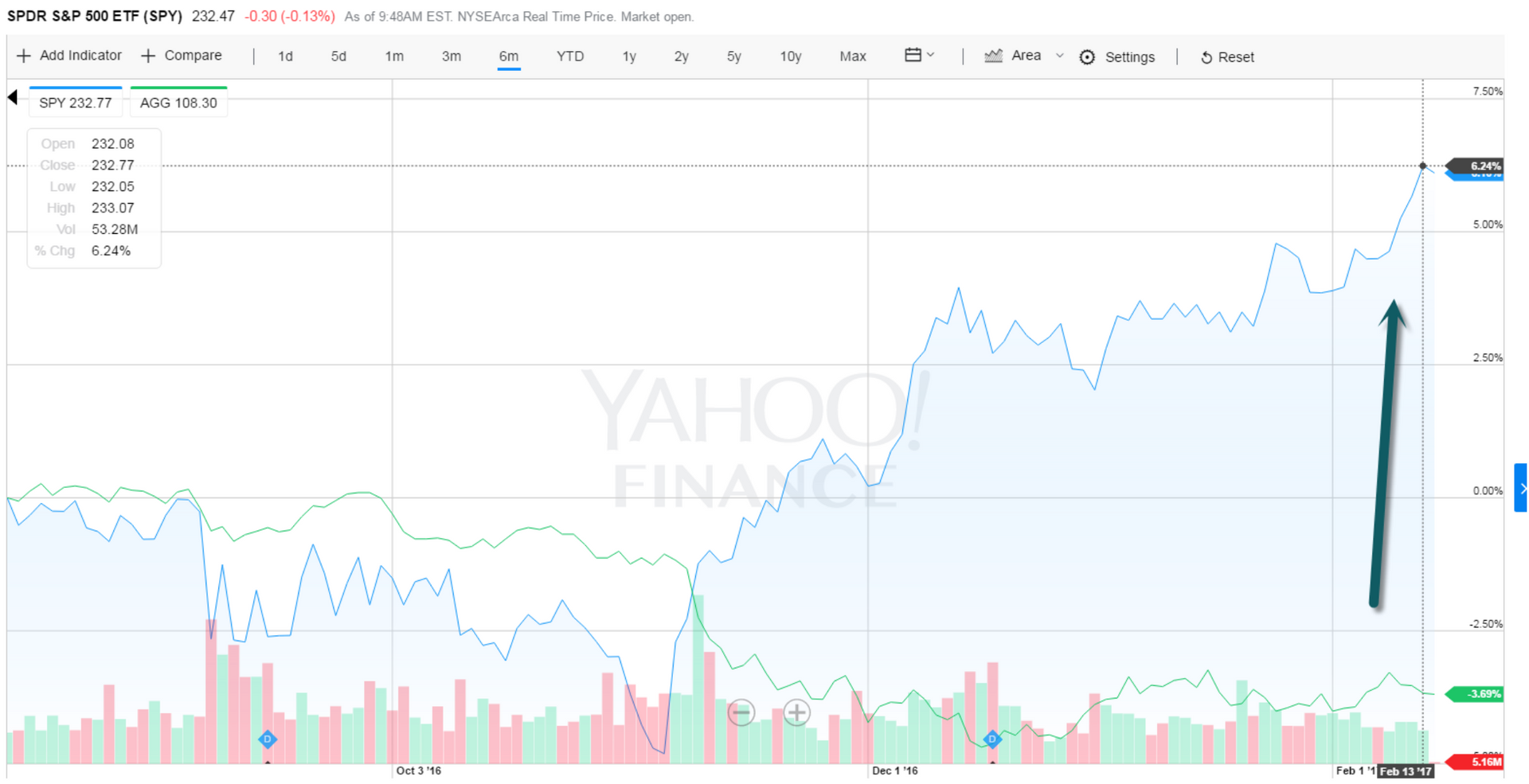
Since my August 2016 “Gimme Shelter” article
The S&P +6.38% vs. AGG (bond index) -3.69%
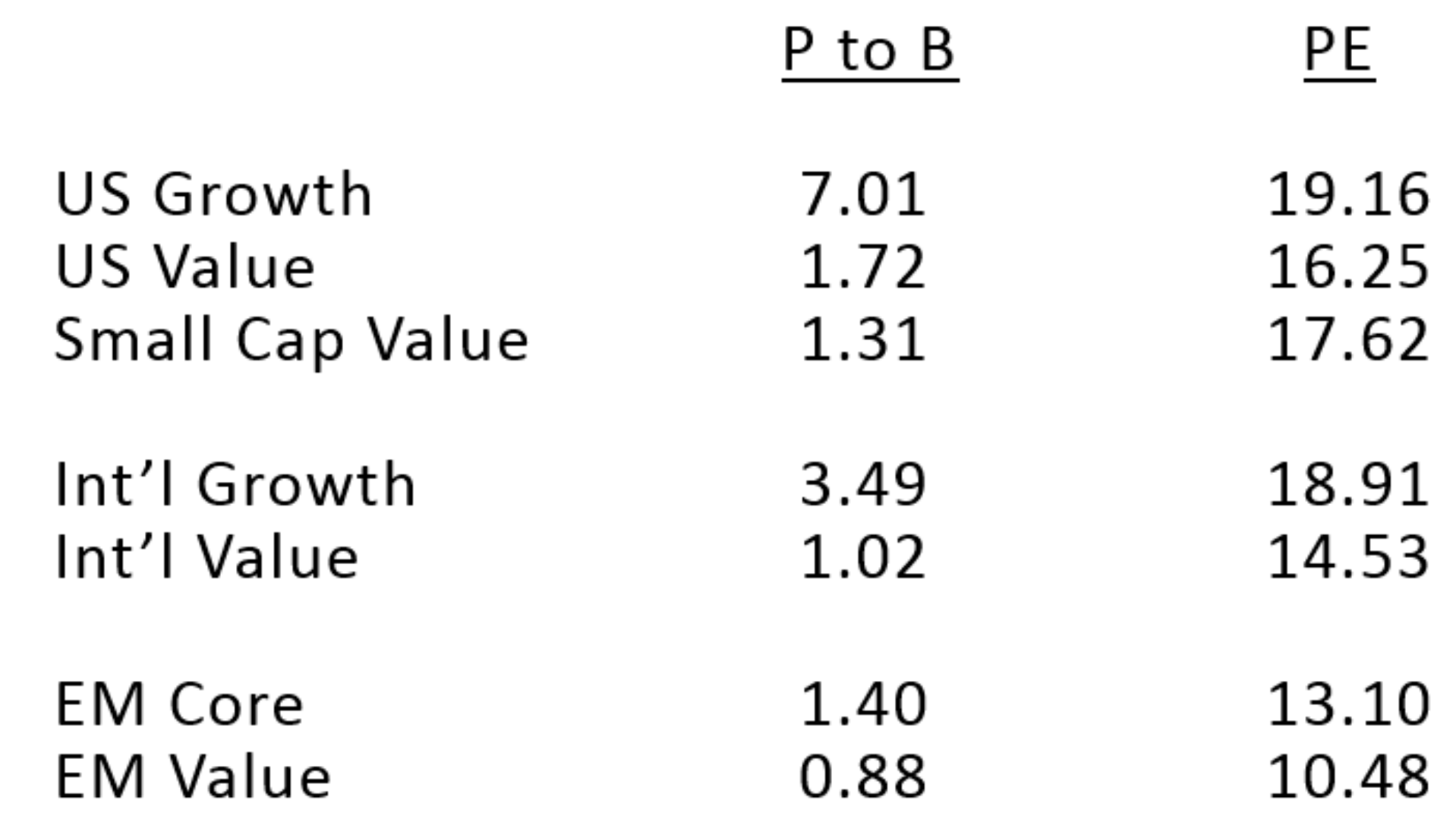
The U.S. accounts for less than half of the world stock market, but it has produced most of the gains in equities since the 2008 financial crisis. With money plowing into U.S. equities, these stocks have become more expensive relative to their international counterparts. The chart below illustrates the disparity in valuations between U.S. growth and value stocks and international growth and value. In some cases, U.S. stocks have almost double the valuation of stocks from the other 60 percent of the globe.
Humans go through cycles of life: birth, infancy, childhood, adolescence,
adulthood, old age and finally death. Investment markets are also cyclical,
although not usually in predictable cycles like human life. Assets and sectors
go through periods of being in and out of favor sort of like husbands. At,
Lansing we do not predict stock markets returns, but we do like using math
and science. History tells us that stock market returns do depend on where
equity valuations are when you start the clock. Today, the U.S. market is not
in a bubble as some pundits would argue, but it is in the high end of its
historical range. At the same time, international markets are trading at a
discount to the U.S. and to past valuations.