Introduction
The Easy Money Has Been Made Just Ask Matt Damon and Ben Affleck
Matt Damon Crypto.com Commercial “Fortune Favors the Brave”

Barrett Strong-Money (That’s What I Want)
Money (That's what I want)
Lots of money (That's what I want)
Whole lot of money (That's what I want)
Uh huh (That's what I want)
All I want (That's what I want)
Woah yeah (That's what I want)
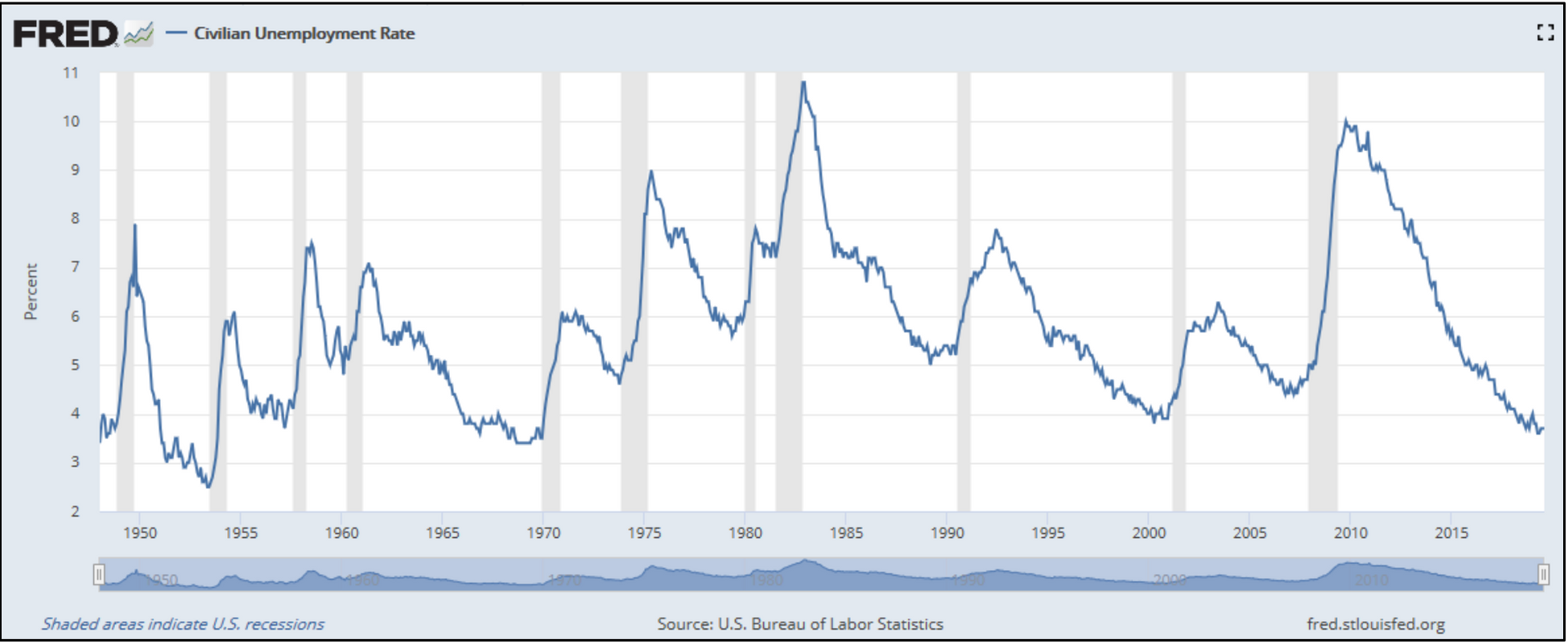
Job openings hit a record 9m plus. Considering we live in the ultimate digital age; I am dumbfounded by the number of “old school” help wanted cardboard signs I see lining commercial corridors across the U.S.
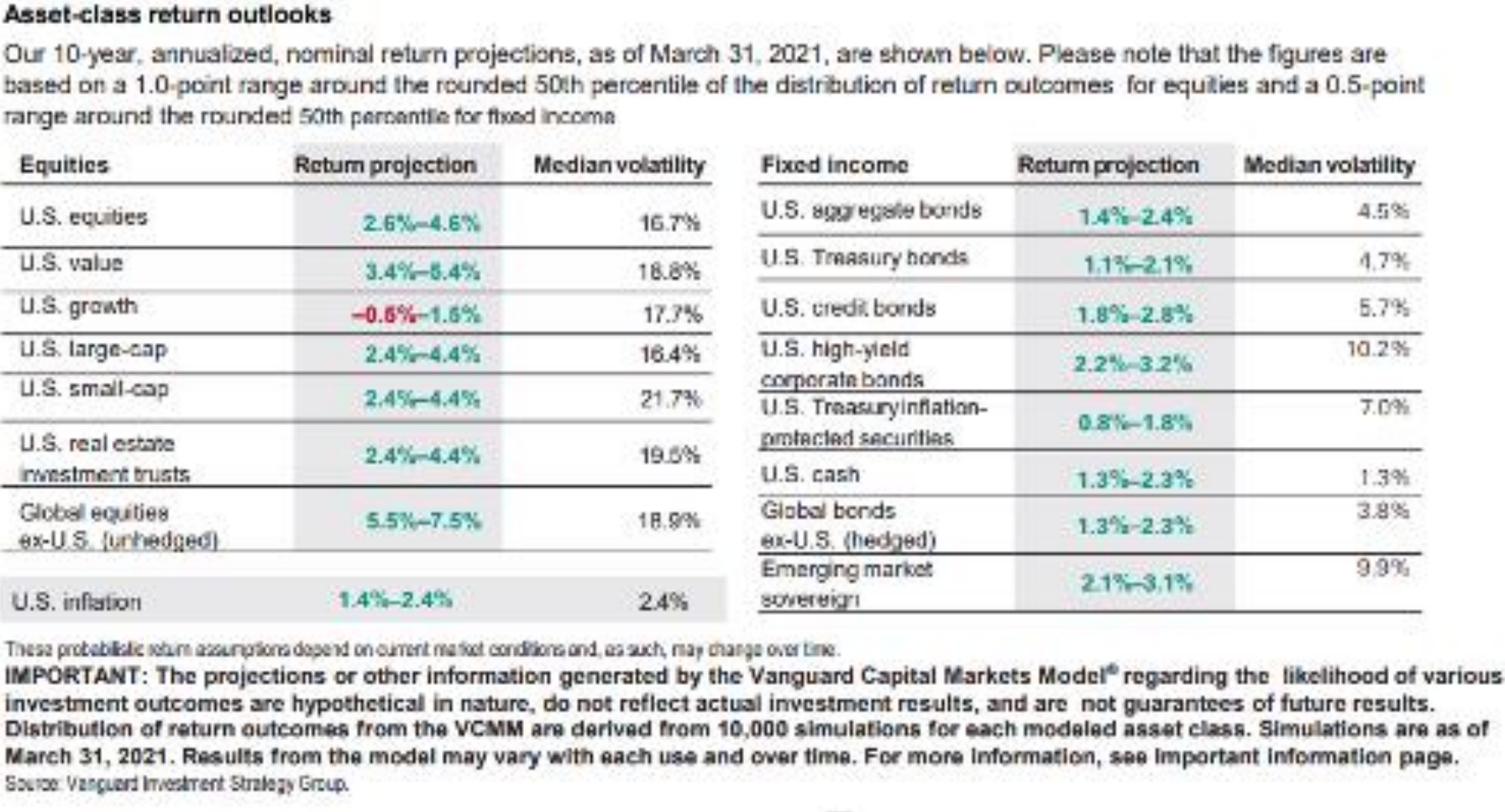
These probabilistic return assumptions depend on current market conditions and, as such, may change over time.
IMPORTANT: The projections and other information generated by the Vanguard Capital Markets Model regarding the likelihood of various investment outcomes are hypothetical in nature, do not reflect actual investment results, and are not guarantees of future results. Distribution of return outcomes from the VCMM are derived from 10,000 simulations for each modeled asset class. Simulations are as of March 31, 2019. Results from the model may vary with each use and over time.
Part II-Stocks and Bonds at Fundamental High Valuations
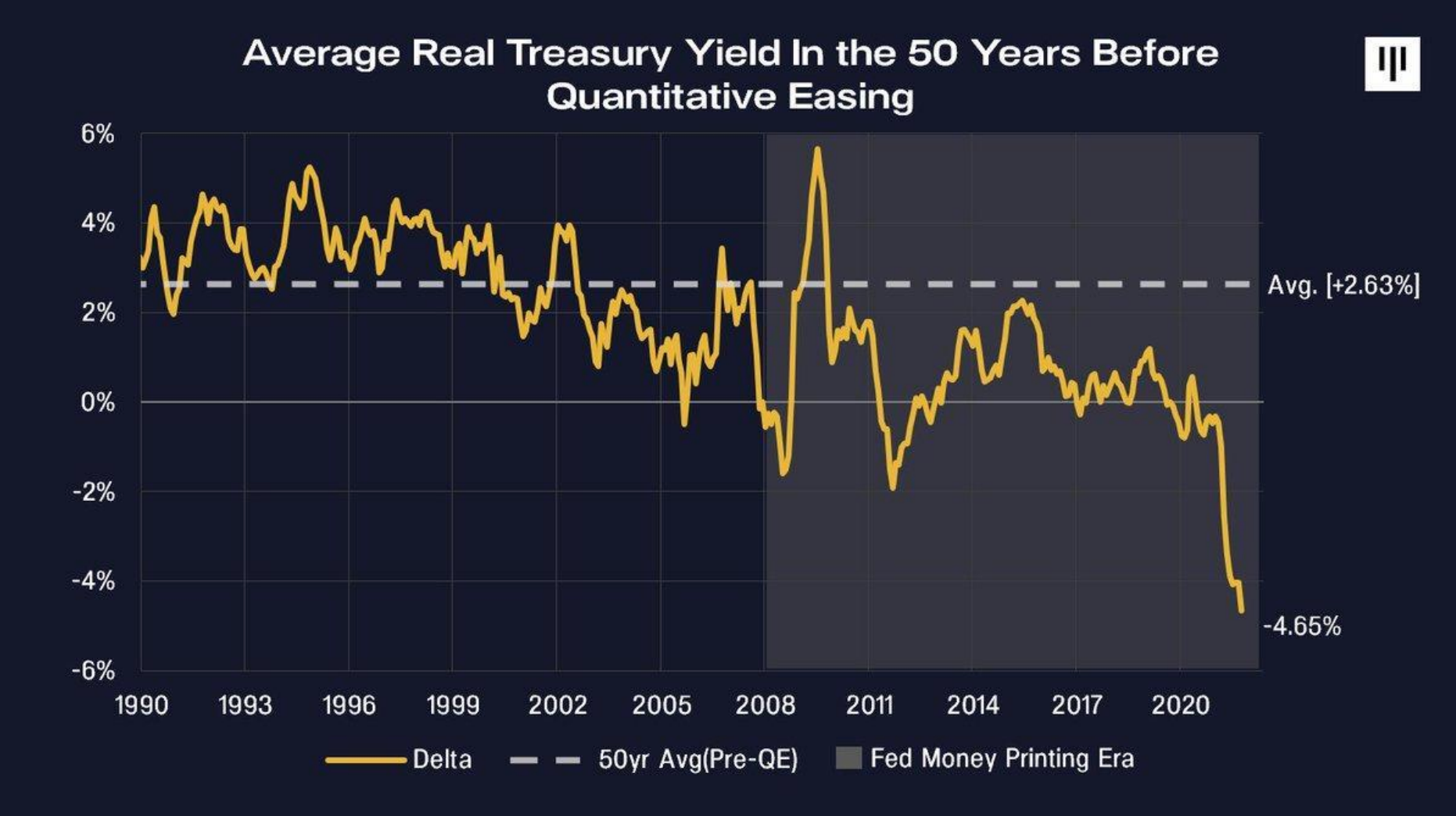
The good news for stocks is that bonds are strictly based on math, so they are much easier to predict than stocks. Considering inflation adjusted (real) treasury yields are -4%, handing investors substantial losses after inflation, and stocks have historically performed well during inflationary periods, it is not time to abandon your equity portfolios for “safe fixed income.” Americans are about to find out for the first time in 50 years that bonds are not always safe.
Average Real (Inflation Adjusted) Treasury Yield in the Last 50 Years.
On December 7th, 1999, Barron’s published the infamous “What’s Wrong,Warren” cover eerily before the Nasdaq crashed 50% and Berkshire recovered years’ worth of underperformance.
The below graph plots the time period 6/30/98 through 2/29/00 for the Nasdaq where many dot-com and technology stocks traded, and the price of Berkshire Hathaway, Warren Buffett’s holding company, which consisted of value stocks:
https://lplresearch.com/2021/12/17/sector-playbook-for-fed-rate-hikes-favors-value/
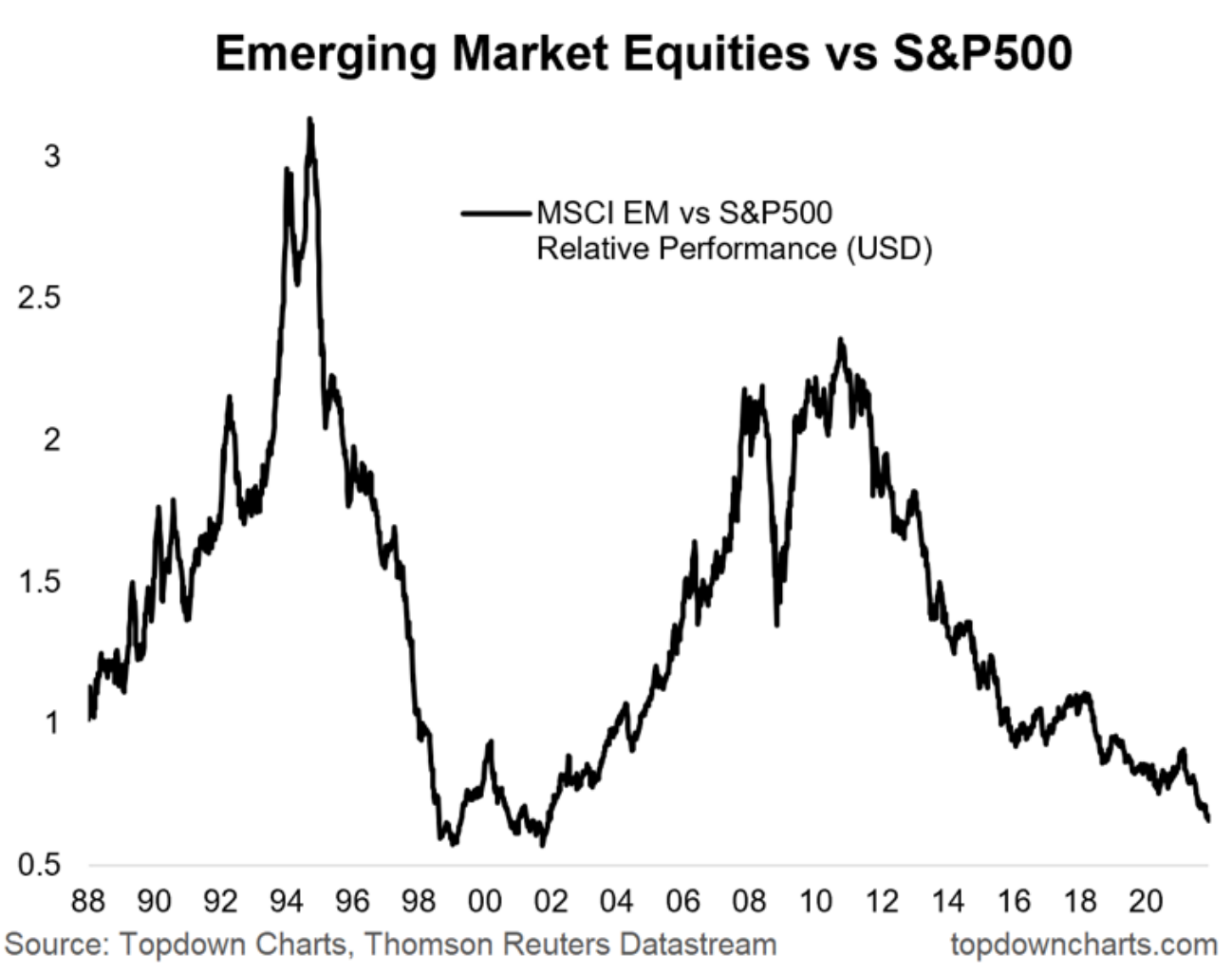
Emerging markets had a record year of underperformance in 2021 roughly -5% versus S&P +28%. This spread left the group trading back to record valuation discount against U.S. markets. In the following chart we see emerging markets hit 2000 internet bubble low valuations.
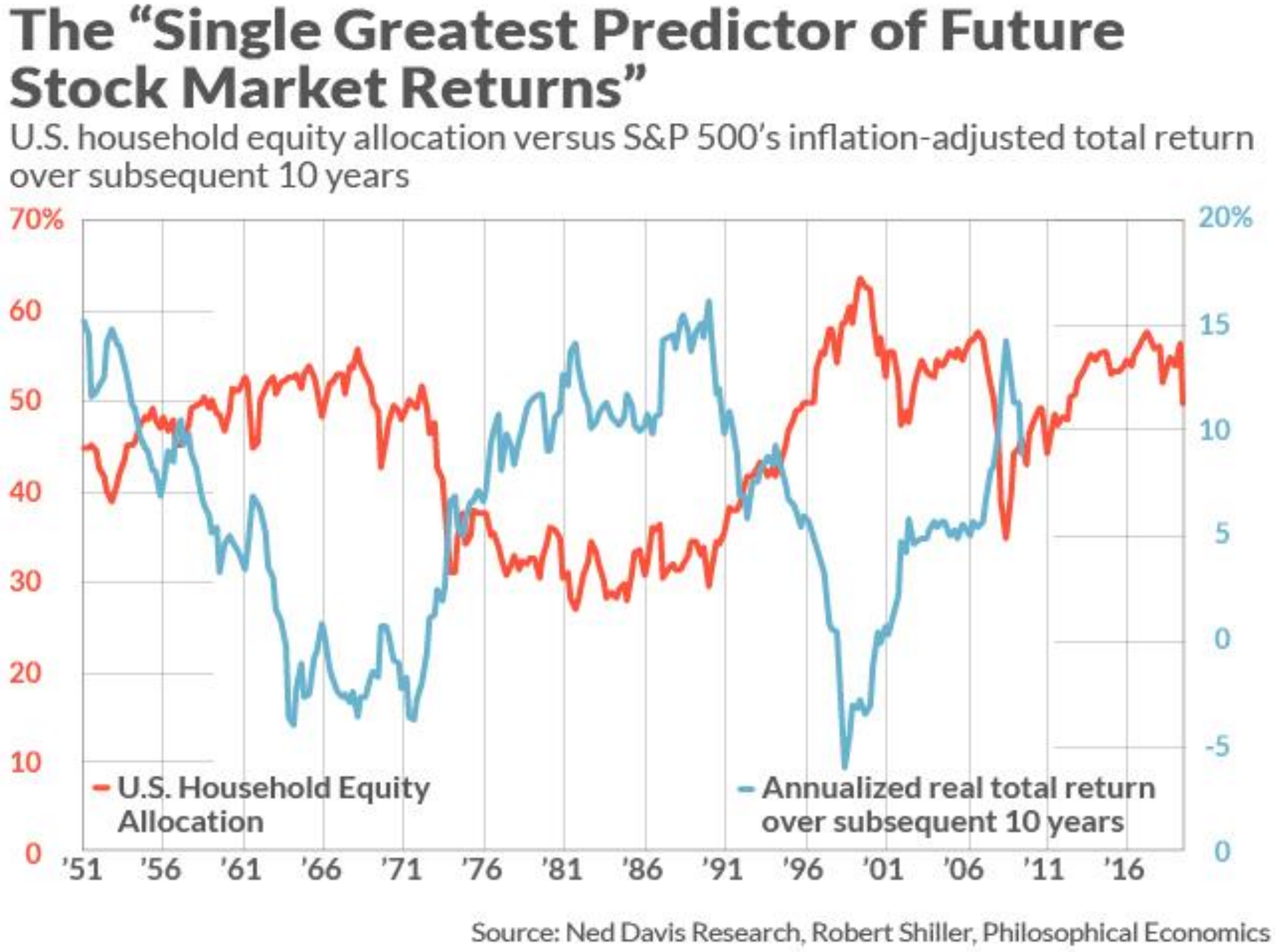
Is Jonathan Baird the single greatest predictor of future stock market returns? Is there a single greatest predictor of stock market returns? No, markets are much too complicated to rely one calculation. However, the chart above draws inferences that are worth consideration.
The obvious conclusion to draw from the chart is that future investment returns tend to be inversely correlated to the popularity of stock ownership. Periods of declining enthusiasm for the ownership of stocks by households, such as the late 1970s-early 80s, create attractively priced markets that subsequently produce strong returns for extended periods. Conversely, times of extreme bullishness for the ownership of stocks by households, such as the late 1920s, late 1960s, and today, have been followed by less than compelling market returns.
https://www.linkedin.com/in/jonathanbaird88/
Vanguard would agree with the assessment that we should prepare for lower future returns as its 10-year capital asset pricing model is predicting muted gains in next 10 years. They also have the most popular asset class, U.S. growth stocks, as producing negative proceeds while the least popular, global ex-U.S. equities, paying out the highest returns. As Warren Buffett says, stocks are the only thing people do not buy when they are on sale.
Investors are ignoring the sales rack as recency bias of outsized U.S. growth stock returns overwhelms any bargain shopping thoughts.
https://www.youtube.com/watch?v=IFr0PpY5opo
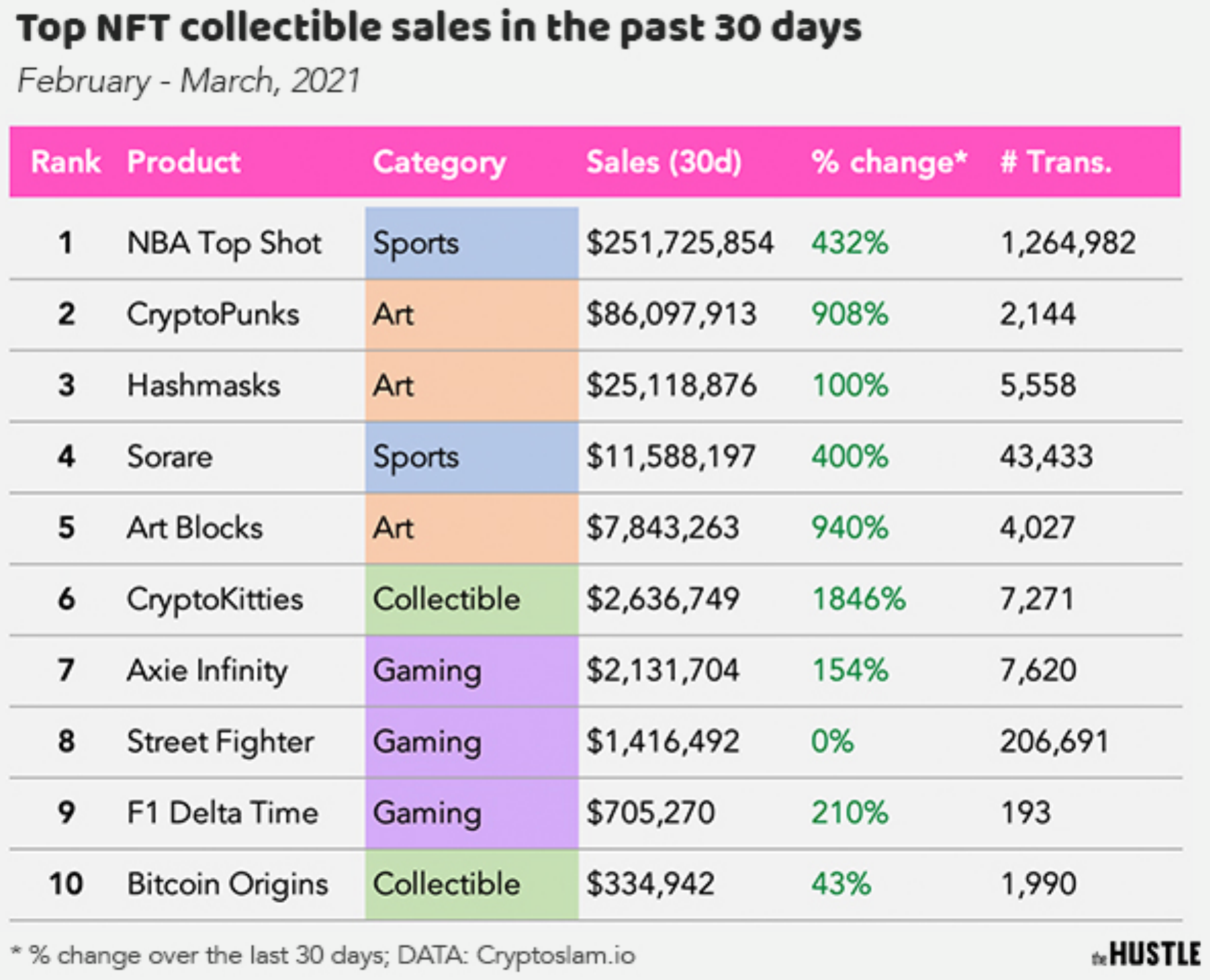
The FED certainly gave Americans a whole lot of money and they just may have turned the entire world into a gambling mecca. Not sure if Matt Damon and Ben Affleck just called the top in speculation but the easy money has been made. Bull markets follow Barrett Strong’s song. They start with investors wanting money, then lots of money, before going all in for “whole lot of money.” The whole lot of money part of bull market took off in 2021.
I never write about politics especially since the world is awash in political comments so these thoughts regarding below actors are based on logic not politics. Matt Damon and Ben Affleck star and produce some of my top 10 favorite movies and they also have some passionate liberal social causes. More power to them but I am not understanding how their recent foray into advertising sync up with their political foundations.
So let me get this straight about these “men of the people.” Damon stars in a commercial comparing crypto to man landing on the moon and Affleck is hocking gambling websites.
Affleck is encouraging consumers who don’t understand basic math to access 24/7 gambling websites to bet away the rent and grocery money under the premise of “bet any game any time.” Damon is one upping him with “embrace the moment and commit” to “peer over the edge” and go long crypto.
Let’s go all you Millennials who haven’t got in the game yet. Do you want to be Christopher Columbus of the new tech world or just another Schmuck buying index funds in your 401k? Let’s go all you citizens working 60 hours a week to make ends meet - bet every football game on the card this weekend, screw it make multiple bets on each game live on your phone. Ben really wants the bookmakers to be in the 1% of wealthiest Americans.
Interesting that Damon is against 1% of Americans holding so much wealth but he is peddling Bitcoin where according to the WSJ the top players represent a mere 0.01% of all bitcoin holders and yet they control 27% of the digital currency, the Wall Street Journal reported.
As I have stated many times in these letters, investing is a psychology game not an IQ game. Why? Hundreds of years of research tell us that human beings do not do well investing in volatile asset classes and the large percentage of them buy at the absolute top. I believe blockchain is real and I have no idea if we are near a top in crypto but the majority of humans cannot take trading an asset that volatile.
So as for Affleck and Damon, great movies yes but “men of the people” not so much. I put an offer out to both of them to carve off 10% of their earnings from these commercials and I will partner with them for a curriculum in basic investing for inner-city Philadelphia school children. If it works we can nationalize it. My contact information if freely available on Lansing Street Advisors website, maybe they will throw me a bit role in their next movie as well.
Damon/Affleck finance education 101
Lesson #1-Never gamble in a casino or go on their websites. Most importantly, never bet on sports because it is one of the lowest probability gambles.
Lesson #2-Investing and speculating are two massively different animals. Let’s discuss today’s biggest unregulated speculative asset class - crypto.
Class, let’s begin. I will wait patiently for Ben and Matt to call me. The kicker to this story - Ben Affleck is a recovering gambling addict. You can’t make it up.
Part I-Prepare for Lower Expected Returns
In my 25-year finance career I have never heard people from such a wide variety of industries tell me 2021 was their best year ever in business. After hearing again and again the term record year from circles of influence, I walked into a retail coin shop to help-out a client only for the owner to tell me he was 300% over his best year ever.
Being somewhat manic, I asked myself a two-part question-Is this the greatest economy in U.S. history or has the FED inflated an everything bubble? Is every investment market addicted to low interest rates right now? How is the FED reversing this course? Similar to politics the answer lies somewhere in the middle.
The Dow Jones total stock market returns 17.5% annually for 5 years and 16% for 10 years versus a long-term average of approximately 10-11% yet in 2021 $200 billion more flowed into bonds than stocks. With money still pouring into bonds, it is tough for rates to rise as the price of bonds go up and the rates go down.
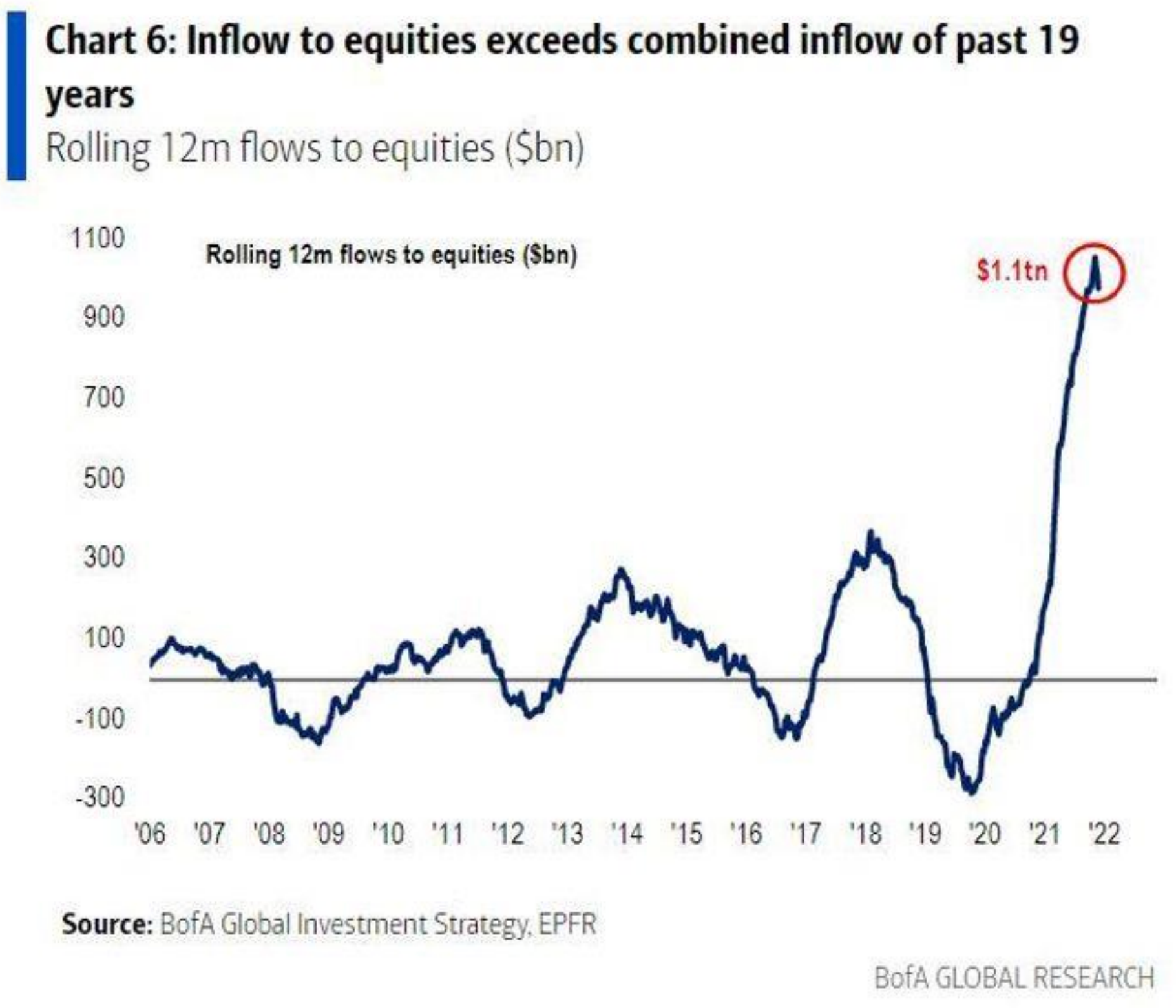
However, this is quickly turning as more money flowed into stocks within the last 12 months than the last 19 years combined.
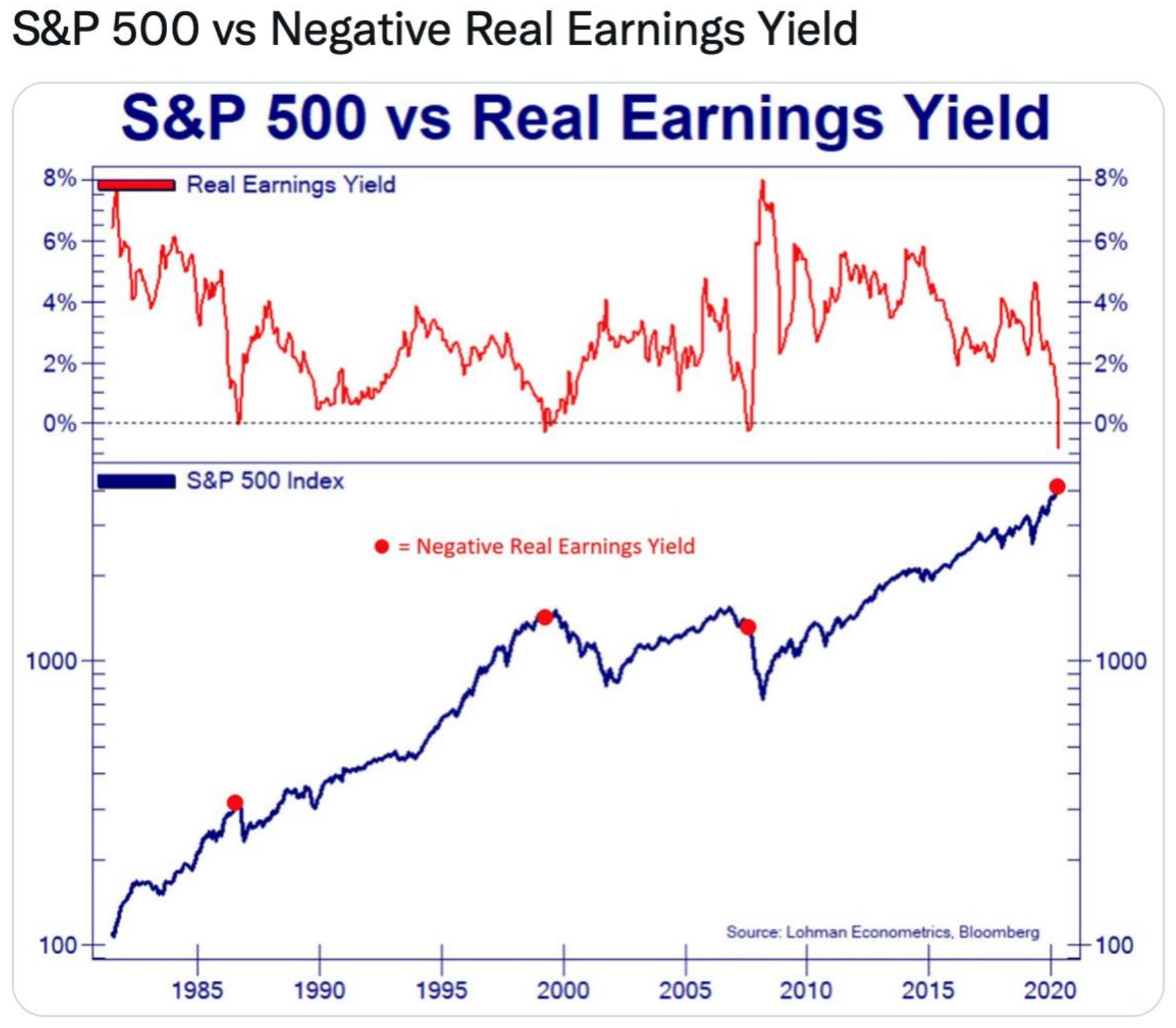
Secondly, we have real earnings yields (inflation adjusted) going negative for the first time since 2000 and 2008. Again, the last time we saw this level hit was 1999-2000 internet bubble.
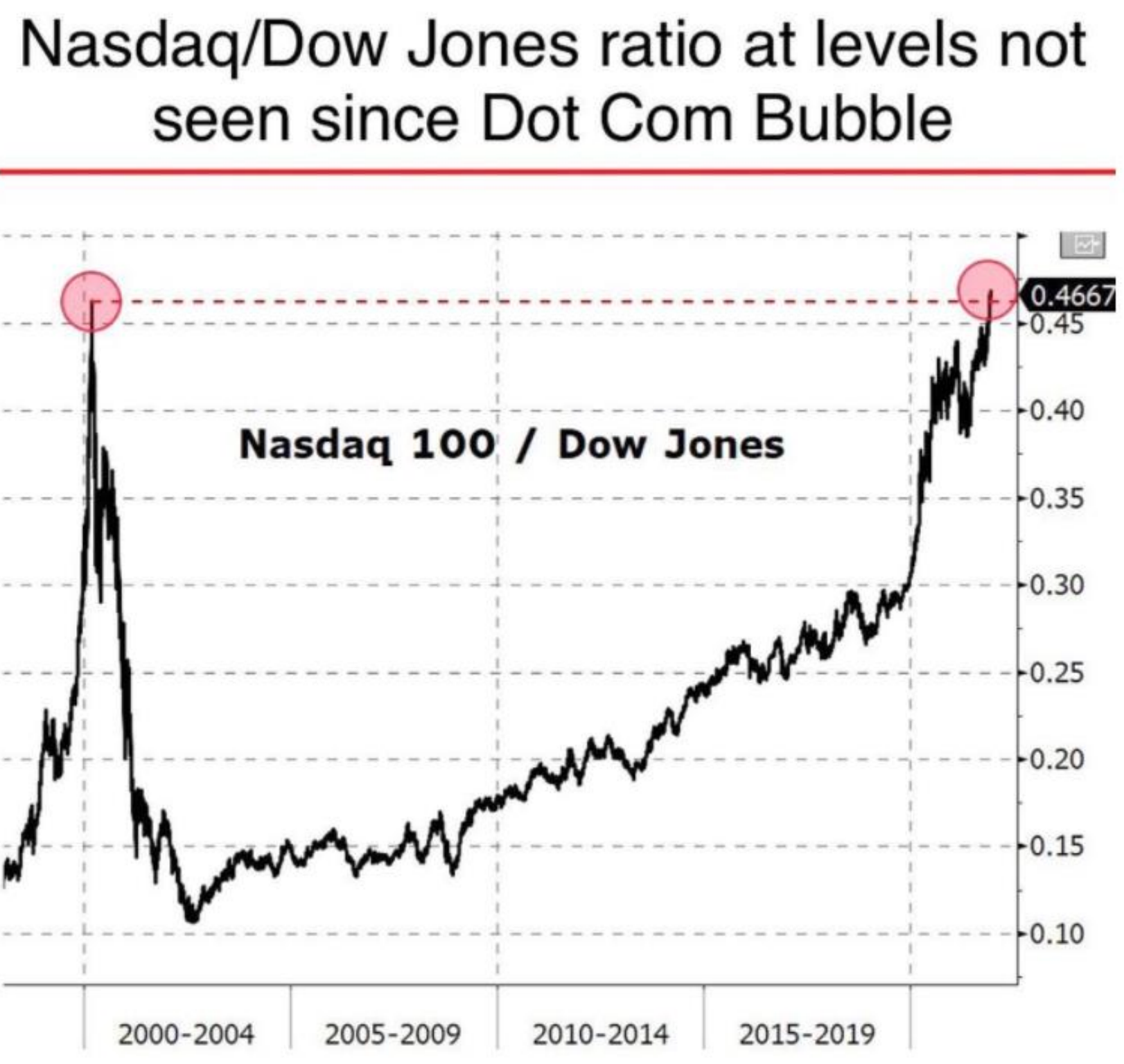
Thirdly, Nasdaq technology stocks hit record valuations versus old school Dow Jones stocks. Again, the last time this happen was 1999-2000.
Leveraged loans are up 50 percent since 2015
Leveraged loans, which are issued by overleveraged companies with insufficient cash flows, are part of what Wolf Richter recently called the “gigantic pile of risky corporate debt that is now being brutally repriced as concerns over credit risk (the risk of default) are finally bubbling to the surface.” According to Richter, the S&P/LSTA US Leveraged Loan 100 Index, which tracks the prices of the largest leveraged loans, has plunged by 20 percent since February 22nd.
According to Richter, leveraged loans “are traded in slices like securities or are packaged into highly rated Collateralized Loan Obligations (CLOs). But for years, investors had the hots for them, driven by their relentless chase for yield, in a world of interest rate repression.”
These companies, noted Richter, were often acquired by private equity firms through leveraged buyouts, which means they loaded up those companies with lots of debt. In addition, “PE firms extracted special dividends from their companies,” which were funded by leveraged loans. That’s a form of asset stripping and it leaves the company “more leveraged, more precarious and more likely to topple. But who cares? Those were the good times and the chase for yield was on,” lamented Richter.
https://www.currentmarketvaluation.com/models/buffett-indicator.php
It is true that these instruments have been at high levels for a number of years especially due to low interest rates - so what is changing now?
There are five factors that point us in the direction of returns for growth stocks slowing down.
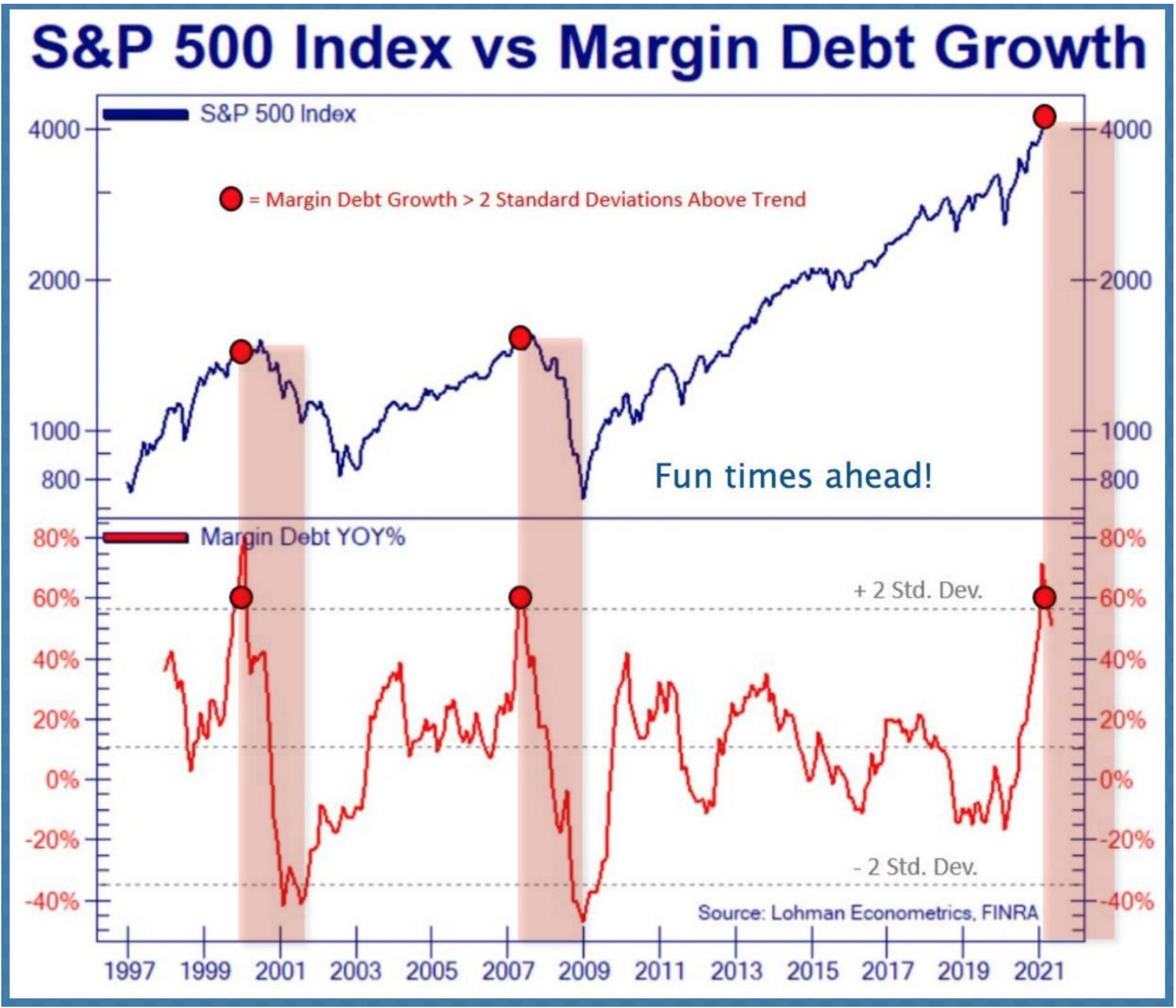
Firstly, in the next chart the stock margin debt growth vs. S&P 500 index is hitting 2000 and 2008.
Margin Debt 2 Standard Deviations Above Mean
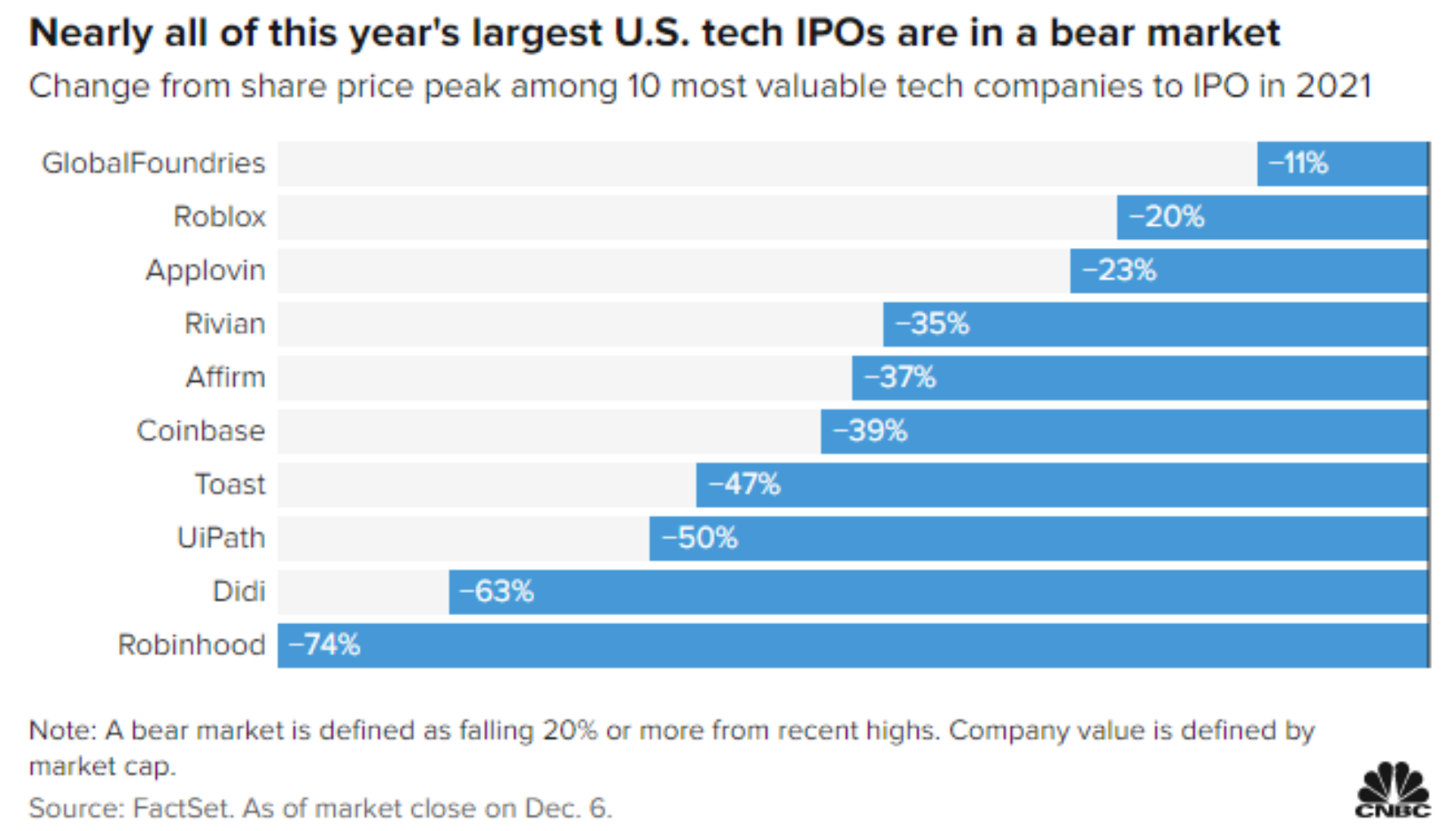
Tech IPOs have been a bad bet in 2021 — all but one are in bear market territory - CNBC
Lastly, we have record insider selling to close 2021 as executives elected to take some money off the table and diversify their holdings.
Record selling by insiders - Barbara Kollmeyer Among the warning signs, he highlights a favorite indicator of his — selling and buying by company insiders, which he tracks via J3 Information Services Group .
“We’ve had all-time record levels of insider selling meaning that the top executives, the people that are the most experienced investors in the world, have been pretty much spending all year getting rid of their stakes in some cases and unloading huge amounts of shares they have accumulated for decades,” said Kaplan.
Record selling by insiders is setting up stocks for a big fall, says contrarian investor
Sure we’ve had high valuations for a long time, justified by great earnings and super low interest rates, but now we see some signs like margin debt and negative real earnings yield that may give us pause. Also in my opinion we have seen the generational low in interest rates. Throw in IPOs breaking down and insiders selling, its tough to say the calculus is not changing.
Part III - Not All Asset Classes are Expensive
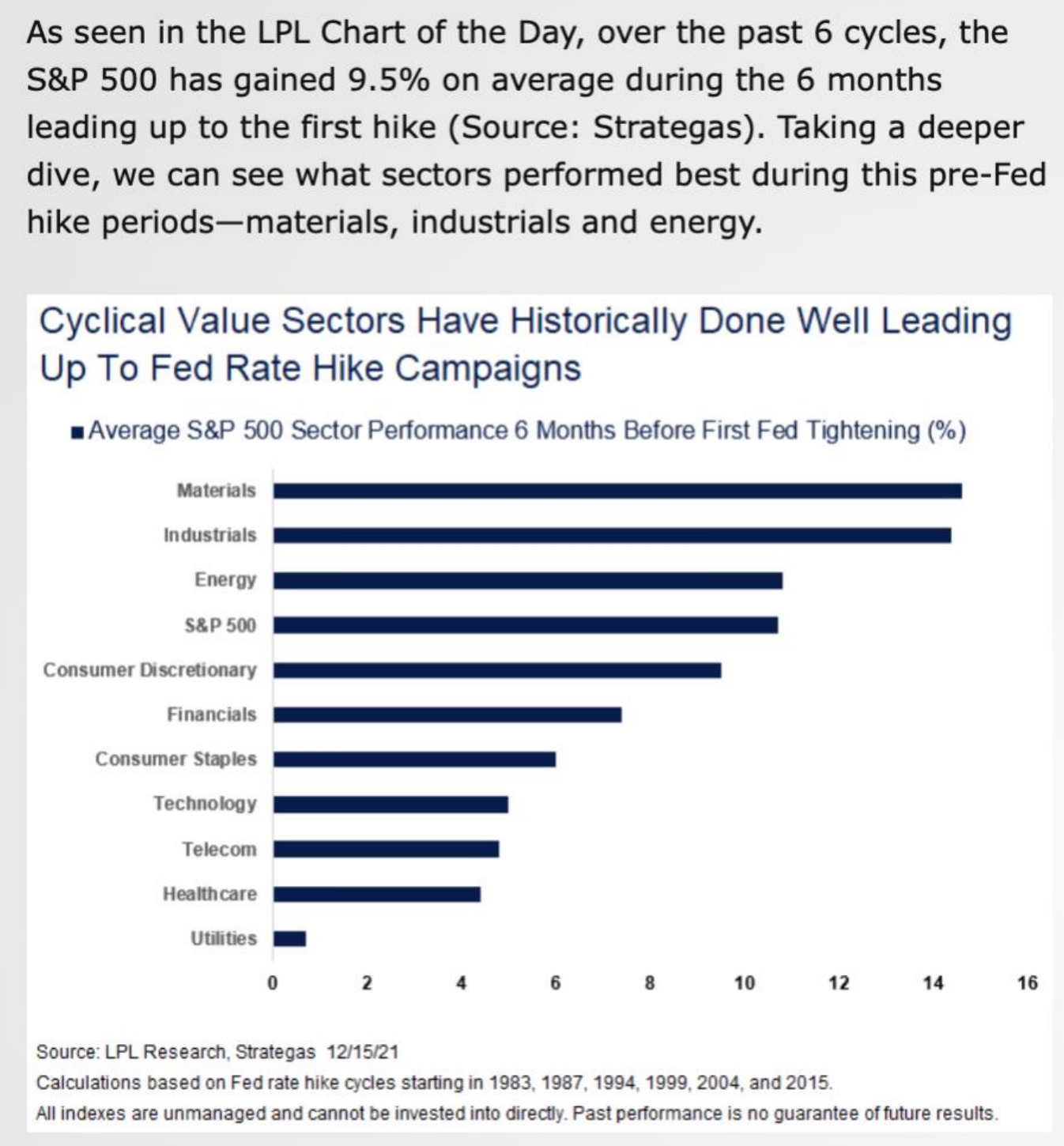
The FED has given clear signal that they are pulling back the punch bowl somewhat with odds favoring at least 3 interest rate raises in 2022. The first thing history tells us is that stocks do fine thru the first few interest rate raises but S&P sectors have differentiated responses.
History of Last 6 Rate Cycles-Sector Performance.
LPL research tells us that during modern day history rate raising cycles, technology and consumer discretionary trail the S&P while materials, industrials and energy lead. This flips the script on sector returns compared to last 10 years.
Disclosures
Lansing Street Advisors, LLC is a registered investment advisor with the State of Pennsylvania. You can read more about the Lansing team at www.lansingadv.com .
To the extent that content includes references to securities, those references do not constitute an offer or solicitation to buy, sell or hold such security as information is provided for educational purposes only. Articles should not be considered investment advice and the information contained within should not be relied upon in assessing whether to invest in any securities or asset classes mentioned. Articles have been prepared without regard to the individual financial circumstances and objectives of persons who receive it. Securities discussed may not be suitable for all investors. Please keep in mind that a company’s past financial performance, including the performance of its share price, does not guarantee future results.
Material compiled by Lansing is based on publicly available data at the time of compilation. Lansing makes no warranties or representations of any kind relating to the accuracy, completeness or timeliness of the data and shall not have liability for any damages of any kind relating to the use of such data.
Material for market review represents an assessment of the market environment at a specific point in time and is not intended to be forecast of future events or guarantee of future results.
Indices that may be included herein are unmanaged indices and one cannot directly invest in an index. Index returns do not reflect the impact of any management fees, transaction costs or expenses. The index information included herein is for illustrative purposes only.
The trademarks and service marks contained herein are the property of their respective owners.
Lansing Street Advisors is a registered investment adviser. Information presented is for educational purposes only and does not intend to make an offer or solicitation for the sale or purchase of any specific securities, investments, or investment strategies. Investments involve risk and, unless otherwise stated, are not guaranteed. Be sure to first consult with a qualified financial adviser and/or tax professional before implementing any strategy discussed herein. Past performance is not indicative of future performance.
Lansing Street Advisors may discuss and display, charts, graphs, formulas which are not intended to be used by themselves to determine which securities to buy or sell, or when to buy or sell them. Such charts and graphs offer limited information and should not be used on their own to make investment decisions.
Give me money (That's what I want)
Oh, lots of money (That's what I want)
All those lean greens, yeah (That's what I want)
I got that, uh, that's what I mean (That's what I want)
All that I want (That's what I want)
Woah yeah (That's what I want)
Give me money yeah...
https://www.youtube.com/watch?v=9hBC5TVdYT8
Ben Affleck WynnBet.com Commercial “Bet Any Game Any Time”
https://panteracapital.com/firm/
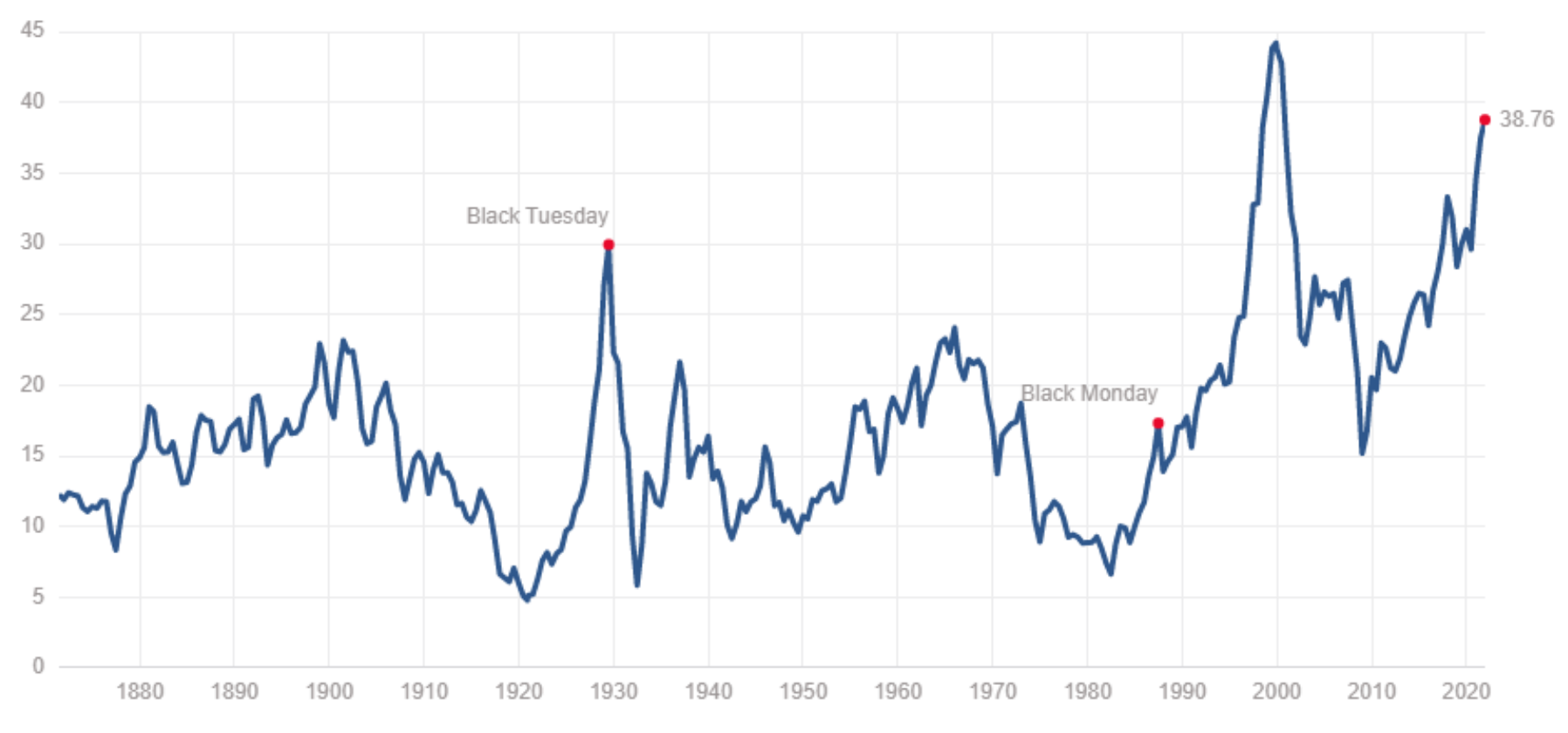
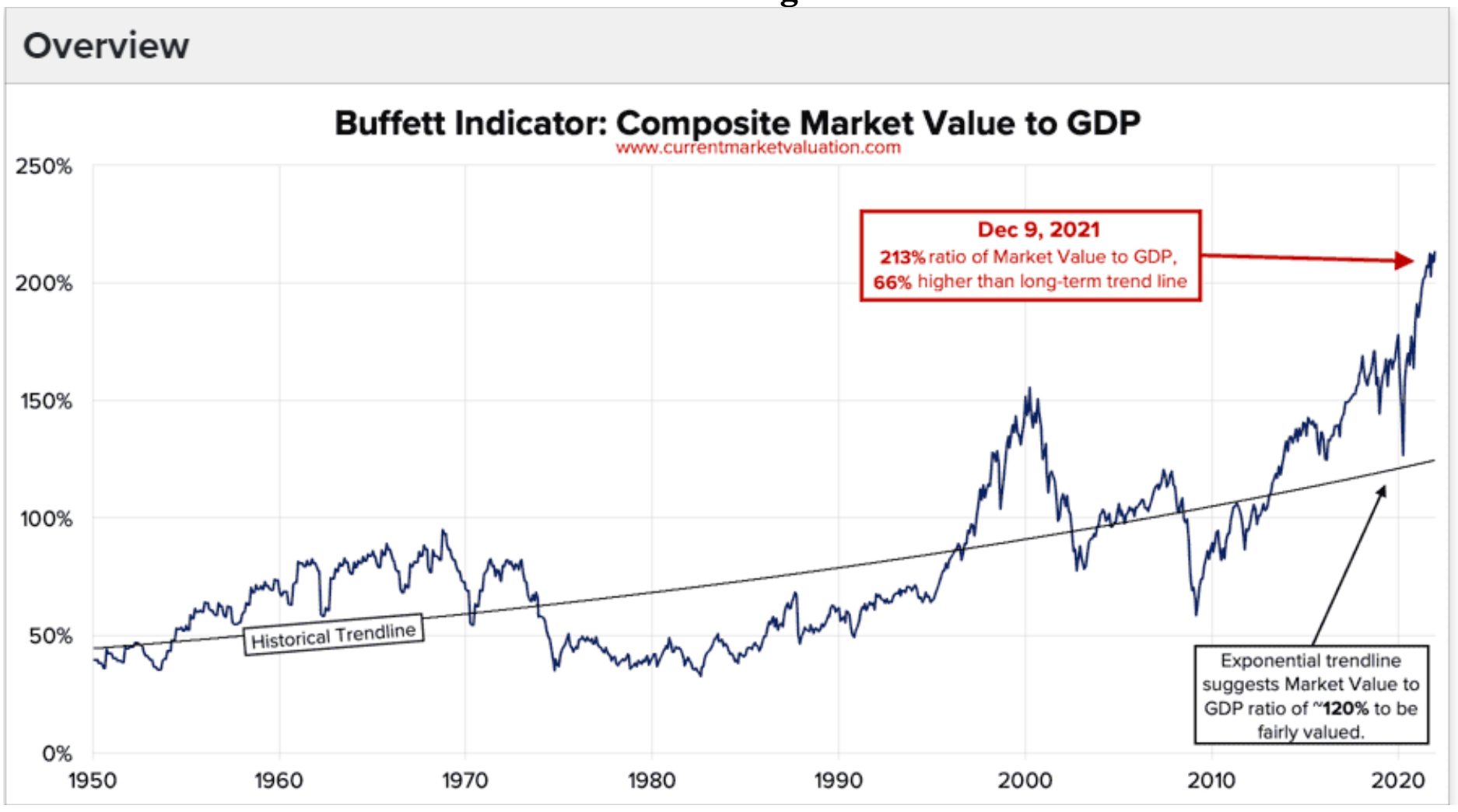
Two respected fundamental stock market valuation methods-Shiller P/E Ratio and Buffett indicators are at or above 1999 internet bubble all-time highs. We don’t have to get in the weeds on these measures - just know that high is expensive and low is cheap. These charts are not timing mechanisms so you should not be selling stocks based on the data but they do help us understand probability of future returns. Simply put, where you start matters so forward returns should be lower than the past 10 years.
Shiller PE Ratio almost at internet bubble highs.
So if you want to make A Whole Lotta Money, you’re lucky to be in America, but it’s going to be a little harder going forward in the stock market.

Contrary to popular belief, future stock investment returns tend to be inversely correlated to the popularity of stock ownership. At Lansing Street Advisors we are huge believers in stocks for the long run and equities in general as the best place to put long-term capital but valuations do matter for future returns.
High Asset Valuations Lead to Lower Expected Returns
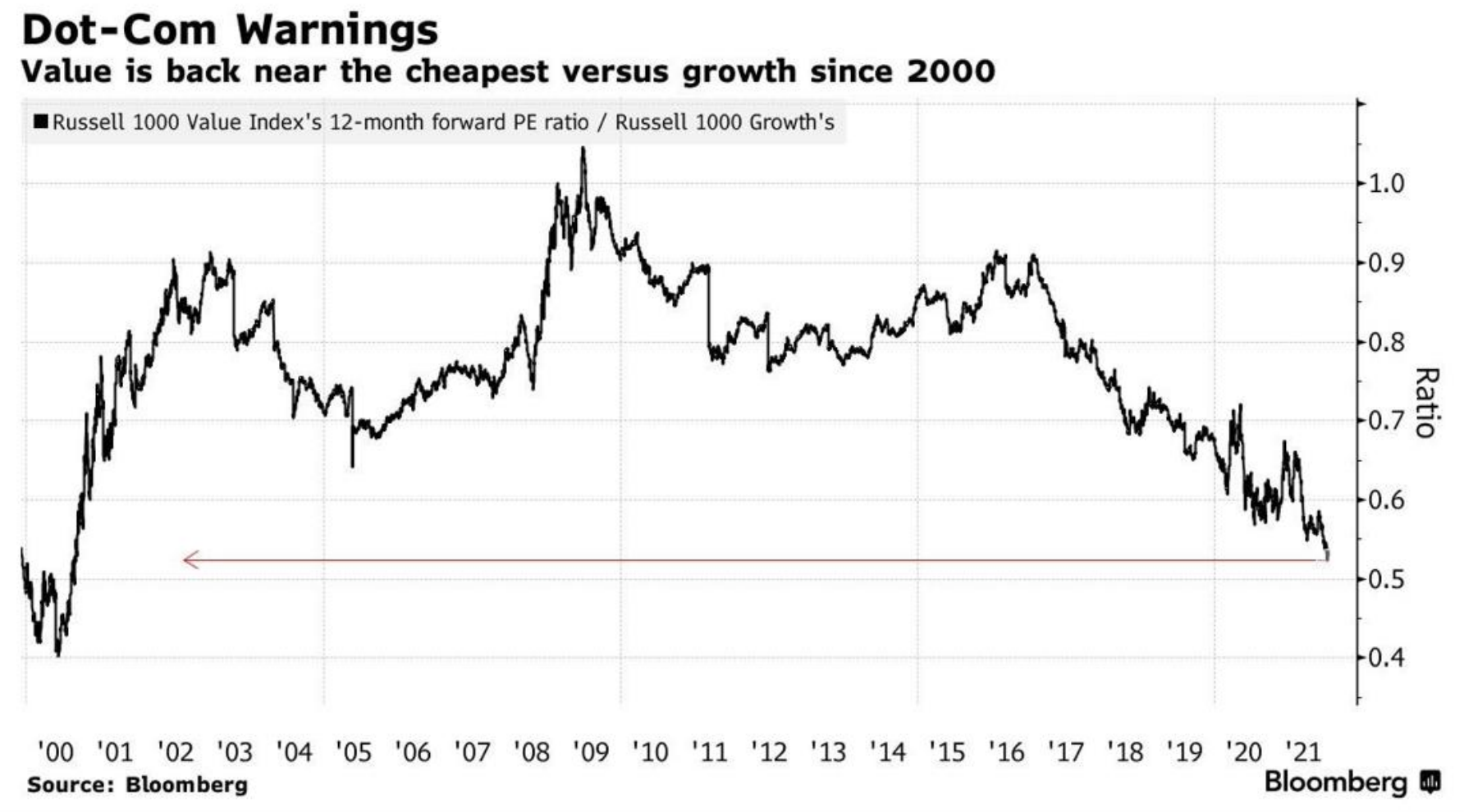
Also U.S. value stocks have hit record low valuations in comparison with growth stocks. Keep in mind that the
previous LPL research chart points out that value sectors lead in periods of rising interest rates.
Conclusion
This is not a recommendation to sell stocks but an observation on valuations versus forward expected returns based on history. Quite to the contrary regarding stocks, its very tough to come up with reason to own bonds outside of personal behavioral control around a stock market correction. Bonds will lower volatility of your portfolio during stock sell-offs but outside of that they will struggle to produce positive returns after inflation for the foreseeable future.
Black Swan events have a 3.6% probability of happening in any given year and we are still living through our once in a decade black swan with Covid raging into its 22nd month. So a curveball that crashes the market is unlikely. Bubbles are always and forever created by the Fed, so considering the government added 8x the stimulus of 2008 and interest rates hit generational lows during Covid, investors should expect some areas of the market are inflated by this cocktail discussed in my last letter.
American corporations experienced record profit margins in 2021 but they are now facing higher wages, higher interest rates, less government stimulus and inflating input costs across industries. As discussed in my last letter Money Money Money , 2021 was a year of record speculation and this type of animal spirits historically does not end in lucrative returns going forward.
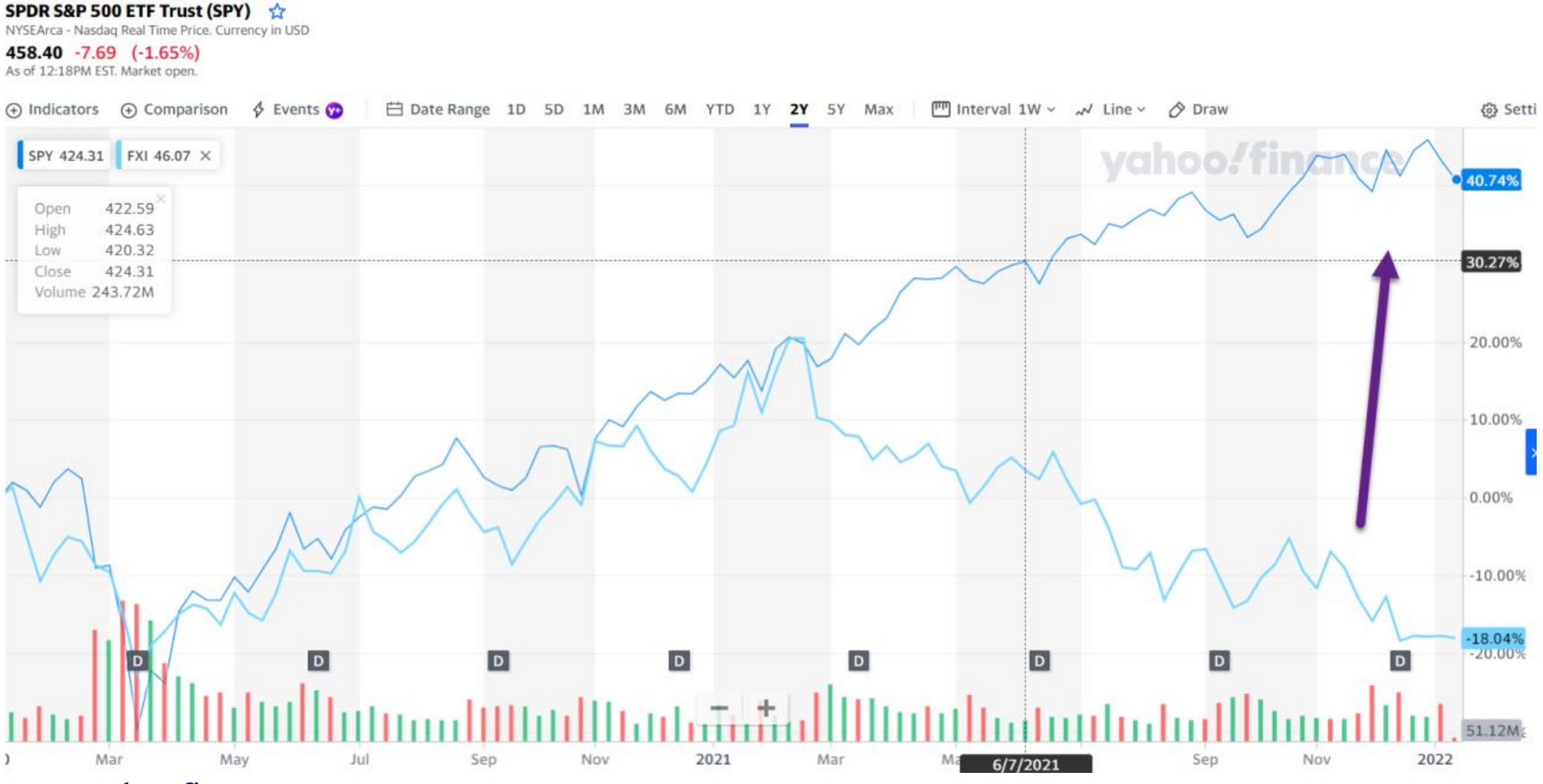
On a positive note, the American economy once again proved its astonishing dynamics through Covid and once again exhibited capitalism’s dominance over communism.
First it was Japan then Russia then China…economically about to take over the U.S….Not so much.
2 Year Chart S&P Capitalism +41% vs. FXI Chinese Communism -18%...A small 59% Spread