
Introduction
One lesson “I’ve learned in time” after nearly 30 years in this business is to ignore predictions, especially ones about the year ahead. I recently finished The 22 Immutable Laws of Marketing, and one principle in particular stood out: the “Law of Unpredictability.” While the authors weren’t writing about financial markets, the idea fits them remarkably well.

Good Riddance
Song by Green Day (1997)
“Another turning point, a fork stuck in the road
Time grabs you by the wrist, directs you where to go
So make the best of this test and don't ask why
It's not a question, but a lesson learned in time
It's something unpredictable,
but in the end is right
I hope you had the time of your life”
The common thread is not Bitcoin, options, or margin debt individually. It is the belief that markets can be predicted, engineered, or gamed into consistency. That belief flourishes late in cycles and disappears quickly when volatility returns.
Speculation always looks smartest right before it stops working.
Long-term investing, by contrast, is boring, humbling, and remarkably resilient. It does not promise certainty, only participation. And history suggests that participation, patience, and discipline remain far more reliable than the next bold forecast or clever trade.
Part V. What Should Americans Be Worrying About?
I know many readers are waiting for a political commentary, but thank God I do not comment on politics.
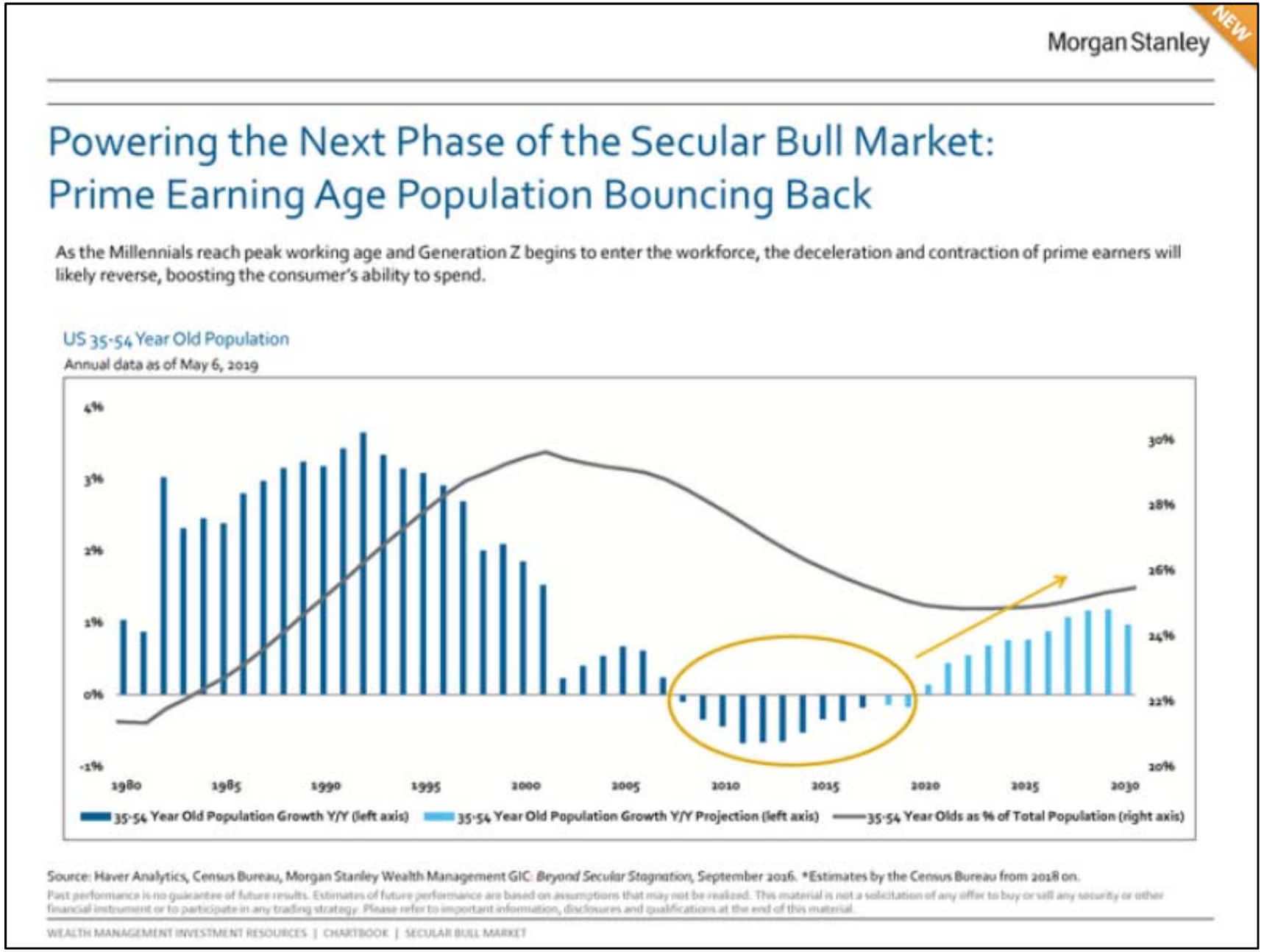
Staying consistent with the theme of this letter around predictions, demographics are one area where trends have a high degree of long-term predictability.
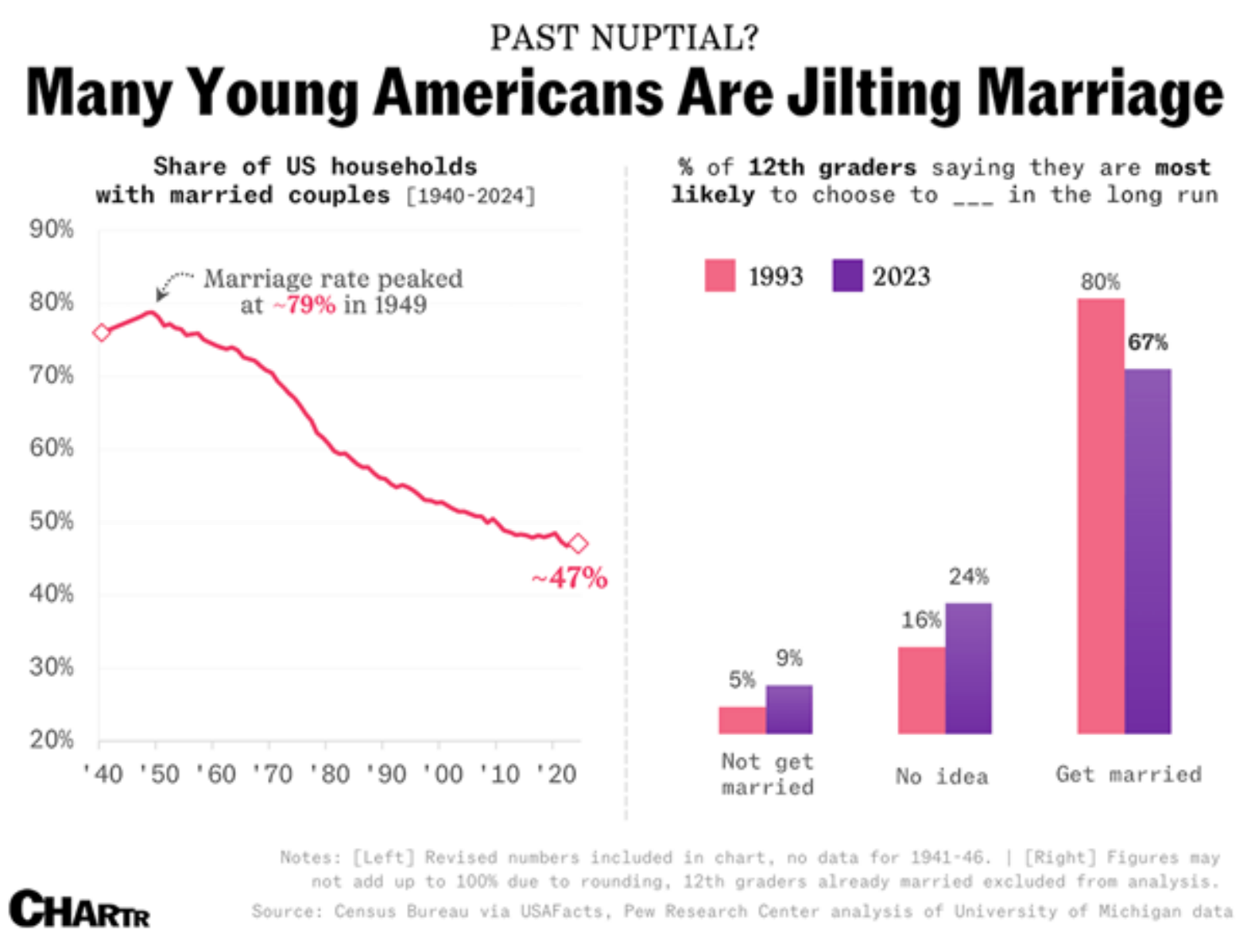
Right now, two demographic trends stand out. Marriage rates are falling sharply and educational outcomes are deteriorating. That combination is not encouraging.
Married-Couple Households Are Plummeting
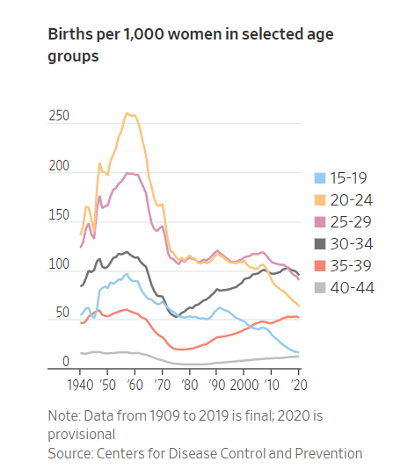
I am not here to judge anyone for being married or unmarried. That is not my business. But the economic implications are straightforward. Fewer marriages tend to mean fewer children. Fewer children lead to slower population growth, which ultimately translates into slower long-term economic growth.
These probabilistic return assumptions depend on current market conditions and, as such, may change over time.
IMPORTANT: The projections and other information generated by the Vanguard Capital Markets Model regarding the likelihood of various investment outcomes are hypothetical in nature, do not reflect actual investment results, and are not guarantees of future results. Distribution of return outcomes from the VCMM are derived from 10,000 simulations for each modeled asset class. Simulations are as of March 31, 2019. Results from the model may vary with each use and over time.
Will this exact pattern repeat in 2026? There are no guarantees. But that’s precisely the point.
A forecast calling for an S&P 500 10% correction is meaningless unless you’re running a hedge fund. For long-term individual investors, it’s noise—and it should be ignored at all costs.
Part IV. The Speculative Economy
Cryptocurrency
“Life is infinitely stranger than anything the mind could invent.”
— Sir Arthur Conan Doyle
According to The Wall Street Journal , here were some of the most widely cited Bitcoin price targets for 2025:
• Bernstein: $200,000
• Bitwise: $200,000
• Fundstrat: $200,000
• BlackRock’s Larry Fink: $700,000 if every large investor buys
• Cathie Wood: $1.5 million by 2030
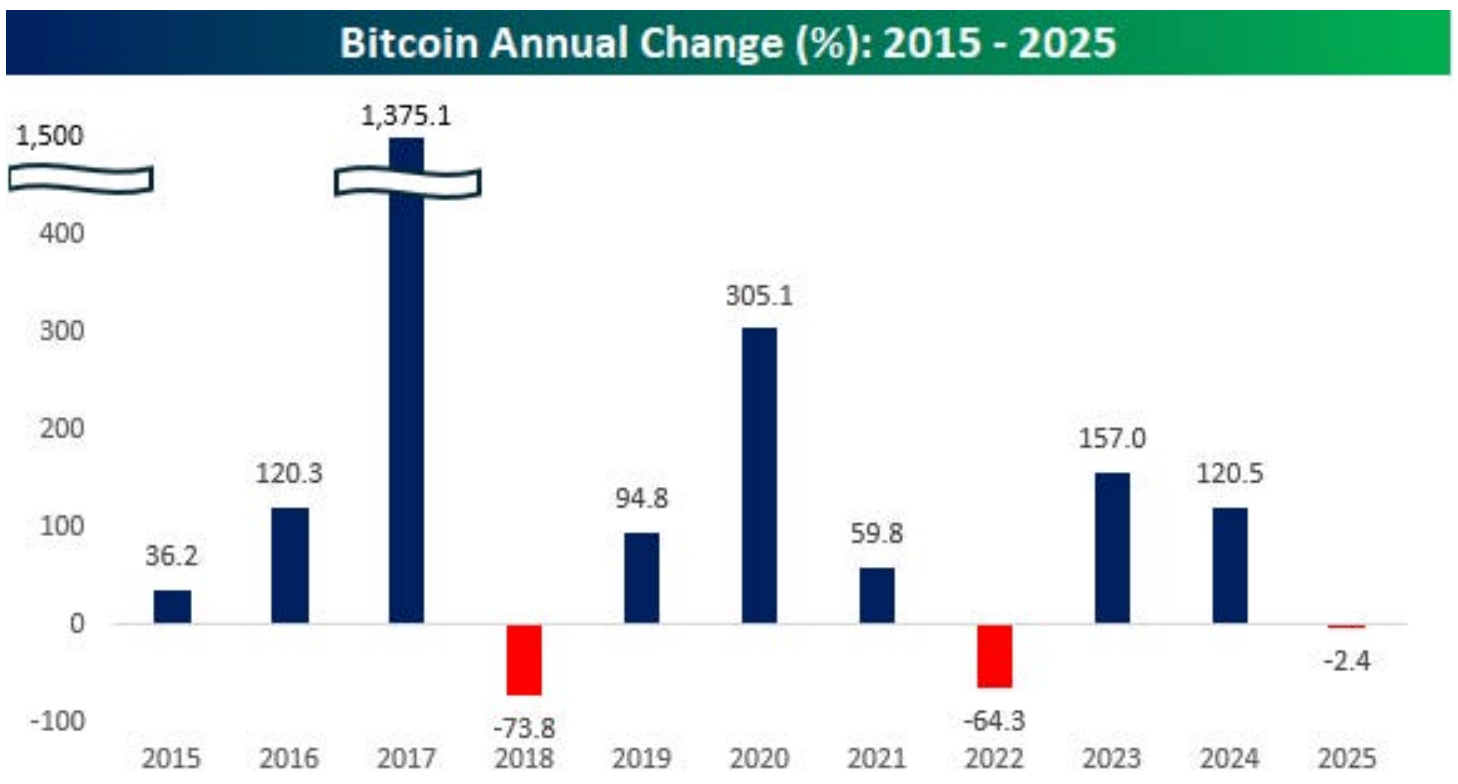
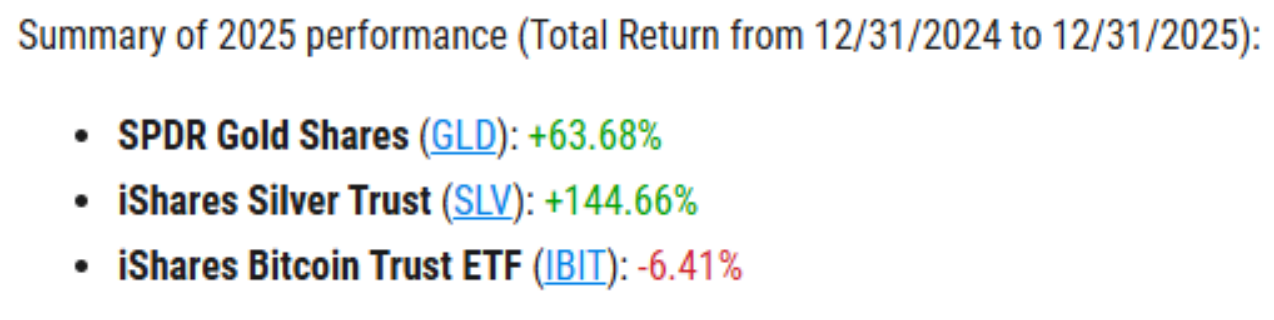
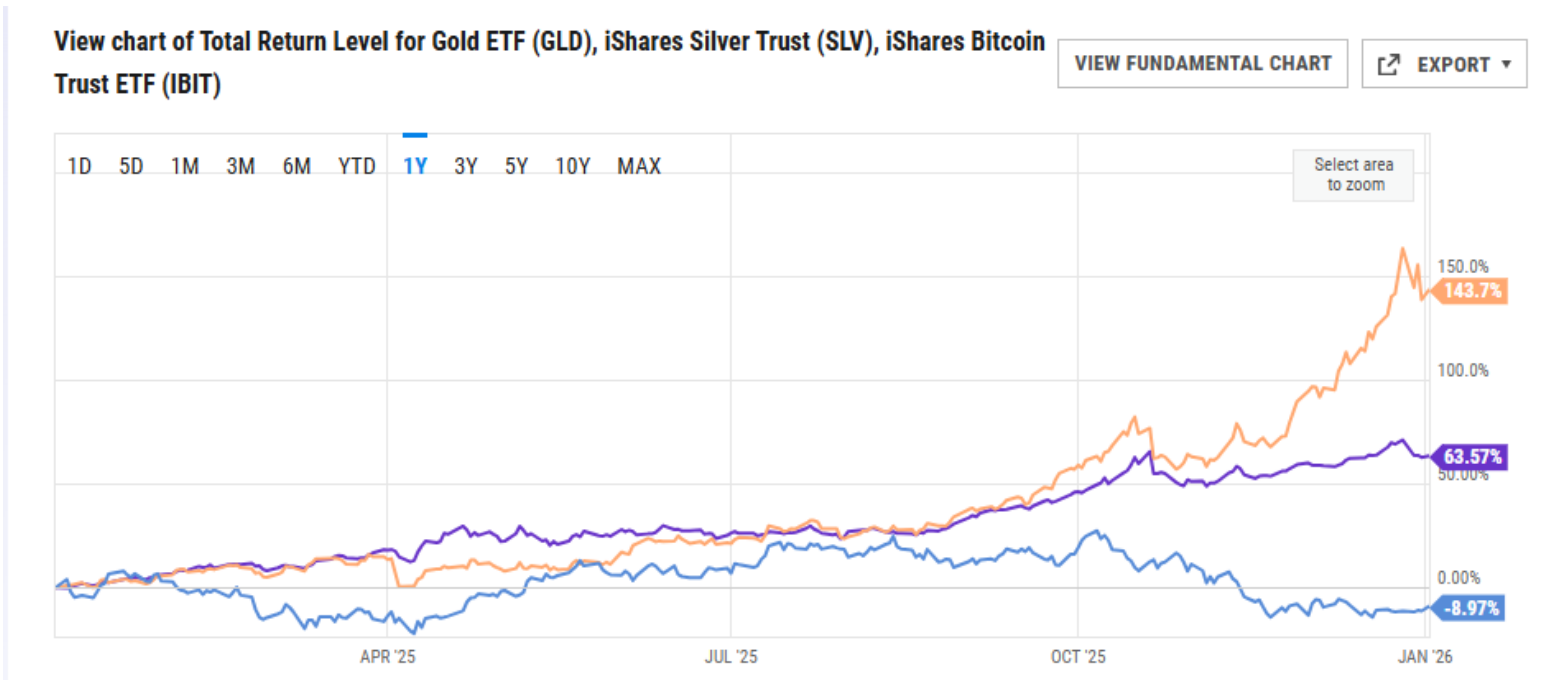
These are all credentialed people at excellent firms, far smarter than me, yet Bitcoin finished 2025 down roughly 6%, closing near $93,460.
That outcome doesn’t indict Bitcoin. It indicts prediction. Highly speculative assets make fools of one-year forecasts, even when those forecasts come from the most sophisticated corners of finance.
Here is the 10-Year history of Bitcoin. Good Luck with a one-year prediction.
On December 7th, 1999, Barron’s published the infamous “What’s Wrong,Warren” cover eerily before the Nasdaq crashed 50% and Berkshire recovered years’ worth of underperformance.
The below graph plots the time period 6/30/98 through 2/29/00 for the Nasdaq where many dot-com and technology stocks traded, and the price of Berkshire Hathaway, Warren Buffett’s holding company, which consisted of value stocks:
https://kailashconcepts.com/ Kailash Concepts
Was the Nasdaq 100 20% rally in the first quarter a repeat of the above or a new bull market in tech? A big portion of the answer will come from the direction of interest rates. The Fed came in like a hurricane upending markets across the world, but we have not begun to feel the effects of higher interest rates working their way across the system. As rates settle into a new range, it will have a profound effect on new business initiatives going forward and be exacerbated by the recent regional bank speed bump that will reduce lending to small business owners. Below are Vanguard’s projected 10-year returns that I include at the end of every letter. The interesting data point is treasuries and high-quality corporate bonds have higher projected returns than growth stocks at one-quarter of the volatility.
Like Neil Young says “I want to love you but I’m getting blown away.”
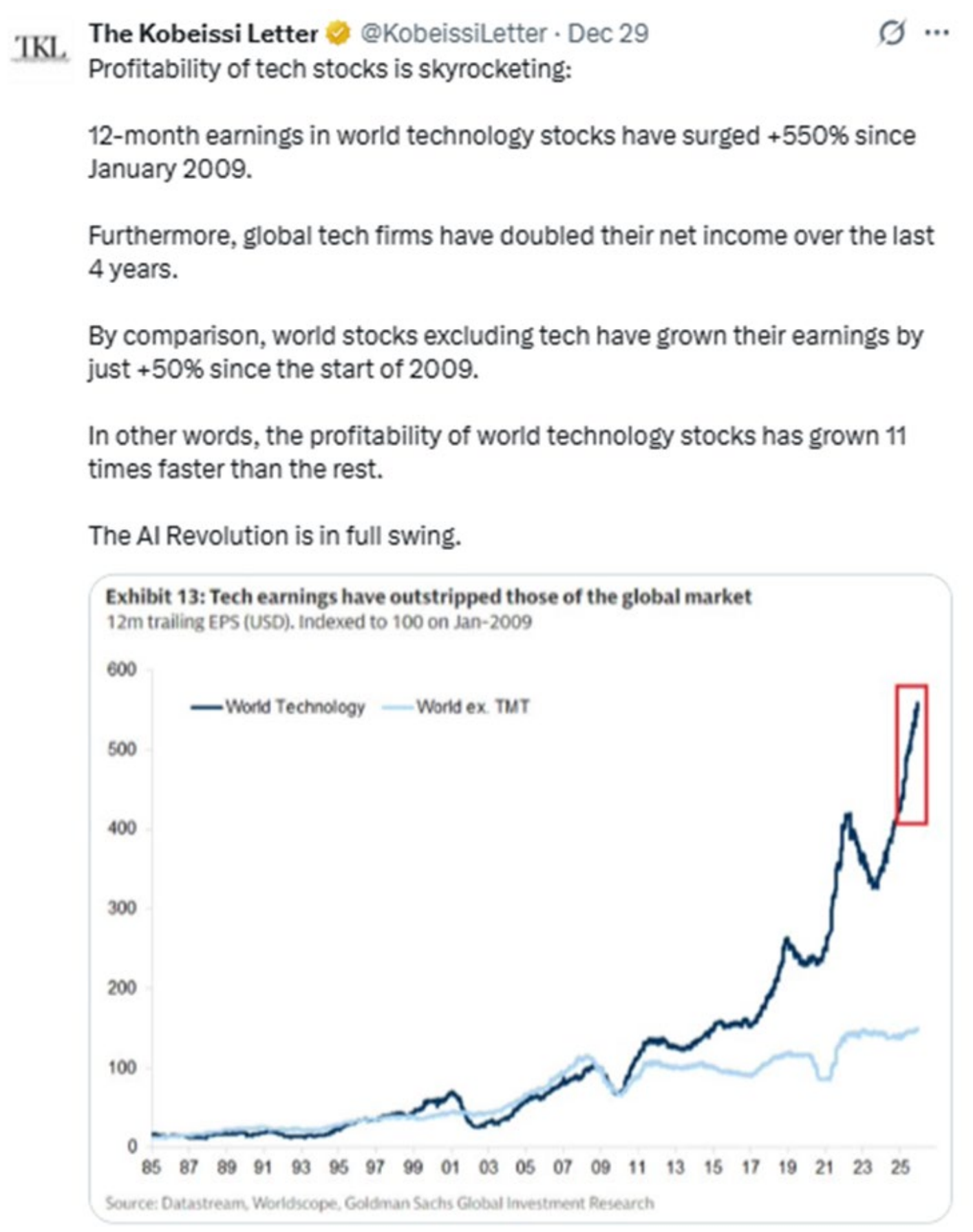
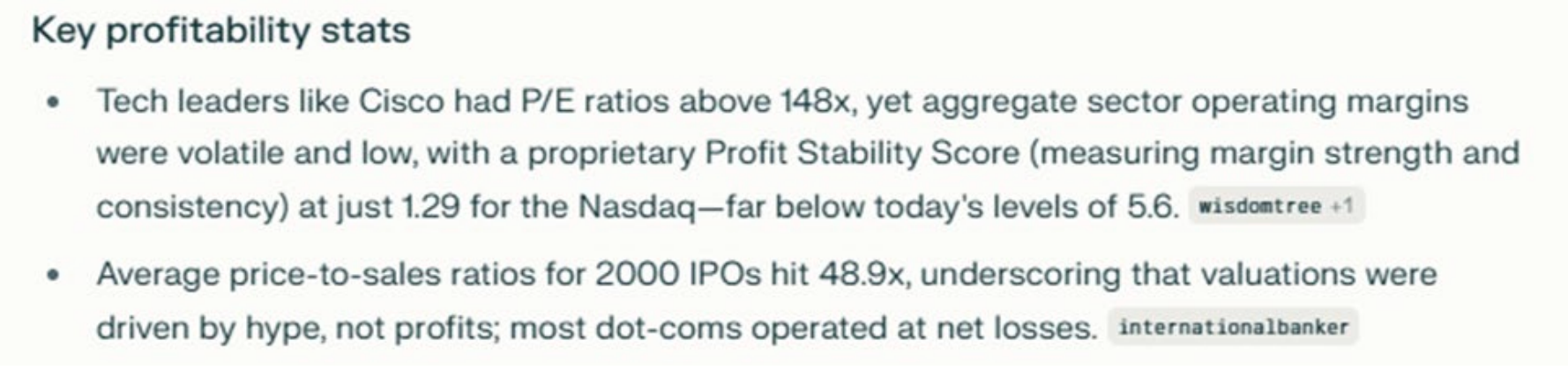
In other words, valuations were high and profits were scarce.
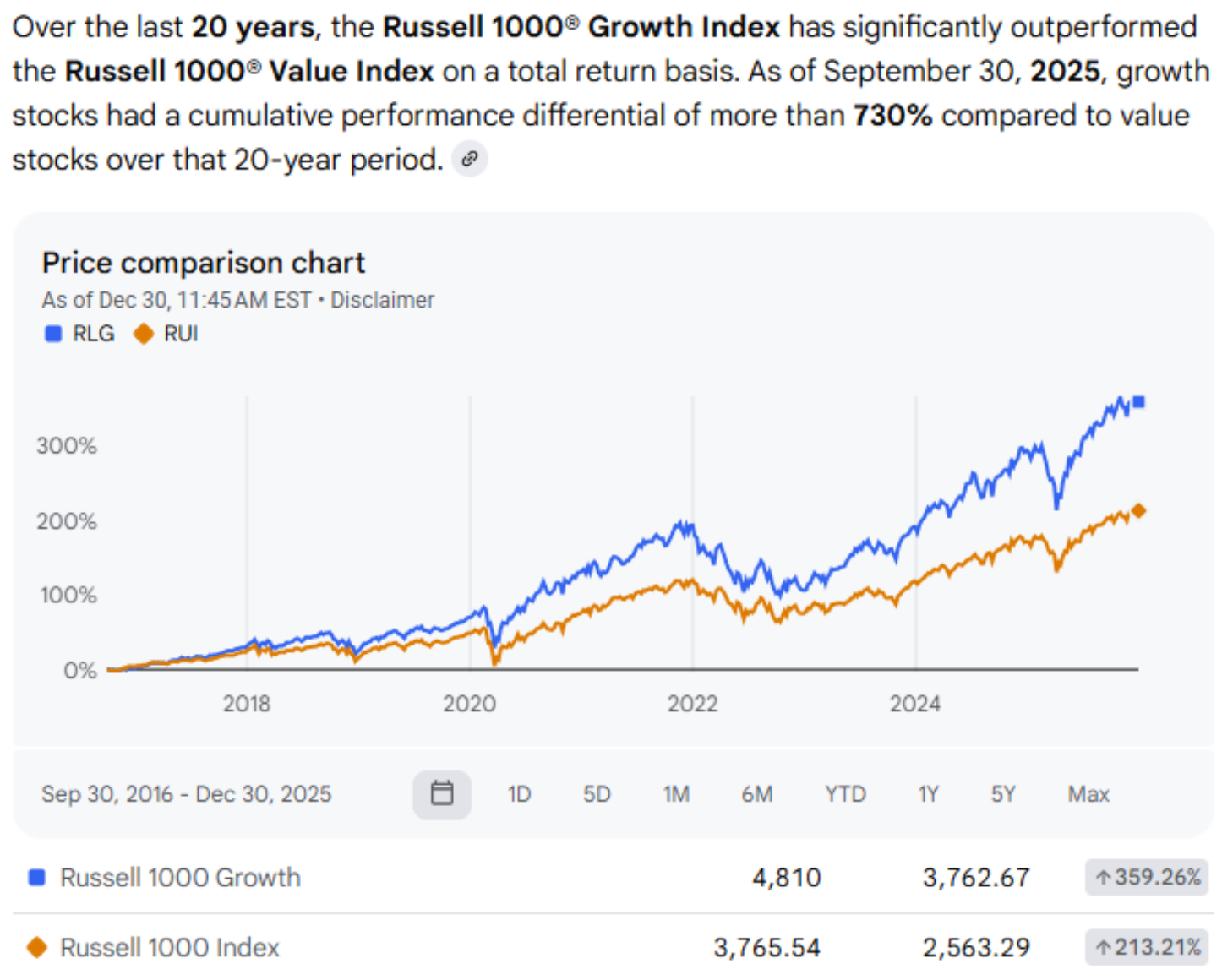
Today’s environment looks very different. Higher profitability has translated directly into market outcomes. Over the past 20 years, growth stocks have outperformed value stocks by more than 730% on a cumulative total return basis.
Nvidia sold off more than 50% during the 2021–2022 semiconductor bear market and saw another 35% correction during the 2025 sell-off tied to Chinese AI competition. By comparison, Cisco Systems was the Nvidia of the internet bubble. At its peak in 2000, Cisco traded at over 200 times earnings, versus Nvidia today at roughly 40 times. Cisco only returned to its all-time high this year—twenty-five years after the dot-com bubble burst.
Part II. Is It a Fad or a Trend?
There is a meaningful gap between today’s technology stock valuations and those seen in 1999—but the difference in profitability is far more important.
Over the last four years, global technology companies have doubled their net income. Since the 2008 financial crisis, technology earnings have grown roughly 550%, compared to just 50% for the rest of the market. This is a critical distinction from the dot-com era.
To put the late-1990s environment into context, here’s how Perplexity summarizes profitability heading into the internet bubble’s collapse:
“Profitability was indeed shrinking or nonexistent for the sector as a whole: 74% of surveyed internet companies had negative cash flows, with most burning cash on marketing and growth rather than generating sustainable earnings.”
Warren Buffett once warned that derivatives are “financial weapons of mass destruction.” That line gets recycled often, but rarely does it feel this current. The combination of leverage, speed, and overconfidence is exactly how small losses turn into life-altering ones.
Margin Debt (My One Worry)
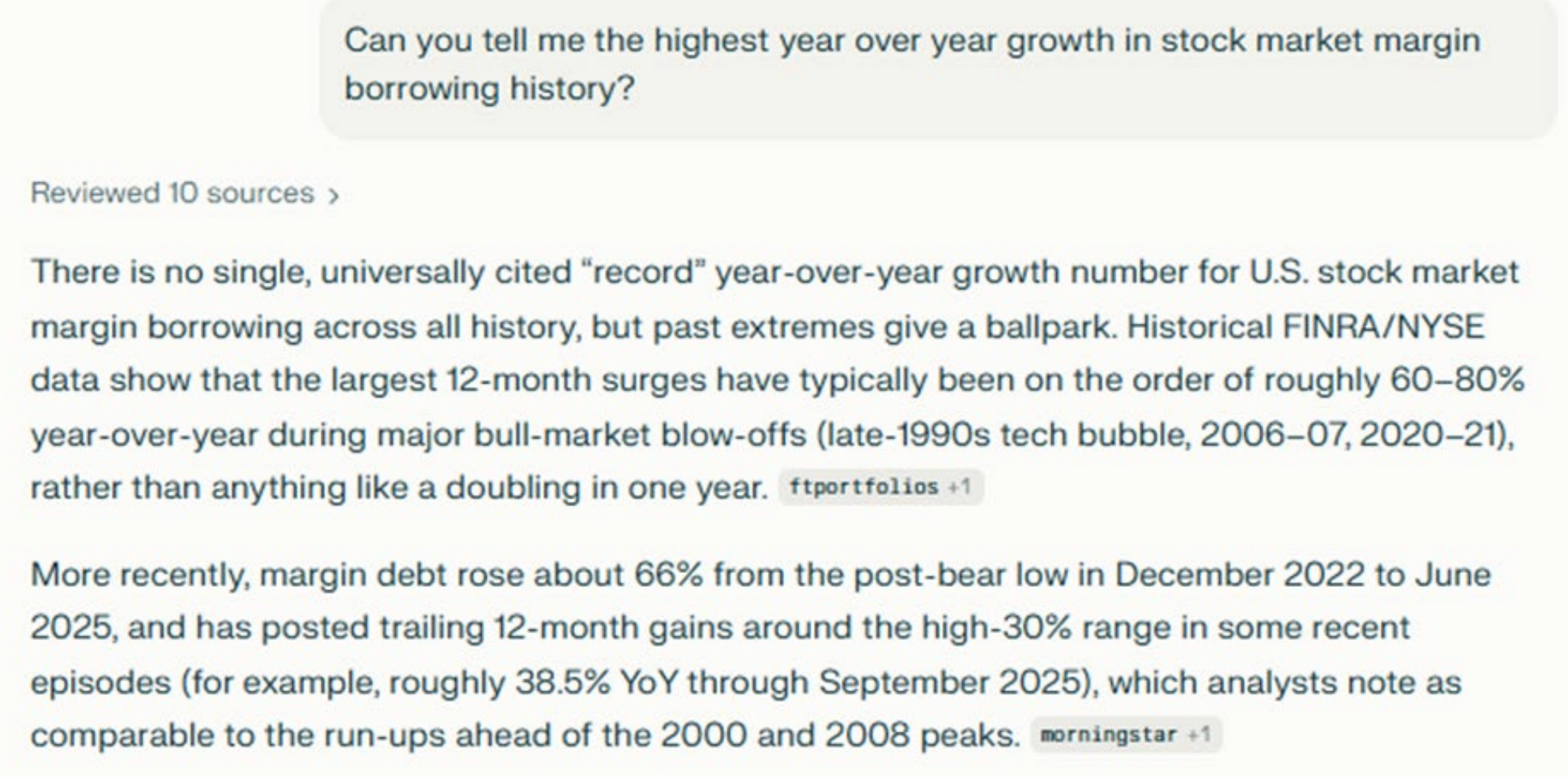
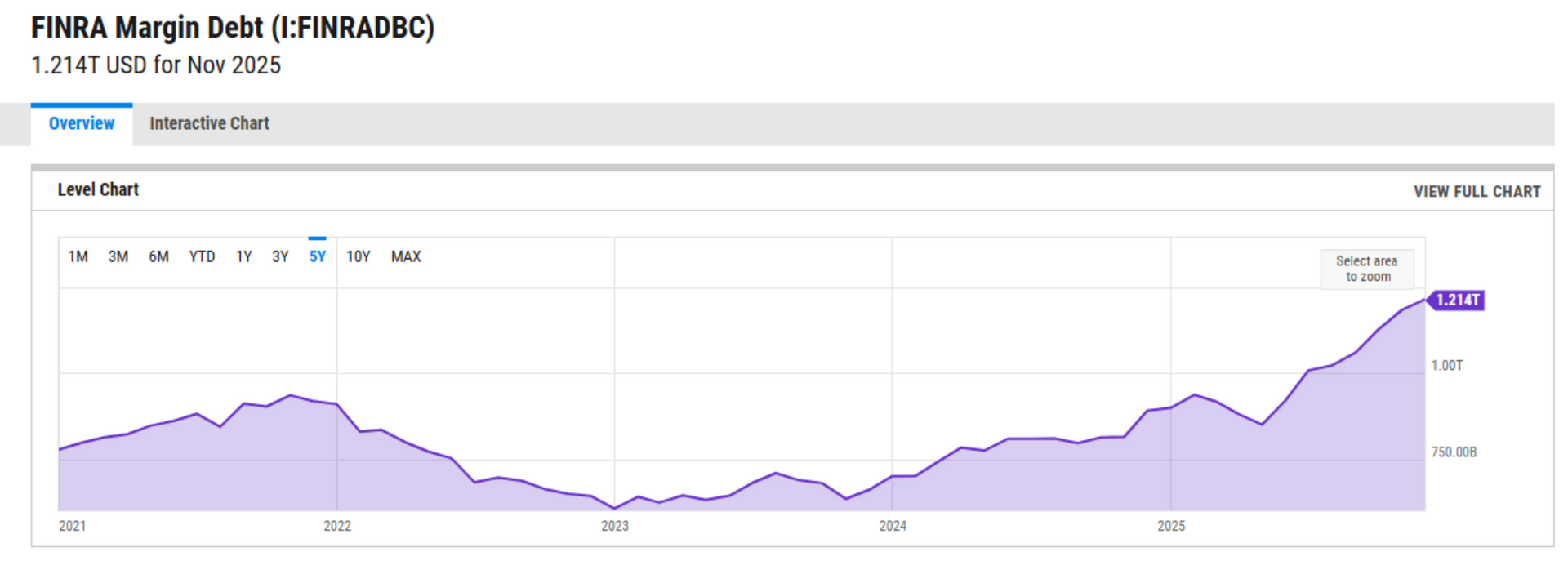
My 2026 worry is the record-breaking margin debt at the end of 2025. Always and forever, things go south when investors become over-leveraged. As the chart below shows, margin debt has surged above the borrowing highs reached during the 2022 meme-stock era. The options activity discussed above is directly contributing to this increase.
Year-over-year margin borrowing is up more than 36%. That is not yet at historic crisis levels, but leverage rarely announces itself at the moment it becomes dangerous. It tends to reveal itself only after markets move against it.
Leveraged loans are up 50 percent since 2015
Leveraged loans, which are issued by overleveraged companies with insufficient cash flows, are part of what Wolf Richter recently called the “gigantic pile of risky corporate debt that is now being brutally repriced as concerns over credit risk (the risk of default) are finally bubbling to the surface.” According to Richter, the S&P/LSTA US Leveraged Loan 100 Index, which tracks the prices of the largest leveraged loans, has plunged by 20 percent since February 22nd.
According to Richter, leveraged loans “are traded in slices like securities or are packaged into highly rated Collateralized Loan Obligations (CLOs). But for years, investors had the hots for them, driven by their relentless chase for yield, in a world of interest rate repression.”
These companies, noted Richter, were often acquired by private equity firms through leveraged buyouts, which means they loaded up those companies with lots of debt. In addition, “PE firms extracted special dividends from their companies,” which were funded by leveraged loans. That’s a form of asset stripping and it leaves the company “more leveraged, more precarious and more likely to topple. But who cares? Those were the good times and the chase for yield was on,” lamented Richter.
Options Trading (My Only Prediction)
“Risk comes from not knowing what you are doing.”
— Warren Buffett
“The range of derivatives contracts is limited only by the imagination of man (or sometimes, so it seems, madmen).”
— Warren Buffett
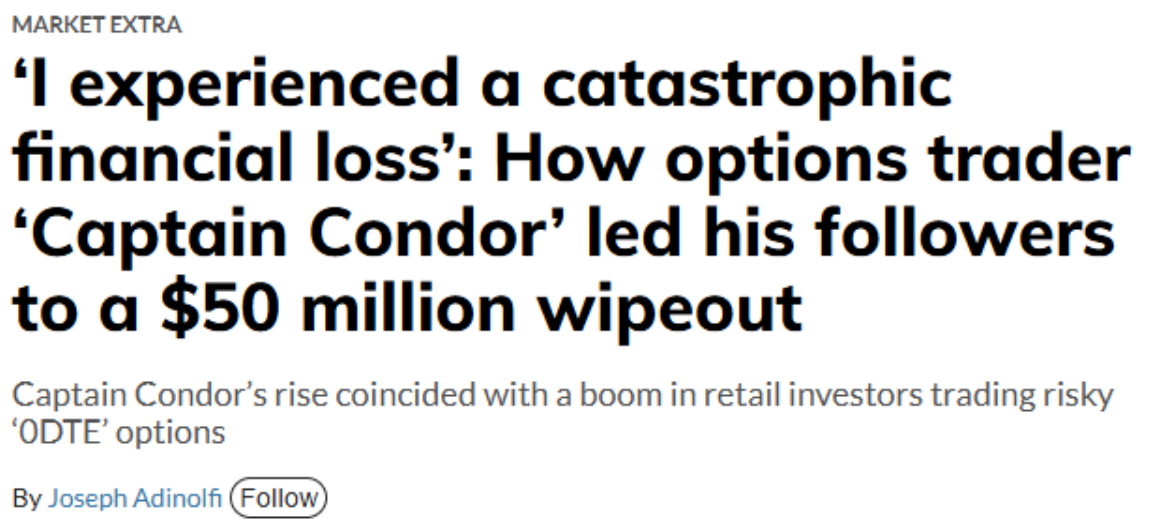
Just before Christmas, an options trader known online as “Captain Condor” and his followers experienced a catastrophic wipeout that erased tens of millions of dollars in days. The strategy relied on the Martingale system, doubling down after losses in the hope that a small win would eventually recover everything. It works…until it doesn’t. When it breaks, it breaks all at once. (Source: MarketWatch)
Note to self: Captain Condor is a WWE wrestler’s name — not the person who should be giving you financial advice.
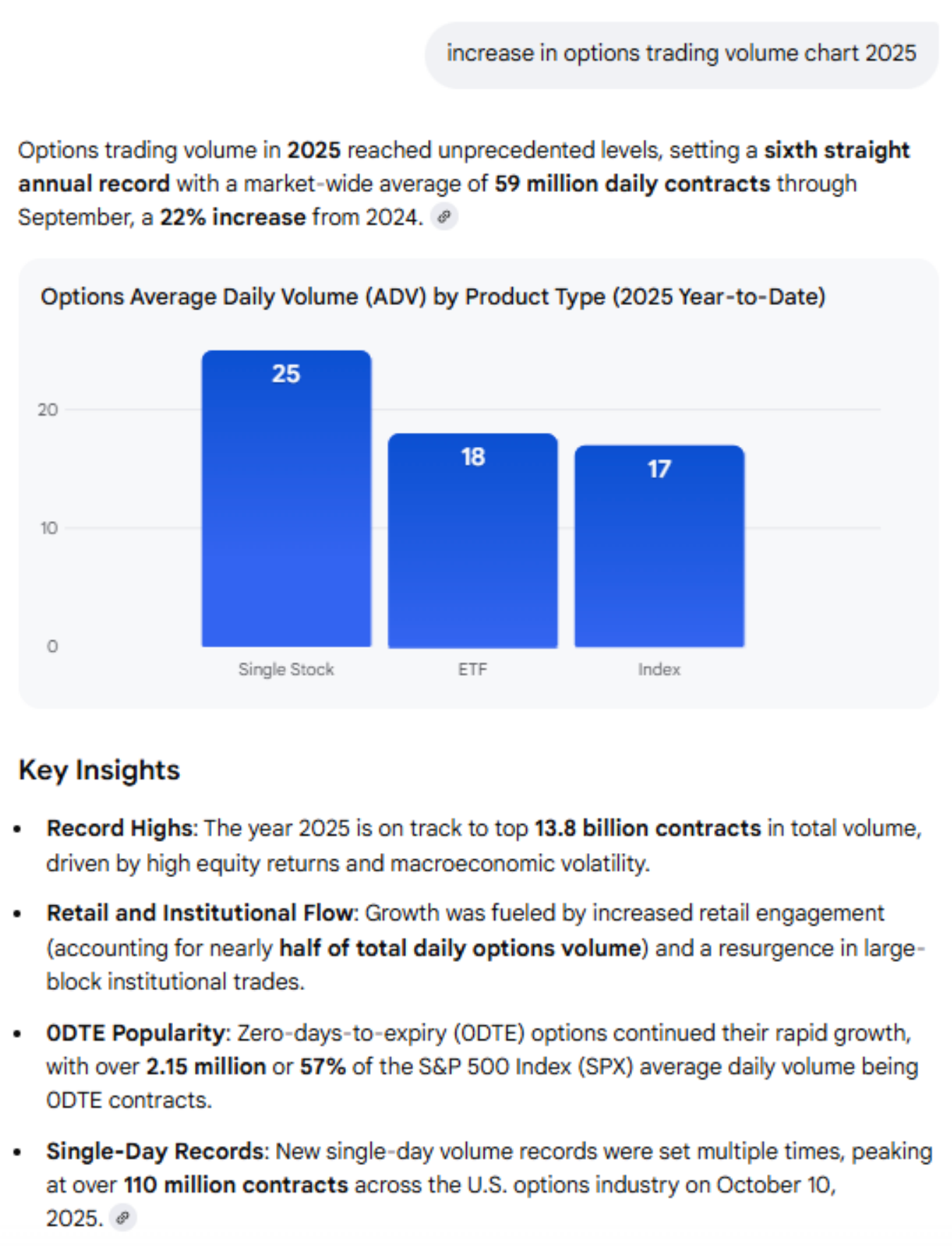
If your adult children are trading options or zero-day-to-expiration (0DTE) contracts, please beg them to stop. Pay them to stop. Some of the biggest hedge funds in the world prohibit their traders from touching certain options strategies, yet we now have the mass public trading complex derivatives on their phones.
Seeing the explosion in options volume, my one clear prediction is that this will end in financial tears.
Disclosures
Lansing Street Advisors, LLC is a registered investment advisor with the State of Pennsylvania. You can read more about the Lansing team at http://www.lansingadv.com/
To the extent that content includes references to securities, those references do not constitute an offer or solicitation to buy, sell or hold such security as information is provided for educational purposes only. Articles should not be considered investment advice and the information contained within should not be relied upon in assessing whether to invest in any securities or asset classes mentioned. Articles have been prepared without regard to the individual financial circumstances and objectives of persons who receive it. Securities discussed may not be suitable for all investors. Please keep in mind that a company’s past financial performance, including the performance of its share price, does not guarantee future results.
Material compiled by Lansing is based on publicly available data at the time of compilation. Lansing makes no warranties or representations of any kind relating to the accuracy, completeness or timeliness of the data and shall not have liability for any damages of any kind relating to the use of such data.
Material for market review represents an assessment of the market environment at a specific point in time and is not intended to be forecast of future events or guarantee of future results.
Indices that may be included herein are unmanaged indices and one cannot directly invest in an index. Index returns do not reflect the impact of any management fees, transaction costs or expenses. The index information included herein is for illustrative purposes only.
The trademarks and service marks contained herein are the property of their respective owners.
Lansing Street Advisors is a registered investment adviser. Information presented is for educational purposes only and does not intend to make an offer or solicitation for the sale or purchase of any specific securities, investments, or investment strategies. Investments involve risk and, unless otherwise stated, are not guaranteed. Be sure to first consult with a qualified financial adviser and/or tax professional before implementing any strategy discussed herein. Past performance is not indicative of future performance.
Lansing Street Advisors may discuss and display, charts, graphs, formulas which are not intended to be used by themselves to determine which securities to buy or sell, or when to buy or sell them. Such charts and graphs offer limited information and should not be used on their own to make investment decisions.
Part I. Is It the 1999 Internet Bubble Again?
“We will continue to ignore political and economic forecasts, which are an expensive distraction.”
— Warren Buffett
True market bubbles don’t usually end with wall-to-wall media warnings predicting their collapse. That irony is worth keeping in mind.
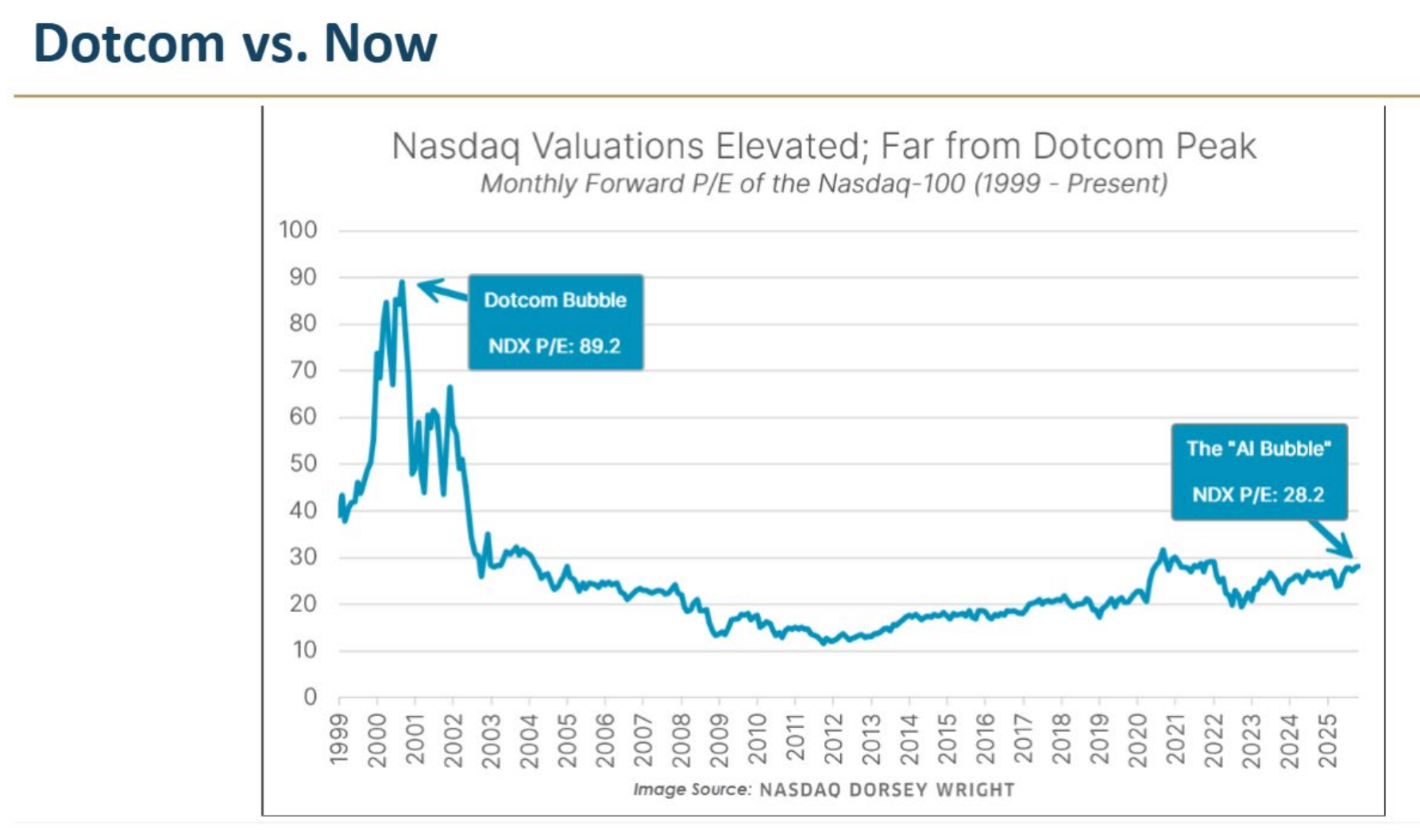
While today’s market is certainly expensive by historical standards, it is nowhere near the valuation extremes reached during the Nasdaq internet bubble.
During the dot-com era, valuations peaked at roughly three times today’s levels on a price-to-earnings basis.
1999 Nasdaq P/E 90X vs. 2025 P/E 28.2x.
The longer-term Bitcoin chart makes the point even clearer: massive gains, violent drawdowns, and price paths that defy tidy narratives. In the same year Bitcoin declined, gold rose more than 60% and silver surged over 140% — an outcome almost no one had on their bingo card.
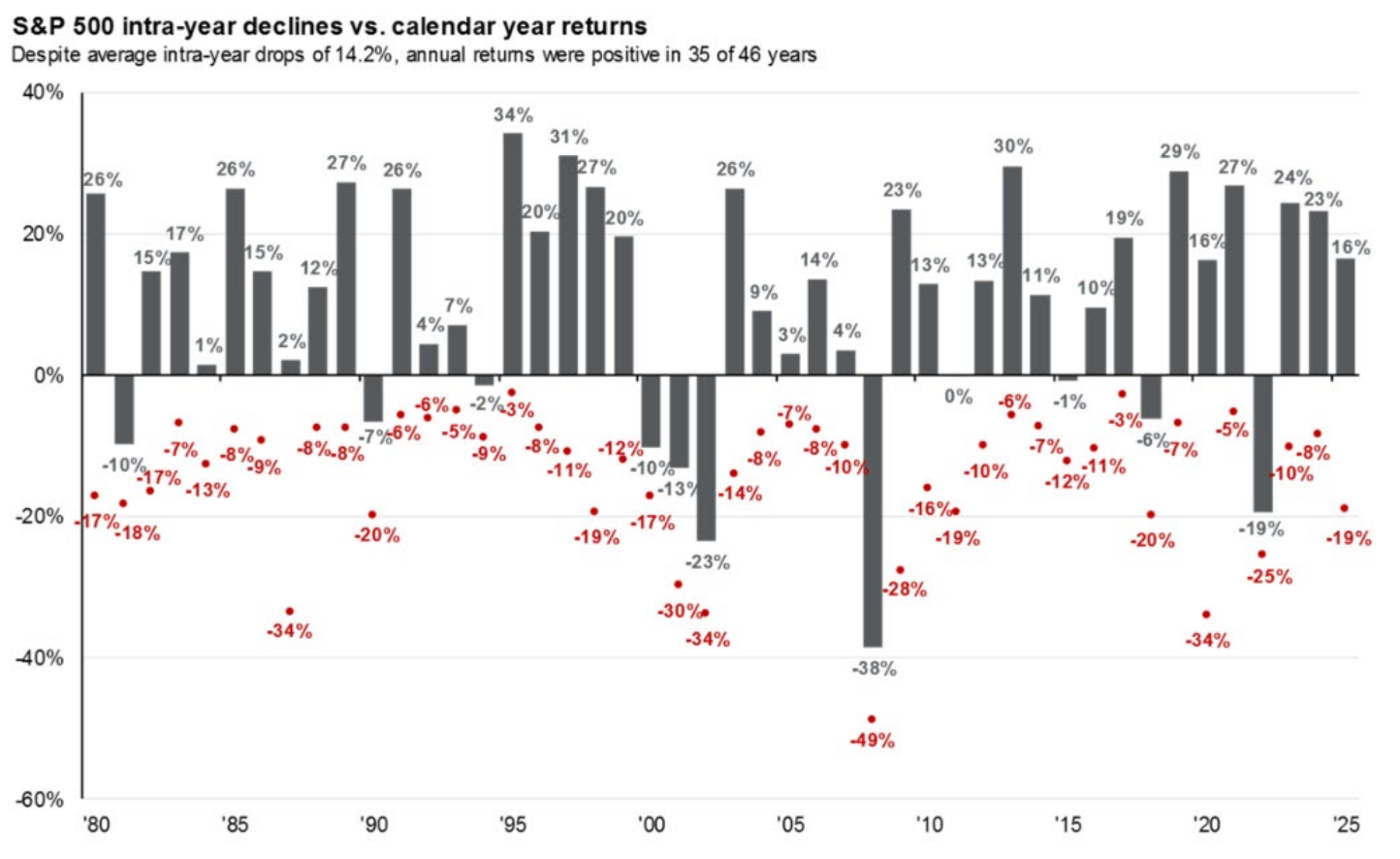
Just look at the last three years. We saw pullbacks of approximately 10%, 8%, and 19%, yet the market finished those years up 24%, 23%, and 16%, respectively. By contrast, the dot-com era was a true bear market—the Nasdaq declined nearly 75% peak to trough.
That distinction matters.
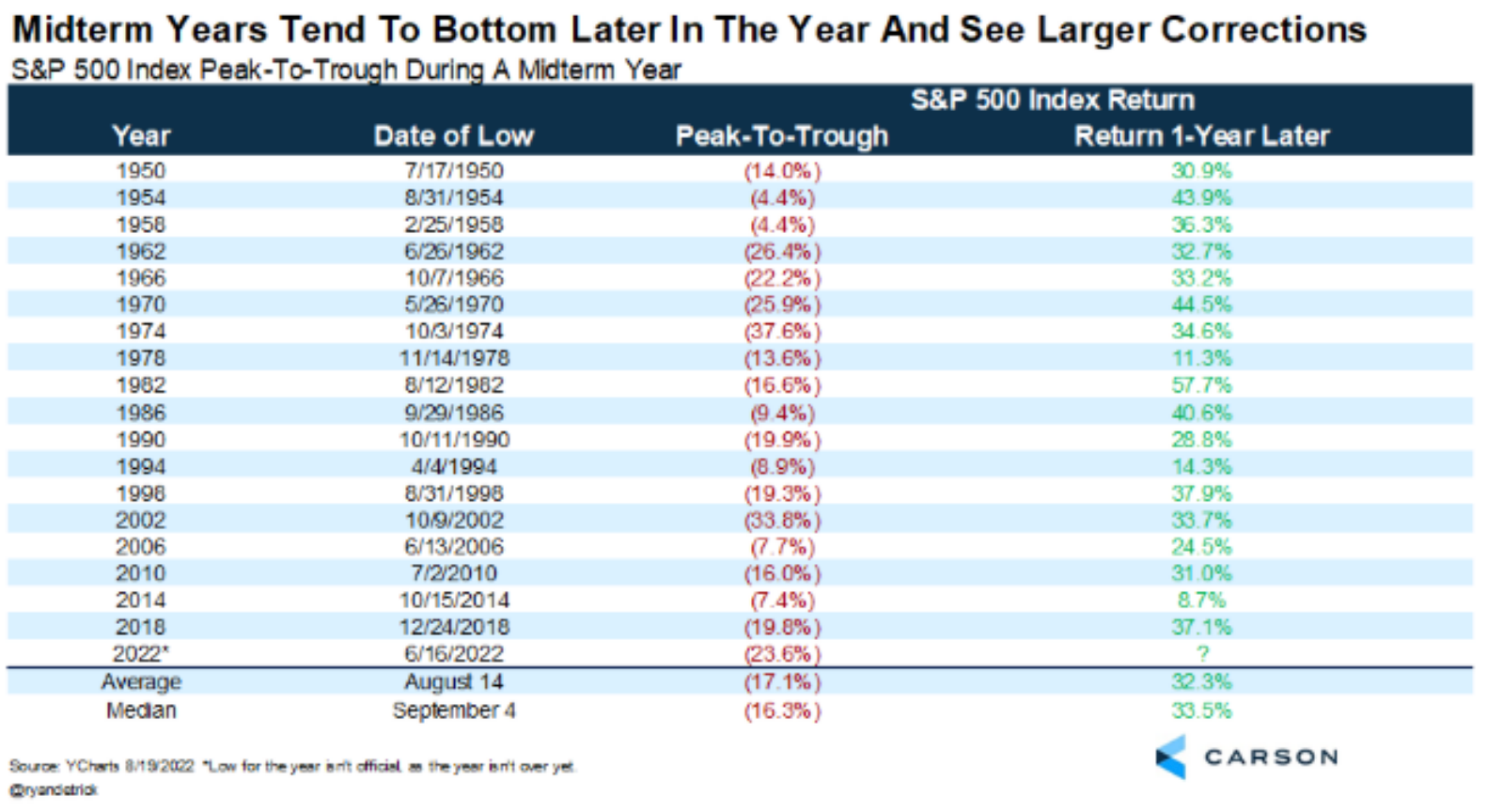
There’s an additional wrinkle for 2026: it’s a midterm election year. Historically, this phase of the election cycle has brought higher volatility and weaker first-half returns. This year also includes a potential Fed chair transition and a Supreme Court ruling on tariffs expected in the first half—both sources of short-term uncertainty.
However, as the next chart shows, one-year returns following midterm-year correction troughs have been positive 100% of the time.
That kind of long-term outperformance doesn’t come from hype alone. It reflects durable earnings power, scalability, and sustained demand. This is the definition of a trend, not a fad.
In 2000, when the bubble burst, technology stocks were trading at far higher forward P/E multiples, profitability across the sector was weak, and the Federal Reserve was raising interest rates. Today, valuations are lower by comparison, profitability is meaningfully stronger, and the Fed is lowering rates.
Does this mean the stock market won’t go down in 2026? Of course not. The stock market goes down every year at some point.
But volatility is not the same thing as a bubble—and understanding the difference matters.
Especially important, none of the above are a recommendations for you to buy or sell any security. This is for information purposes only. Please talk with your advisor regarding any advice around the subject matter and your goals.
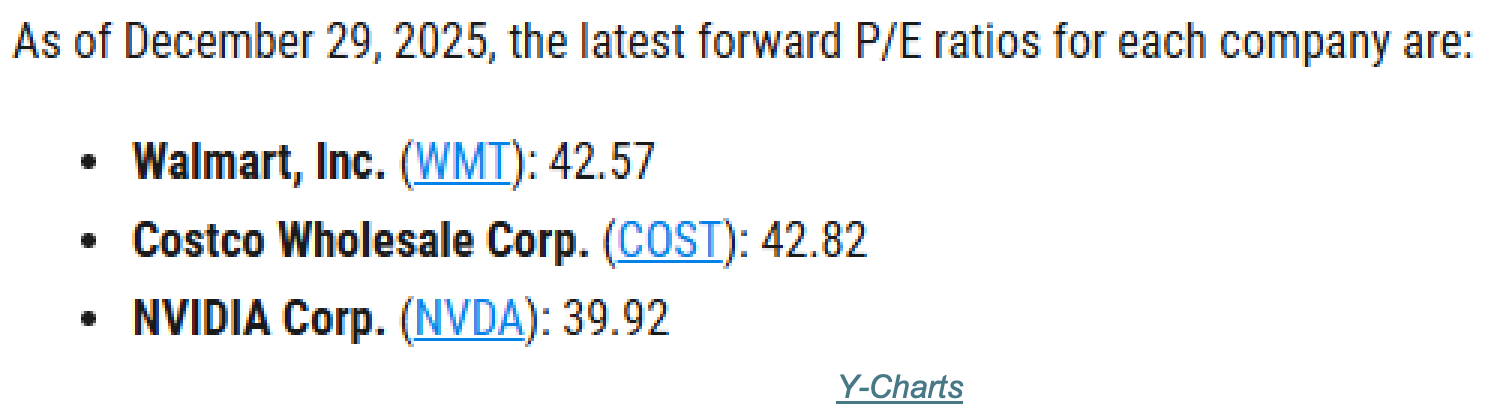
The statistics below are borrowed from Tom Lee at Fundstrat. One example worth highlighting: NVIDIA currently trades at a lower forward P/E than both Walmart and Costco—hardly the profile of a speculative outlier.
Weekly S&P500 ChartStorm - 22 June 2025 [@GunjanJS]
A large share of 2026 predictions also center on whether we’re in a stock-market bubble, particularly within AI and the broader tech sector. Going back to The 22 Immutable Laws of Marketing, the authors make an important distinction between a fad and a trend. Again, they weren’t referring to markets, but the concept provides a useful framework for the year ahead.
So the question becomes: Is AI and tech a fad—or a trend?
The data confirms this shift. According to research cited by *The Wall Street Journal*, the share of Americans who have never married by age 40 has risen steadily for decades. Between 1960 and 1980, only about 6 percent of 40-year-olds had never married. By 1990, that figure rose to roughly 10 percent. By 2000, it reached 15 percent. By 2010, it was 20 percent. By 2021, one quarter of 40-year-olds had never married, including 28 percent of men and 22 percent of women.
Marriage rates also vary significantly by demographic group and education level. Nearly half of 40-year-old Black Americans have never married, compared with 27 percent of Hispanics and 20 percent of whites. Americans with a high school diploma or less are roughly twice as likely to be unmarried at 40 as those with a bachelor’s degree or higher.
This matters not for moral reasons, but for economic ones. Demographics are destiny. Slowly, quietly, and relentlessly.
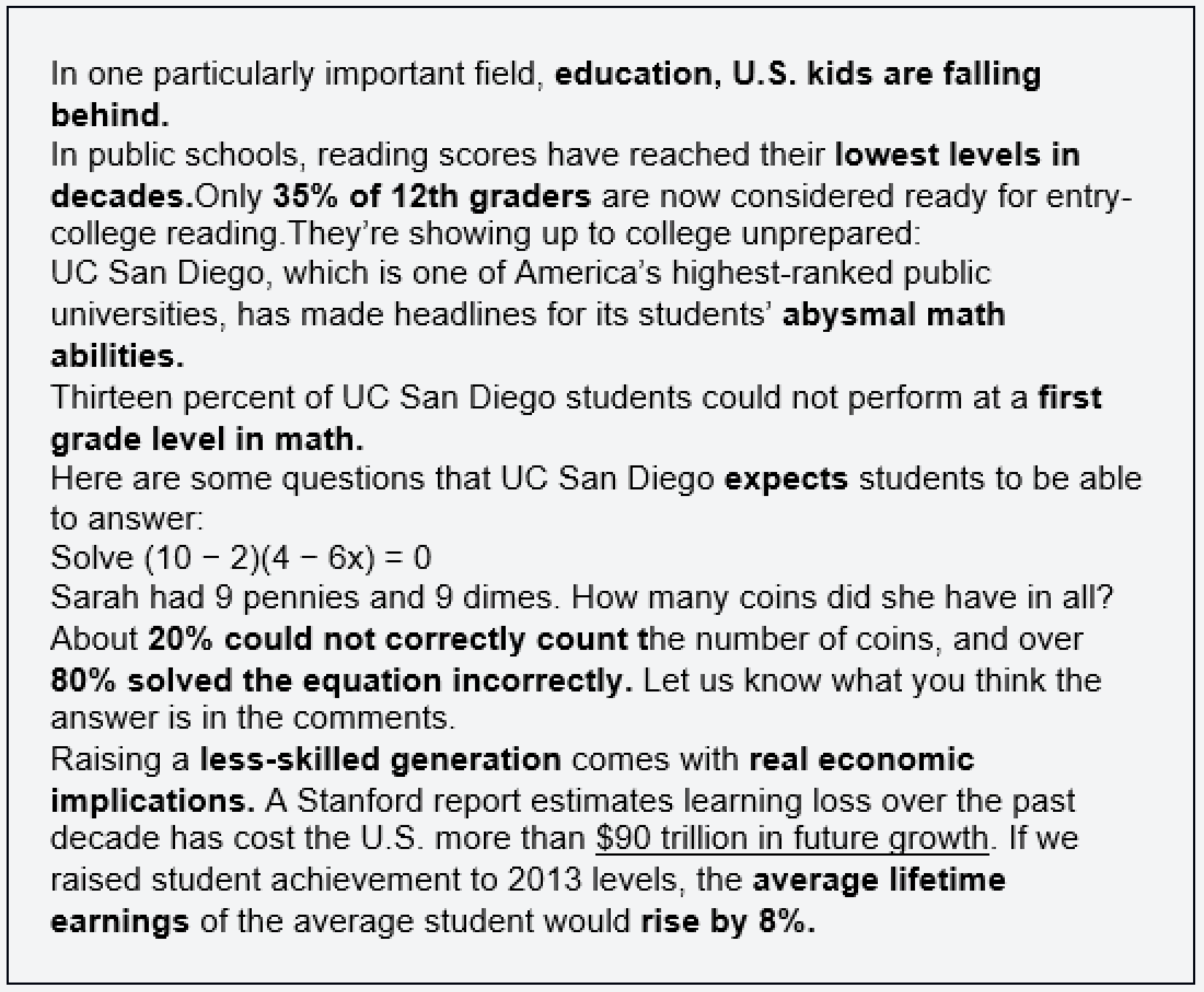
The State of Education and the Decline of Reading
The second long-term concern is the condition of our public education system. I will leave much of this analysis to Professor G, who captures it powerfully in a single slide.
Conclusion
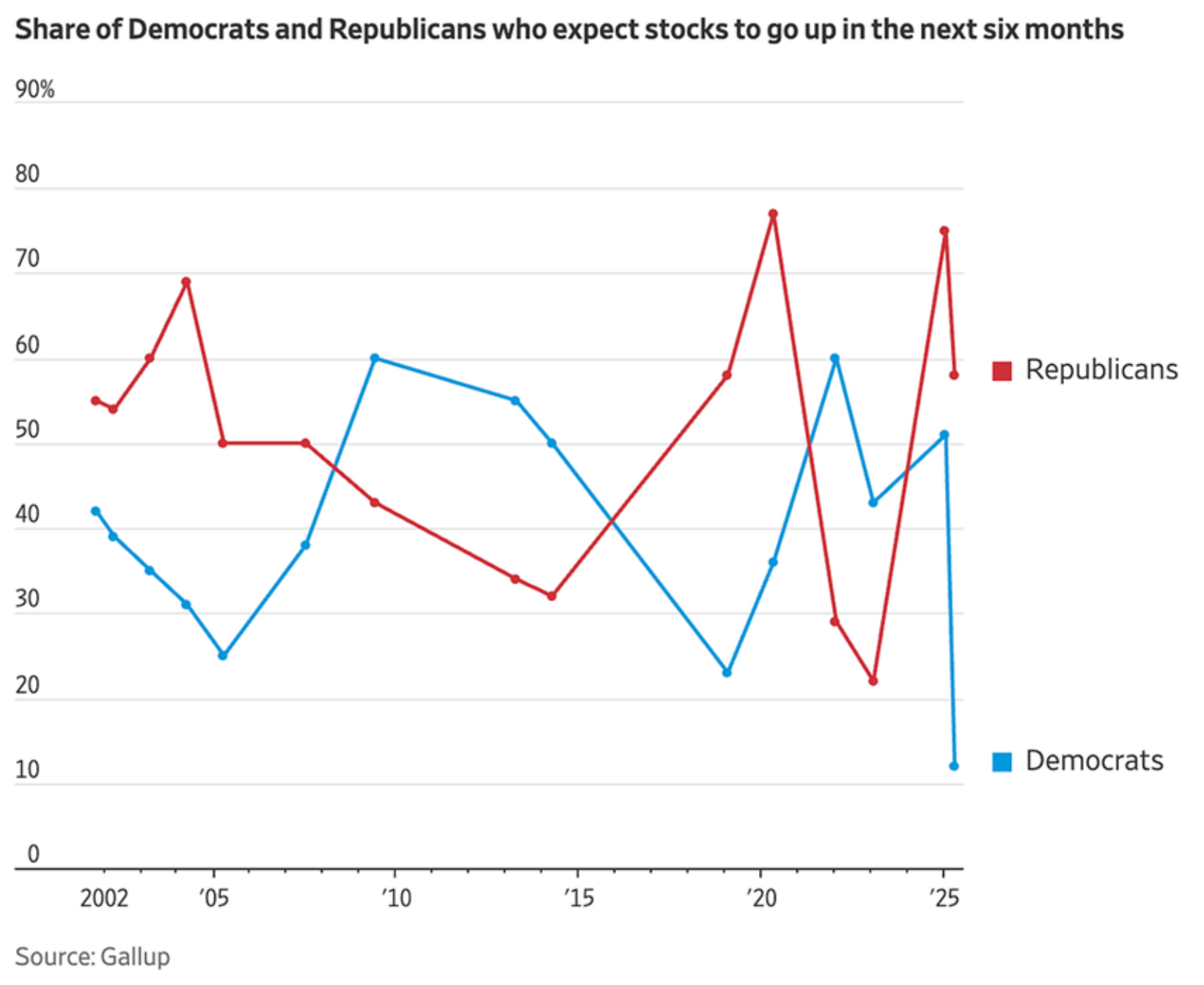
In conclusion, the market is “something unpredictable,” especially when forecasts are built on politics or macroeconomic narratives. In 2025, we moved close to a world of Republican bulls and Democratic bears. My previous letters have consistently argued against making investment decisions based on political affiliation. Markets do not care about party lines.
The stock market is unpredictable, but in the end it tends to be right. The real force at work is not forecasting skills but the quiet power of buy and hold compounding, often referred to as the eighth wonder of the world.
Predictions of ten percent pullbacks are not prophecies of any kind. They occur regularly, and almost every year includes one, particularly during midterm election cycles like 2026. Fixating on the next correction or the next bubble misses the point. Investors would be far better served paying attention to America’s aging demographics and the state of our education system than trying to outguess the market.
So here we are again, another year of good riddance to predictions. In the end, it is worth listening to Einstein on compound interest.
“He who understands it earns it; He who does not pays it.”
Good Riddance
Song by Green Day (1997)
Another turning point, a fork stuck in the road
Time grabs you by the wrist, directs you where to go
So make the best of this test and don’t ask why
It’s not a question, but a lesson learned in time
It’s something unpredictable, but in the end is right
I hope you had the time of your life”

When it comes to the stock market, the most unpredictable forces are often the ones discussed most loudly across media outlets—namely the macro-economy and politics.
Right now, every Democrat in the United States seems convinced the market is headed lower in 2026, while most Republicans expect it to move higher. It’s no surprise the gap between these views is as wide as it’s ever been—and that was before we grabbed Maduro.

Part III. Market Corrections vs. Bear Markets
“The biggest section of investment graveyard is set aside for macro forecasts.”
-Warren Buffett
There is a larger-than-usual group of well-known investors predicting a 10–15% correction in 2026. That’s not much of a forecast—something along those lines happens almost every year.
As the chart below from JPMorgan Asset Management illustrates, the S&P 500 experiences an average intra-year drawdown of roughly 10% annually. The red bars show the intra-year declines, while the gray bars represent where the market ultimately finished the year.
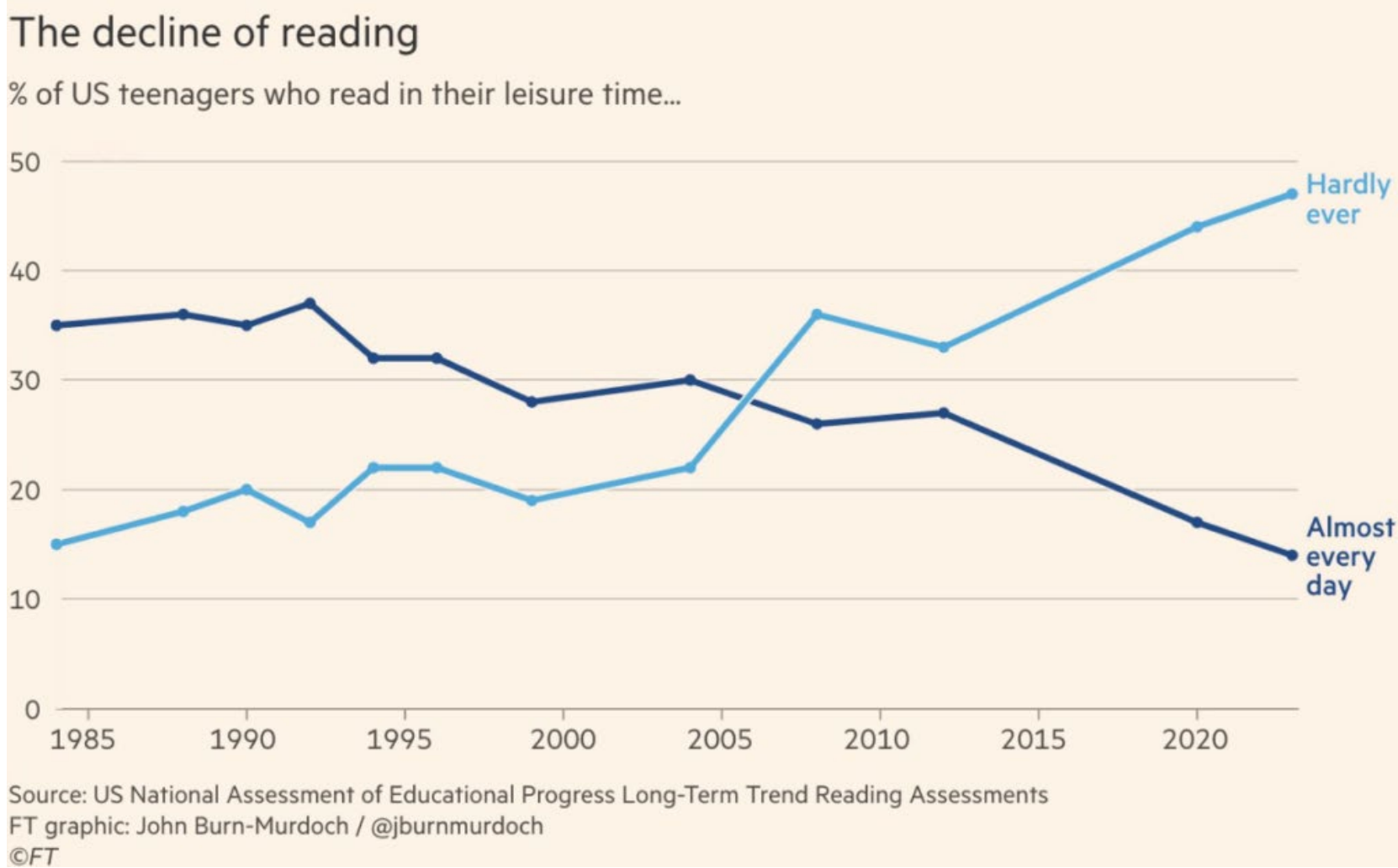
At the most basic level, reading — the foundation of learning — is declining.
As Charlie Munger once said:
“In my whole life, I have known no wise people (over a broad subject matter area) who didn’t read all the time — none, zero.”
Yet data from the *Financial Times* show a steady decline in the percentage of teenagers who read for pleasure in their leisure time. Screens have replaced books, and passive consumption has displaced deep thinking.
The contrast with other parts of the world is stark. While American children scroll social media, Russian children are being prepared for war beginning in the earliest grades. According to reporting by The Wall Street Journal, military-style training is now embedded in Russia’s school curriculum . By eighth grade, weapons training — once extracurricular — is mandatory. Students are taught military discipline, history, weapons assembly, and drone operation.
One does not need to endorse such an approach to recognize the seriousness with which education and national preparation are treated elsewhere.
The Bigger Picture
Markets fluctuate. Forecasts fail. Speculative excesses come and go.
But demographics and education change slowly — and when they move in the wrong direction, the consequences compound over decades, not quarters. If Americans want to worry about something beyond the next election cycle or the next market pullback, these are the trends that deserve attention.
They may not dominate headlines, but they shape the future far more reliably than any market prediction ever could.